
Is Beijing Easy to Visit for First-Time Travelers?
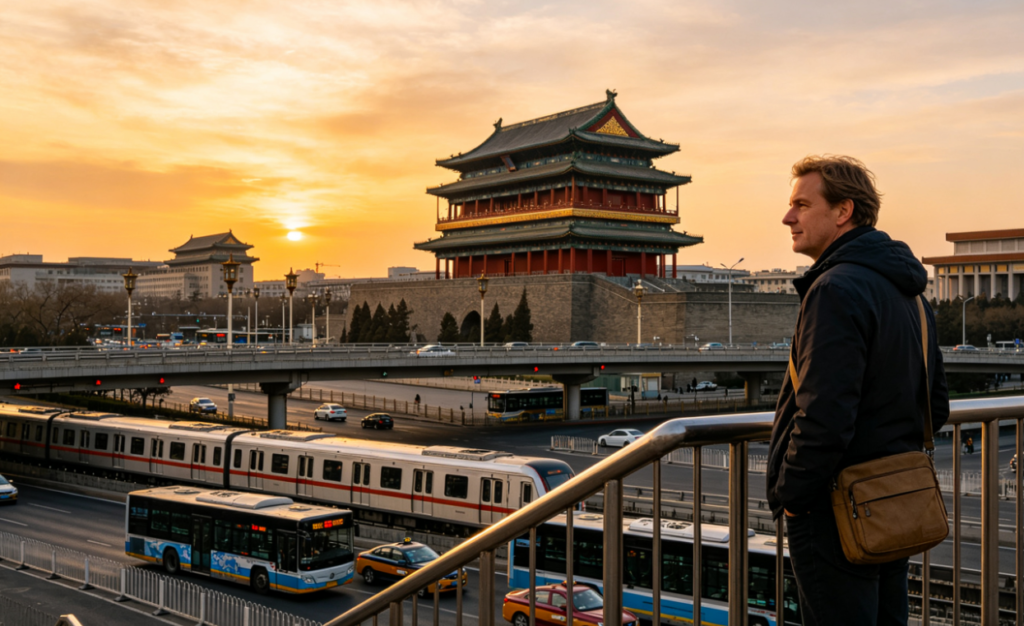
Beijing can look intimidating on a map.
It is a huge city with a complex history, unfamiliar language, millions of residents, an extensive transportation network, and some of China’s most important attractions.
For someone planning a first visit, it is reasonable to wonder whether the city will actually be easy to navigate.
The short answer is yes—but with some preparation.
For Beijing for first-time travelers, the biggest challenge usually isn’t safety or a lack of infrastructure. It is understanding how the city works before you arrive.
Once you understand the basic systems—where to stay, how to move around, how to pay, how attractions are organized, and how much time you actually need—Beijing becomes considerably easier.
The important distinction is that Beijing is easy to visit, but it isn’t necessarily simple to visit without preparation.
Quick Answer: Is Beijing Easy for First-Time Visitors?
Yes.
Most travelers can visit Beijing independently if they prepare for a few important differences.
What is relatively easy?
- The city has extensive public transportation.
- Major tourist attractions are well established.
- Hotels are widely available.
- Many attractions are easy to identify on maps.
- Taxis and ride-hailing make longer journeys easier.
- There is a huge variety of food.
- The city has excellent infrastructure.
What can be challenging?
- The size of Beijing
- Language differences
- Payment systems
- Attraction reservations
- Understanding Chinese addresses
- Planning realistic sightseeing days
- Navigating very large subway stations
- Deciding which attractions are actually worth your limited time
So the question isn’t really whether Beijing is easy.
It’s how much preparation you need to make it easy.
1. Beijing Is Easier Than It First Appears
A first-time visitor may initially see Beijing as a complicated maze.
There are huge distances between some attractions, unfamiliar Chinese characters appear everywhere, and the city operates differently from many Western destinations.
But Beijing also has an important advantage:
It is a major international city built around a highly developed urban infrastructure.
You don’t need to understand the entire city.
You only need to understand the parts relevant to your itinerary.
If you’re staying in a central area and visiting major attractions, you can gradually learn the city as you travel.
2. The Biggest Challenge Is Beijing’s Scale
This is probably the most important thing to understand before arriving.
Beijing is enormous.
Two attractions may appear reasonably close on a map but still require considerable travel time.
A sightseeing day isn’t simply:
Attraction A → Attraction B → Attraction C
It is more realistically:
Hotel → station → transportation → entrance → sightseeing → exit → lunch → transportation → next attraction
Every transfer takes time.
This is why a realistic itinerary matters more in Beijing than simply creating a long list of attractions.
3. You Don’t Need to See Everything
Many first-time visitors make Beijing harder than necessary by trying to see everything.
They want to fit:
- Forbidden City
- Temple of Heaven
- Summer Palace
- Great Wall
- Hutongs
- Museums
- Shopping
- Food experiences
into just a few days.
The result is usually an exhausting schedule.
A better approach is to identify your priorities first.
For example:
Priority A
Historical landmarks
Priority B
Great Wall
Priority C
Food and local culture
Priority D
Museums
Then build the itinerary around those priorities.
4. Is Beijing Easy to Navigate Without a Tour?
Yes.
Independent travel is realistic for many visitors.
You can combine:
- Subway
- Walking
- Taxi
- Ride-hailing
- Private transportation
The subway is especially useful for longer journeys when traffic would otherwise slow you down.
Walking is useful once you’re inside a particular sightseeing area.
Cars become more useful when you have luggage, are traveling with family, or need direct transportation.
The key is not choosing one method.
It is knowing when each method makes sense.
5. Public Transportation Is One of Beijing’s Strengths
Beijing’s transportation network makes independent travel much easier than the city’s size might suggest.
For tourists, the subway is often the most useful option for moving between major areas.
It can help you avoid road congestion and provides predictable travel times for many journeys.
However, don’t assume that a subway ride is the entire journey.
You also need to consider:
- Walking to the station
- Security screening
- Transfers
- Walking through large stations
- Walking from the destination station
Once you understand this, getting around becomes much more manageable.
6. Should Foreign Tourists Use Taxis?
Absolutely.
You don’t need to use public transportation for every journey.
Taxis or ride-hailing can be particularly useful when:
- You’re tired
- You’re carrying luggage
- You’re traveling with children
- The destination is far from a station
- You have already spent hours sightseeing
A hybrid approach is usually easier than trying to minimize transportation costs at every opportunity.
7. Language Is a Challenge—but Not an Automatic Barrier
The language difference can initially seem intimidating.
You may encounter Chinese characters on:
- Restaurant menus
- Street signs
- Subway exits
- Shops
- Addresses
But you don’t need to speak fluent Mandarin to visit Beijing.
What you do need is a system for handling situations where English isn’t available.
Useful preparations include saving:
- Your hotel’s Chinese name
- Your hotel’s Chinese address
- Important attraction names
- Restaurant names
- Transportation information
A screenshot can sometimes be more useful than trying to explain a destination verbally.
8. Learn a Few Chinese Travel Words
You don’t need a full language course.
A handful of terms can make your trip easier.
For example:
- 出口 — Exit
- 入口 — Entrance
- 地铁 — Subway
- 厕所 — Restroom
- 火车站 — Railway station
- 机场 — Airport
Recognizing these characters can be surprisingly helpful when navigating transportation.
9. Payment Requires Some Preparation
Payment is another area where first-time visitors should prepare before arriving.
China has a highly digital payment environment, and travelers may encounter situations where mobile payment is more convenient than cash.
Rather than waiting until your first restaurant visit to figure everything out, prepare your payment options before your trip.
Also keep a backup option available.
The goal isn’t to carry large amounts of cash.
It’s to avoid being dependent on a single payment method.
10. Attraction Reservations Can Affect Your Entire Day
One reason Beijing can feel complicated is that some major attractions operate with specific entry arrangements.
You shouldn’t assume that being physically near an attraction means you can simply walk up and enter.
Before visiting major sites, check:
- Opening information
- Reservation requirements
- Entry times
- Identification requirements
- Official booking procedures
This is particularly important for a short trip.
A missed reservation can affect an entire day’s schedule.
11. The Forbidden City Requires More Planning Than It Looks
The Forbidden City is one of Beijing’s most important attractions.
But it isn’t a small museum that you can quickly walk through.
The complex is enormous.
You may spend several hours moving through different sections, photographing architecture, reading historical information and walking between major courtyards.
Therefore, don’t schedule several major attractions immediately afterward.
Give yourself enough time.
12. The Great Wall Is Not a Quick City Excursion
This is another reason Beijing requires realistic planning.
The Great Wall isn’t located in central Beijing.
Your day may involve:
hotel departure → transportation → Great Wall entrance → hiking → lunch → return transportation
Depending on the section you choose, transportation and hiking can take a substantial portion of the day.
For first-time visitors, the Great Wall should generally be treated as a major day experience, not something to squeeze into two spare hours.
13. Is Beijing Safe for Tourists?
For most ordinary travelers, Beijing is generally regarded as a relatively safe major city.
The more common concerns are usually practical rather than dramatic:
- Losing belongings
- Getting lost
- Misunderstanding transportation
- Overestimating how much can fit into one day
- Becoming exhausted
Basic urban travel precautions still apply.
Keep valuables secure, pay attention in crowded areas, and don’t let unfamiliar surroundings cause you to abandon common sense.
14. Crowds Can Be More Difficult Than Safety
For many visitors, crowds are a bigger practical issue than personal safety.
Major attractions can become busy during:
- Weekends
- Public holidays
- Peak travel periods
- Popular sightseeing hours
If possible, schedule major attractions strategically.
Early starts can make a substantial difference.
Also avoid assuming that every attraction should be visited at midday simply because that’s when your hotel breakfast ends.
15. Food Is Surprisingly Easy to Find
Food is one of the easiest parts of visiting Beijing.
You don’t need to eat at expensive restaurants every day.
You can find:
- Noodles
- Dumplings
- Breakfast foods
- Roast duck
- Hot pot
- Street snacks
- Rice dishes
- Vegetarian meals
- International cuisine
The harder question is usually not:
“Can I find food?”
It is:
“Which food should I try?”
16. Don’t Be Afraid of Local Restaurants
A restaurant without an English menu isn’t automatically inaccessible.
If you have a translation tool or can identify a few dishes in advance, smaller restaurants can become much easier to explore.
Photos on menus can also help.
And sometimes ordering what nearby customers are eating can lead to a better experience than choosing only familiar international dishes.
17. Beijing Is Easy to Visit If You Accept That Things Work Differently
This is an important mindset shift.
Some visitors become frustrated because they expect Beijing to operate exactly like their home city.
Instead, accept that you may encounter:
- Different payment habits
- Different restaurant customs
- Different transportation systems
- Different navigation conventions
- Different opening and reservation procedures
Different doesn’t necessarily mean difficult.
Once you stop expecting everything to work exactly as it does at home, the learning curve becomes much shorter.
18. Choose Your Hotel Based on Your Itinerary
Where you stay can have a major effect on how easy your trip feels.
Don’t choose a hotel only because it looks good in photos.
Consider:
- Subway access
- Distance from major attractions
- Restaurants nearby
- Airport transportation
- Evening convenience
- Your Great Wall departure arrangements
A hotel near a convenient transportation connection can save significant time over several days.
19. Central Doesn’t Always Mean Convenient
A hotel may be geographically central but still inconvenient.
What matters is how easily you can reach:
- A subway station
- Major roads
- Restaurants
- Your planned attractions
Look at the actual transportation network rather than relying only on the phrase “central Beijing.”
20. Three Days Can Work—If You Prioritize
Beijing doesn’t require a week for everyone.
A three-day trip can work if you’re disciplined.
A reasonable structure might be:
Day 1
Imperial Beijing
Day 2
Great Wall
Day 3
Temple, hutongs and food
You won’t see everything.
But you can experience several major dimensions of the city.
21. Four to Five Days Is More Comfortable
For many first-time visitors, four or five full sightseeing days provide a much better balance.
You can separate major attractions rather than stacking them together.
For example:
Day 1: Historic center
Day 2: Great Wall
Day 3: Temple of Heaven + local neighborhoods
Day 4: Summer Palace
Day 5: Flexible exploration
The extra time isn’t necessarily for adding more attractions.
It gives you flexibility.
22. Don’t Confuse Hotel Nights With Sightseeing Days
If your flight arrives late at night, that arrival day doesn’t really count as a full sightseeing day.
Likewise, an early departure means your final day may have little usable time.
When planning your trip, calculate:
actual sightseeing hours
rather than simply counting calendar dates.
This small distinction can prevent overplanning.
23. Build Your Day Around Geography
One of the easiest ways to make Beijing more manageable is to group attractions by location.
Instead of:
North → South → West → East
try to organize:
nearby attraction → nearby lunch → nearby attraction
This reduces transportation time and makes the day less tiring.
It also gives you more time for unexpected discoveries.
24. Don’t Make Every Hour Productive
This sounds counterintuitive, but it matters.
A first-time visitor may feel that every empty hour represents wasted vacation time.
In reality, some of the most memorable moments can happen during unplanned periods.
You might:
- Stop at a neighborhood café
- Walk through a hutong
- Browse a local shop
- Try an unfamiliar snack
- Sit in a park
- Return to an area you enjoyed
A good itinerary has empty space.
25. Should You Plan Everything Yourself?
That depends on your travel style.
Independent planning works well if you:
- Enjoy research
- Are comfortable with apps
- Don’t mind navigating unfamiliar places
- Prefer flexibility
A more structured approach can help if you:
- Have limited time
- Travel with family
- Want to minimize transportation complexity
- Prefer having someone coordinate logistics
If you want to plan Beijing trip logistics around your own priorities without simply following a fixed group-tour schedule, a customized planning approach can be a useful middle ground.
26. When a Private Tour Makes Sense
A private tour isn’t necessary just because you’re visiting Beijing for the first time.
But it can be particularly useful for:
- Great Wall visits
- Families
- Older travelers
- Travelers with limited time
- Visitors who want historical explanations
- Travelers who don’t want to manage transportation
The biggest advantage isn’t simply having a guide.
It is reducing the number of logistical decisions you need to make.
27. When Independent Travel Is Better
Independent travel may be preferable if you want:
- Flexible meal times
- Longer museum visits
- Unstructured neighborhood walks
- Your own pace
- Spontaneous changes
You don’t need a guide to enjoy Beijing.
The choice should depend on how much logistical responsibility you want to handle yourself.
28. Don’t Assume You Need a Tour for Everything
A useful compromise is to combine independent sightseeing with selected guided experiences.
For example:
Independent city sightseeing
private Great Wall experience
independent food exploration
This gives you flexibility while adding support where logistics are more complicated.
29. What Makes Beijing Feel Difficult?
Most first-time visitors encounter difficulty in four areas.
1. Scale
The city is larger than expected.
2. Systems
Payment and reservations may work differently from home.
3. Language
Not everything will be available in English.
4. Planning
Attractions require more time than their location on a map suggests.
None of these problems are impossible.
They simply require preparation.
30. What Makes Beijing Easy?
The city also has major advantages.
Extensive transportation
You can move around without needing a car.
Strong tourism infrastructure
Major attractions are well established.
Huge food variety
There are options for almost every preference.
Many accommodation choices
You can choose based on budget and location.
Multiple ways to travel
You aren’t dependent on a single transportation system.
These strengths make Beijing much more accessible than its size might suggest.
31. A Simple Preparation Checklist
Before your flight, make sure you have:
Transportation
- Hotel location
- Airport transfer plan
- Basic subway knowledge
- Backup transportation option
Payments
- Primary payment method
- Backup payment method
Attractions
- Major attraction reservations
- Opening information
- Entry requirements
Communication
- Hotel Chinese name
- Hotel Chinese address
- Important attraction names
- Translation method
Itinerary
- Must-see attractions
- Flexible activities
- Restaurant ideas
- Buffer time
This preparation removes most of the avoidable friction.
32. What Should You Do on Your First Day?
Don’t make your arrival day the most complicated day of the trip.
If you’ve just arrived in China, give yourself time to adjust.
A better first day might involve:
- Checking into the hotel
- Exploring the nearby neighborhood
- Having a simple local meal
- Taking a short walk
- Visiting one manageable attraction
Then tackle your most important sightseeing days after you’ve become familiar with the city.
33. Don’t Put the Great Wall Immediately After a Long-Haul Flight
A long-haul flight followed by an early Great Wall departure can be physically demanding.
If possible, allow yourself some recovery time.
Jet lag, unfamiliar food and a major hiking day aren’t always the best combination.
Your itinerary should consider your energy, not just your available hours.
34. What About Families?
Beijing can work very well for families.
But family travel requires a different pace.
Plan for:
- Regular meals
- Rest breaks
- Shorter walking periods
- Flexible evenings
- Transportation that minimizes unnecessary transfers
Don’t try to copy an adult-only itinerary and simply bring children along.
Design the day around the family’s actual energy levels.
35. What About Older Travelers?
Older travelers can also enjoy Beijing comfortably if the itinerary is designed properly.
The main consideration is physical intensity.
Large attractions may involve substantial walking.
The solution isn’t necessarily skipping them.
Instead:
- Reduce the number of major attractions per day
- Use taxis strategically
- Schedule breaks
- Allow more time at major sites
- Avoid unnecessary cross-city travel
36. What About Solo Travelers?
Solo travel is entirely possible.
The main benefit is flexibility.
You can:
- Change your schedule
- Eat when you want
- Spend longer at museums
- Walk through neighborhoods
- Adjust transportation based on your energy
The main challenge is that you don’t have another person to share navigation and decision-making.
Good preparation becomes more valuable.
37. What About Travelers Who Don’t Speak Chinese?
You can still travel independently.
The important thing is to reduce situations where verbal explanation is essential.
Use:
- Saved addresses
- Digital maps
- Screenshots
- Translation tools
- Written destination names
This makes communication more predictable.
You don’t need to be fluent.
You need a reliable way to communicate key information.
38. The Best Way to Prepare Is to Simplify
You don’t need a 50-page travel manual.
You need to know:
Where am I staying?
How do I get there from the airport?
How do I reach my major attractions?
What needs to be reserved?
How will I pay?
What do I want to eat?
What happens if my plan changes?
Once these questions are answered, the rest can be flexible.
39. Don’t Build an Itinerary That Requires Perfect Execution
This is perhaps the most useful planning principle.
If your itinerary only works when:
- Your taxi arrives exactly on time
- You never get lost
- Every attraction takes exactly two hours
- You never stop for coffee
- You never get tired
- Every restaurant has an available table
then your itinerary is too aggressive.
A good itinerary should survive small delays.
40. How to Make Your First Beijing Trip Feel Easy
The simplest formula is:
Stay conveniently
Choose a hotel with practical transportation access.
Prioritize
Select your must-see experiences.
Group geographically
Avoid unnecessary cross-city travel.
Reserve important attractions
Don’t leave critical parts of your itinerary to chance.
Mix transportation
Use metro, walking and cars according to the situation.
Leave gaps
Don’t schedule every hour.
Expect differences
Not everything will work exactly like it does at home.
This combination makes a much bigger difference than trying to memorize every travel tip.
41. A Practical First-Time Beijing Framework
If you’re still unsure how to organize everything, think in five layers:
Layer 1 — Where to Stay
Choose based on transportation and itinerary.
Layer 2 — Major Experiences
Select the Great Wall, imperial landmarks and your top cultural interests.
Layer 3 — Daily Geography
Group nearby attractions together.
Layer 4 — Food
Add local meals according to your route.
Layer 5 — Flexibility
Leave space for weather, fatigue and spontaneous exploration.
This is much more effective than starting with a list of twenty attractions.
42. When Should You Consider a Custom Itinerary?
A customized itinerary becomes particularly useful when your trip has several competing priorities.
For example:
- You want the Great Wall
- You want major imperial sites
- You care about food
- You are traveling with family
- You don’t want long daily walks
- You have only four days
Those requirements can conflict with each other.
A custom Beijing itinerary can solve this by deciding not only what you visit, but when and in what order you visit it.
43. Is Beijing Easier Than You Think?
For many first-time visitors, yes.
The initial learning curve can feel significant because the city operates differently from what they know.
But once you understand:
transportation + payments + reservations + geography + pacing
the city becomes much more predictable.
The biggest mistake is arriving with no plan at all.
The second biggest mistake is planning every minute.
The ideal approach sits between the two.
44. What You Don’t Need to Worry About Too Much
You don’t need to know:
- Every subway line
- Every famous restaurant
- Every Chinese dish
- Every neighborhood
- Every historical detail
before you arrive.
Learn the information that affects your own itinerary.
Then learn the rest as you go.
45. Final Verdict: Is Beijing Easy to Visit?
Yes—but easy doesn’t mean effortless.
For Beijing for first-time travelers, the city is highly accessible once you prepare for its scale and understand a few practical systems.
The most important things to prepare are:
- Your hotel location
- Airport transportation
- Payment methods
- Major attraction reservations
- Basic navigation
- A realistic daily schedule
After that, you can leave some space for spontaneity.
You don’t need to understand all of Beijing before you visit it.
You simply need to understand your route through Beijing.
Final Takeaway
So, is Beijing easy to visit for first-time travelers?
Yes.
Beijing has excellent infrastructure, extensive transportation, a huge range of accommodation and food, and well-established tourist attractions.
The challenge is mainly that the city is large, busy and different from what many international visitors are accustomed to.
Once you account for those differences, traveling around the city becomes much easier.
For Beijing for first-time travelers, the best strategy isn’t to create the most detailed itinerary possible. It’s to create a realistic one.
Prioritize the experiences you care about, group attractions by location, prepare for payment and reservations, use the right transportation for each journey, and leave enough room for rest.
If you want to combine independent exploration with organized experiences, Beijing tours can be useful for specific parts of the trip, while a custom Beijing itinerary can help coordinate your attractions, food and transportation around your actual travel pace.
In the end, Beijing doesn’t require you to be an expert traveler.
It simply rewards a little preparation.
Plan the important parts, leave the rest flexible, and the city becomes much easier to enjoy.