
3 Days in Beijing: The Perfect First-Timer Itinerary
Quick Answer
If you have 3 days in Beijing, the best approach is to combine Beijing’s major historical landmarks with local neighborhoods and food rather than trying to see everything.
A well-balanced first-time itinerary should include the Forbidden City and Tiananmen Square, the Mutianyu or Badaling Great Wall, and the Temple of Heaven, while leaving enough time to explore hutongs, eat local dishes, and experience everyday Beijing.
For most first-time visitors, the ideal structure is:
- Day 1: Tiananmen Square, Forbidden City, Jingshan Park and historic central Beijing
- Day 2: Great Wall of China and a relaxed evening in Beijing
- Day 3: Temple of Heaven, hutongs, local neighborhoods and Beijing cuisine
The key is not simply how many attractions you visit, but how you organize them geographically and by energy level.
Is 3 Days Enough for Beijing?
Three days is enough for a strong introduction to Beijing, but not enough to experience the entire city.
Beijing is a huge metropolitan area, and many of its most important attractions are spread across different districts. The Great Wall alone can require several hours of transportation, while major attractions such as the Forbidden City deserve at least half a day.
With limited time, prioritize experiences that represent different sides of the city:
| Experience | Why It Matters |
|---|---|
| Forbidden City | Imperial history and architecture |
| Great Wall | China’s most iconic landscape |
| Temple of Heaven | Ming-Qing religious architecture |
| Hutongs | Traditional Beijing neighborhood life |
| Beijing cuisine | Local culture through food |
| Jingshan Park | Classic views over the historic center |
The goal of a three-day trip should therefore be depth over quantity.
Instead of adding six or seven attractions to every day, group nearby sights together and leave room for meals, walking, transportation, and unexpected discoveries.
If you are still building your route, start with a flexible plan Beijing trip approach rather than booking every hour in advance.
Day 1: Discover Imperial Beijing
Morning: Tiananmen Square
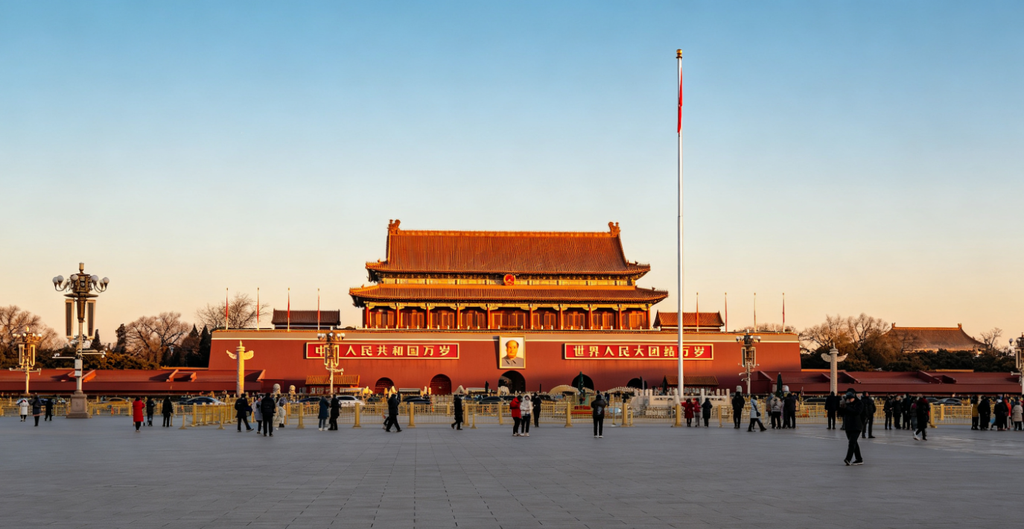
Begin your first morning in the historic center of Beijing.
Tiananmen Square is one of the most recognizable public spaces in China and provides useful historical context before entering the Forbidden City.
Because access procedures and visitor requirements can change, check the official booking and entry information before your trip.
Allow approximately 45–90 minutes for the square and surrounding area, depending on your interest and security procedures.
Why Visit Tiananmen Square First?
Starting here gives you a geographical understanding of central Beijing.
From Tiananmen Square, you can continue north toward the Forbidden City, following the traditional north-south axis that forms the backbone of historic Beijing.
This makes the morning efficient because you are moving naturally from one major attraction to another rather than crossing the city.
Late Morning to Afternoon: Explore the Forbidden City
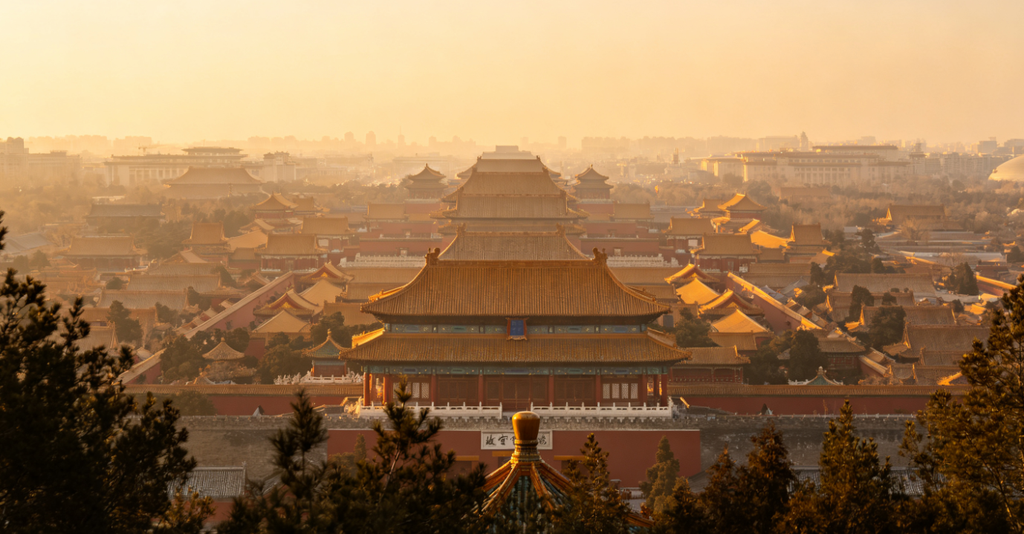
The Forbidden City should be the centerpiece of your first day.
A first-time visitor should generally allow 3–4 hours rather than trying to rush through it in one hour.
The complex contains thousands of rooms and courtyards, but you do not need to see every building to understand its significance.
Focus on the major ceremonial axis and then explore selected side courtyards.
What Should You See?
Prioritize:
- Meridian Gate
- Outer Golden Water River
- Hall of Supreme Harmony
- Hall of Central Harmony
- Hall of Preserving Harmony
- Palace of Heavenly Purity
- Hall of Union
- Palace of Earthly Tranquility
- Imperial Garden
A well-planned Forbidden City tour should balance the famous central buildings with quieter architectural details.
Look for:
- Imperial roof decorations
- Stone carvings
- Courtyard layouts
- Painted wooden structures
- Bronze vessels
- Traditional architectural symmetry
A Common Mistake
Do not treat the Forbidden City as a quick photo stop.
Its scale is part of the experience. The enormous courtyards were designed to communicate imperial authority through distance, symmetry and controlled movement.
That is why rushing from one landmark to another can make the visit feel surprisingly empty.
Late Afternoon: Jingshan Park
After leaving the Forbidden City, walk north to Jingshan Park.
This is one of the best places to understand Beijing’s historic urban layout.
From the hilltop pavilion, you can look south toward the Forbidden City and see its central axis from above.
Why Add Jingshan Park?
After several hours inside palace courtyards, Jingshan provides a completely different perspective.
Instead of examining individual buildings, you can see the Forbidden City as a complete architectural composition.
Allow around 45–60 minutes.
It is also a good place to slow down before dinner.
Evening: Wangfujing or a Local Neighborhood
For your first evening, choose between a convenient commercial district and a more local neighborhood.
Wangfujing is easy for first-time visitors, while areas around Shichahai and the hutongs offer a more atmospheric experience.
If you still have energy, walk around the lakes and traditional neighborhoods near Shichahai.
Otherwise, have an early dinner and rest.
Your second day will involve considerably more transportation and walking.
Day 2: Walk the Great Wall
Morning: Visit the Great Wall
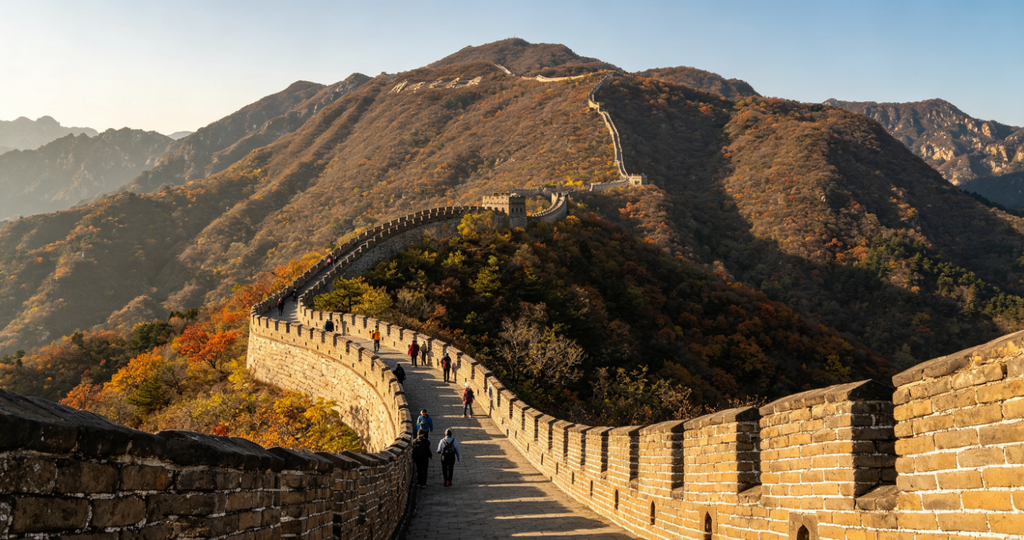
Your second day should be dedicated primarily to the Great Wall.
Trying to combine the Great Wall with several major Beijing attractions is one of the most common itinerary mistakes.
The wall is outside the central city, and transportation time can significantly affect your schedule.
For first-time visitors, Mutianyu and Badaling are two of the most practical choices.
Mutianyu vs. Badaling
| Factor | Mutianyu | Badaling |
|---|---|---|
| Scenery | Excellent | Excellent |
| Accessibility | Good | Very good |
| Crowds | Generally more manageable | Often busier |
| Historic atmosphere | Strong | Strong |
| First-time suitability | Excellent | Excellent |
| Distance from central Beijing | Relatively farther | Relatively closer |
Mutianyu is often attractive to travelers who want a more relaxed Great Wall experience and mountain scenery.
Badaling is a practical choice for visitors who prioritize accessibility and a highly developed visitor infrastructure.
The best choice depends on your priorities rather than a simple “which is better” ranking.
How Long Should You Spend at the Great Wall?
Plan for roughly 4–6 hours for the complete excursion, including transportation, depending on the section and your travel method.
At the wall itself, give yourself enough time to walk beyond the first viewpoint.
The Great Wall changes dramatically as you move along the ridges.
Instead of spending the entire visit taking photographs at the entrance area, walk farther and experience the changing landscape.
What to Bring
Bring:
- Comfortable walking shoes
- Water
- Sun protection
- A light jacket depending on the season
- Small snacks
- A fully charged phone
Avoid carrying unnecessary luggage because stairs and uneven surfaces can make the walk tiring.
Afternoon: Return to Beijing and Rest
After returning to the city, keep your afternoon flexible.
This is intentionally different from a typical “checklist itinerary.”
You may arrive back in Beijing tired, especially after several hours of walking.
Use the afternoon for:
- Hotel rest
- Coffee
- Massage
- Shopping
- A relaxed neighborhood walk
Do not feel obligated to add another major historical attraction.
Evening: Beijing Dinner Experience
Your second evening is a good time to focus on food.
Try dishes such as:
- Peking duck
- Zhajiangmian
- Jiaozi
- Beijing-style hotpot
- Douzhi if you are adventurous
- Traditional Beijing snacks
Food is not simply something to fit between attractions. It can help you understand how Beijing’s northern Chinese culinary traditions developed.
For a more detailed food-focused route, use a dedicated Beijing food guide alongside your sightseeing itinerary.
Day 3: Temples, Hutongs and Local Beijing
Morning: Temple of Heaven
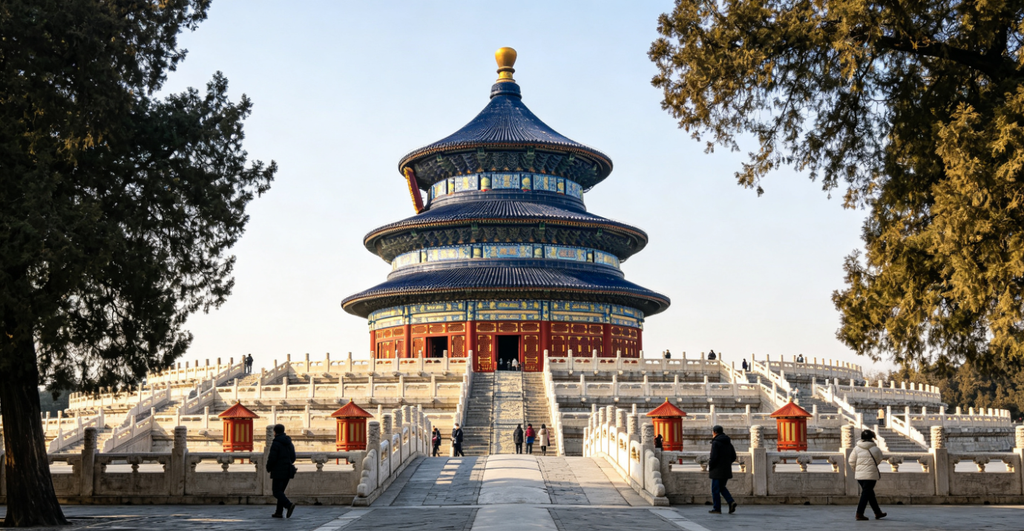
Start your final full day at the Temple of Heaven.
Unlike the Forbidden City, which represents imperial political power, the Temple of Heaven reflects the religious and ceremonial traditions of the imperial court.
The complex is particularly impressive for its relationship between architecture, geometry and landscape.
Key Areas to See
Prioritize:
- Hall of Prayer for Good Harvests
- Imperial Vault of Heaven
- Circular Mound Altar
- Danbi Bridge
Allow around 2–3 hours.
Try to arrive relatively early.
The park is also known for its local morning activities, with residents practicing exercise, dancing, singing and other forms of recreation.
This creates an interesting contrast with the monumental architecture.
You are not only seeing a historical site—you are seeing how a historic public space functions in contemporary Beijing.
Late Morning: Explore a Beijing Hutong
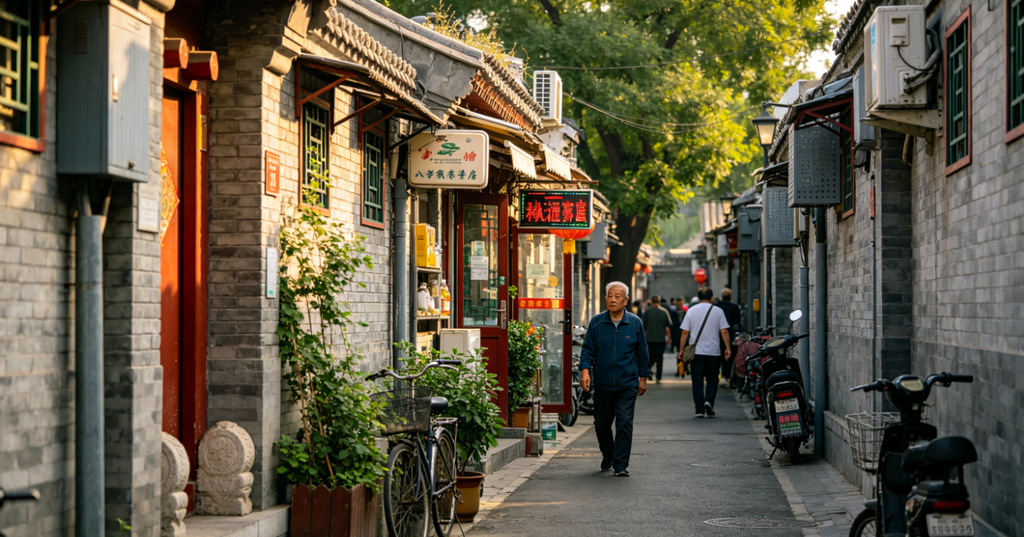
After the Temple of Heaven, head toward one of Beijing’s historic hutong areas.
Hutongs are narrow lanes traditionally associated with Beijing’s courtyard residences.
They provide a completely different experience from monumental attractions.
Instead of looking at imperial architecture, you can observe:
- Traditional courtyard entrances
- Small local shops
- Neighborhood restaurants
- Street life
- Residential alleys
- Older and renovated buildings
Popular areas include the hutongs around Shichahai, Nanluoguxiang and other historic neighborhoods.
However, avoid treating hutongs as an open-air museum.
They remain residential communities, so visitors should respect privacy, avoid entering private courtyards without permission, and keep noise under control.
Afternoon: Choose One Experience
By the afternoon of Day 3, you have several options.
Option 1: Summer Palace
If you are particularly interested in imperial gardens, replace the hutong afternoon with the Summer Palace.
The Summer Palace is a major attraction and can easily consume several hours.
Choose it if:
- You enjoy gardens and landscapes
- You prefer slower sightseeing
- You have strong historical interests
- You do not mind additional transportation
Option 2: Lama Temple and Guozijian
For travelers interested in religion, architecture and traditional Beijing neighborhoods, the Lama Temple area can be a better fit.
You can combine the temple with nearby historic streets and the former Imperial Academy area.
Option 3: Slow Down
If you have already visited the Great Wall and Forbidden City, slowing down can actually make your final day better.
Spend the afternoon:
- Drinking tea
- Exploring a neighborhood
- Shopping for souvenirs
- Sitting in a local café
- Taking photographs
- Trying additional Beijing dishes
This is particularly useful for travelers who dislike rushed itineraries.
What to Eat During 3 Days in Beijing
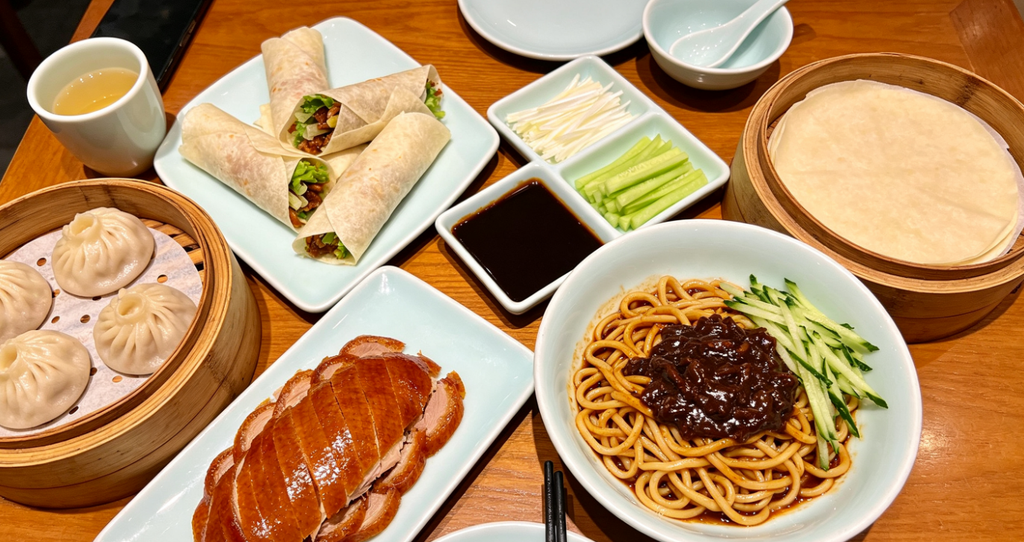
Food deserves a dedicated place in a first-time Beijing itinerary.
The city is especially known for wheat-based dishes, noodles, dumplings, roasted meats and hearty northern Chinese flavors.
Peking Duck
Peking duck is the obvious first choice for many visitors.
A traditional meal usually involves thin slices of roasted duck served with pancakes, sauces and vegetables.
For a better experience, treat it as a full meal rather than a quick tourist snack.
Zhajiangmian
Zhajiangmian is a classic Beijing noodle dish served with fermented soybean-based sauce and various vegetables.
It is a useful introduction to the everyday side of Beijing cuisine because it is much more casual than Peking duck.
Jiaozi
Dumplings are another practical option for travelers because they are widely available and come in many fillings.
Beijing Breakfast
If you want to go beyond famous dishes, try local breakfast foods.
Depending on the neighborhood, you may encounter:
- Jianbing
- Baozi
- Youtiao
- Doufu nao
- Various noodle and pancake dishes
Breakfast is often one of the easiest ways to experience everyday local food culture.
How to Get Around Beijing in 3 Days
Transportation planning can make or break a short Beijing trip.
The city has an extensive subway system, but attractions can still be surprisingly far apart.
Subway
The subway is usually the most predictable option for moving around central Beijing.
It is particularly useful for:
- Tiananmen area
- Forbidden City vicinity
- Temple of Heaven
- Major commercial districts
- Hutong areas
However, stations can involve considerable walking.
Taxi and Ride-Hailing
Taxis and ride-hailing services are useful when:
- Traveling with luggage
- Traveling with older family members
- Moving between distant attractions
- Returning from the Great Wall
- Traveling late in the evening
Traffic can be heavy, so allow extra time during peak hours.
Private Transportation
For a short trip, private transportation can be especially valuable on the Great Wall day.
Instead of spending a large part of the day navigating transfers, you can focus on the attraction itself.
This is one reason travelers planning a custom Beijing itinerary may prefer private transportation for selected days rather than using it for every journey.
Where to Stay for a 3-Day Beijing Trip
Location matters more than luxury when you only have three days.
Wangfujing and Dongcheng
Good for:
- First-time visitors
- Central sightseeing
- Shopping
- Easy access to major attractions
Qianmen
Good for:
- Historic atmosphere
- Traditional streets
- Central location
- Travelers interested in old Beijing
Shichahai and Hutong Areas
Good for:
- Local atmosphere
- Evening walks
- Traditional architecture
- Restaurants and cafés
Sanlitun
Good for:
- Restaurants
- Nightlife
- Modern Beijing
- International travelers
For a first visit, staying relatively close to the historic center can reduce transportation time and make your three-day schedule more efficient.
Practical Tips for First-Time Visitors
1. Book Major Attractions Early
Major attractions can have visitor limits, reservation requirements or changing entry procedures.
Check the latest official requirements before traveling.
Do not assume that showing up at the gate will always be enough.
2. Start Early
Early mornings generally give you more time and can make popular attractions more comfortable.
This is especially important for:
- Forbidden City
- Temple of Heaven
- Great Wall
3. Group Attractions Geographically
Do not plan your itinerary only according to a list of attractions.
Think in terms of geographic clusters.
For example:
Tiananmen Square → Forbidden City → Jingshan Park
is much more efficient than visiting three attractions located in completely different parts of the city.
4. Leave Buffer Time
A realistic itinerary needs room for:
- Security checks
- Subway transfers
- Traffic
- Meals
- Rest
- Unexpected delays
A schedule that looks perfect on paper can become stressful once you are actually in Beijing.
5. Prepare for Walking
Beijing sightseeing involves more walking than many first-time visitors expect.
Even when public transportation is available, attractions themselves can be enormous.
Comfortable shoes are one of the most useful things you can pack.
How Much Does 3 Days in Beijing Cost?
Your budget depends heavily on accommodation, transportation and dining style.
A basic framework is:
| Expense | Budget Approach | Mid-Range Approach | Premium Approach |
|---|---|---|---|
| Hotel | Simple hotel/guesthouse | Comfortable central hotel | Upscale hotel |
| Transportation | Subway + occasional taxi | Subway + ride-hailing | Private transfers |
| Food | Local restaurants | Mix of local and mid-range dining | High-end dining |
| Attractions | Standard tickets | Standard + guided experiences | Private tours |
| Great Wall | Public transport | Organized transfer | Private vehicle |
The biggest cost difference usually comes from where you stay and how you visit the Great Wall.
For a three-day trip, paying slightly more for a convenient hotel or efficient transportation can sometimes provide better value than choosing the cheapest option.
A More Efficient 3-Day Beijing Schedule
Here is the itinerary at a glance:
| Day | Morning | Afternoon | Evening |
|---|---|---|---|
| Day 1 | Tiananmen Square | Forbidden City | Jingshan + local dinner |
| Day 2 | Great Wall | Great Wall + return | Beijing cuisine |
| Day 3 | Temple of Heaven | Hutongs / Summer Palace | Relaxed final evening |
This structure works because each day has a clear geographic and thematic focus.
Day 1 = Imperial Beijing
Day 2 = Great Wall and nature
Day 3 = Religion, neighborhoods and local culture
That gives first-time visitors a much more balanced introduction than attempting to visit every famous attraction.
Can You Modify This Itinerary?
Absolutely.
The best itinerary depends on your interests.
If you love history
Add the Summer Palace, National Museum or more time inside the Forbidden City.
If you love food
Spend more time exploring local markets, neighborhood restaurants and traditional breakfast spots.
If you love photography
Prioritize Jingshan Park, hutongs, the Great Wall and early-morning visits.
If you travel with children
Reduce the number of attractions per day and allow more breaks.
If you travel with older family members
Consider private transportation, shorter walking routes and more frequent rest periods.
If you have a fourth day
Add the Summer Palace, Lama Temple, 798 Art District or another cultural experience rather than squeezing everything into three days.
Final Takeaway
A successful 3 days in Beijing itinerary should not attempt to cover every famous attraction.
Instead, focus on three different experiences: imperial Beijing, the Great Wall, and everyday local Beijing.
Spend your first day understanding the city’s historic center, your second day experiencing the Great Wall, and your third day slowing down enough to appreciate temples, hutongs and food.
The most important principle is simple: leave enough time to experience Beijing rather than simply photograph it.
With smart geographic planning, early starts and realistic transportation times, three days can provide a surprisingly rich introduction to China’s capital—and give you a strong foundation for a longer Beijing trip in the future.