
How Many Attractions Can You Visit in Beijing in One Day?
Quick Answer
Most visitors can realistically experience two to four major sightseeing stops in Beijing in one day, but the number alone does not tell you whether the schedule is comfortable or rushed.
A large attraction such as the Forbidden City can occupy several hours once you include entry procedures, walking, sightseeing, photography, and the time needed to reach the next location.
By contrast, a smaller temple, neighborhood, viewpoint, or museum may take much less time.
The better question is therefore not:
“How many attractions can I visit?”
It is:
“How much sightseeing can one day realistically contain?”
A practical Beijing sightseeing day usually has:
- one major anchor attraction
- one or two complementary attractions
- realistic transportation time
- meal and rest breaks
- some flexibility for delays
If you count every gate, temple, street, viewpoint, and neighborhood as a separate attraction, you may be able to create a very long list.
But if your goal is to actually experience Beijing rather than collect checkmarks, the number should be much smaller.
1. Why There Is No Universal Number
Beijing attractions vary enormously in size and complexity.
Consider the difference between:
- a large imperial palace
- a major museum
- a historic temple
- a hutong neighborhood
- a park
- a Great Wall section
- a short photo stop
They cannot all be treated as equivalent units.
For example, spending two hours walking through a compact neighborhood and spending two hours inside a huge palace complex are not necessarily comparable experiences.
The physical size of the attraction matters.
So does the amount of time required to understand it.
This is why a daily sightseeing capacity should be measured in time and energy, not simply in attraction count.
2. The Three Categories of Beijing Attractions
A useful way to estimate your daily capacity is to divide attractions into three categories.
Major Attractions
These usually require substantial time and energy.
Examples include:
- Forbidden City
- Great Wall
- Summer Palace
- major museums
- large historical complexes
A major attraction can easily become the central activity of an entire morning or afternoon.
Medium Attractions
These may require one to two hours.
Examples include:
- Temple of Heaven
- major temples
- selected museums
- historic districts
- substantial parks
They can often be combined with another attraction in the same geographic area.
Short Stops
These may take 30–90 minutes.
Examples include:
- viewpoints
- small historic sites
- selected hutong streets
- architectural photo stops
- small cultural venues
Several short stops can fit into one day, but only if transportation between them is efficient.
3. A Better Rule Than “Four Attractions Per Day”
Instead of setting a fixed number, think in terms of sightseeing weight.
For example:
Major attraction = 3 points
Medium attraction = 2 points
Short attraction = 1 point
A comfortable full sightseeing day might contain approximately 4–6 points.
That could mean:
3 + 2 = 5
One major attraction plus one medium attraction.
Or:
2 + 2 + 1 = 5
Two medium attractions plus a short stop.
Or:
1 + 1 + 1 + 1 = 4
Several smaller experiences concentrated in one neighborhood.
This is not a scientific measurement.
It is a planning framework designed to prevent the common mistake of treating every attraction as equal.
4. Why a Famous Attraction Can Consume Half a Day
Major attractions often take longer than their official opening hours suggest.
Suppose an attraction is technically open for several hours.
Your actual visit may include:
- getting there
- finding the correct entrance
- security screening
- ticket verification
- walking from the entrance
- waiting
- sightseeing
- photography
- finding an exit
- reaching your next destination
The attraction itself may occupy three hours, while the complete experience consumes four or more.
This distinction is critical when planning a Beijing day.
Your itinerary should account for door-to-door time, not just the time spent inside the attraction.
5. The Forbidden City Is a Good Example
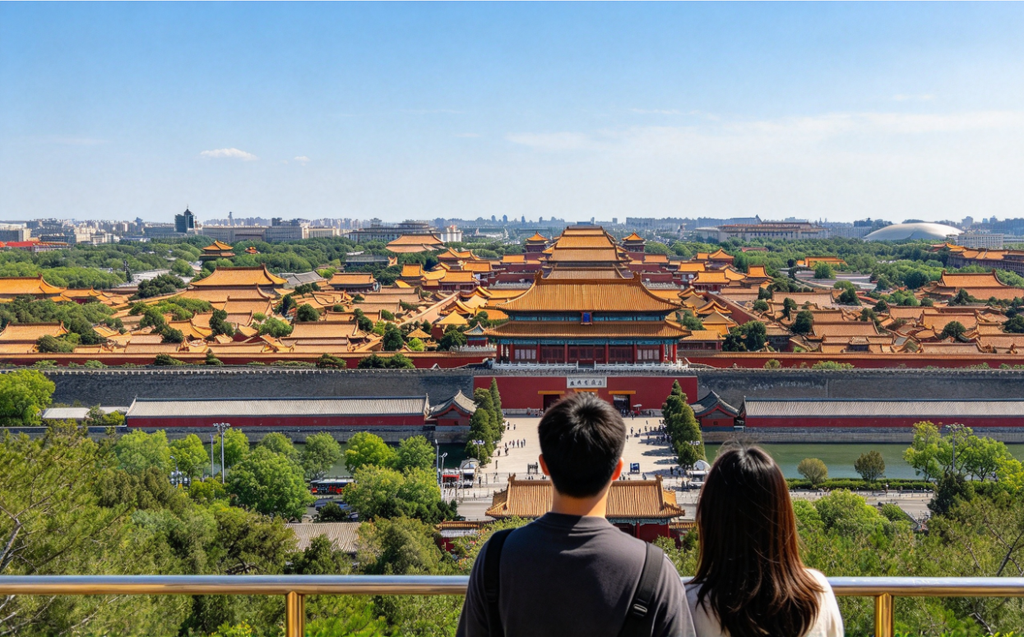
The Forbidden City is not a normal “one-hour attraction.”
The complex is extensive, historically dense, and physically demanding to walk through.
Visitors may spend several hours there depending on:
- interest in history
- photography
- crowds
- route
- exhibitions
- walking speed
- entry procedures
That means combining the Forbidden City with another enormous attraction immediately afterward can create a very long day.
A Forbidden City tour can therefore function as the day’s primary historical experience rather than simply one item on a long checklist.
This is an important distinction between visiting an attraction and experiencing it properly.
6. The Great Wall Is a Special Case
The Great Wall should usually be treated differently from an ordinary Beijing attraction.
The experience includes much more than the time spent standing on the Wall.
You also need to consider:
- transportation from central Beijing
- road conditions
- entrance procedures
- walking or hiking
- elevation changes
- photography
- rest periods
- transportation back to the city
This means a Great Wall tour is normally a full-day experience for visitors staying in central Beijing.
Trying to combine a substantial Great Wall visit with several major downtown attractions on the same day usually creates an unnecessarily compressed schedule.
The geographic distance alone changes the calculation.
7. Geographic Distance Changes Your Daily Capacity
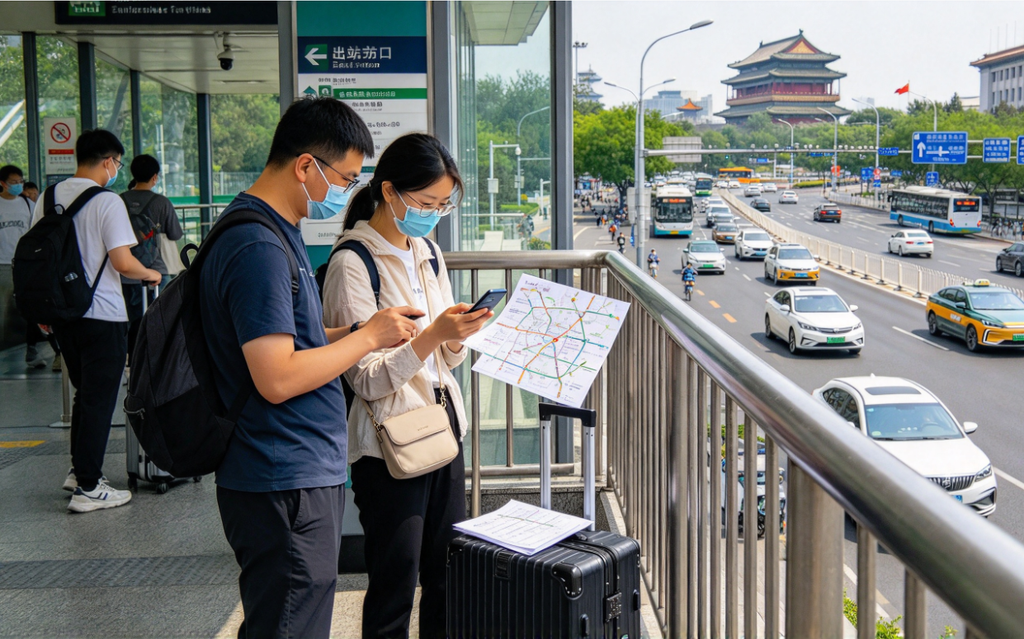
Beijing is enormous.
Two attractions may look relatively close when you view the city as a whole but still require substantial travel time.
Transportation involves more than the vehicle journey.
You may need to:
- walk to a station
- enter the station
- find the correct platform
- transfer
- leave the station
- walk to the attraction
- pass security
- find the entrance
The total door-to-door journey can therefore be significantly longer than the map distance suggests.
This is why attractions should usually be grouped geographically.
8. Think in Neighborhoods, Not Just Attractions
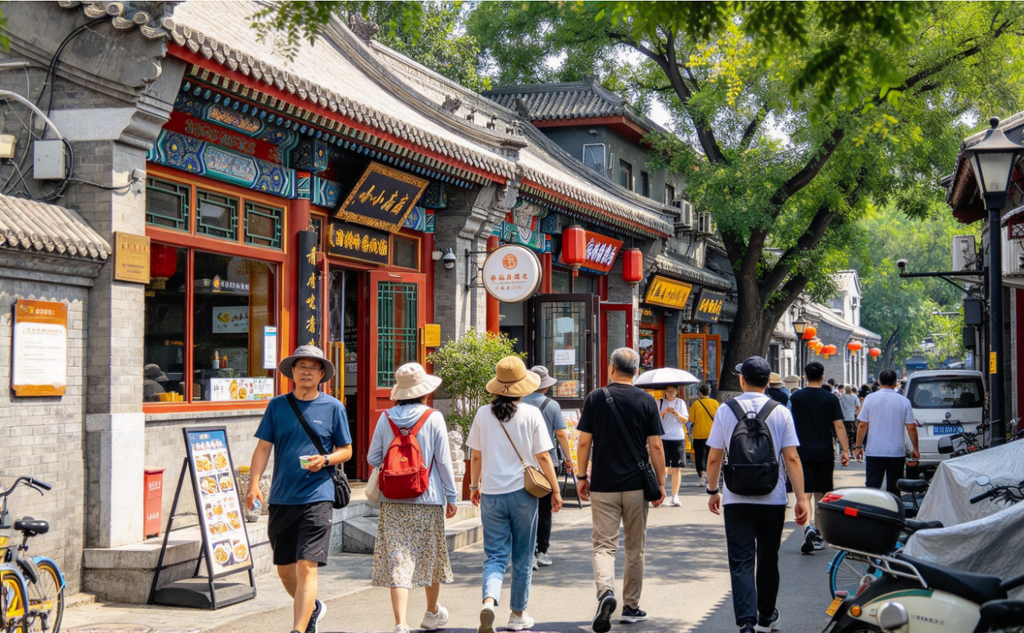
One of the most effective ways to increase sightseeing capacity without making the day exhausting is to reduce unnecessary movement.
Suppose you choose three attractions located in the same area.
You may spend much of the day sightseeing.
If you choose three attractions scattered across Beijing, a large portion of the day can disappear into transportation.
The number of attractions is identical.
The quality of the day is not.
This is why geographic clustering is more important than simply increasing the number of stops.
9. The “One Anchor” Principle
A strong Beijing day usually has one anchor attraction.
The anchor is the activity that determines the character and rhythm of the day.
Examples include:
- Forbidden City
- Great Wall
- Summer Palace
- major museum
- Temple of Heaven
Once the anchor is selected, add smaller experiences around it.
For example:
Anchor: Temple of Heaven
Supporting experiences: Qianmen + historic streets + local meal
Or:
Anchor: Forbidden City
Supporting experience: Jingshan Park or nearby historic area
The anchor gives the day structure without requiring every hour to be filled.
10. Why Two Major Attractions Can Be Too Much
Two major attractions may technically fit into one calendar day.
But “possible” does not mean “comfortable.”
Imagine:
8:00–12:00: Major attraction A
12:00–13:00: lunch
13:00–14:00: transportation
14:00–18:00: Major attraction B
You have created eight hours of activity before accounting for delays, walking, or dinner.
By the evening, many visitors will have very little energy left.
This is especially relevant when both attractions require extensive walking.
A schedule can be physically possible but still be poor travel design.
11. Walking Is Part of the Attraction
One of the biggest reasons visitors underestimate Beijing sightseeing capacity is that they calculate only the time spent “inside” attractions.
But Beijing sightseeing frequently involves substantial walking.
You may walk:
- inside palace complexes
- through parks
- between historical buildings
- through hutongs
- between subway stations and attractions
- up and down stairs
- along the Great Wall
Walking should therefore be treated as part of the day’s sightseeing budget.
A person who can comfortably walk 15 kilometers may have a very different daily capacity from someone who prefers shorter walking distances.
12. Your Physical Energy Is a Planning Resource
Time is not the only limited resource.
Energy matters too.
A schedule might technically contain enough hours for five attractions but still be unrealistic because the traveler becomes exhausted halfway through the day.
Consider the difference between:
Museum → museum → temple → historic district → shopping street
and:
Museum → lunch → park → relaxed dinner
The first may contain more attractions.
The second may produce a better travel experience.
A good itinerary should therefore manage energy density, not simply time.
13. Morning and Afternoon Do Not Have Equal Value
Your available energy changes throughout the day.
Morning is often the best time for:
- large historical sites
- museums
- long walking routes
- outdoor attractions
- major excursions
Afternoon can be used for:
- smaller attractions
- neighborhoods
- cafés
- shopping
- flexible activities
Evening can work well for:
- food
- entertainment
- relaxed neighborhood exploration
- night views
- short walks
This allows you to place the most demanding activity when your energy is highest.
14. Attraction Size Matters More Than Attraction Count
Consider two hypothetical days.
Day A
- Forbidden City
- small hutong walk
Day B
- small temple
- small museum
- historic street
- viewpoint
- local market
Day B contains twice as many attractions.
But Day A may require more physical and mental effort.
Therefore, a travel plan should not use attraction count as the primary measure of workload.
A better calculation combines:
size + duration + walking + transportation + complexity.
15. Some Attractions Have Hidden Time Costs
A museum may require:
- security screening
- bag checks
- timed admission
- entrance queues
A major palace complex may require:
- advance reservation
- identity verification
- controlled entry
- substantial walking
A popular scenic site may involve:
- shuttle transportation
- queues
- cable cars
- internal walking routes
These hidden steps reduce your actual daily sightseeing capacity.
When estimating how many attractions you can visit, include them.
16. Reservations Can Change Your Entire Day
Timed-entry attractions create a fixed point in your schedule.
For example:
10:00 reservation
means you cannot simply arrive whenever convenient.
That fixed time affects:
- breakfast
- hotel departure
- transportation
- previous attraction
- lunch
- following attraction
This is why reservations should be treated as anchors, not minor details.
If an attraction has a strict entry window, build the surrounding day around it rather than trying to squeeze it into an already crowded schedule.
17. What Is a Comfortable Number for Different Travelers?
There is no universal answer, but the following framework is useful.
Slow traveler
1–2 major experiences per day
Best for travelers who value depth, photography, food, and relaxed exploration.
Moderate traveler
1 major + 1–2 smaller attractions
This is often a comfortable structure for a first Beijing trip.
Fast traveler
2 major + 1 smaller attraction
Possible for experienced travelers with good transport planning and high energy.
Extremely fast traveler
4–6+ short stops
Possible when attractions are small and geographically concentrated, but this can turn the day into a checklist.
The key is that “four attractions” can represent four completely different workloads.
18. Families Need a Different Calculation
Traveling with children changes the daily capacity.
You may need additional time for:
- meals
- bathroom breaks
- snacks
- rest
- transportation
- unexpected delays
Children may also enjoy spending longer in one place rather than constantly moving.
A family itinerary therefore often benefits from fewer attractions with more flexible transitions.
The same principle applies to multigenerational groups.
Older travelers may prefer fewer stairs and shorter walking distances.
The itinerary should reflect the physical needs of the group.
19. Older Travelers Should Count Walking, Not Just Attractions
Beijing’s historical attractions can involve considerable walking.
A schedule that looks reasonable on paper may become tiring because of:
- large courtyards
- long paths
- stairs
- uneven surfaces
- subway transfers
- standing in queues
For older travelers, a day with two well-selected attractions can provide a richer experience than a five-attraction checklist.
Transportation can also be used strategically to reduce unnecessary walking between areas.
20. First-Time Visitors Often Overestimate Their Capacity
A common assumption is:
“I have twelve hours, so I can fill twelve hours.”
But sightseeing is not the same as working at a desk.
You need time for:
- eating
- resting
- navigating
- taking photographs
- waiting
- making decisions
- recovering from walking
A twelve-hour day may contain only six or seven hours of genuinely productive sightseeing.
Trying to convert every remaining minute into another attraction can make the entire day feel rushed.
21. Why “Nearby” Does Not Always Mean “Quick”
Two attractions can be geographically close but still require time to move between.
You may encounter:
- large entrance plazas
- security checks
- restricted gates
- one-way visitor routes
- underground passages
- long station exits
A map measures geographical distance.
It does not measure visitor movement.
This is particularly important around major historical attractions.
Always estimate the actual transfer from exit to entrance.
22. A Useful Daily Capacity Formula
You can estimate your realistic sightseeing capacity with a simple formula:
Available Day = Opening Hours − Meals − Transportation − Queues − Breaks − Buffers
Then divide the remaining time among attractions.
For example:
12 hours available
minus:
- 1.5 hours meals
- 2 hours transportation
- 1 hour buffers
- 1 hour breaks
leaves approximately:
6.5 hours of usable sightseeing time.
Six and a half hours does not necessarily mean six attractions.
One major attraction may consume three hours.
Two medium attractions may consume another three.
The remaining 30 minutes can disappear surprisingly quickly.
23. Use the “One Major + Two Supporting” Model
For many first-time visitors, one useful structure is:
One major attraction
The day’s main historical or cultural experience.
One supporting attraction
A smaller but related site nearby.
One flexible experience
Food, neighborhood walking, shopping, photography, or a short cultural stop.
For example:
Forbidden City → Jingshan → hutong dinner
This creates variety without requiring constant transportation.
The flexible component can also be removed if the major attraction takes longer than expected.
24. When Three Attractions Work Well
Three attractions can fit comfortably when:
- they are geographically close;
- at least one is relatively small;
- there are no excessive transportation transfers;
- entry procedures are manageable;
- the group has reasonable energy;
- meals are planned nearby.
For example:
Temple of Heaven → Qianmen → nearby historic streets
can create a coherent day because the experiences complement each other.
The important factor is not the number three.
It is the relationship between the three stops.
25. When Four or More Attractions Can Work
Four or more stops can work if most are short experiences.
For example:
- short temple
- neighborhood walk
- local market
- viewpoint
- dinner
These are not equivalent to four major attractions.
If every stop requires two or three hours, the schedule quickly becomes unrealistic.
The more attractions you add, the smaller each individual experience becomes.
At some point, the trip stops being sightseeing and becomes transportation between checkboxes.
26. The Problem With “See Everything”
Beijing contains far more attractions than any first-time visitor can realistically experience.
Trying to see everything creates three problems.
Problem 1: Reduced depth
You spend less time understanding each place.
Problem 2: Increased transportation
More attractions usually mean more movement.
Problem 3: Reduced flexibility
A delayed subway or longer lunch can disrupt the entire schedule.
The solution is not simply to wake up earlier.
It is to decide what deserves your limited attention.
27. Choose Experiences, Not Just Landmarks
A strong Beijing day can contain different types of experiences.
For example:
History: Forbidden City
Landscape: Jingshan
Local life: hutong
Food: neighborhood restaurant
This can feel much richer than visiting four similar historical buildings.
Variety also gives your mind a break.
After several hours of architecture and history, a meal or neighborhood walk can be more valuable than another museum.
28. How a Custom Trip Changes the Calculation
A custom Beijing trip can be structured around your group’s actual interests and physical pace rather than around a fixed list of attractions.
For example:
History-focused traveler
One major palace + one museum + historic neighborhood
Food-focused traveler
One major attraction + local market + food-focused neighborhood
Photography-focused traveler
One major site + viewpoints + streets with distinctive architecture
Family traveler
One major attraction + park + flexible evening
The number of attractions changes because the purpose of the day changes.
29. Great Wall Days Should Usually Be Different
A Great Wall day should normally be treated as its own category.
The experience involves:
- outbound transportation
- mountain roads
- entrance
- hiking
- photography
- rest
- return transportation
If you choose a demanding section, the walking alone can consume several hours.
Trying to return from the Wall and immediately visit two major downtown attractions may create a very long day.
For most visitors, the Wall deserves enough time to become the main experience rather than a rushed item between other attractions.
30. The Forbidden City Also Deserves Special Treatment
The Forbidden City has a different challenge from the Great Wall.
The problem is not primarily distance from central Beijing.
It is scale and historical density.
There are numerous buildings, courtyards, gates, collections, and architectural details.
Visitors who rush through may technically “see” the complex without absorbing much of it.
A longer visit can be worthwhile for travelers interested in imperial history.
This is why attraction count should never replace the question:
How much attention does this place deserve?
31. Transportation Can Add or Remove an Attraction
Imagine two versions of the same day.
Version A
Attraction 1 → 45-minute transfer → Attraction 2 → 60-minute transfer → Attraction 3
Version B
Attraction 1 → 10-minute walk → Attraction 2 → 15-minute walk → Attraction 3
The second day has much more usable sightseeing time.
Therefore, transportation efficiency can effectively create additional sightseeing capacity without extending the day.
This is one of the strongest reasons to group attractions geographically.
32. Lunch Is Not Dead Time
Do not assume lunch should be reduced to 15 minutes so you can fit another attraction into the schedule.
A meal can serve several purposes:
- nutrition
- rest
- cultural experience
- neighborhood exploration
- recovery from walking
In Beijing, food can also become part of the destination experience.
A local meal near the day’s attractions can make the transition between activities feel intentional rather than wasted.
33. Build a Cut-First List
A good itinerary should contain attractions that can be removed without damaging the day.
Divide your attractions into:
Essential
The experience you came specifically to see.
Important
You would like to visit it if time allows.
Optional
It is nice to have but not worth disrupting the schedule.
If the day starts running late, remove optional activities first.
This prevents one delay from destroying the entire itinerary.
34. Leave One Flexible Block
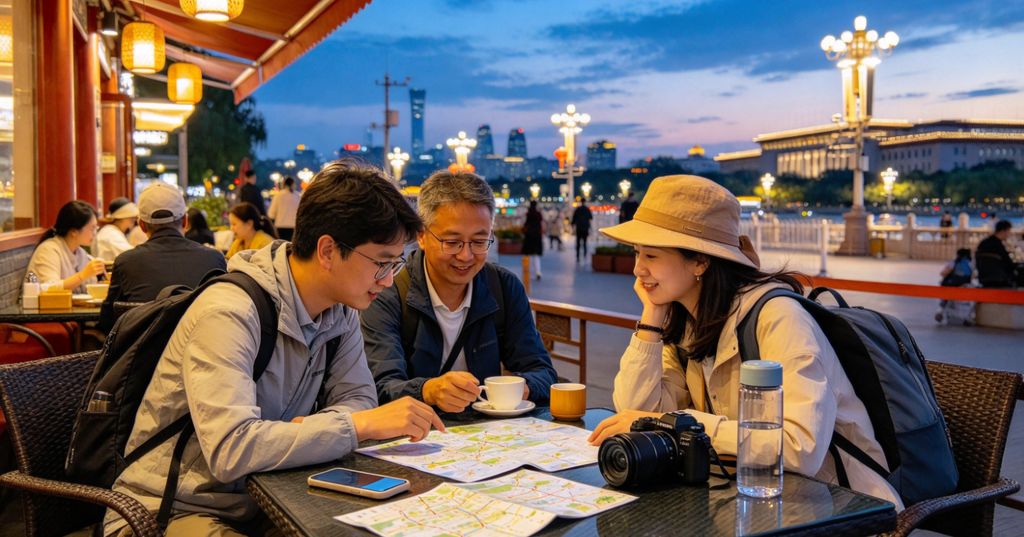
A flexible block might be:
16:00–18:00 — flexible
You can use it for:
- another attraction
- shopping
- coffee
- a neighborhood walk
- an extended museum visit
- rest at the hotel
This creates a powerful psychological benefit.
You are no longer racing the clock.
If everything goes smoothly, you can add something.
If the day becomes slower than expected, you already have space.
35. Why a Flexible Day Often Feels More Productive
This sounds counterintuitive.
A day with fewer scheduled attractions can actually produce more memorable experiences.
Why?
Because you have time to:
- stop when something interests you
- photograph details
- talk with locals
- explore a side street
- eat without rushing
- rest when tired
A rigid itinerary optimizes quantity.
A flexible itinerary can optimize attention.
For cultural travel, attention is often more valuable than raw attraction count.
36. How Weather Changes Your Daily Capacity
Beijing weather can affect how much sightseeing you can comfortably do outdoors.
Hot weather increases fatigue.
Cold weather can make long outdoor walks uncomfortable.
Rain can slow movement and affect photography.
Poor air conditions may also influence how much time you want to spend outdoors.
Therefore, your daily attraction capacity should remain adjustable.
If the weather is uncomfortable, replace a long outdoor activity with an indoor attraction rather than forcing the original schedule.
37. Seasonal Day Length Matters
Summer gives travelers more daylight.
Winter provides shorter daylight hours.
This does not necessarily mean you should simply add more attractions in summer.
Longer daylight can instead provide more flexibility.
For example:
Summer: major attraction → neighborhood walk → evening food
Winter: major attraction → museum → early dinner
The objective is not to maximize daylight.
It is to use daylight where it adds the most value.
38. How Many Attractions for a 3-Day Beijing Trip?
If you have only three days, resist the temptation to maximize attraction count.
A reasonable structure might be:
Day 1
Major historical attraction + nearby supporting sites
Day 2
Great Wall-focused day
Day 3
Temple, neighborhood, museum, or cultural experiences
The exact attractions can change according to interests.
The important principle is to give each day a distinct geographic and thematic identity.
39. How Many Attractions for a 5–7 Day Trip?
With more days, your daily capacity does not necessarily need to increase.
Instead, the pressure decreases.
You can spread major attractions across multiple days.
For example:
Day 1: Imperial history
Day 2: Great Wall
Day 3: Temple and historic neighborhoods
Day 4: Gardens and museums
Day 5: Flexible cultural day
Additional days can be used to deepen the experience rather than simply adding more landmarks.
40. The Difference Between “Visit” and “See”
This distinction is useful.
You can see an attraction in 20 minutes.
You can visit it in one or two hours.
You can experience it over several hours.
For example, a traveler might walk past a historical gate, take a photograph, and count it as a “visited attraction.”
Another traveler may spend an hour learning its history and exploring the surrounding area.
Both have technically visited.
But they are pursuing different travel goals.
Your daily attraction target should therefore reflect your preferred depth.
41. A Practical Daily Planning Template
Instead of starting with ten attraction names, start with this:
Morning: one major experience
Lunch: nearby
Afternoon: one medium or flexible experience
Late afternoon: optional short stop
Evening: food or neighborhood exploration
This structure leaves room for real-world travel.
It also prevents the common mistake of filling every hour with another ticketed attraction.
42. A More Precise Way to Calculate Your Day
Before confirming an attraction, estimate:
Visit time
How long will you actually spend there?
Entry time
Will you need security or ticket verification?
Transfer time
How long from the previous exit to this entrance?
Walking time
How much walking is involved?
Meal time
Where will you eat?
Recovery time
Will you need a break?
Buffer
What happens if something takes 30 minutes longer?
Add these together.
Only then can you determine whether another attraction realistically fits.
43. A Sample Comfortable Day
Consider a first-time visitor interested in imperial history.
8:30
Arrive at the main attraction.
8:30–12:00
Major historical visit.
12:00–13:00
Lunch nearby.
13:15–14:30
Supporting historical attraction.
14:30–15:00
Transfer.
15:00–16:30
Park or viewpoint.
16:30 onward
Flexible.
This is not a maximum-efficiency schedule.
That is precisely why it works.
If the main attraction takes longer, the flexible section absorbs the delay.
44. A Sample High-Energy Day
An experienced traveler with good stamina may choose:
Morning
Major attraction
Midday
Nearby medium attraction
Afternoon
Museum or historic district
Evening
Food-focused neighborhood
This can work when the attractions are geographically close and the traveler is comfortable with substantial walking.
But even here, the schedule should contain a cut-first option.
45. What Should You Never Do?
Avoid building a day like this:
08:00 attraction A
10:00 attraction B
12:00 attraction C
14:00 attraction D
16:00 attraction E
18:00 attraction F
This looks productive on paper.
In reality, every delay becomes a crisis.
A late breakfast affects attraction C.
A crowded entrance affects D.
A long transfer affects E.
By evening, the itinerary is already behind schedule.
A good travel day should have enough flexibility to survive ordinary delays.
46. How Many Attractions Should You Actually Aim For?
For most first-time visitors, a practical target is:
1 major attraction + 1–2 supporting experiences per day.
On a lighter day, that may mean only two attractions.
On a highly efficient day with small nearby attractions, it may become four or more.
For a Great Wall day, the Wall may effectively be the entire day’s major experience.
For a neighborhood-focused day, several small stops can work well.
The number is therefore a starting point, not a rule.
47. The Real Unit of Beijing Sightseeing
The real unit is not the attraction.
It is the experience block.
An experience block includes:
attraction + walking + transportation + waiting + food + recovery
Once you plan using experience blocks, your itinerary becomes much easier to balance.
Instead of asking:
“Can I add one more attraction?”
Ask:
“Can I add another two-hour experience block without making the day uncomfortable?”
That is a much better planning question.
48. Final Planning Framework
Before adding another attraction, ask six questions:
- How long will I actually spend there?
- How far is it from the previous stop?
- How much walking is involved?
- Does it require a reservation or fixed entry time?
- Will I still have enough energy afterward?
- What will I remove if something takes longer than expected?
If you cannot answer these questions, the attraction probably should not be added yet.
FAQ
How many attractions can you realistically visit in Beijing in one day?
For many first-time visitors, two to four attractions or experiences is a practical range, but the appropriate number depends heavily on attraction size, travel time, walking, and personal pace.
Can I visit five attractions in one day?
Yes, if several are small and geographically close. Five major attractions would generally create a much more demanding schedule.
Can I visit the Forbidden City and the Great Wall on the same day?
It may be technically possible in some circumstances, but it creates a very demanding schedule because both experiences require substantial time and the Great Wall is outside central Beijing.
How long should I spend at the Forbidden City?
Many visitors benefit from allowing several hours because of the complex’s size, walking requirements, and historical density.
Is the Great Wall a full-day attraction?
For many visitors traveling from central Beijing, yes. Transportation, entrance, hiking, photography, and the return journey can consume most of the day.
Should I visit more attractions or spend longer at each one?
That depends on your travel style. Travelers interested in history and culture may prefer fewer attractions with more time, while fast-paced travelers may prefer more short stops.
How can I see more attractions without making my day exhausting?
Group attractions geographically, select one major anchor, minimize unnecessary transfers, plan meals nearby, and keep one flexible block that can absorb delays.
Final Takeaway
So, how many attractions can you visit in Beijing in one day?
For most travelers, two to four meaningful experiences is a more useful target than trying to maximize the number of attraction names on a schedule.
One major attraction can easily consume several hours once you include entry procedures, walking, transportation, photography, and breaks. The Forbidden City and Great Wall are particularly important examples because they can function as the main experience of an entire day.
Smaller attractions can be combined more easily, especially when they are located within the same neighborhood.
The most efficient Beijing itinerary is therefore not necessarily the one with the highest attraction count.
It is the one that minimizes wasted transportation, matches the group’s energy, respects reservation times, and leaves enough flexibility to enjoy the places you actually came to see.
A custom Beijing trip can make this approach especially practical because the number and length of experiences can be adjusted around your interests rather than forcing every traveler into the same sightseeing rhythm.
When planning major historical attractions, remember that a Forbidden City tour and a Great Wall tour should not automatically be treated as ordinary two-hour stops. Their scale and logistics can change the entire capacity of the day.
Ultimately, think in terms of experience blocks rather than attraction counts.
One well-planned major experience, one complementary attraction, and enough time to eat, walk, rest, and explore spontaneously can create a much richer Beijing day than racing through six landmarks.
The goal is not to prove how many attractions you can visit.
It is to leave Beijing remembering what you actually experienced.