
What Should You Include in a Beijing Itinerary?
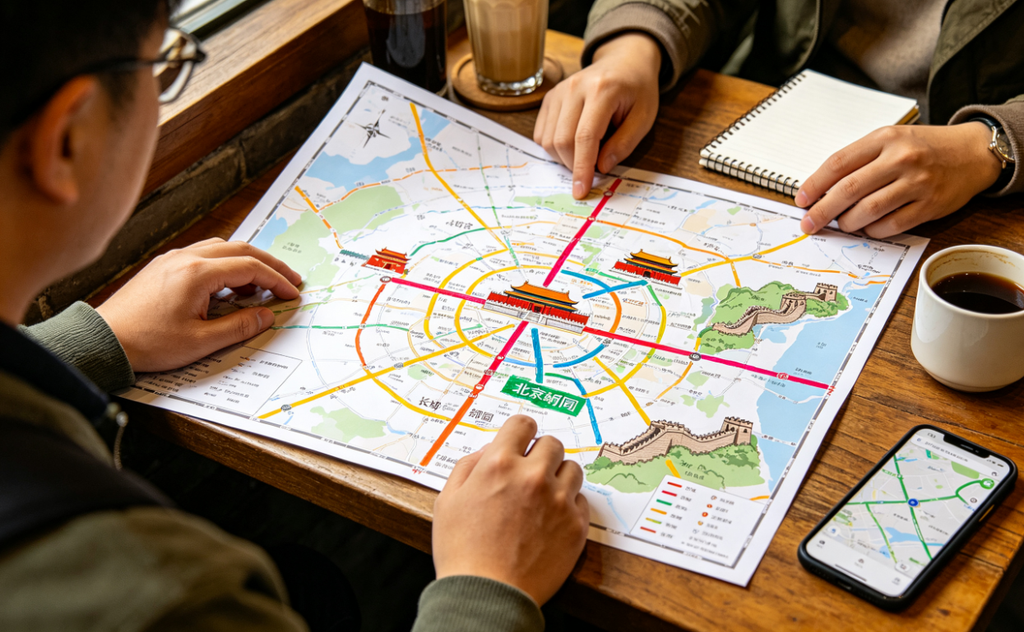
A good Beijing itinerary is not simply a list of famous attractions.
Beijing is a city where imperial architecture, ancient neighborhoods, religious sites, modern landmarks, museums, food culture, and mountain landscapes are spread across a large urban area. The Great Wall alone can turn one sightseeing day into a full-day excursion, while the historic core contains enough major sites to require careful sequencing.
That means what to include in a Beijing itinerary depends less on how many attractions you can collect and more on whether those attractions work together geographically, historically, and physically.
A well-designed itinerary should answer several practical questions:
- Which major landmarks are essential for your trip?
- Which attractions naturally belong together?
- Where should you leave time for walking and exploration?
- How should the Great Wall fit into the overall rhythm?
- When should you schedule museums and indoor attractions?
- How much time should be reserved for food and local neighborhoods?
- Which activities require advance reservations?
- Where should you deliberately leave empty space?
The goal is not maximum attraction count.
The goal is to create a trip in which each day has a clear character and the transition between experiences makes sense.
1. Start With the Core Historical Structure of Beijing
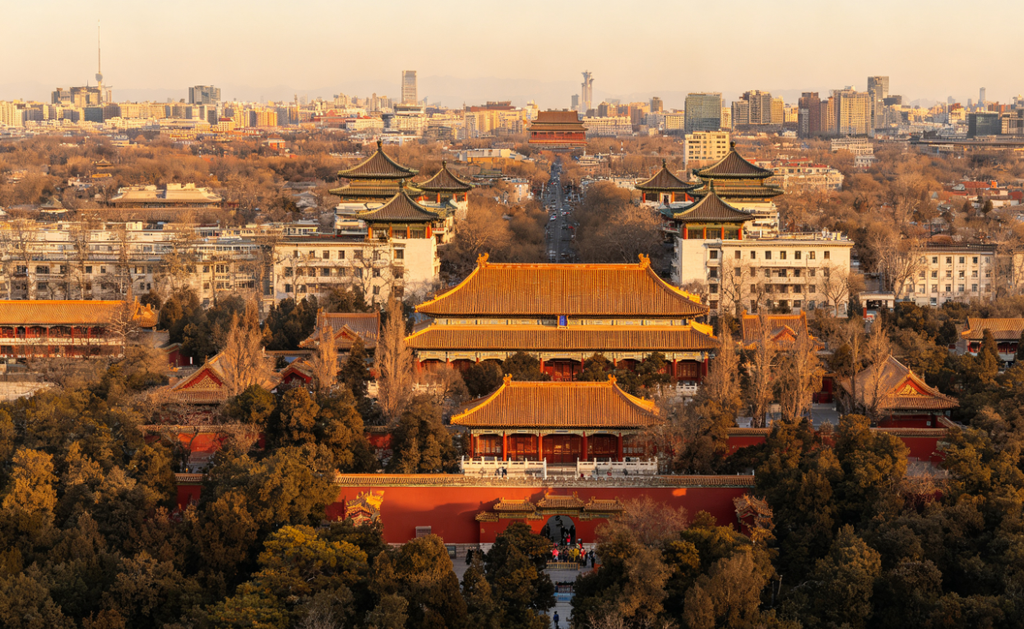
Before selecting individual attractions, understand the city’s historical geography.
Beijing’s traditional urban structure is strongly organized around its north-south Central Axis. The axis connects landmarks including the Bell and Drum Towers, Jingshan, the Palace Museum, Tian’anmen area, Zhengyangmen, and the Temple of Heaven. Beijing’s tourism authorities continue to develop walking routes around this historic structure.
This provides a useful framework for itinerary design.
Instead of treating every famous attraction as an isolated destination, group them according to their relationship with the city’s historic structure.
For example:
Imperial center
- Tian’anmen area
- Palace Museum
- Jingshan Park
- Imperial-era surroundings
Southern historic axis
- Qianmen
- Zhengyangmen
- Temple of Heaven
- Traditional commercial streets
Northern historic neighborhoods
- Bell and Drum Towers
- Hutongs
- Shichahai
- Nanluoguxiang area
This approach creates continuity.
A visitor does not simply move from “Attraction A” to “Attraction B.” They gradually understand how Beijing developed as an imperial capital.
2. Include the Forbidden City, But Give It Enough Context
For most first-time visitors, the Palace Museum, commonly known as the Forbidden City, deserves a substantial place in the itinerary.
The complex covers more than 720,000 square meters and was completed in 1420 during the Ming Dynasty. It was the imperial palace for the Ming and Qing dynasties.
The important planning question is not whether to include it.
It is what you put before and after it.
A rushed visit can reduce the Forbidden City to a sequence of courtyards, gates, and halls.
A better structure allows visitors to understand the larger imperial landscape.
For example:
Tian’anmen area → Forbidden City → Jingshan
This sequence has a geographical and visual logic.
Jingshan can also provide a different perspective on the enormous scale of the former imperial complex after the museum visit.
Should you book a Forbidden City tour?
A guided experience can be useful if your goal is historical interpretation rather than simply seeing the architecture.
A good Forbidden City tour should explain things such as:
- Why the complex has its particular layout
- How imperial space was divided
- What different halls were used for
- How architecture reflected hierarchy
- How Ming and Qing imperial life operated
- Why certain symbols and colors appear repeatedly
The guide should help turn architecture into a story.
However, travelers who prefer independent exploration may instead use an audio guide or official visitor information and spend more time photographing or observing details themselves.
3. Include the Great Wall as a Different Type of Experience
The Great Wall should not be treated as just another sightseeing stop.
It is geographically different from central Beijing and physically different from most city attractions.
A Great Wall day usually involves:
hotel → transportation → mountain area → Wall → return to Beijing
That makes it an excursion rather than a normal urban attraction.
Beijing has several visitor-accessible sections, including Badaling and Mutianyu. The official Beijing tourism information describes Mutianyu as a Ming Dynasty section with dense watchtowers, distinctive defensive structures, and extensive surrounding vegetation.
Badaling offers a different visitor experience and is located about 60 kilometers northwest of central Beijing. Current official information lists its opening hours and ticket arrangements separately from many central attractions.
Therefore, your itinerary should include one Great Wall section, not an attempt to see several sections in the same trip.
Match the Great Wall section to the traveler
When choosing a section, consider:
- Travel time
- Walking ability
- Desired scenery
- Crowds
- Cable car availability
- Photography priorities
- Interest in hiking
- Whether you want a guide
- How much of the day you want to spend outside the city
If history and interpretation matter, a knowledgeable Great Wall guide can add considerable value because the wall is easier to appreciate when visitors understand its defensive system, watchtowers, passes, and relationship with the surrounding landscape.
The key is to treat the Great Wall as a major experience with its own rhythm, rather than squeezing it between two unrelated city attractions.
4. Add at Least One Imperial Garden
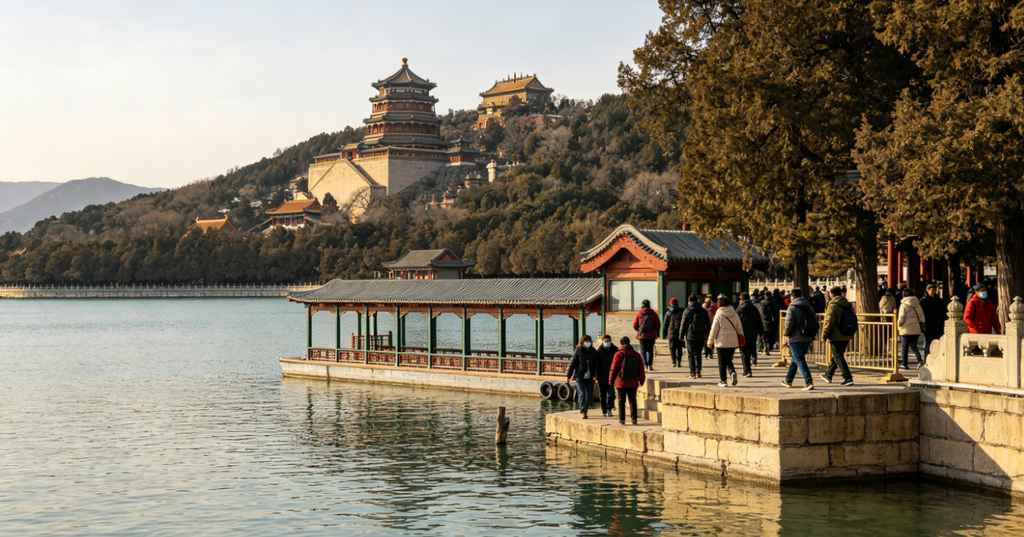
Beijing’s imperial experience should not consist entirely of palaces.
An imperial garden shows a different approach to power, landscape, architecture, and leisure.
The Summer Palace is particularly significant. Located in western Beijing, it combines Kunming Lake, Longevity Hill, gardens, pavilions, corridors, and palace structures. Beijing’s official tourism information describes it as the best-preserved imperial garden in China.
This makes it valuable for itinerary balance.
Compare the experiences:
Forbidden City: formal, axial, ceremonial, enclosed
Summer Palace: landscape-oriented, expansive, recreational
Putting these experiences on different days can prevent historical sightseeing from feeling repetitive.
The same principle applies to other garden and park experiences.
The itinerary should alternate between:
architecture → landscape → neighborhood → museum → outdoor excursion
rather than repeatedly scheduling monumental architecture.
5. Include the Temple of Heaven for a Different View of Imperial Culture
The Temple of Heaven adds another dimension to Beijing’s imperial history.
Unlike the Forbidden City, which focuses on imperial residence and administration, the Temple of Heaven was associated with imperial ceremonies of sacrifice and prayer for good harvests. Its architecture and spatial organization reflect traditional cosmological ideas.
This makes it especially useful when building a historical narrative.
Instead of presenting the city’s imperial sites as unrelated monuments, an itinerary can gradually introduce different functions:
Forbidden City → imperial residence and governance
Temple of Heaven → ritual and cosmology
Summer Palace → imperial landscape and leisure
Great Wall → military defense and frontier geography
Together, these experiences provide a much broader picture of imperial Beijing.
6. Leave Space for Hutongs and Local Neighborhoods
A Beijing itinerary that contains only monumental attractions can feel surprisingly incomplete.
The historic city is also experienced through its smaller-scale urban fabric:
- Hutongs
- Courtyard houses
- Traditional shops
- Local markets
- Neighborhood restaurants
- Small cultural venues
- Former residential districts
This part of the city should not necessarily be assigned a strict checklist.
Instead, allocate several hours to walking.
The current Beijing tourism program includes multiple themed walking routes around the Central Axis, including hutong areas, Bell and Drum Towers, Shichahai, Jingshan, Qianmen, and the Temple of Heaven area.
This reflects an important principle for itinerary design:
Some parts of Beijing are better experienced by moving slowly rather than by checking off individual attractions.
A hutong block does not need to compete with the Forbidden City for “importance.”
Its role is different.
It gives the traveler a sense of how people lived within the historic city.
7. Include at Least One Museum or Cultural Experience
Major landmarks explain Beijing’s physical history.
Museums can explain its intellectual, artistic, archaeological, and political history.
However, adding five museums to a short trip is usually unnecessary.
Instead, choose one that fills a gap in your understanding.
For example:
For Chinese history
Choose a major history-focused museum.
For art
Consider a museum or gallery centered on Chinese painting, ceramics, calligraphy, or contemporary art.
For archaeology
Choose a collection that provides deeper historical context.
For families
A museum with interactive or age-appropriate interpretation may be more useful than another monumental building.
The purpose of adding a museum is not to increase the attraction count.
It is to introduce a different information format into the trip.
After several hours of walking through historic architecture, an indoor museum can also provide a slower period of concentration and rest.
8. Include Food as Part of the Itinerary, Not an Afterthought
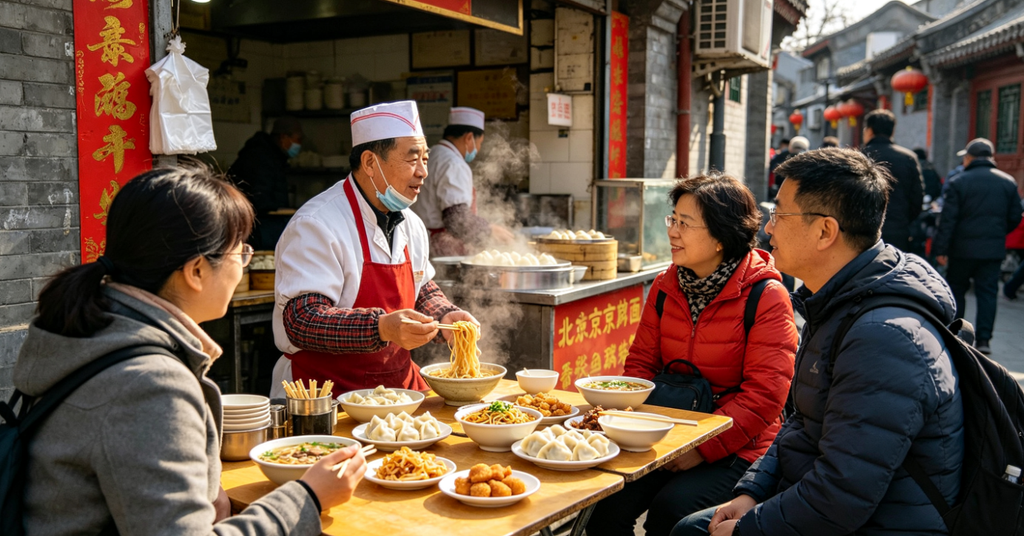
Food should occupy a real place in a Beijing itinerary.
That does not mean scheduling every meal months in advance.
Instead, identify a few food experiences that help explain the city.
Potential categories include:
- Beijing roast duck
- Beijing-style noodles
- Dumplings
- Traditional breakfast
- Hotpot
- Snacks and street foods
- Tea
- Local desserts
- Neighborhood restaurants
More importantly, consider where you eat.
A restaurant near the Forbidden City is not automatically the best place to experience Beijing food.
Sometimes it makes more sense to combine a meal with the neighborhood you are already exploring.
For example:
morning sightseeing → neighborhood lunch → afternoon walking
is often more natural than:
morning sightseeing → cross the entire city for lunch → return to the original area
Food should support the geography of the itinerary.
9. Build Around Geographic Clusters
One of the most important principles when deciding what to include in a Beijing itinerary is geographic clustering.
Beijing is large enough that poor grouping can turn a culturally interesting day into a transportation-heavy day.
Think in zones.
Central historic Beijing
Potential components:
- Tian’anmen
- Forbidden City
- Jingshan
- Wangfujing
- Imperial-era sites
Southern historic Beijing
Potential components:
- Qianmen
- Dashilar
- Temple of Heaven
- Traditional commercial streets
Northern historic neighborhoods
Potential components:
- Bell and Drum Towers
- Hutongs
- Shichahai
- Nanluoguxiang
Western Beijing
Potential components:
- Summer Palace
- Yuanmingyuan
- Other university or garden areas
Northern suburban Beijing
Potential components:
- Great Wall
- Mountain landscapes
- Selected rural or cultural experiences
These zones should not become rigid boundaries.
They are planning tools.
The purpose is to reduce unnecessary cross-city movement while allowing the itinerary to tell a coherent story.
10. Include Different Energy Levels
A strong itinerary is not only geographically efficient.
It is physically sustainable.
Consider the difference between:
High-energy day
Great Wall hiking, long walks, stairs, outdoor exposure
Medium-energy day
Forbidden City, historical streets, museums
Low-energy day
Garden, café, shopping, neighborhood walk, cultural performance
Avoid placing several high-energy days consecutively.
For example:
Great Wall → relaxed neighborhood day → major historical site
may feel much better than:
Great Wall → Temple of Heaven → Forbidden City → long hutong walk
even if the second schedule technically fits.
Travelers often remember the quality of their experience more than the number of attractions they visited.
11. Include Transportation as Part of the Itinerary
Transportation should not appear as a separate technical problem.
It should be built into the itinerary itself.
For every major activity, consider:
Where am I starting?
Where am I going?
How long is the practical transfer?
How much walking happens after arrival?
What happens if I leave later than expected?
For central Beijing, the subway can work well for many journeys. For distant excursions, especially the Great Wall, private transportation or organized transportation may become more useful depending on the traveler.
This is where the difference between independent travel and Beijing private tours becomes relevant.
A private tour can reduce the coordination burden for geographically dispersed experiences, while independent travel gives travelers more control over pace and spontaneous changes.
Neither needs to define the entire trip.
A hybrid itinerary can work particularly well:
independent city exploration + guided Great Wall experience + independent neighborhood time
This allows travelers to use professional support where interpretation or logistics are more demanding while keeping simpler parts of the trip flexible.
12. Include Free Time Deliberately
Free time should not be whatever remains after everything else has been booked.
It should be an intentional component.
For example, a day might contain:
Morning: major attraction
Lunch: local restaurant
Afternoon: flexible neighborhood exploration
Evening: optional food or cultural activity
The afternoon does not need three additional attractions.
That empty space allows you to:
- Stop at an interesting shop
- Take photographs
- Sit in a café
- Explore a side street
- Spend longer at a museum
- Recover from jet lag
- Change plans according to weather
This flexibility becomes especially valuable on longer trips.
13. Add One Modern Side of Beijing
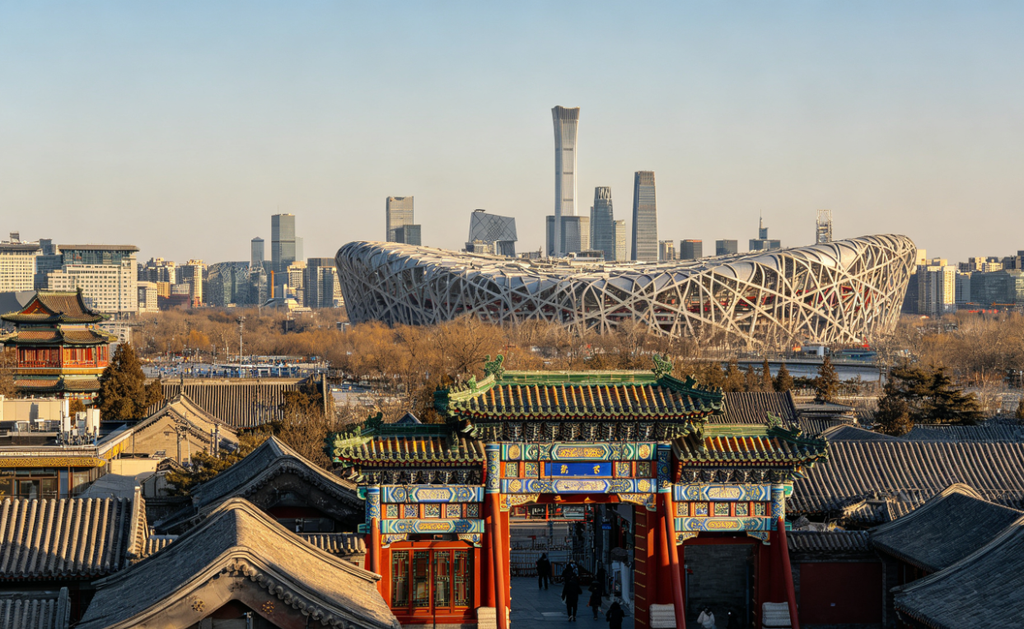
An itinerary focused exclusively on imperial history can create a distorted picture of contemporary Beijing.
The city also contains:
- Olympic architecture
- Contemporary art districts
- Modern shopping areas
- Design spaces
- Technology companies
- Contemporary restaurants
- Modern urban parks
A short modern-Beijing component can provide contrast.
The purpose is not to visit every modern landmark.
It is to show that Beijing is simultaneously:
an imperial capital, a historic residential city, and a modern global metropolis.
Contrast often creates a stronger sense of place than adding another similar historical attraction.
14. Include a Weather-Resistant Component
Outdoor attractions should not be the only foundation of your itinerary.
Every trip should have at least a few activities that can work under less-than-ideal weather.
Outdoor options
- Great Wall
- Parks
- Hutong walks
- Temple complexes
- City photography
Weather-resistant options
- Museums
- Shopping areas
- Indoor cultural experiences
- Food experiences
- Galleries
- Tea houses
This creates an important distinction between a fixed itinerary and a flexible itinerary.
The attractions may remain the same, but their order can change.
For example:
clear day → Great Wall
poor weather → museum + indoor cultural experience
Then switch the two when conditions improve.
15. Consider the Trip’s Narrative
The strongest itineraries often have a narrative.
Instead of:
Palace → temple → wall → museum → shopping → garden
think:
How did Beijing become an imperial capital, how did the imperial system shape the city, how did people live around it, and how has the city evolved into the modern capital?
This changes how you choose attractions.
A possible narrative could be:
Chapter 1 — The Imperial Center
Forbidden City and surrounding Central Axis landmarks
Chapter 2 — Ritual and Power
Temple of Heaven and other imperial institutions
Chapter 3 — Life Beyond the Palace
Hutongs, markets, traditional neighborhoods
Chapter 4 — Defense and the Frontier
Great Wall and surrounding mountains
Chapter 5 — Imperial Landscape
Summer Palace and gardens
Chapter 6 — Contemporary Beijing
Modern architecture, food, art, and urban life
This structure gives the traveler something more valuable than a checklist.
It provides a mental model of the city.
16. Match the Content to the Number of Days
The same categories do not need equal space.
For 2–3 days
Prioritize:
- Imperial center
- One traditional neighborhood
- One major cultural site
- Great Wall if it is a top priority
Do not attempt to cover every district.
For 4–5 days
You can add:
- Temple of Heaven
- Summer Palace
- More hutong time
- Museum or cultural experience
- Modern Beijing
This is enough time to create meaningful contrast between different sides of the city.
For 6–7 days
You can slow down.
Add:
- Additional museums
- More neighborhood exploration
- A second cultural theme
- More food experiences
- Flexible half-days
- A less-touristed area
- Additional time for photography or shopping
The key change is not simply adding attractions.
It is increasing depth.
17. Use a “Must, Should, Could” System
A useful way to prevent overloading the itinerary is to classify activities before assigning them to days.
Must
Experiences you would genuinely regret missing.
Examples:
- Great Wall
- Forbidden City
- One major historical experience
Should
Experiences that strongly interest you but can be moved.
Examples:
- Summer Palace
- Temple of Heaven
- Museum
- Hutong exploration
Could
Optional additions.
Examples:
- Shopping
- Additional museums
- Extra parks
- Cafés
- Photography locations
This system creates flexibility without making the itinerary vague.
If the weather changes or you become tired, remove a “Could” activity first.
18. Do Not Make Every Day Look the Same
An itinerary becomes tiring when every day follows the same pattern:
large attraction → large attraction → large attraction → dinner
Instead, create variation.
For example:
| Day type | Main experience |
|---|---|
| Imperial | Palace and historic architecture |
| Outdoor | Great Wall and mountain scenery |
| Cultural | Museum and traditional neighborhoods |
| Landscape | Imperial garden and parks |
| Local | Hutongs, food, markets |
| Modern | Contemporary Beijing |
This produces a more balanced trip even when the traveler visits many famous places.
19. The Ideal Itinerary Is a System, Not a Checklist
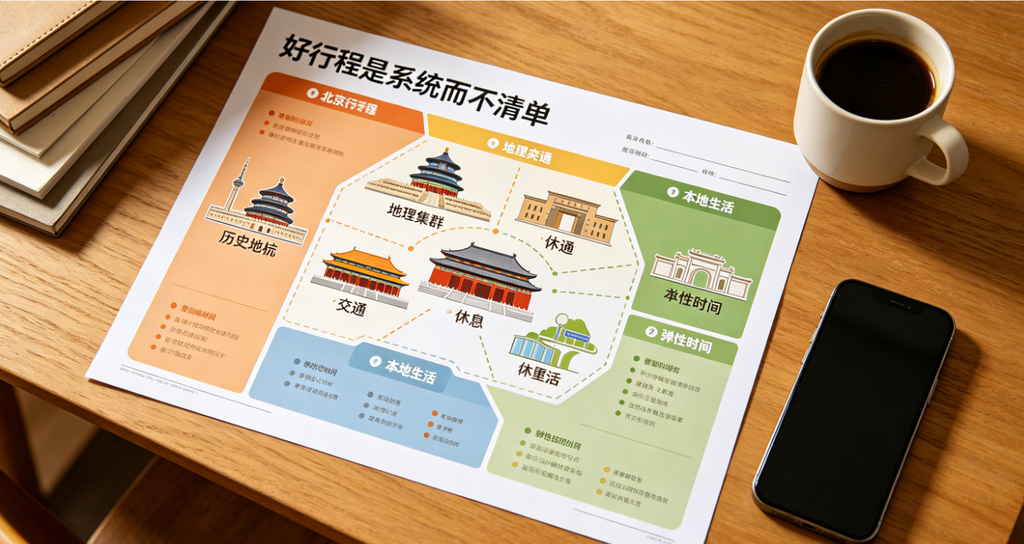
Ultimately, what to include in a Beijing itinerary is not just a question of which attractions deserve a place.
A complete itinerary should contain several interconnected layers:
Layer 1 — Major landmarks
The places that define Beijing’s historical identity.
Layer 2 — Geographic structure
Groups of attractions that make sense together.
Layer 3 — Cultural interpretation
Guides, museums, historical context, and local experiences.
Layer 4 — Physical rhythm
Walking, transportation, meals, rest, and recovery.
Layer 5 — Local life
Hutongs, food, markets, neighborhoods, and everyday experiences.
Layer 6 — Flexibility
Open time and alternative activities for weather or unexpected changes.
Layer 7 — Practical logistics
Reservations, transportation, opening times, and realistic transfer time.
If one of these layers is missing, the itinerary can still look impressive on paper but feel inconvenient once you are actually in Beijing.
A Practical Beijing Itinerary Planning Checklist
Before finalizing your plan, ask:
Attractions
- Have I included at least one major imperial site?
- Have I included the Great Wall if it is important to me?
- Have I included a garden or landscape experience?
- Have I included at least one museum or cultural activity?
- Have I included time in a traditional neighborhood?
- Have I included something representing modern Beijing?
Geography
- Are most daily activities reasonably close together?
- Have I avoided unnecessary cross-city journeys?
- Have I treated the Great Wall as a separate excursion?
Pace
- Are there too many high-energy days in a row?
- Does every day have enough time for meals and transfers?
- Have I left genuinely free time?
Flexibility
- Do I have an indoor alternative for important outdoor activities?
- Which activities can be moved?
- Which reservations are fixed?
Experience
- Does the trip explain Beijing as a city rather than simply display famous attractions?
- Will I experience both historic landmarks and everyday neighborhoods?
- Does the itinerary reflect my interests rather than someone else’s checklist?
Final Takeaway
A strong Beijing itinerary should combine landmarks, geography, history, local life, food, transportation, physical pacing, and flexibility.
The most important attractions—such as the Forbidden City, Great Wall, Temple of Heaven, and Summer Palace—provide the historical framework, but they should not become the entire trip. Beijing’s hutongs, food culture, museums, gardens, modern districts, and everyday streets provide the context that turns a sightseeing schedule into a more complete experience.
The best approach is to build the itinerary around themes and geographic clusters, then add practical details such as transportation, reservations, meals, and rest.
That way, you are not simply asking:
“How many places can I visit?”
You are asking:
“What combination of experiences will help me understand Beijing?”
That is the foundation of a well-designed trip.