
What Food Is Beijing Famous For? 12 Must-Try Foods for First-Time Visitors
Quick Answer
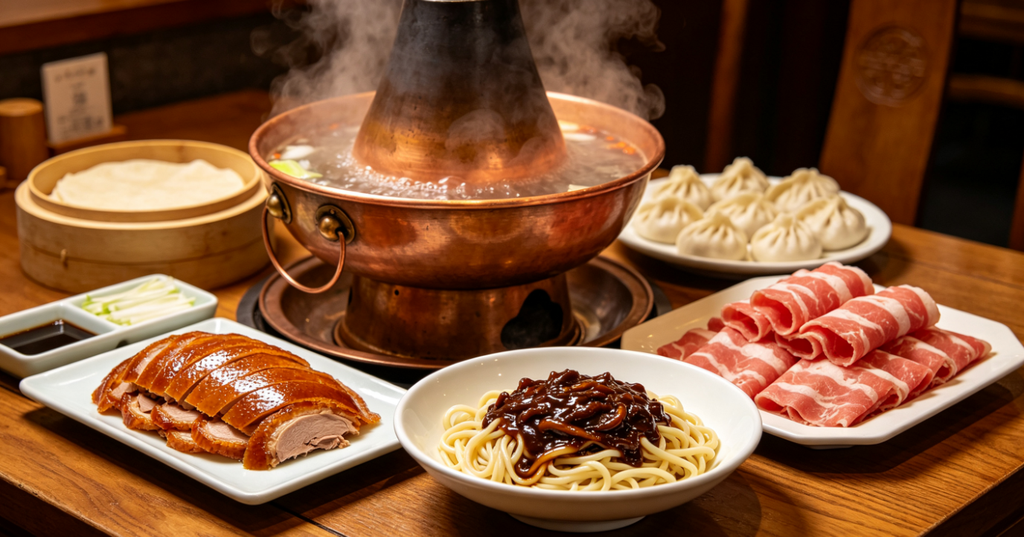
What food is Beijing famous for?
Beijing is best known for Peking duck, but its food culture goes far beyond one famous dish.
The capital’s culinary identity includes roasted meats, hand-pulled and hand-cut noodles, dumplings, savory pancakes, traditional snacks, fermented sauces, pastries and dishes influenced by centuries of migration and imperial cuisine.
Some of the most representative foods to try include:
- Peking duck
- Zhajiangmian
- Beijing-style hotpot
- Jiaozi
- Bao du
- Jingjiang rousi
- Douzhi
- Jianjiao
- Tanghulu
- Lvdagun
- Beijing-style pastries
- Traditional Beijing breakfast foods
The important thing is that Beijing food isn’t defined by one flavor.
It combines wheat-based staples, roasted meats, fermented sauces, hearty noodles and traditional snacks, reflecting both northern Chinese food traditions and Beijing’s history as an imperial capital.
For first-time visitors, the best approach is to experience Beijing food across several meals rather than trying to find everything in one restaurant.
1. Peking Duck: Beijing’s Most Famous Dish
If you only have time to try one iconic Beijing food, Peking duck is the obvious starting point.
The dish is famous for its thin, crisp skin and carefully roasted duck.
Traditionally, the duck is sliced and served with accompaniments such as:
- Thin pancakes
- Sweet bean sauce
- Cucumber
- Scallions
The combination is what makes the dish distinctive.
You place the duck inside a pancake, add sauce and vegetables, then wrap everything together.
But the experience is about more than the final bite.
A good Peking duck restaurant often makes the preparation part of the dining experience. The duck may be carved in front of diners, with attention paid to the ratio of crispy skin, meat and fat.
Why Is Peking Duck So Important to Beijing?
Peking duck has a long association with Beijing’s restaurant culture and imperial culinary traditions.
Over time, it developed from a court-associated food into one of the city’s most recognizable dishes.
Today, different restaurants have their own approaches to:
- Roasting
- Seasoning
- Carving
- Sauce
- Pancakes
- Side dishes
This means that “trying Peking duck” isn’t necessarily one identical experience.
For visitors, it can be useful to think of it as both a dish and a dining tradition.
2. Zhajiangmian: Beijing’s Signature Noodle Dish
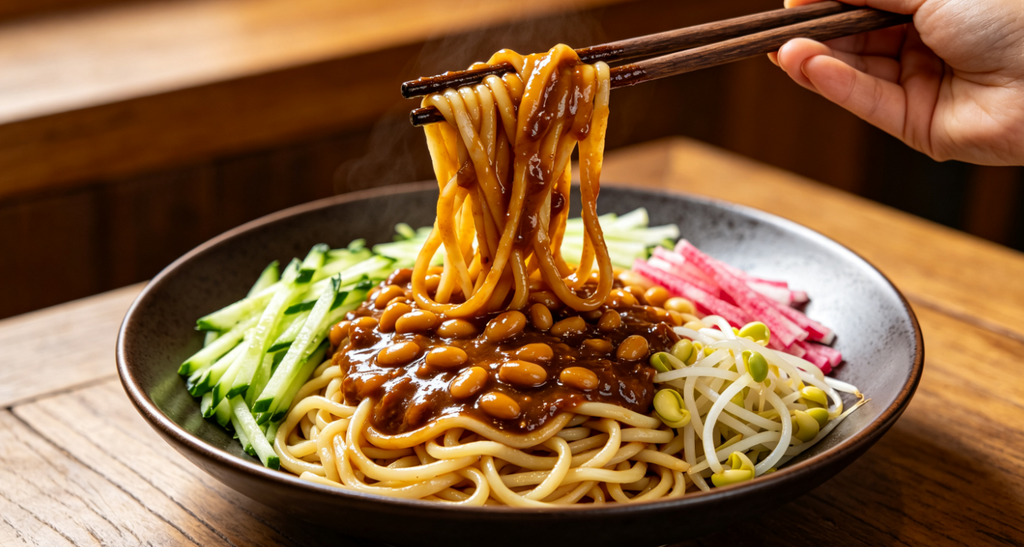
Another important answer to what food is Beijing famous for is zhajiangmian.
The dish consists of noodles served with a savory fermented soybean-based sauce and a selection of vegetables.
Typical toppings may include:
- Cucumber
- Bean sprouts
- Radish
- Soybeans
- Other seasonal vegetables
The ingredients are mixed together before eating.
Unlike spicy Sichuan noodles, zhajiangmian usually emphasizes savory, fermented and slightly sweet flavors.
It is also a useful introduction to northern Chinese wheat-based food traditions.
Why Zhajiangmian Is Different From Many Western Noodle Dishes
The sauce is the key.
Instead of relying primarily on chili oil, broth or a simple soy-based seasoning, zhajiangmian gets much of its character from fermented bean paste.
That creates a deeper and more concentrated flavor.
The vegetables provide freshness and texture, balancing the rich sauce.
For travelers who enjoy noodles, this is one of the easiest Beijing dishes to add to a food-focused itinerary.
3. Beijing-Style Hotpot
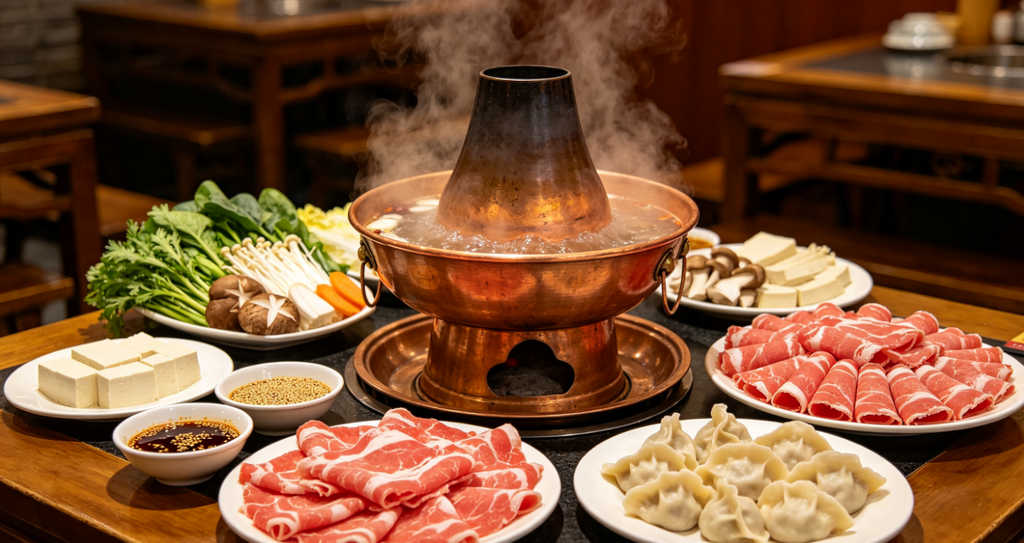
Hotpot is popular throughout China, but Beijing has its own distinctive tradition.
Traditional Beijing hotpot is strongly associated with copper pots and charcoal heating, although modern restaurants may use other heating systems.
The ingredients are often relatively simple.
You may find:
- Thinly sliced mutton
- Beef
- Tofu
- Vegetables
- Mushrooms
- Noodles
The dipping sauce is particularly important.
A traditional Beijing-style sauce can be based around sesame paste and other seasonings.
This produces a very different experience from spicy Sichuan hotpot.
4. Jiaozi: Dumplings With Northern Roots
Dumplings are eaten throughout China, but they have an especially strong place in northern Chinese food culture.
Beijing visitors can encounter jiaozi in restaurants, neighborhood eateries and family-style dining establishments.
Fillings can include:
- Pork
- Beef
- Lamb
- Chives
- Cabbage
- Shrimp
- Seasonal vegetables
They can be boiled, steamed or pan-fried.
Dumplings are also associated with family gatherings and important occasions, which gives them cultural significance beyond being a convenient meal.
5. Jingjiang Rousi
Jingjiang rousi is a northern Chinese dish made with shredded pork and a savory-sweet sauce.
It is traditionally served with thin pancakes or wrappers.
The dish offers a good example of Beijing and northern Chinese cooking’s preference for:
savory + sweet + wheat-based wrappers
It is often eaten as part of a shared meal rather than as a standalone dish.
For visitors traveling in groups, this style of dining makes it easy to sample several dishes at once.
6. Bao Du
Bao du is a traditional Beijing food made from cleaned and prepared beef or lamb tripe.
It is generally cooked quickly and served with a dipping sauce.
The texture is central to the experience.
It can be:
- Firm
- Crisp
- Chewy
Bao du is a good example of how traditional Beijing cuisine includes ingredients that may be unfamiliar to international visitors.
You don’t have to try every traditional dish, but foods like this reveal a different side of the city’s culinary history.
7. Douzhi: Beijing’s Most Unusual Traditional Drink
If you want to explore traditional Beijing food culture beyond familiar dishes, douzhi is worth knowing about.
Douzhi is a fermented mung bean drink with a distinctive sour aroma and flavor.
It is strongly associated with traditional Beijing breakfast culture.
For visitors unfamiliar with fermented foods, the taste can be surprising.
That’s actually part of its appeal.
Trying douzhi isn’t necessarily about deciding whether it tastes “good” immediately.
It is about experiencing a food that has been part of Beijing’s traditional culinary identity for generations.
8. Jianjiao
Jianjiao, or Beijing-style fried dumplings, offers a more approachable introduction to traditional northern Chinese flavors.
The dumplings are pan-fried, creating a crisp exterior while retaining a softer filling.
Depending on the restaurant, fillings can include:
- Pork
- Vegetables
- Chives
- Other meat or vegetable combinations
If you like dumplings but prefer a crisp texture, this is an easy dish to try.
9. Beijing Breakfast Foods
Beijing’s food culture is not limited to dinner.
Breakfast is an important part of daily life, and traditional breakfast foods provide a different view of the city.
You may encounter:
- Jianbing
- Baozi
- Youtiao
- Douzhi
- Tea eggs
- Noodles
- Savory pancakes
One of the best ways to experience this side of Beijing is to eat in the morning rather than relying entirely on hotel breakfast.
Local breakfast shops often serve food quickly and inexpensively.
10. Jianbing
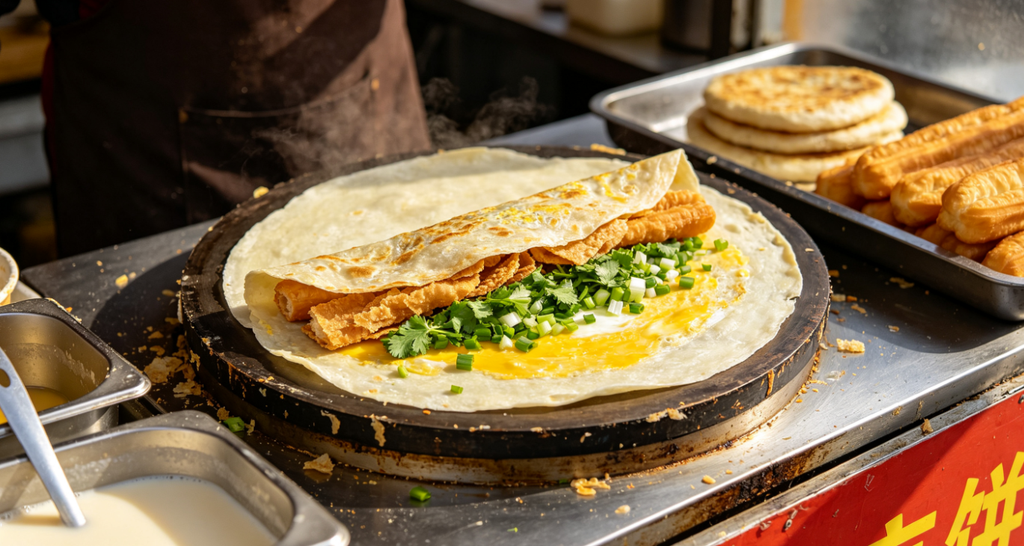
Jianbing is a popular Chinese savory crepe-style breakfast.
A thin batter is spread on a hot surface, then combined with ingredients such as:
- Egg
- Scallions
- Cilantro
- Sauce
- Crispy elements
The result is portable, filling and full of contrasting textures.
Although versions of jianbing can be found across China, eating it as part of a Beijing morning is an easy way to experience local street-food culture.
11. Traditional Beijing Desserts and Snacks
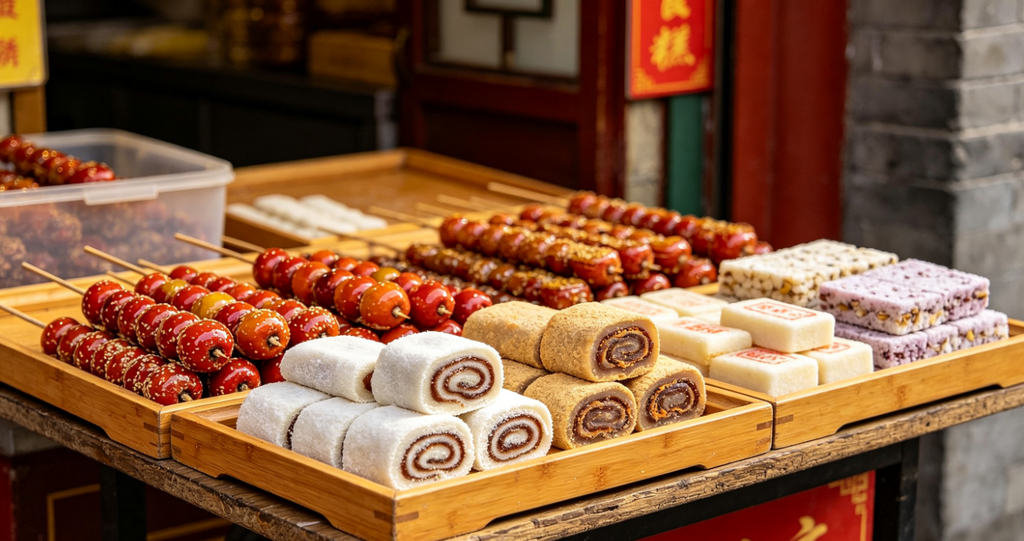
Beijing’s traditional snack culture includes many sweet foods that don’t receive as much international attention as Peking duck.
Examples include:
Lvdagun
A traditional glutinous rice-based snack associated with Beijing.
Tanghulu
Candied fruit on skewers, traditionally made with hawthorn but now available in many varieties.
Beijing-Style Pastries
Traditional pastries have been influenced by northern Chinese and imperial culinary traditions.
These foods are particularly useful for travelers who want to explore Beijing beyond restaurant meals.
12. Beijing-Style Pastries
Traditional pastries were historically important in Beijing’s culinary culture.
They can include different combinations of:
- Flour
- Nuts
- Seeds
- Beans
- Sugar
- Dried fruit
Some are associated with traditional festivals or tea culture.
Rather than looking for one universally famous pastry, visitors can explore local bakeries and traditional food shops to discover different regional styles.
What Makes Beijing Food Different?
Understanding what food is Beijing famous for becomes easier when you understand the geography and history behind the cuisine.
Beijing sits in northern China, where wheat has historically played an important role in everyday food.
As a result, traditional Beijing cuisine includes many:
- Noodles
- Dumplings
- Pancakes
- Breads
- Pastries
At the same time, Beijing’s status as an imperial capital brought culinary influences from different regions.
The result is a food culture that combines northern staples, imperial traditions and ingredients from across China.
Is Beijing Food Spicy?
Generally, Beijing cuisine is not known for extreme spiciness.
This is an important distinction for travelers who associate Chinese cuisine primarily with Sichuan or Hunan food.
Beijing dishes more commonly emphasize:
- Savory flavors
- Fermentation
- Roasted aromas
- Soy-based sauces
- Sesame
- Sweet-and-savory combinations
Of course, modern Beijing restaurants offer cuisines from throughout China, including very spicy dishes.
But traditional Beijing food itself is not defined by chili heat.
Why Northern Chinese Cuisine Uses So Much Wheat
Rice is strongly associated with southern Chinese cuisine, while northern China has historically relied more heavily on wheat.
This geographical difference influenced Beijing’s culinary traditions.
Wheat became the foundation for foods such as:
- Noodles
- Dumplings
- Pancakes
- Steamed buns
- Pastries
This is why a Beijing food experience can feel quite different from visiting cities in southern China.
How Beijing’s Imperial History Influenced Food
Beijing was the capital of several major Chinese dynasties.
The imperial court attracted chefs, ingredients and culinary traditions from different parts of China.
This helped create a sophisticated food culture in the capital.
But Beijing food isn’t only imperial cuisine.
The city also developed a strong everyday food culture based on:
- Neighborhood restaurants
- Breakfast stalls
- Noodle shops
- Dumpling restaurants
- Traditional snack vendors
Understanding both sides gives you a more complete picture.
Street Food vs. Restaurant Food
First-time visitors often wonder whether they should focus on street food or restaurants.
The answer is:
Try both, but for different reasons.
Restaurants
Better for:
- Peking duck
- Hotpot
- Shared dishes
- Formal dining
- Regional specialties
Street and Casual Food
Better for:
- Breakfast
- Jianbing
- Snacks
- Dumplings
- Quick local meals
A good Beijing food experience shouldn’t consist entirely of expensive restaurants.
Some of the most interesting everyday foods are inexpensive and casual.
How to Order Beijing Food If You Don’t Speak Chinese
You don’t need to speak Chinese to explore Beijing’s food scene.
However, preparation helps.
Before going to a restaurant, save:
- Dish names
- Chinese characters
- Photos
- Dietary restrictions
- Allergy information
For unfamiliar dishes, photos can be especially useful.
If a menu has pictures, you can also use them to identify dishes visually.
How Many Beijing Foods Should You Try?
Don’t try to turn your trip into a checklist.
Instead, aim for variety.
A good food-focused trip could include:
1 famous roast meat
1 noodle dish
1 dumpling or pancake
1 traditional snack
1 local breakfast
1 hotpot meal
This gives you a much better understanding of Beijing’s food culture than eating Peking duck five times.
A One-Day Beijing Food Plan
If you’re short on time, you can still experience several local foods.
Breakfast
Jianbing + soy milk or another traditional breakfast drink.
Lunch
Zhajiangmian or dumplings.
Afternoon Snack
Tanghulu or a traditional pastry.
Dinner
Peking duck or Beijing-style hotpot.
This provides four different types of food experiences in one day without making the schedule excessively complicated.
A Three-Day Food Strategy
If you have three days, spread the experience out.
Day 1 — Classic Beijing
- Peking duck
- Zhajiangmian
- Traditional pastry
Day 2 — Local Everyday Food
- Jianbing breakfast
- Dumplings
- Street snacks
Day 3 — Traditional Flavors
- Beijing-style hotpot
- Bao du or another traditional dish
- Local dessert
This approach prevents every meal from feeling similar.
How Food Fits Into Your Beijing Itinerary
Food should not be treated as something you do only after sightseeing.
It can actually help determine your daily route.
For example:
Morning attraction → local lunch → nearby neighborhood → afternoon sightseeing → dinner
is often more efficient than crossing Beijing simply to reach a famous restaurant.
When planning a custom Beijing trip, consider where you want to eat at the same time you decide which attractions to visit.
This reduces unnecessary travel and gives you more time to explore neighborhoods.
Where Should You Eat in Beijing?
There isn’t one single “best food street” that everyone needs to visit.
Different neighborhoods offer different experiences.
You may want:
Historic Neighborhoods
For traditional foods and hutong atmosphere.
Commercial Areas
For famous restaurants and modern dining.
Residential Neighborhoods
For everyday local meals.
Tourist Areas
For convenience and accessibility.
The best choice depends on whether you prioritize authenticity, convenience, atmosphere or a particular dish.
Should You Eat at Famous Restaurants?
Famous restaurants can be worth visiting, particularly for dishes such as Peking duck.
But popularity doesn’t automatically mean that a restaurant will match your preferences.
Consider:
- Waiting time
- Price
- Location
- Portion size
- Dining style
- Reviews
- Reservation requirements
Sometimes a small neighborhood restaurant can provide a more relaxed experience.
How Much Should You Budget for Food?
Beijing has a wide range of dining prices.
You can eat very cheaply at breakfast shops and casual noodle restaurants.
At the other end of the spectrum, high-end restaurants can be considerably more expensive.
A useful strategy is to mix:
affordable local meals + one or two special dining experiences.
This allows you to explore more dishes without making food one of the largest parts of your travel budget.
What Foods Should Vegetarians Look For?
Vegetarian travelers can still find plenty to eat in Beijing.
Options may include:
- Vegetable dumplings
- Stir-fried vegetables
- Tofu dishes
- Vegetable noodles
- Mushroom dishes
- Vegetarian restaurants
However, some dishes that appear vegetarian may contain meat-based stock or other animal ingredients.
If this matters to you, communicate your requirements clearly when ordering.
What Should First-Time Visitors Avoid?
You don’t need to avoid traditional foods simply because they’re unfamiliar.
But be cautious about trying too many unusual dishes in one meal.
A better strategy is:
one familiar dish + one new dish.
For example:
Zhajiangmian + bao du
or
dumplings + a traditional snack
This makes experimentation easier.
The Biggest Mistake Tourists Make With Beijing Food
The biggest mistake is reducing Beijing cuisine to Peking duck.
Peking duck deserves its reputation, but it represents only one part of the city’s food culture.
If you only eat famous restaurant dishes, you miss:
- Breakfast culture
- Noodle traditions
- Dumplings
- Hutong snacks
- Traditional desserts
- Fermented foods
- Everyday neighborhood dining
The most memorable food experiences often happen when you combine famous dishes with ordinary local meals.
How to Explore Beijing Food Like a Local
Instead of asking:
“Where is the most famous restaurant?”
try asking:
“What do people in this neighborhood actually eat?”
Look for restaurants that specialize in one or two dishes.
A small noodle shop may tell you more about everyday Beijing food culture than an enormous tourist restaurant.
Likewise, a neighborhood breakfast shop can reveal more about daily life than a carefully designed tourist food experience.
A Practical Beijing Food Checklist
For a first trip, consider trying at least:
- Peking duck
- Zhajiangmian
- Beijing-style hotpot
- Dumplings
- Jianbing
- A traditional Beijing snack
- A traditional pastry
- One unfamiliar local dish
- A neighborhood breakfast
You don’t have to complete the entire list.
The goal is variety rather than quantity.
How to Build a Food-Focused Beijing Trip
If food is one of your main reasons for visiting Beijing, organize your trip around food categories rather than individual restaurants.
For example:
Day 1
Imperial Beijing + Peking duck
Day 2
Hutongs + traditional snacks + noodles
Day 3
Local neighborhood + dumplings + hotpot
This approach creates a more coherent culinary experience.
You can also use a Beijing local dishes resource to identify additional traditional foods worth adding based on your interests.
Final Takeaway
So, what food is Beijing famous for?
Peking duck may be the city’s most internationally famous dish, but Beijing’s food culture is much broader.
Its culinary identity is shaped by northern China’s wheat-based traditions, centuries of imperial history and the everyday food culture that developed around the capital.
For a first visit, start with the classics:
Peking duck → zhajiangmian → dumplings → Beijing-style hotpot → jianbing → traditional snacks.
Then go beyond the famous dishes.
Try a neighborhood breakfast.
Order something you’ve never heard of.
Explore a small noodle shop.
Taste a traditional snack.
That combination of famous food + everyday food + unfamiliar local flavors will give you a much deeper understanding of Beijing than simply checking famous restaurants off a list.
And if you’re planning your itinerary around food, don’t separate dining from sightseeing. Build meals into your daily route, choose restaurants near the areas you’re exploring, and leave enough time to enjoy the meal rather than treating it as another item on a checklist.
For a first-time visitor, that’s the real secret to experiencing Beijing food well.