
Beijing Food Guide: 10 Local Dishes to Try First
Quick Answer
If you’re visiting Beijing for the first time, knowing which Beijing local dishes to try can make your trip much more rewarding.
Start with the city’s best-known specialties—Peking duck, Zhajiangmian, jianbing, dumplings, baozi, Beijing-style hotpot, lamb skewers, and traditional snacks—but don’t stop at famous restaurant dishes.
Beijing’s food culture is closely connected to its history as China’s imperial capital, its northern Chinese culinary traditions, its Muslim communities, and the everyday life of its hutongs and neighborhoods.
For a first trip, the most useful approach is to experience several types of food:
- A classic Peking duck dinner
- A bowl of Beijing-style noodles
- A local breakfast
- Dumplings or baozi
- Beijing-style hotpot
- Traditional snacks
- A casual neighborhood meal
This gives you a much more complete picture of what Beijing tastes like than simply visiting one famous restaurant.
What Makes Beijing Food Different?
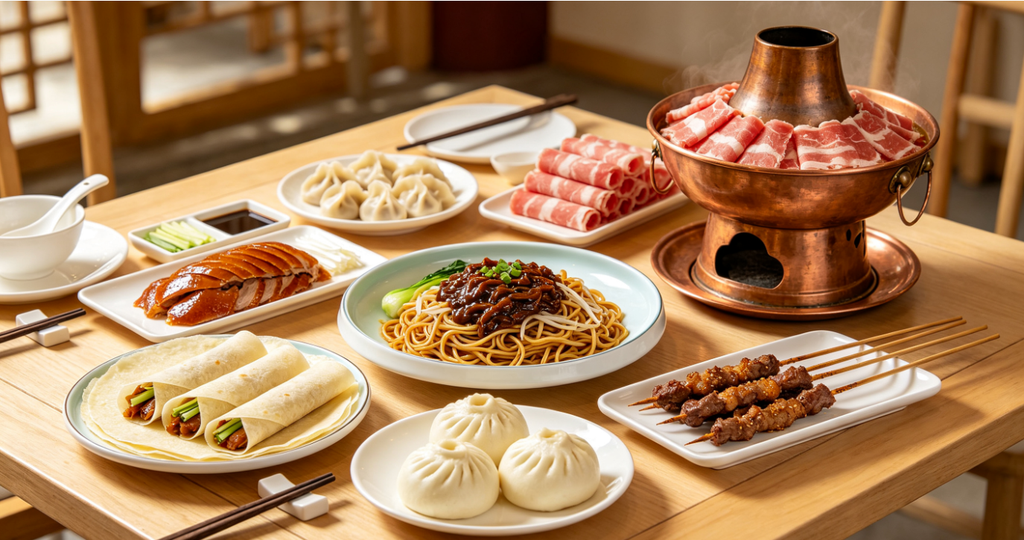
Beijing is not defined by one single cooking style.
Its food culture developed over centuries as the capital of imperial China and as a major northern Chinese city. The result is a cuisine that combines wheat-based staples, roasted meats, noodles, fermented sauces, lamb, seasonal vegetables, and influences from different communities.
You will notice several characteristics when eating in Beijing.
Wheat is Important
Northern China’s climate historically favored wheat more than the rice-dominated food traditions associated with many southern regions.
As a result, noodles, dumplings, steamed buns, pancakes and other wheat-based foods are central to everyday eating.
Savory and Fermented Flavors
Sauces made with fermented soybean products appear in several traditional dishes.
Zhajiangmian is the most obvious example.
Lamb and Mutton Have a Strong Tradition
Lamb features prominently in Beijing-style hotpot and other northern dishes.
The city’s Muslim culinary traditions have also contributed significantly to Beijing’s food landscape.
Imperial Cuisine Influenced Restaurant Culture
Beijing’s role as an imperial capital helped develop sophisticated cooking traditions and elaborate restaurant dishes.
Peking duck is perhaps the most internationally recognizable result.
1. Peking Duck
No first-time visit to Beijing would be complete without considering Peking duck.
The dish is famous for its thin, crisp skin and carefully roasted meat, traditionally served with pancakes, scallions, cucumber and sweet bean sauce.
The meal is also interactive.
You place the ingredients inside a pancake, fold it and eat it by hand.
That makes Peking duck especially enjoyable for families and travelers who want more than a conventional restaurant meal.
What Should You Look For?
A good Peking duck experience is about balance rather than simply maximum crispiness.
Look for:
- Thin, crisp skin
- Tender meat
- Fresh pancakes
- Properly prepared garnishes
- Balanced sauce
- Skilled slicing
At established restaurants, the duck may be sliced in front of diners.
Watching the chef turn a whole roasted duck into thin, uniform slices is part of the experience.
How Much Should You Order?
For groups, a whole duck is generally more practical than individual servings.
Some restaurants also use the remaining meat or bones in another preparation, giving diners more than one way to experience the same ingredient.
2. Zhajiangmian
Zhajiangmian is one of the most representative everyday noodle dishes associated with Beijing.
It consists of wheat noodles combined with a savory fermented soybean-based sauce and a selection of fresh vegetables.
Typical toppings can include:
- Cucumber
- Bean sprouts
- Radish
- Carrots
- Soybeans
- Other seasonal vegetables
The flavor is rich, salty and fermented.
It may be very different from noodle dishes visitors are familiar with, but that difference is exactly why it deserves a place on a first-time food itinerary.
How Is It Served?
The ingredients are generally arranged over the noodles.
You mix the sauce, noodles and vegetables together before eating.
Start with a modest amount of sauce if you’re unfamiliar with the flavor. You can always add more.
This is a useful approach to many traditional dishes:
Try a little first, then adjust to your taste.
3. Jianbing
Jianbing is one of Beijing’s most recognizable breakfast foods.
It is a savory crepe made on a hot griddle, usually with ingredients such as:
- Egg
- Scallions
- Savory sauces
- Crispy components
- Herbs or vegetables
The preparation is almost as interesting as the finished food.
A vendor spreads the batter across the hot surface, adds an egg, layers the fillings and folds everything into a portable breakfast.
Why Try Jianbing in the Morning?
Eating jianbing early in the day lets you experience Beijing differently from a restaurant-focused food tour.
You’ll see:
- Office workers buying breakfast
- Students heading to school
- Vendors preparing food quickly
- Residents eating on their way to work
For travelers interested in everyday city life, this can be one of the most authentic food experiences of the trip.
4. Dumplings
Dumplings are found throughout China, so they aren’t uniquely Beijing.
Nevertheless, they are an excellent choice for first-time visitors because they are familiar, versatile and easy to share.
You may find dumplings that are:
- Boiled
- Steamed
- Pan-fried
Common fillings include:
- Pork
- Beef
- Lamb
- Shrimp
- Vegetables
- Mixed fillings
For families, dumplings are particularly convenient because different people can choose different fillings.
They also work well as a quick lunch between sightseeing stops.
5. Baozi
Baozi are steamed buns filled with meat or vegetables.
They are particularly common as a breakfast or quick meal.
Compared with a formal Peking duck dinner, baozi offers a much simpler view of Beijing’s everyday food culture.
You can eat them:
- At breakfast
- As a snack
- As a quick lunch
- Alongside other dishes
Try them in the morning when neighborhood shops are busy.
The experience is not just about the food. It is also about observing how locals start their day.
6. Beijing-Style Hotpot
Beijing-style hotpot is another dish worth prioritizing.
Traditional versions are closely associated with thinly sliced lamb cooked in a relatively simple broth.
This makes it quite different from hotpot styles that rely on heavily seasoned or spicy broths.
Common ingredients include:
- Lamb
- Beef
- Vegetables
- Tofu
- Mushrooms
- Noodles
The dipping sauce is an important part of the meal, with sesame-based sauces commonly associated with northern hotpot traditions.
Why Is Hotpot Good for Groups?
Hotpot is naturally social.
Instead of receiving a finished dish, everyone cooks ingredients at the table.
That makes it particularly suitable for:
- Families
- Couples
- Groups of friends
- Travelers who want to try several ingredients
If traveling with young children, remember that the cooking pot and surrounding equipment can become very hot.
7. Lamb Skewers
Lamb skewers offer another perspective on northern Chinese food traditions.
They are commonly seasoned with:
- Cumin
- Chili
- Salt
- Other spices
The combination of grilled lamb, smoky aroma and cumin makes them particularly popular as an evening snack or casual meal.
They also reflect the broader influence of northern and Muslim culinary traditions in Beijing.
If you enjoy grilled meat, this is a dish worth looking for beyond the city’s more famous imperial-style foods.
8. Jianjiao and Other Traditional Snacks
Beijing has a long tradition of small snacks and inexpensive street-style foods.
Depending on where you travel, you may encounter:
- Savory pancakes
- Fried dough foods
- Rice-based snacks
- Traditional pastries
- Steamed snacks
- Sweet treats
Rather than trying to find every traditional snack, choose a few that fit naturally into your sightseeing route.
This prevents food exploration from becoming another checklist.
9. Tanghulu
Tanghulu is one of the easiest traditional snacks for first-time visitors to recognize.
It consists of fruit coated in a hardened sugar shell.
The contrast between:
crisp sugar + fresh fruit
makes it especially popular with children.
Traditional versions often use hawthorn, although other fruits are also commonly used today.
Because tanghulu is portable, it works well as a snack while exploring historic streets or neighborhoods.
10. Beijing Breakfast
Breakfast deserves its own place in any serious discussion of Beijing local dishes.
Many visitors focus on dinner because they associate travel with famous restaurants.
But breakfast provides a different view of the city.
Depending on the neighborhood, you may find:
- Jianbing
- Baozi
- Soy milk
- Fried dough sticks
- Noodles
- Savory pancakes
- Simple pastries
The atmosphere can be just as interesting as the food.
A breakfast stall may be full of local residents rather than international tourists.
That makes morning food one of the easiest ways to experience everyday Beijing.
Beyond the Famous Dishes: Understanding Beijing Food Culture
One important mistake is assuming that Beijing food means only Peking duck.
It doesn’t.
Beijing’s culinary identity is connected to several layers of history.
Imperial Beijing
The city’s centuries as an imperial capital influenced formal restaurant cuisine, presentation and roasted meat traditions.
Northern Chinese Food
Noodles, dumplings, pancakes and other wheat-based foods are deeply connected to northern Chinese culinary traditions.
Muslim Food Culture
Beijing’s Muslim communities have contributed important dishes and restaurant traditions, particularly involving lamb, beef and noodles.
Hutong Food Culture
Historic neighborhoods preserve a different side of eating in Beijing.
Small restaurants and neighborhood shops provide a glimpse into everyday dining rather than ceremonial or luxury cuisine.
Understanding these layers makes eating in Beijing much more interesting.
Where Should You Eat in Beijing?
There is no single “best” type of restaurant.
The best choice depends on what you want from the meal.
Traditional Specialty Restaurants
Choose these for dishes such as:
- Peking duck
- Beijing-style hotpot
- Traditional Beijing cuisine
They are particularly appropriate for a special dinner.
Neighborhood Restaurants
These are useful for:
- Noodles
- Dumplings
- Baozi
- Simple stir-fries
- Everyday meals
They can provide a more casual view of local food culture.
Hutong Restaurants
Eating in or around a historic hutong allows you to combine food with architecture and neighborhood exploration.
If you want to connect food with local history and traditional neighborhoods, Beijing cultural tours can be a useful way to experience the city beyond its major monuments.
How to Choose a Restaurant
You don’t need to find the restaurant with the highest online rating.
Instead, consider several practical signals.
Look at What People Are Ordering
If most tables are ordering the same specialty, it may be worth trying.
Consider Restaurant Specialization
A restaurant known for one dish can sometimes be a better choice than a huge menu covering multiple unrelated cuisines.
Check the Menu Before Sitting Down
Photos can make ordering easier if you don’t speak Chinese.
Don’t Assume Expensive Means Better
Some of the most memorable Beijing meals are inexpensive everyday foods.
At the same time, certain dishes such as Peking duck can be worth paying more for when preparation quality matters.
What Should First-Time Visitors Eat for Breakfast, Lunch and Dinner?
Instead of trying to eat every dish in one day, distribute them throughout your trip.
Breakfast
Try:
- Jianbing
- Baozi
- Soy milk
- Fried dough sticks
Lunch
Try:
- Zhajiangmian
- Dumplings
- Simple Beijing dishes
Dinner
Try:
- Peking duck
- Beijing-style hotpot
- Lamb dishes
Snacks
Try:
- Tanghulu
- Traditional pastries
- Local street snacks
This creates much more variety without requiring complicated planning.
How to Add Food to Your Beijing Itinerary
Food should be part of your travel planning rather than something added at the last minute.
For example:
Morning sightseeing → local lunch → afternoon attraction → neighborhood dinner
is often more efficient than crossing Beijing several times to reach restaurants.
You can also match food with the type of attraction you’re visiting.
Historic Center
Combine major imperial attractions with a traditional restaurant.
Hutong Area
Plan a slower walking route followed by a neighborhood meal.
Great Wall Day
Keep lunch practical and return to Beijing for a more substantial dinner.
Relaxed Day
Use the day to explore markets, snacks and local neighborhoods.
If you want sightseeing, restaurants, transportation and rest periods to work together, a custom Beijing itinerary can be built around your family’s interests and preferred pace.
A Sample Food Plan for a 5-Day Beijing Trip
| Day | Breakfast | Lunch | Dinner |
|---|---|---|---|
| Day 1 | Jianbing | Zhajiangmian | Peking duck |
| Day 2 | Baozi | Dumplings | Beijing hotpot |
| Day 3 | Local breakfast | Neighborhood dishes | Hutong restaurant |
| Day 4 | Jianbing | Noodles | Lamb dishes |
| Day 5 | Baozi or pancakes | Local restaurant | Favorite meal again |
You don’t have to follow this schedule exactly.
The goal is simply to avoid eating the same type of food every day.
Food for Families With Children
Beijing can be very easy to navigate from a food perspective if you don’t expect children to eat exactly like adults.
Start with familiar textures and gradually introduce stronger flavors.
Good options often include:
- Dumplings
- Baozi
- Noodles
- Peking duck pancakes
- Grilled meat
- Simple rice dishes
For unfamiliar foods, order one portion to share rather than ordering a full meal for each person.
Let Children Choose
Giving children limited choices can make food exploration much easier.
For example:
“Do you want dumplings or noodles?”
is often more successful than:
“You have to try this.”
The objective is to make local food part of the adventure.
Vegetarian and Dietary Considerations
Travelers with dietary restrictions should plan more carefully.
Some dishes that appear to contain only vegetables may use:
- Meat stock
- Animal fat
- Meat-based sauces
- Small amounts of meat
If you have a serious allergy or strict dietary requirement, communicate it clearly and confirm ingredients with restaurant staff.
Beijing also has vegetarian restaurants and a wide range of international cuisines, so you don’t need to rely exclusively on traditional dishes.
What If You Don’t Eat Pork?
Pork is common in Chinese cuisine, but Beijing has many alternatives.
Consider:
- Beef
- Lamb
- Chicken
- Seafood
- Vegetarian dishes
- Muslim restaurants
Lamb-based dishes can be particularly interesting because they connect naturally with Beijing’s northern culinary traditions.
How Much Should You Budget for Food?
Beijing has an enormous range of dining prices.
You can eat relatively inexpensively at breakfast stalls and neighborhood restaurants, while specialty restaurants and premium Peking duck establishments can cost considerably more.
A useful strategy is to combine:
low-cost local meals + mid-range restaurants + one or two special meals
This gives you variety without making every meal expensive.
Don’t Chase “Authenticity” at the Expense of Enjoyment
Another common mistake is becoming too focused on finding the “most authentic” restaurant.
A small neighborhood restaurant can offer a wonderful experience.
But a well-established restaurant serving Peking duck can also provide an excellent introduction to the dish.
Authenticity isn’t simply determined by:
- How old the building looks
- How difficult the restaurant is to find
- Whether tourists eat there
- Whether the menu is in Chinese only
What matters more is food quality, preparation, ingredients, local relevance and whether the experience fits what you want from your trip.
How to Explore Beijing Food Like a Local
If you really want to understand Beijing’s food culture, pay attention to the context around the meal.
Try breakfast early.
Walk through a neighborhood before dinner.
Visit a local market.
Watch how food is prepared.
Share several dishes instead of ordering only one.
Notice what local customers order.
Ask about ingredients.
These small observations often tell you more about Beijing food culture than a list of “top 10 restaurants.”
For broader information on attractions, transportation, neighborhoods and practical planning, our Beijing travel guide can help you connect food experiences with the rest of your trip.
A Better First-Time Food Strategy
If your Beijing trip is short, don’t try to eat everything.
Instead, aim for five different food experiences:
1. One Iconic Dish
Peking duck
2. One Everyday Local Meal
Zhajiangmian or dumplings
3. One Local Breakfast
Jianbing or baozi
4. One Social Meal
Beijing-style hotpot
5. One Traditional Snack
Tanghulu or another local snack
This approach gives you variety while keeping your food itinerary realistic.
Final Takeaway
The best Beijing local dishes are not simply famous foods to check off a travel list.
They tell the story of the city.
Peking duck reflects Beijing’s sophisticated restaurant traditions. Zhajiangmian and breakfast foods reveal everyday northern Chinese eating habits. Lamb dishes connect with the city’s Muslim culinary heritage, while hutong restaurants and neighborhood food stalls show how local food culture continues to exist alongside modern Beijing.
For a first visit, start with the classics, but leave enough room for discovery.
Try a famous Peking duck restaurant one evening. Eat noodles at a neighborhood shop the next day. Have jianbing for breakfast. Share dumplings with your family. Walk through a hutong and stop when something looks interesting.
That combination of famous dishes + everyday food + neighborhood experiences is what makes eating in Beijing memorable.
And if you’re planning your first trip, remember that food doesn’t need to compete with sightseeing. With the right itinerary, Beijing’s food culture can become one of the best ways to understand the city itself.