
Best Traditional Beijing Foods for First-Time Visitors
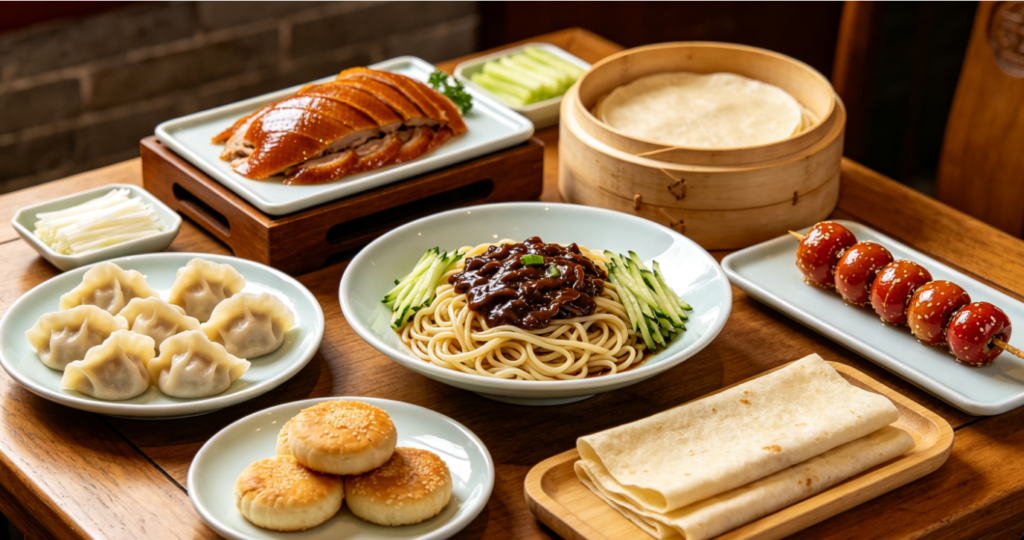
Beijing is famous for its imperial history, ancient architecture, and the Great Wall, but one of the best ways to understand the city is through its food.
For first-time visitors, choosing what to eat can be surprisingly difficult. Beijing’s food culture includes famous restaurant dishes, everyday noodles, inexpensive breakfast foods, traditional snacks, seasonal specialties, and foods influenced by the city’s long history as a capital.
If you’re looking for the best traditional Beijing foods, don’t limit yourself to Peking duck.
A more complete food experience includes sitting down for a formal northern Chinese meal, trying a bowl of hand-made noodles, eating a quick breakfast from a street-side shop, and exploring traditional snacks in an old neighborhood.
This guide focuses on what is genuinely worth trying, what each dish tells you about Beijing’s food culture, and how to build a realistic food itinerary without turning every meal into a checklist.
Quick Answer: What Traditional Foods Should You Try in Beijing?
For a first visit, start with these:
- Peking duck — Beijing’s most internationally famous dish
- Zhajiangmian — traditional noodles with fermented soybean sauce
- Jianbing — a popular Chinese-style breakfast crepe
- Douzhi — fermented mung bean drink with a distinctly local character
- Bao du — quickly cooked tripe, traditionally associated with Beijing
- Beijing-style hot pot — a northern Chinese hot-pot tradition
- Luzhu huoshao — a hearty traditional Beijing dish
- Tanghulu — candied fruit on a stick
- Beijing-style meat pie — a filling northern Chinese snack
- Traditional pastries — including several varieties associated with Beijing’s old food culture
You don’t need to try all ten.
A better strategy is to choose several dishes from different categories, so you experience Beijing at breakfast, lunch, dinner, and snack time.
1. Peking Duck: The Dish Everyone Associates With Beijing
No first-time Beijing food list would be complete without Peking duck.
But the interesting part isn’t simply the crispy skin.
A traditional Peking duck meal is a dining experience built around several components:
- Roasted duck
- Thin pancakes
- Sweet bean sauce
- Sliced scallions
- Cucumber
- Other accompaniments
The chef typically presents and slices the duck before serving it.
The best bites combine crisp skin, tender meat, sauce, and fresh vegetables inside a thin pancake.
What Makes Beijing Peking Duck Different?
The technique is the key.
Preparing a good duck involves controlling:
- Skin drying
- Roasting temperature
- Fat rendering
- Skin crispness
- Meat moisture
- Slicing technique
That’s why Peking duck isn’t simply “roast duck.”
How Should First-Time Visitors Eat It?
Don’t overload the pancake.
A small amount of sauce, a few slices of duck, and a little scallion or cucumber usually creates a better balance.
Also pay attention to the skin.
A well-prepared duck should give you a contrast between crisp exterior and tender meat.
2. Zhajiangmian: Beijing’s Everyday Noodle Classic
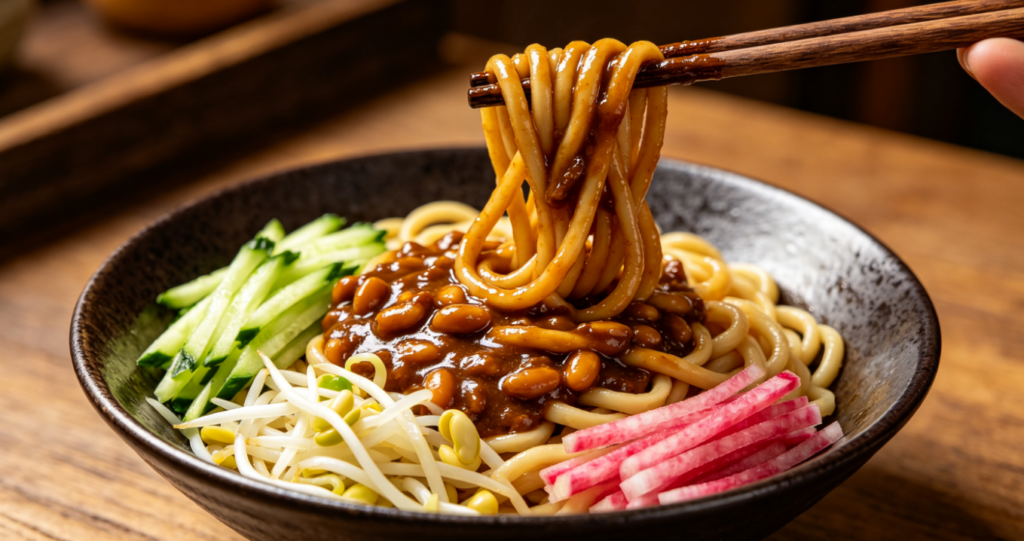
If Peking duck represents celebratory Beijing dining, zhajiangmian represents something much more everyday.
The dish consists of noodles topped with a savory fermented soybean-based sauce and usually accompanied by finely cut vegetables.
Typical vegetable toppings may include:
- Cucumber
- Bean sprouts
- Carrot
- Cabbage
- Radish
- Other seasonal vegetables
The ingredients vary between restaurants and households.
Why Should You Try It?
Because it gives you a better understanding of northern Chinese food culture.
The dish is relatively simple.
There isn’t a complicated broth hiding the flavor.
Instead, the character comes from the sauce, noodles, vegetables, and how they are mixed together.
This is the kind of food that helps you move beyond the famous tourist dishes.
3. Jianbing: One of Beijing’s Most Interesting Breakfasts
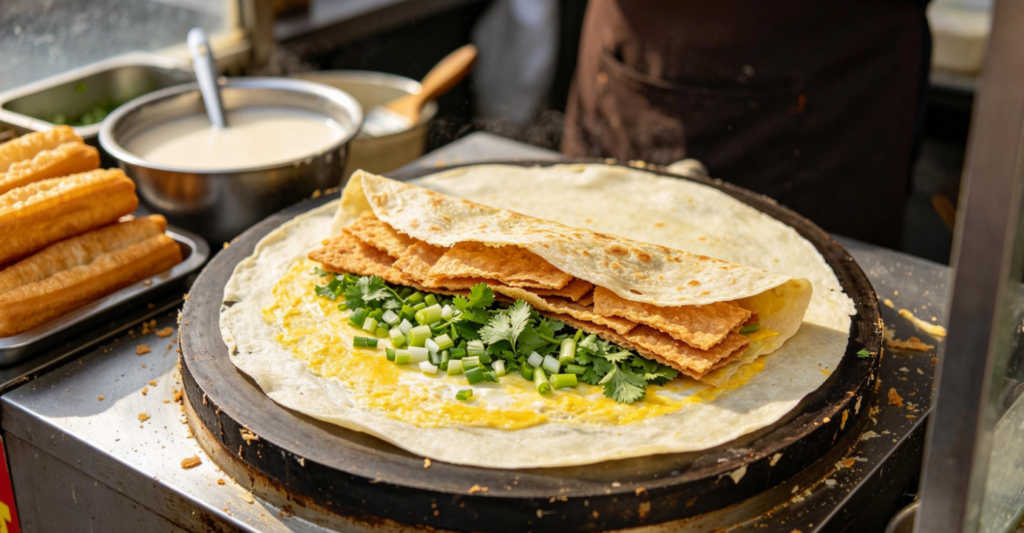
Jianbing is a popular Chinese breakfast food made from a thin batter cooked on a flat surface.
The basic preparation often involves:
- Spreading batter
- Adding an egg
- Adding sauces
- Adding herbs or vegetables
- Adding a crispy component
- Folding everything together
The result is portable, savory, crunchy and soft at the same time.
Why Is Jianbing Worth Trying?
Because it shows another side of Beijing.
Peking duck requires a formal restaurant.
Jianbing can be a quick breakfast eaten before work or sightseeing.
If you want to understand what people actually eat during an ordinary morning, breakfast foods can be just as revealing as famous dishes.
4. Douzhi: The Beijing Taste You May Not Expect
Douzhi is one of the more unusual traditional Beijing foods for international visitors.
It is a fermented mung bean drink with a distinctive sour aroma and flavor.
This is not a dish designed to appeal instantly to everyone.
And that’s precisely why it is interesting.
Should First-Time Visitors Try It?
If you’re curious about traditional food, yes.
But don’t approach it expecting a sweet beverage.
Douzhi has a strong fermented character, and reactions can range from fascination to immediate dislike.
Usually, it is associated with other traditional foods and snacks rather than being treated as a modern refreshing drink.
Trying it is less about finding your new favorite beverage and more about experiencing an older layer of Beijing food culture.
5. Bao Du: A Traditional Beijing Specialty
Bao du refers to quickly cooked tripe, traditionally prepared by blanching or boiling different cuts and serving them with seasonings.
The texture is an important part of the experience.
It can be:
- Firm
- Crisp
- Chewy
- Tender, depending on the cut and preparation
Who Should Try It?
Bao du is best for adventurous eaters.
If you already enjoy offal dishes, it’s worth seeking out.
If you’re unfamiliar with organ meats, this may not be the first dish you choose.
Either way, it demonstrates how traditional Beijing cuisine makes use of ingredients that modern international menus sometimes overlook.
6. Beijing-Style Hot Pot
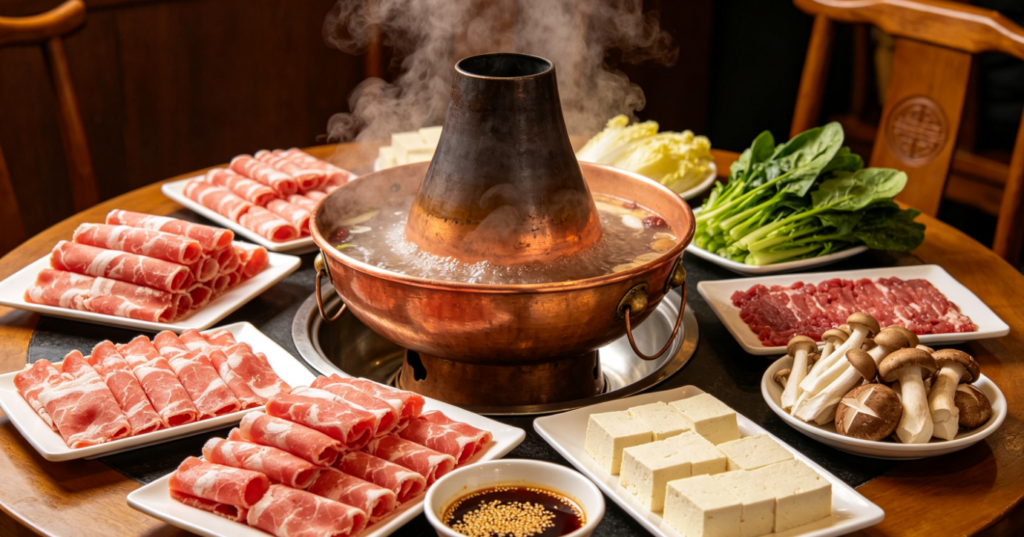
Hot pot is not unique to Beijing, but Beijing has its own northern tradition.
The classic Beijing approach is often associated with a copper pot, charcoal heating in traditional versions, and a relatively clean broth.
Thinly sliced lamb is particularly important.
The cooking process is simple:
boiling broth → add meat → cook briefly → dip in sauce → eat
The sauce can be just as important as the broth.
A sesame-based dipping sauce is commonly associated with northern-style hot pot.
7. Why Beijing Hot Pot Is Different From Spicy Hot Pot
Visitors who know Sichuan hot pot may expect a fiery, heavily spiced broth.
Beijing-style hot pot can be very different.
The emphasis is often on:
- Quality of lamb
- Fresh ingredients
- Simple broth
- Dipping sauce
- The natural flavor of the meat
This makes it an excellent example of northern Chinese culinary philosophy.
Instead of overwhelming ingredients with spices, the preparation can be comparatively restrained.
8. Luzhu Huoshao: A Hearty Old Beijing Dish
Luzhu huoshao is another traditional Beijing specialty with a very different character from Peking duck.
It typically combines a rich braised broth with ingredients such as:
- Pork
- Pork offal
- Tofu products
- Huoshao, a baked wheat-based bread
The result is hearty and intensely flavored.
This isn’t necessarily the easiest introduction to Beijing cuisine for every visitor.
But for travelers interested in historical local food rather than polished restaurant dishes, it offers a deeper look into traditional Beijing eating habits.
9. Beijing-Style Meat Pie
Northern Chinese cuisine is closely associated with wheat-based foods.
Beijing and surrounding northern regions have a long tradition of:
- Noodles
- Dumplings
- Breads
- Stuffed pastries
- Meat pies
A Beijing-style meat pie usually combines minced meat and seasonings inside a wheat-flour dough, which is then cooked until the exterior develops a crisp surface.
It’s filling, inexpensive and relatively easy for first-time visitors to understand.
If you’re looking for something less adventurous than fermented drinks or offal dishes, this is a good entry point.
10. Tanghulu: A Classic Traditional Snack
Tanghulu consists of fruit coated in hardened sugar syrup and served on a skewer.
Hawthorn is the traditional choice, although modern versions can use other fruits.
The experience is based on contrast:
hard, crisp sugar shell + tart or sweet fruit
It’s especially recognizable as a traditional northern Chinese snack.
However, don’t confuse a food’s popularity with its historical uniqueness.
Tanghulu can be found in many parts of northern China, so its connection to Beijing should be understood within the broader northern Chinese food tradition.
11. Traditional Beijing Pastries
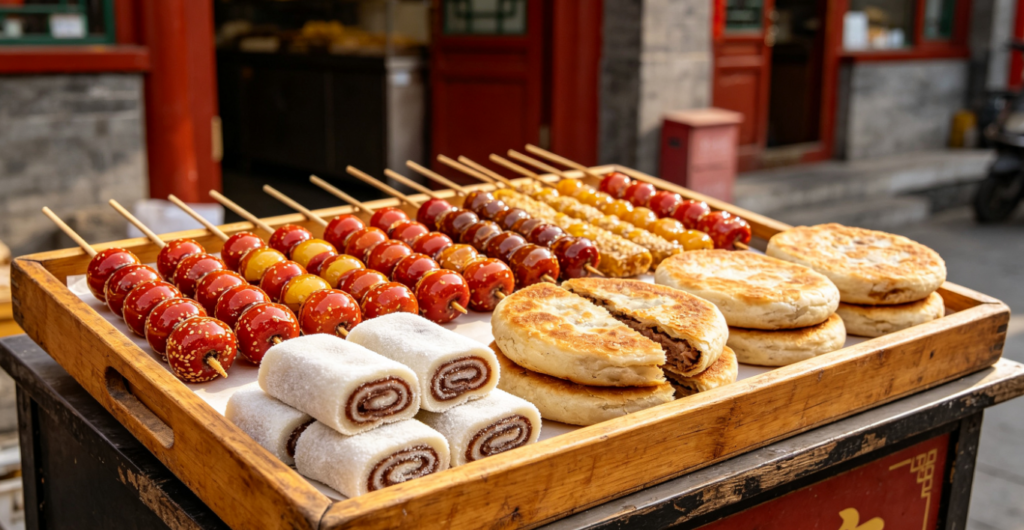
Beijing has a long history of traditional baked and steamed pastries.
Some are associated with old-style pastry shops and northern Chinese culinary traditions.
These pastries can contain:
- Red bean paste
- Sesame
- Nuts
- Lotus seed paste
- Sweetened fillings
They make convenient snacks or gifts, although the sweetness and texture can differ significantly from Western pastries.
For visitors interested in food history, traditional pastries are worth trying because they reflect the influence of imperial, religious and regional culinary traditions.
12. Why Beijing Food Tastes Different From Southern Chinese Cuisine
One of the most useful things to understand is that Beijing belongs to a northern Chinese culinary environment.
Historically, wheat has played a major role in northern diets.
That’s why you’ll encounter so many:
- Noodles
- Pancakes
- Breads
- Dumplings
- Wheat-based snacks
Rice is certainly available in Beijing, but wheat-based foods are particularly important in traditional northern cuisine.
Climate and geography also influenced cooking styles.
Northern winters historically encouraged hearty foods, preserved ingredients and filling wheat-based meals.
13. Beijing Food Isn’t Just About Famous Dishes
This is where many first-time visitors make a mistake.
They search for a list of “10 famous Beijing foods” and visit restaurants serving only the most recognizable dishes.
But food culture is broader than famous dishes.
Consider experiencing Beijing through:
Breakfast
Jianbing, noodles, buns or other quick local foods.
Lunch
A simple noodle or wheat-based meal.
Dinner
Peking duck or Beijing-style hot pot.
Snacks
Traditional pastries, tanghulu or neighborhood specialties.
This creates a much more realistic food experience.
14. How to Choose Restaurants as a First-Time Visitor
You don’t necessarily need the most expensive restaurant.
Instead, look for places where the dish is central to the menu and where there is a strong local customer base.
Consider:
- How busy the restaurant is
- Whether the menu specializes in one cuisine or dish
- Whether preparation looks fresh
- Whether locals are ordering the same food
- Whether the restaurant has a long-standing reputation
For famous dishes, technique matters more than simply finding a restaurant with an English menu.
15. Don’t Judge Authenticity by Appearance
A restaurant doesn’t need:
- Old furniture
- Chinese calligraphy everywhere
- Wooden tables
- Red lanterns
to serve traditional food.
Likewise, a modern-looking restaurant isn’t automatically inauthentic.
Authenticity is better evaluated through:
- Ingredients
- Preparation
- Recipe
- Regional tradition
- Cooking technique
- Consistency
This is particularly important in Beijing, where traditional food continues to evolve.
16. How Much Food Should You Order?
Chinese meals are often designed around sharing.
If you’re traveling with several people, ordering multiple dishes can provide a much better experience than everyone ordering one individual meal.
A useful approach is:
one main dish + one vegetable + one carbohydrate + one specialty
Then add dishes depending on appetite.
For Peking duck, the restaurant will generally guide you through the appropriate serving size.
17. Don’t Fill Up Before Trying the Signature Dish
If you’re planning to eat Peking duck for dinner, don’t spend the afternoon eating every snack you encounter.
Instead, think about food as a sequence.
For example:
Breakfast: Jianbing
Lunch: Zhajiangmian
Afternoon: Small traditional snack
Dinner: Peking duck
This allows you to sample more without turning the trip into continuous overeating.
18. Food and Sightseeing Should Work Together
Food can be integrated naturally into your sightseeing route.
For example, instead of crossing Beijing solely to find a restaurant, choose meals near the area you’re already exploring.
This reduces unnecessary transportation and gives you a reason to explore different neighborhoods.
If you’re organizing attractions, meals and transportation together, a Beijing trip planner can help structure the itinerary around both sightseeing and dining rather than treating food as an afterthought.
19. Try Breakfast Like a Local
Breakfast is one of the most underrated ways to experience Beijing.
International visitors often focus on dinner because it feels more significant.
But breakfast can reveal everyday food culture more clearly.
Look for local breakfast shops serving things such as:
- Jianbing
- Buns
- Noodles
- Soy milk
- Other wheat-based foods
You don’t need an elaborate restaurant.
In fact, a simple neighborhood breakfast can sometimes tell you more about daily Beijing life than an expensive tourist-oriented meal.
20. Explore Food Through Neighborhoods
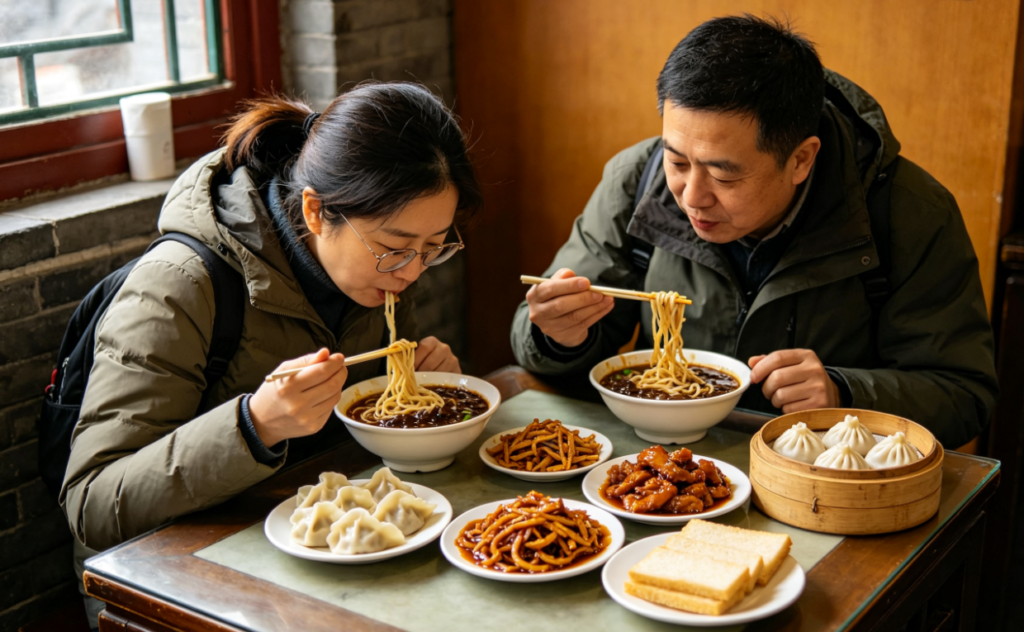
Food becomes more interesting when you connect it with the neighborhood around it.
Traditional hutong areas can offer a different atmosphere from major commercial districts.
A neighborhood food experience may involve:
walking → observing → eating → exploring → eating again
rather than:
taxi → restaurant → meal → taxi
This slower approach works especially well if food is one of your main reasons for visiting Beijing.
21. What If You Don’t Like Strong Flavors?
Beijing cuisine isn’t uniformly spicy.
This can surprise visitors who associate Chinese food primarily with Sichuan or Hunan cuisine.
Many traditional Beijing dishes emphasize:
- Savory flavors
- Fermented sauces
- Roasted flavors
- Lamb
- Wheat
- Aromatic seasonings
You can therefore build a Beijing food itinerary without eating extremely spicy dishes.
If you’re unsure, start with familiar foods such as noodles, dumplings, roast duck and meat pies before moving toward more unusual specialties.
22. What If You’re Vegetarian?
Traditional Beijing cuisine contains many meat-heavy dishes, but vegetarian travelers still have options.
Look for:
- Vegetable noodles
- Tofu dishes
- Vegetable dumplings
- Buddhist vegetarian cuisine
- Stir-fried seasonal vegetables
- Vegetarian restaurants
When ordering, clearly communicate dietary restrictions.
Don’t assume that a dish described as “vegetable” automatically contains no animal products.
23. What If You Don’t Eat Pork or Lamb?
You can still experience Beijing’s food culture.
Options include:
- Peking duck
- Vegetarian dishes
- Vegetable noodles
- Tofu dishes
- Certain chicken-based dishes
- Seafood, depending on the restaurant
The key is to understand the ingredients before ordering.
This is another reason that a little preparation before your trip can make dining easier.
24. How to Avoid Turning Food Into a Checklist
Trying every famous food isn’t necessarily the best strategy.
Instead, choose dishes based on what they represent.
For example:
One Famous Dish
Peking duck
One Everyday Dish
Zhajiangmian
One Breakfast
Jianbing
One Traditional Snack
Tanghulu
One Adventurous Food
Douzhi or bao du
One Shared Meal
Beijing-style hot pot
This gives you different perspectives without forcing yourself to eat ten large meals.
25. A One-Day Beijing Food Experience
If you only have one day to focus on food, try this structure.
Breakfast
Jianbing and a local breakfast drink.
Lunch
Zhajiangmian or another noodle-based dish.
Afternoon
Traditional pastry or tanghulu.
Dinner
Peking duck.
Evening
Walk through a historic neighborhood and look for small local snack shops.
The goal isn’t to eat as much as possible.
It’s to experience different eating occasions.
26. A Three-Day Food Strategy
With three days, you can go deeper.
Day 1 — Famous Beijing
Peking duck + traditional pastry
Day 2 — Everyday Beijing
Jianbing + zhajiangmian + neighborhood snacks
Day 3 — Traditional and Adventurous
Beijing hot pot + bao du or another specialty
This gives you a much broader understanding of the city’s food culture.
27. How Food Fits Into a First Beijing Trip
If food is important to you, don’t simply add restaurants wherever there is empty space.
Build your sightseeing around reasonable meal locations.
For example:
Morning attraction → local breakfast
Afternoon neighborhood → snack
Evening sightseeing area → dinner
This makes the itinerary feel more natural.
Travelers looking for broader practical advice can also review [Beijing travel tips for first-time visitors], especially when planning meals around transportation, opening times and busy sightseeing days.
28. Should You Book a Food Tour?
A food tour can be useful if you don’t know where to start.
It may help with:
- Ordering
- Translation
- Understanding unfamiliar dishes
- Finding small local restaurants
- Learning food history
However, a food tour isn’t necessary for everyone.
Independent travelers can create an excellent food experience by researching dishes beforehand and choosing restaurants based on location and specialization.
If you’re interested in combining food with cultural sightseeing, some Beijing tours can also incorporate local dining experiences rather than treating food as a separate activity.
29. What First-Time Visitors Often Get Wrong
Mistake 1: Only Eating Peking Duck
It’s famous, but it represents only one part of Beijing cuisine.
Mistake 2: Eating Only at Tourist Restaurants
Convenience is useful, but neighborhood restaurants can offer a different experience.
Mistake 3: Ignoring Breakfast
Breakfast provides an excellent introduction to everyday food culture.
Mistake 4: Ordering Too Much
Several small experiences are usually better than one enormous meal.
Mistake 5: Expecting Every Dish to Be Familiar
Traditional foods may have flavors or textures you’ve never encountered.
Approach them with curiosity rather than comparing everything with food from home.
30. A Better Way to Understand Beijing Food
Instead of asking:
“What is the most famous Beijing food?”
ask:
“What did people traditionally eat, and why?”
That question leads you toward a much richer experience.
You’ll start noticing the importance of:
- Wheat
- Fermentation
- Roasting
- Braising
- Lamb
- Noodles
- Pancakes
- Preserved ingredients
- Seasonal foods
These patterns tell you much more about Beijing’s food culture than a simple top-ten list.
31. Traditional Beijing Foods Worth Prioritizing
If you need a short list, use this one:
| Food | Type | Best For | Flavor / Character |
|---|---|---|---|
| Peking duck | Main dish | First-time visitors | Roasted, savory, crisp |
| Zhajiangmian | Noodles | Everyday food | Savory, fermented, rich |
| Jianbing | Breakfast | Casual eating | Savory, crisp, soft |
| Beijing hot pot | Shared meal | Groups | Light broth, lamb-focused |
| Bao du | Specialty | Adventurous eaters | Firm, savory |
| Douzhi | Drink | Food explorers | Sour, fermented |
| Luzhu huoshao | Main dish | Traditional cuisine | Rich, hearty |
| Tanghulu | Snack | Casual tasting | Sweet, crisp, tart |
| Meat pie | Snack/meal | Easy introduction | Savory, filling |
| Traditional pastries | Snack | Light tasting | Sweet, varied |
32. How Many Traditional Foods Do You Really Need to Try?
You don’t need to try everything.
For a three-to-five-day trip, five to seven different food experiences is enough to give you a meaningful introduction.
Prioritize variety rather than quantity.
For example:
Peking duck
plus
zhajiangmian
plus
jianbing
plus
hot pot
plus
one traditional snack
already gives you several completely different eating experiences.
Then add more depending on your curiosity.
33. The Difference Between Traditional and “Old”
A traditional dish doesn’t have to be prepared exactly the way it was centuries ago.
Food culture evolves.
Restaurants adjust:
- Portion sizes
- Presentation
- Ingredients
- Cooking equipment
- Seasoning
- Service
What makes a dish traditional is its connection to a culinary tradition—not whether the restaurant looks like a museum.
This distinction is particularly useful when exploring modern Beijing.
34. Food Is One of the Best Ways to See Another Side of Beijing
The city’s monuments tell you about emperors, dynasties and political history.
Food tells you about something different.
It shows:
- What people ate every day
- What ingredients were available
- How families cooked
- How regional traditions developed
- How food changed with urban life
A bowl of noodles can therefore tell a different story from a palace.
You need both to understand Beijing properly.
35. Final Recommendation: What Should You Eat First?
If you’re visiting Beijing for the first time, start with:
Peking duck for the iconic experience.
Zhajiangmian for everyday northern Chinese food.
Jianbing for breakfast culture.
Beijing-style hot pot for a shared traditional meal.
Then add one or two less familiar foods, such as bao du, douzhi or luzhu huoshao, depending on your comfort level.
That combination gives you a much broader picture than simply visiting a famous duck restaurant.
Final Takeaway
The best traditional Beijing foods aren’t limited to the dishes most frequently mentioned in tourist guides.
Peking duck deserves its reputation, but Beijing’s culinary identity is also found in humble noodles, quick breakfasts, wheat-based snacks, hot pot, fermented foods and old neighborhood specialties.
For first-time visitors, the smartest approach is to build variety into your meals:
one iconic dish + one everyday food + one breakfast + one shared meal + one traditional snack.
That way, food becomes part of your understanding of Beijing rather than simply another item on your sightseeing checklist.
And if you have several days in the city, don’t plan every meal around famous restaurants. Leave room for neighborhood exploration, spontaneous discoveries and foods you may never have heard of before your trip.
Beijing is best tasted in layers—just like the city itself.