
Jinshanling vs Simatai: Which Great Wall Is Better for Hiking?
Direct Answer: Should You Choose Jinshanling or Simatai?
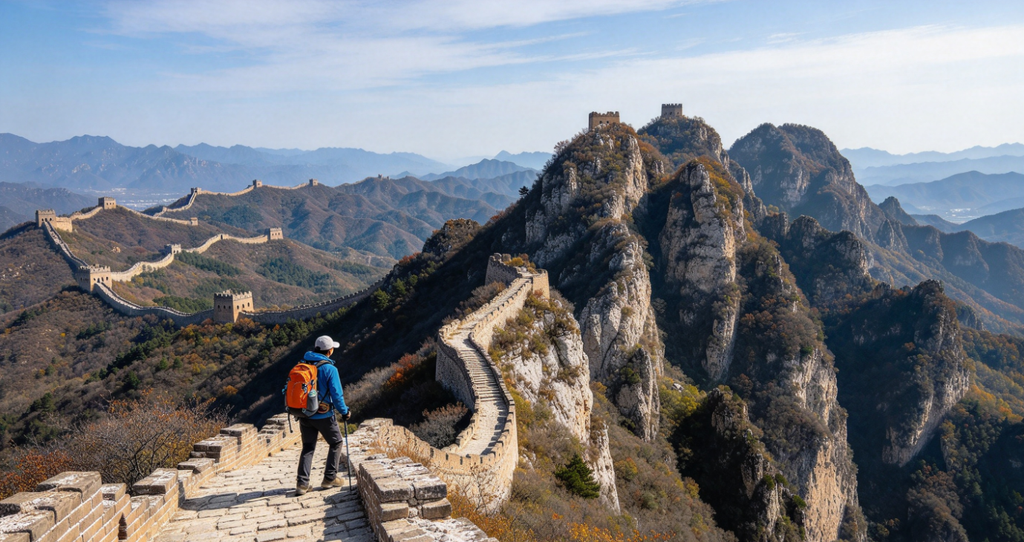
If you are comparing Jinshanling vs Simatai for hiking, the better choice depends less on which section is more impressive and more on how long you can walk uphill, how much time you have, and whether you can arrange reliable transport back to Beijing.
Choose Jinshanling if:
- You want a longer, more flexible Great Wall hiking experience.
- You can comfortably walk on uneven stone steps and rolling mountain terrain for two or more hours.
- You have a private driver or have confirmed a suitable return bus.
- You want to decide your own walking distance and turn back when necessary.
Choose Simatai if:
- You want a shorter visit with dramatic mountain scenery.
- You are staying at or visiting Gubei Water Town.
- You are willing to pay for a cable car to reduce part of the uphill approach.
- You can manage steep steps and uneven walking surfaces even after taking the cable car.
Do not assume Simatai is an easy alternative to Jinshanling. Its cable car reduces the amount of climbing needed to reach the wall, but it does not remove the steep stairs and elevation changes along the visitor route.
For most independent hikers with a full day and reasonable fitness, Jinshanling offers more flexibility. For travelers with limited hiking time who also want to visit Gubei Water Town, Simatai is usually easier to organize.
The practical decision is:
| Your main constraint | Better choice | Why |
|---|---|---|
| You have 5–7 hours for the Great Wall itself | Jinshanling | More flexibility to choose a longer or shorter walk |
| You only have around 2–3 hours | Simatai | A more compact visitor route |
| You have limited uphill endurance | Neither is automatically easy | Simatai has steep steps; Jinshanling requires sustained walking |
| You want a cable-car-assisted visit | Simatai | The visitor route has an established cable-car option |
| You want a longer hiking experience | Jinshanling | More opportunities to extend your walk |
| You rely on public transport | Simatai, with reservations | Its direct bus service has published departure arrangements, but return times still matter |
| You want to visit both in one day | Private car | Possible as a rushed two-stop itinerary, not a full hiking day |
1. Start With Your Available Time: How Much of the Day Can You Give the Great Wall?
Before comparing scenery or ticket prices, work out how much time you actually have.
Both Jinshanling and Simatai are outside central Beijing. The drive from Beijing takes roughly 2–2.5 hours under normal conditions, although traffic can make the journey longer.
That means a trip advertised as a full-day Great Wall excursion may leave you with considerably less time on the wall than expected.
If you have only half a day
Neither section is ideal for a half-day trip from central Beijing.
The long journey makes it difficult to enjoy either location without rushing. If you still want to visit one, Simatai is more suitable for a short, focused visit when combined with a pre-arranged transfer or an overnight stay at Gubei Water Town.
Do not choose Jinshanling simply because you want to hike. You could spend most of your available time traveling rather than walking.
If you have one full day
Choose one section and give it enough time.
For Jinshanling, allow approximately 3–5 hours at the scenic area if you want a meaningful walk, photography stops, and time to return to the entrance.
For Simatai, a shorter visit can work, but you should include the approach to the wall, the climb, time on the accessible section, and the return journey.
These are planning estimates, not guaranteed walking times. Your pace, the weather, the route currently open, and whether you use the cable car will all affect the schedule.
If you have two days
This is the best arrangement if you genuinely want to experience both sections.
You can visit Jinshanling on the first day and Simatai with Gubei Water Town on the second. This avoids turning two very different destinations into a rushed checklist.
It also gives you more flexibility if weather, transport delays, or temporary access restrictions affect one visit.
2. Jinshanling: How Far Should You Actually Walk?
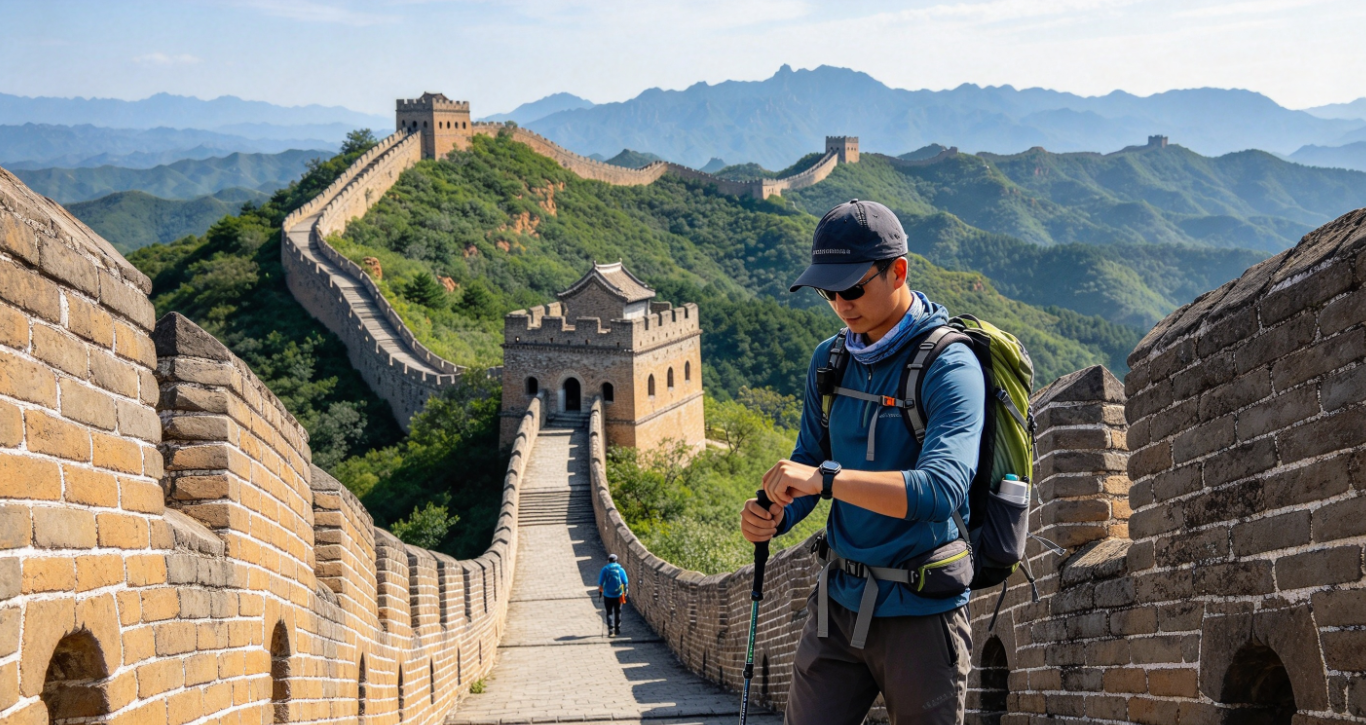
Jinshanling is often described as a better hiking destination because it has a long stretch of wall, multiple watchtowers, and more flexibility for choosing a walking route.
However, there is an important distinction:
The length of Jinshanling’s Great Wall is not the same as the distance an ordinary visitor should attempt to hike.
The scenic area’s historic wall extends for approximately 10.5 km. That does not mean every visitor should attempt to walk the entire length.
The approach from the visitor area also takes time and energy. Once you reach the wall, the terrain continues to rise and fall, with stone steps, uneven surfaces, and exposed sections.
If you have average fitness, a shorter out-and-back walk may be a much better experience than trying to cover as much distance as possible.
Three practical Jinshanling hiking plans
The following are suggested planning levels, not official routes or guaranteed distances. Always follow the current visitor map, marked paths, and staff instructions.
| Hiking plan | Suggested time on the wall | Who it suits | Main consideration |
|---|---|---|---|
| Short visit | Around 1–1.5 hours | Casual walkers and visitors with limited stamina | Choose a nearby section and return before fatigue builds |
| Moderate hike | Around 2–3 hours | People who exercise occasionally | Allow time for repeated climbs and descents |
| Longer hike | Around 3–4+ hours | Experienced walkers | Requires better endurance, more water, and careful time management |
Where should you turn back at Jinshanling?
This is more useful than simply telling visitors to spend 3–5 hours hiking.
Use the following decision rules.
Turn back early if:
- You are already breathing heavily during the approach to the wall.
- Your legs feel tired before you have completed the first few climbs.
- You need frequent stops after relatively short stair sections.
- You are losing confidence on steep or uneven steps.
- You are approaching your pre-agreed return time with your driver.
Do not wait until you feel exhausted.
For a short visit: Walk to a nearby watchtower or viewpoint, take photographs, and return along the same permitted route. This is a sensible choice if you are not used to hiking.
For a moderate hike: Continue only while you can comfortably manage the repeated climbs and descents. Set a turnaround time before leaving the entrance rather than deciding to return only when you feel tired.
For a longer hike: Extend your route only if your pace remains steady and you have enough time to return. Check the current access restrictions before planning a longer route.
A useful rule is to turn back when you have used roughly half of your available walking time. You still need enough energy and time to return to the entrance.
For example, if you have two hours available for walking, do not spend the entire two hours moving away from your starting point. Allow time for the return journey and unexpected delays.
Why Jinshanling’s length can become a disadvantage
Jinshanling gives experienced hikers more opportunities to explore, but that flexibility can tempt visitors to walk farther than their fitness allows.
The wall is not a flat trail. You repeatedly climb and descend, and the cumulative effort can be greater than the distance suggests.
If you are traveling with someone who has limited mobility, do not assume that a short distance on the map means an easy walk.
Also, do not plan to walk all the way from Jinshanling to Simatai. The connecting sections are not an ordinary open tourist route, and the Simatai western section is restricted.
3. Simatai: Does the Cable Car Make Hiking Easy?
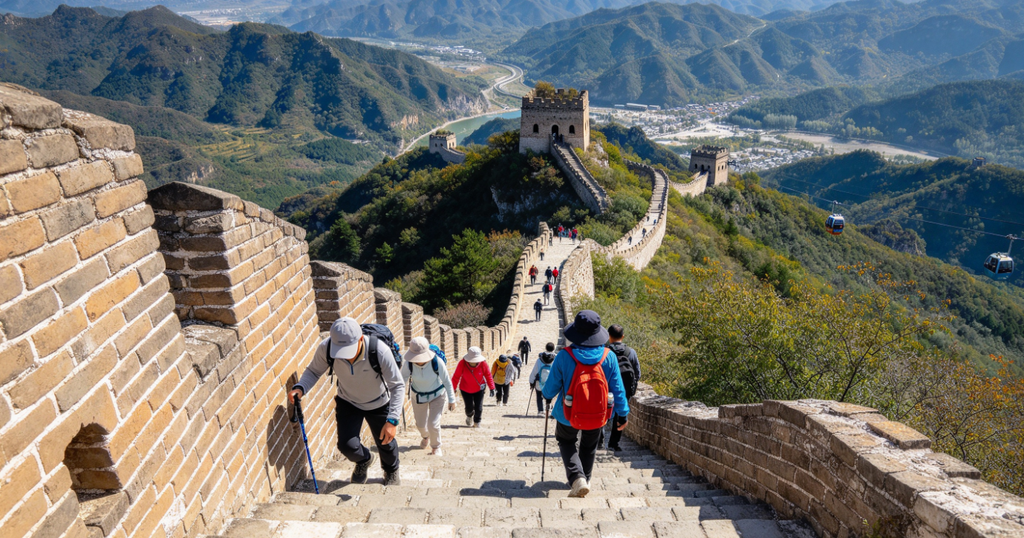
Simatai is known for its steep mountain terrain and dramatic changes in elevation.
Its visitor experience is more controlled than a long independent hike across Jinshanling. However, that does not mean it is suitable for everyone.
The most important detail is the approach from the entrance to the Great Wall.
According to the official Gubei Water Town FAQ, the distance from the entrance area to East Tower 2 is approximately 1,400 meters and takes around 45 minutes on foot.
That approach is a substantial uphill effort. For someone who rarely exercises, it can use up a significant amount of energy before the actual wall walk begins.
What does the cable car actually solve?
The cable car can reduce the amount of uphill walking required to reach the wall.
It does not turn the accessible section into a flat sightseeing path.
After getting off the cable car, you may still encounter:
- Steep stone steps.
- Uneven surfaces.
- Short but demanding climbs.
- Narrow sections where you need to watch your footing.
- Repeated changes in elevation.
In other words, the cable car helps with access, not with every difficult part of the hike.
If you have weak knees, poor balance, or difficulty climbing stairs, a cable-car-assisted visit may still be uncomfortable.
Three Simatai visit plans
| Visit plan | What to expect | Suitable for |
|---|---|---|
| Walk from the entrance | Approximately 45 minutes to reach East Tower 2, followed by the wall visit and return | Visitors with reasonable walking endurance |
| Use the cable car | Less uphill walking before reaching the wall, but stairs remain | Visitors who want to reduce the approach climb |
| Night visit | A restricted, designated section with cable-car requirements | Visitors who want the illuminated Great Wall experience |
The official visitor information currently identifies East Towers 2–10 as the open daytime section. The western section is not open to ordinary visitors, and other areas are restricted for safety reasons.
For night visits, access is much more limited: the official FAQ identifies the section between Watchtowers 5 and 6, with a round-trip cable car requirement.
Do not plan your own route based on photographs of closed or restricted towers.
Who should avoid walking the full Simatai approach?
Consider using the cable car or choosing another destination if:
- You rarely walk uphill.
- You become tired after 20–30 minutes of continuous climbing.
- You have difficulty descending steep stairs.
- You are traveling with someone who cannot comfortably walk for 45 minutes uphill.
Even with the cable car, you should be comfortable walking on uneven stone steps.
If you cannot manage stairs confidently, neither the cable car nor a shorter route automatically makes Simatai a suitable choice.
4. Jinshanling vs Simatai: Which Is More Difficult?
The two sections are difficult in different ways.
Jinshanling is more about cumulative endurance. You can choose a shorter route, but a longer visit involves repeated climbs and descents.
Simatai has a more demanding approach and a more concentrated steep terrain experience. The cable car changes the amount of climbing before reaching the wall, but the remaining route can still be physically challenging.
| Difficulty factor | Jinshanling | Simatai |
|---|---|---|
| Approach to the wall | Walking required; optional transport facilities may be available | Approximately 1,400 m from the entrance to East Tower 2, around 45 minutes on foot |
| Terrain | Repeated climbs and descents | Steep slopes and pronounced elevation changes |
| Walking flexibility | More flexible, subject to current access rules | Restricted to designated visitor areas |
| Cable car | Availability must be confirmed | Established cable-car option |
| Main physical challenge | Cumulative walking endurance | Steep climbing and stair sections |
| Best for | Visitors who want to control their hiking distance | Visitors who want a shorter, more concentrated mountain-wall experience |
My recommendation: If you are reasonably fit and want to walk for several hours, choose Jinshanling. If you have limited time and are willing to use the cable car, consider Simatai—but do not confuse a shorter visit with an easy hike.
5. Can You Visit Jinshanling and Simatai in One Day?
Yes, a private-car itinerary visiting both areas in one day is physically possible.
But it is important to understand what you are giving up.
You will not have enough time for a full hiking experience at either location.
A realistic one-day two-section itinerary
| Approximate time | Activity |
|---|---|
| 06:30–07:00 | Leave central Beijing by private car |
| 09:00–09:30 | Arrive at Jinshanling, depending on traffic |
| 09:30–11:00 | Short walk and photography at Jinshanling |
| 11:00–12:00 | Transfer toward Simatai/Gubei Water Town, allowing for traffic and entry arrangements |
| 12:00–13:30 | Visit the accessible Simatai section, subject to ticketing and opening times |
| 13:30–14:00 | Return to the vehicle |
| Afternoon | Drive back to Beijing |
This is an aggressive schedule. Actual arrival times depend on traffic, the departure point, and the time needed to enter each scenic area.
It also assumes that you can obtain tickets and access the relevant sections within the planned time.
What is the real cost of visiting both?
The main additional expense is not simply the second entrance ticket.
You need a vehicle and driver for a longer day, including:
- The round trip from Beijing.
- The transfer between the two scenic areas.
- Waiting time while you visit each section.
- Any additional tolls, parking, or service charges.
There is no single reliable standard charter price for this itinerary. Get a written quote that specifies the vehicle, total hours, waiting time, tolls, parking, and overtime charges.
Do not assume that a one-section private transfer can simply be extended at no extra cost.
Is the one-day two-section plan worth it?
Choose it only if:
- You mainly want to see and photograph both locations.
- You are comfortable spending a long day in a car.
- You accept having only around 1–1.5 hours at each site.
- Your budget can accommodate a longer private-car arrangement.
Avoid it if:
- Your main goal is hiking.
- You want to explore Gubei Water Town properly.
- You dislike rushing.
- You are traveling with people who need frequent rest breaks.
For most visitors, one section per day is the better experience. If you only have one day, choose the section that best matches your fitness and transport arrangements.
6. Public Transport: Which Destination Is Easier Without a Private Car?
This is one of the most important differences between Jinshanling and Simatai.
Both destinations are outside central Beijing, but their public-transport arrangements are not equally straightforward.
Jinshanling: Public transport is a high-risk choice for a same-day independent trip
Jinshanling is not served by Beijing’s ordinary urban metro and bus network.
Some seasonal or dedicated tourist services connect Beijing with the scenic area. Other routes involve traveling toward Miyun or Gubeikou and arranging additional transport.
The difficulty is not just reaching Jinshanling.
It is making sure you can get back to Beijing after your visit.
Services may operate only on selected days or during particular seasons. Published schedules can differ between operators and may change. A route that appears on a travel website is not necessarily operating on your travel date.
My practical assessment:
- Private car: Best option for flexibility and a reliable return arrangement.
- Confirmed direct tourist bus: Possible if the operator confirms both the outbound and return services for your exact date.
- Multiple public-transport transfers: Not recommended for a first-time visitor attempting a same-day return without local assistance.
- Unplanned taxi from the scenic area: Do not rely on finding one when you finish hiking.
If you choose public transport, confirm the exact departure point, arrival point, return departure time, booking requirements, and what happens if you miss the scheduled service.
Simatai: More organized, but the return bus still controls your day
Simatai benefits from its connection with Gubei Water Town.
The official Gubei Water Town website publishes a direct express-bus service between Dongzhimen in Beijing and Gubei Water Town.
Its currently published schedule lists:
| Direction | Weekdays | Weekends and public holidays |
|---|---|---|
| Beijing Dongzhimen to Gubei Water Town | 09:00, 12:00, 15:30 | 09:00, 12:00, 14:00, 15:30 |
| Gubei Water Town to Beijing Dongzhimen | 13:00, 16:00, 21:00 | 12:00, 17:00, 19:00, 21:00 |
The published fare is CNY 48 per person, payable on the bus according to the operator’s current information.
These are the operator’s published times, not a guarantee that every departure will run on every date. Confirm the schedule before traveling.
There is another important detail: visitors who buy a Simatai-only ticket may have a separate return shuttle arrangement after visiting the wall. The official FAQ lists specific return shuttle departures at 12:30, 13:30, 15:30, and 16:30.
You should not assume that the Simatai return shuttle and the Beijing express bus are the same service.
Public transport difficulty comparison
| Transport situation | Jinshanling | Simatai |
|---|---|---|
| Direct service from Beijing | Seasonal or dedicated services may be available | Published direct express-bus service |
| Ordinary city-bus access | Requires additional arrangements | Not necessary if using the express bus |
| Return planning | Difficult if services are not confirmed | Easier to plan, but departure times are fixed |
| Risk of missing transport | High if relying on unverified services | Still significant if you miss the scheduled bus |
| Best for independent travelers | Only with confirmed transport | More manageable with advance planning |
For a wider overview of transport options around Beijing, see our Beijing transport guide.
Bottom line: Simatai is generally the more practical option for independent travelers using published direct bus services. Jinshanling is better approached with a private driver or a confirmed round-trip tourist service.
7. Ticket Prices: How Much Should You Budget?
Do not compare only the basic entrance ticket.
The actual amount you pay depends on whether you need a cable car, shuttle bus, Gubei Water Town admission, or a transport package.
The figures below are published reference prices. Ticket policies, seasonal rates, and package availability can change, so confirm the amount and inclusions before purchasing.
Jinshanling ticket costs
Published reference prices include:
| Item | Reference price |
|---|---|
| Peak-season adult entrance ticket | CNY 65 |
| Low-season adult entrance ticket | CNY 55 |
| Cable car, one way | CNY 40 |
| Cable car, round trip | CNY 60 |
| Scenic-area shuttle bus, one way | CNY 10 |
| Scenic-area shuttle bus, round trip | CNY 20 |
A basic visit without the cable car or shuttle would therefore start at approximately CNY 55–65 per adult.
If you add a round-trip cable car and shuttle bus, the indicative total becomes:
- Peak season: CNY 145
- Low season: CNY 135
This is a reference calculation using the published prices, not a guaranteed package price.
Important: Jinshanling’s cable-car operation may be affected by maintenance or temporary closure. A third-party update reported a suspension for inspection and maintenance beginning November 3, 2026. Confirm whether it has reopened before including it in your plan. Do not assume the cable car will be available on your visit date.
Simatai ticket costs
The official Gubei Water Town ticket page publishes the following prices:
| Ticket type | Published price |
|---|---|
| Simatai daytime admission | CNY 40 |
| Simatai daytime visit with one-way cable car | CNY 110 |
| Simatai daytime visit with round-trip cable car | CNY 180 |
| Gubei Water Town admission | CNY 150 |
| Gubei Water Town + Simatai daytime admission | CNY 170 |
| Gubei Water Town + Simatai with round-trip cable car | CNY 280 |
| Simatai night tour with round-trip cable car | CNY 160 |
These are published ticket-package prices. The CNY 110 and CNY 180 options are not simply cable-car charges to add again to the CNY 40 entrance ticket.
For example:
- If you only want to visit Simatai during the day, budget CNY 40 for the basic admission.
- If you want the daytime visit with a round-trip cable car, the published package is CNY 180.
- If you also want to enter Gubei Water Town and use the round-trip cable car package, the published combination is CNY 280.
The night-tour package is different from the daytime visit. It has its own operating hours and access restrictions.
How much should one person prepare?
The following examples make the differences easier to understand.
| Visit plan | Approximate scenic-area budget per adult |
|---|---|
| Jinshanling basic admission | CNY 55–65 |
| Jinshanling admission + round-trip cable car + shuttle | CNY 135–145 |
| Simatai basic daytime admission | CNY 40 |
| Simatai daytime visit + round-trip cable car | CNY 180 |
| Gubei Water Town + Simatai daytime visit | CNY 170 |
| Gubei Water Town + Simatai + round-trip cable car | CNY 280 |
| Simatai night tour + round-trip cable car | CNY 160 |
These figures exclude transport from Beijing, meals, accommodation, and any optional services.
Which destination is cheaper?
If you compare only basic entrance tickets, Simatai is cheaper.
But that is not a complete comparison.
Jinshanling can become more expensive if you add a cable car, shuttle, and private transport. Simatai can also become more expensive if you add Gubei Water Town admission, cable-car access, and a private transfer.
For a fair comparison, calculate the complete trip:
Total budget = Beijing transport + scenic-area admission + cable car or shuttle + meals + optional accommodation.
Do not buy a Gubei Water Town combination ticket unless you actually intend to enter the water town. Likewise, do not add a separate cable-car charge if your selected Simatai package already includes it.
8. Which Great Wall Should You Choose Based on Your Fitness, Time, and Budget?
This is the most useful way to make the final decision.
Instead of choosing based on whether you are a first-time visitor, a photographer, or an experienced traveler, start with your actual constraints.
Situation A: You can hike for 2–3 hours and have a full day
Choose Jinshanling.
You can adjust your walking distance and turn back when necessary.
This is the better choice if you want the experience of walking along the wall rather than simply reaching a viewpoint.
Arrange a private driver or confirm a round-trip bus before departure.
Situation B: You can walk for only 30–60 minutes at a time
Consider Simatai with a cable car, but assess your stair-climbing ability first.
The cable car reduces part of the approach, but you still need to walk on the wall.
If steep stairs are difficult for you, Simatai may not be a comfortable choice either.
Do not choose it solely because you have seen photographs of visitors using the cable car.
Situation C: You have limited time and want to visit Gubei Water Town
Choose Simatai.
Its location within the Gubei Water Town visitor area makes it easier to combine the Great Wall with the town.
You can arrange your day around the direct bus schedule or stay overnight.
This is a more practical plan than trying to fit Jinshanling into the same short visit.
Situation D: You have a low budget and want to hike independently
Jinshanling may have the lower entrance cost, but transport can erase that advantage.
If you already have a confirmed direct bus, the basic ticket can make Jinshanling an economical option.
If you need a private car for the entire journey, transport will likely become the largest part of your budget.
Simatai has a cheaper basic admission ticket, but cable-car and water-town options increase the total.
Situation E: You want to visit both in one day
Choose both only if you have a private car and accept a rushed itinerary.
Plan around short visits, not full hikes.
If you want to walk for several hours, take photographs without watching the clock, and explore the surrounding area, split the two destinations across separate days.
Situation F: You are traveling with children or older relatives
Do not choose based only on the total walking distance.
Ask whether everyone can:
- Walk uphill for 30–45 minutes.
- Climb uneven stone steps.
- Descend safely.
- Continue walking after several climbs.
- Manage exposed and uneven sections.
Simatai’s cable car may reduce the approach effort, but it does not eliminate the walking challenge.
Jinshanling allows a shorter out-and-back visit, but the terrain is still uneven.
If a traveler has limited mobility, consider a more accessible Great Wall section rather than assuming either of these two is suitable.
9. Can You Hike from Jinshanling to Simatai?
You should not plan this as a normal, freely accessible hiking route.
Although the two sections are geographically connected as part of the wider Great Wall system, the connecting stretch includes restricted and non-standard visitor areas.
The official Gubei Water Town FAQ states that the Simatai western section is not open to visitors. The daytime visitor area is limited to East Towers 2–10, while other areas are restricted for safety reasons.
This means you should not assume that you can simply walk from Jinshanling to Simatai along the wall.
If a tour operator advertises a Jinshanling–Simatai through-hike, ask for:
- Written confirmation that the route is authorized for your travel date.
- A current route map showing the permitted sections.
- Confirmation of which access points are open.
- Details of emergency support and evacuation arrangements.
- A clear explanation of how the group returns to transport.
If these details are not provided, choose separate visits.
The practical alternative
If you want to experience both sections, use a vehicle to travel between the two scenic areas.
You can visit Jinshanling in the morning and Simatai in the afternoon, but you will need to accept short stays and a long day.
For a more relaxed experience, spend one day at Jinshanling and another day at Simatai and Gubei Water Town.
10. What Should You Bring for Either Hike?
Both sections involve uneven terrain. The right preparation makes a bigger difference than trying to walk farther.
Wear:
- Shoes with reliable grip and good ankle support.
- Comfortable clothing suitable for changing temperatures.
- A hat and sun protection in warmer months.
- Layers in spring, autumn, and winter.
Carry:
- Enough drinking water for your planned walking time.
- Snacks if you expect to stay for several hours.
- A fully charged phone.
- A portable battery.
- Cash or a suitable payment method for incidental expenses.
- Your hotel and driver contact details.
Before entering:
- Check the weather forecast.
- Confirm the current opening hours and accessible route.
- Check whether cable cars and shuttle buses are operating.
- Agree on a pickup point and return time with your driver.
- Save the return-bus departure time if you are traveling independently.
Avoid starting a long hike late in the afternoon. You need enough daylight and time to return safely.
11. Best Time to Visit Jinshanling and Simatai
Spring and autumn are generally the most comfortable seasons for hiking.
Spring
Temperatures are usually more comfortable than in summer, although conditions can change quickly.
Bring an extra layer for exposed sections of the wall.
Summer
Heat and direct sunlight can make the climbs more tiring.
Start early, carry enough water, and avoid trying to complete a long route during the hottest part of the day.
Autumn
Autumn is popular for clear views and changing foliage.
It is a good season for photography, but weekends and public holidays can be busier.
Winter
Winter visits require more caution.
Stone steps can become slippery, and exposed sections may be cold and windy. Check whether the route and facilities you need are operating before traveling.
For both destinations, the best visit is not necessarily the day with the best photographs. It is the day when weather, access, transport, and your physical condition work together.
12. Final Recommendation: Jinshanling or Simatai?
There is no universal winner in the Jinshanling vs Simatai comparison.
The right choice depends on the kind of day you want and the effort you can comfortably manage.
| Your priority | My recommendation |
|---|---|
| A longer and more flexible hike | Jinshanling |
| A shorter visit with a cable-car option | Simatai |
| A more manageable independent bus arrangement | Simatai, after confirming the timetable |
| A lower basic entrance fee | Simatai |
| More freedom to decide when to turn back | Jinshanling |
| Visiting the Great Wall and Gubei Water Town together | Simatai |
| Visiting both sections in one day | Private-car itinerary only |
| A serious hiking experience | Jinshanling, provided you have the fitness and time |
My overall recommendation is simple:
Choose Jinshanling if you want to hike. Choose Simatai if you want a shorter, more structured Great Wall visit and are also interested in Gubei Water Town.
Do not choose Jinshanling just because its wall is longer. Do not choose Simatai just because it has a cable car.
Your available walking time, uphill endurance, transport arrangements, and total budget should determine the decision.
For more information about choosing a Great Wall section and planning a visit from Beijing, explore our Great Wall guide.
Frequently Asked Questions
Is Jinshanling or Simatai better for hiking?
Jinshanling is generally better for a longer and more flexible hiking experience. Simatai is better for a shorter, more structured visit with a cable-car option. However, Simatai still has steep steps and uneven walking surfaces.
Is Simatai easier than Jinshanling?
Not necessarily. The cable car can reduce the uphill approach, but visitors still need to walk on steep and uneven sections of the wall. Jinshanling can be more flexible because visitors can choose a shorter out-and-back route.
How long does it take to walk to Simatai East Tower 2?
The official Gubei Water Town FAQ gives an approximate walking distance of 1,400 meters from the entrance to East Tower 2, taking around 45 minutes. The actual time depends on your pace and conditions.
Can I visit Jinshanling without a private driver?
Yes, but you should confirm a direct tourist bus or a complete public-transport route for your exact travel date. The main difficulty is arranging a reliable return journey. Do not assume that a service listed online operates every day.
Is Simatai easier to reach by public transport?
Generally, yes. Gubei Water Town publishes a direct express-bus service between Dongzhimen and the resort. However, departures are limited, and you must plan your Great Wall visit around the return schedule.
Can I visit Jinshanling and Simatai in one day?
Yes, with a private car and a tightly planned schedule. Expect short visits of around 1–1.5 hours at each location rather than a full hike. A two-day itinerary is much better if hiking is your priority.
Can I walk from Jinshanling to Simatai?
Do not treat this as an ordinary open hiking route. The Simatai western section is closed to visitors, and connecting areas may be restricted. Only consider a through-hike if an operator can provide current authorization and a clearly defined permitted route.
How much does it cost to visit Simatai?
The official operator currently lists CNY 40 for basic daytime admission, CNY 180 for a daytime visit with a round-trip cable car, and CNY 170 for a Gubei Water Town and Simatai daytime combination ticket. The combination including a round-trip cable car is listed at CNY 280. Confirm the latest ticket details before purchasing.
Is the Simatai cable car included in the entrance ticket?
Not in the basic CNY 40 daytime admission. The official operator lists separate packages for visits with one-way or round-trip cable-car access. Check the exact inclusions before buying.
Should I visit Gubei Water Town and Simatai on the same day?
Yes. They are part of the same visitor area, making them a practical combination. However, allow enough time for the Great Wall visit and check the final bus departure if you are returning to Beijing.