
Which Great Wall Section Should You Visit from Beijing?
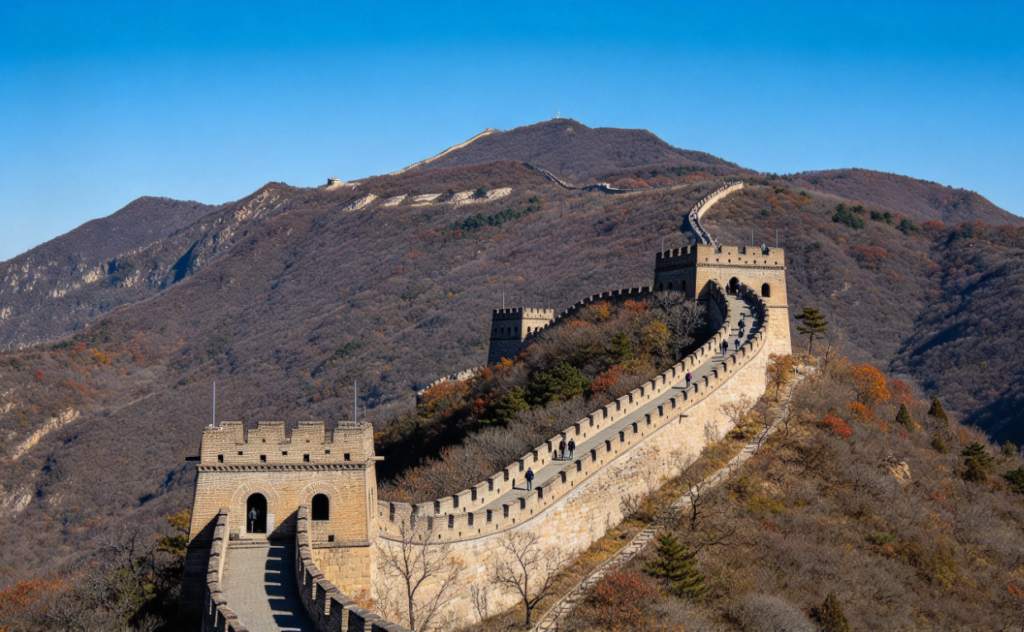
Quick Answer
There is no single Great Wall section that is ideal for every visitor.
From Beijing, the most practical choices include Mutianyu, Badaling, Jinshanling, Simatai, and Huanghuacheng. Each offers a different combination of accessibility, scenery, restoration, hiking difficulty, visitor numbers, and travel time.
For many first-time visitors, Mutianyu offers a balanced combination of mountain scenery, well-preserved architecture, and manageable access.
Badaling is particularly convenient for travelers who prioritize transportation, infrastructure, and a straightforward first visit.
Jinshanling is better suited to travelers who want a more substantial hiking experience and wider mountain views.
Simatai offers a more rugged atmosphere and can be combined with Gubei Water Town.
Huanghuacheng provides a distinctive landscape where sections of the Wall interact with a reservoir and surrounding mountains.
The important point is that choosing a section should come after deciding what kind of Great Wall experience you want.
1. Why Choosing the Right Section Matters
One of the biggest mistakes first-time visitors make is treating the Great Wall as a single attraction.
It is better understood as a huge network of historic fortifications spread across different landscapes.
The visitor experience can change dramatically from one section to another.
Two travelers can both say they “visited the Great Wall” while having completely different days.
One may spend a few hours on a restored section with convenient transportation and developed facilities.
Another may hike along steep mountain ridges for several hours with relatively few other visitors.
Neither experience is automatically more authentic or more worthwhile.
The right choice depends on your priorities.
Before you plan Beijing trip, decide whether you care most about:
- easy transportation
- iconic scenery
- fewer crowds
- hiking
- photography
- family convenience
- historical atmosphere
- combining the Wall with another attraction
That decision should determine your section.
2. The Main Great Wall Sections Near Beijing
For most international visitors, five sections deserve particular attention:
| Section | Best Known For | Hiking | Access | Visitor Experience |
|---|---|---|---|---|
| Mutianyu | Scenic balance and restored architecture | Moderate | Moderate | Developed but scenic |
| Badaling | Accessibility and infrastructure | Moderate | Easy | More visitor-oriented |
| Jinshanling | Long-distance hiking and mountain views | Moderate–Hard | More difficult | Quieter, hiking-focused |
| Simatai | Rugged terrain and night experience | Moderate–Hard | Moderate | More atmospheric |
| Huanghuacheng | Wall and reservoir scenery | Moderate | More difficult | Distinctive landscape |
These categories are general rather than absolute.
Crowds vary by day.
Weather changes the landscape.
Access conditions and operating arrangements can also change.
Therefore, the best section is not determined by one universal ranking.
3. Mutianyu: A Balanced Choice for First-Time Visitors
Mutianyu is one of the most frequently considered sections for visitors staying in Beijing.
Its appeal comes from balance.
It combines:
- restored Ming-era architecture
- mountain scenery
- watchtowers
- relatively substantial walking opportunities
- visitor infrastructure
- transportation options
- scenic viewpoints
For travelers who want to experience the Wall without committing to a demanding remote hike, Mutianyu can be a practical middle ground.
The surrounding mountains are an important part of the experience.
Instead of viewing the Wall as a structure sitting on flat ground, you see it following ridgelines through a forested landscape.
That relationship between architecture and terrain is one of Mutianyu’s major attractions.
Who is Mutianyu suitable for?
It can work particularly well for:
- first-time visitors
- couples
- families
- photographers
- travelers who want scenery
- visitors who want some walking without a full-day trek
It is also a useful choice when the Wall is important to your itinerary but you do not want the entire day to become a physically demanding hiking expedition.
4. Badaling: The Most Straightforward Introduction
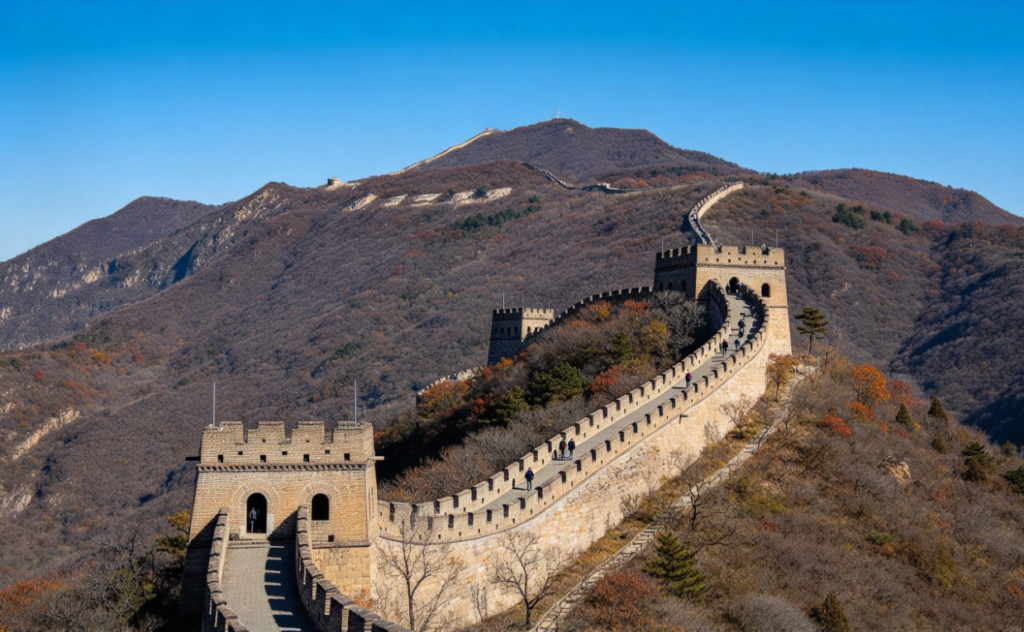
Badaling is one of the most famous and accessible sections.
Its historical importance is accompanied by extensive visitor infrastructure.
For first-time travelers, that can be a major advantage.
You are less likely to feel that you are solving a logistics puzzle before the actual sightseeing begins.
Badaling can be particularly useful if you prioritize:
- straightforward transportation
- developed facilities
- clear visitor infrastructure
- a recognizable Great Wall experience
- efficient logistics
It is also well suited to travelers who are uncomfortable with remote or less-developed destinations.
The trade-off is that its popularity can mean a busier atmosphere, particularly during holidays and peak travel periods.
Therefore, the question is not whether Badaling is “better” or “worse.”
It is whether convenience and infrastructure are more important to you than seeking a quieter or more hiking-oriented experience.
5. Jinshanling: For Travelers Who Want to Hike
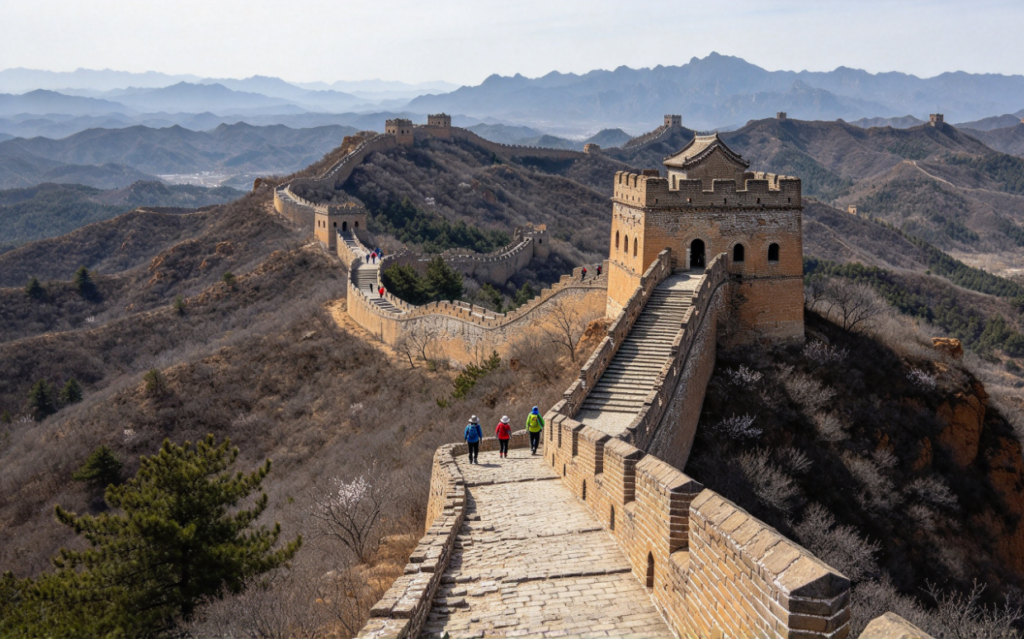
Jinshanling appeals to a different type of visitor.
Rather than treating the Great Wall primarily as a sightseeing stop, travelers often choose Jinshanling because they want to walk along the Wall.
The landscape is particularly attractive for photography and longer-distance views.
You can experience:
- mountain ridges
- watchtowers
- changing elevations
- less urbanized surroundings
- longer stretches of walking
- more varied Wall scenery
The physical demands are also greater.
This is important.
A traveler who simply wants to see the Great Wall for an hour or two may not need Jinshanling.
Someone who enjoys hiking may find the additional travel and walking precisely what makes the excursion worthwhile.
Jinshanling therefore represents an important principle in Great Wall planning:
A less convenient section can be the better fit if the experience itself is your priority.
6. Simatai: A More Rugged Atmosphere
Simatai is known for its more rugged terrain and dramatic mountain setting.
Compared with heavily developed visitor areas, it can provide a stronger sense of the Wall interacting with the natural landscape.
Some sections are steep and physically demanding, so visitors should not choose Simatai simply because they want “something more authentic.”
The term authentic can be misleading.
A better question is:
Do you want a more rugged and physically involved experience?
If yes, Simatai may be appropriate.
Another reason travelers consider Simatai is its connection with Gubei Water Town.
This makes it possible to create a broader excursion rather than spending the entire day on the Wall itself.
For travelers who enjoy combining historical scenery with an evening destination, this can be an attractive itinerary structure.
7. Huanghuacheng: When Water Changes the Landscape
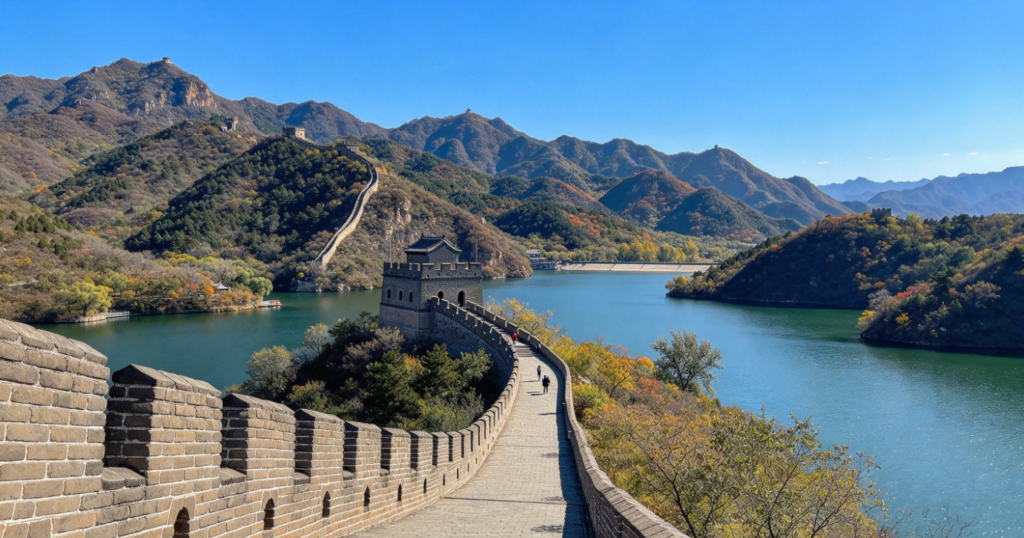
Huanghuacheng is particularly distinctive because sections of the Great Wall are surrounded by mountainous terrain and a reservoir.
This creates a visual experience that differs from the classic image of a wall stretching across dry mountain ridges.
The relationship between:
- water
- mountains
- stone and brick fortifications
- watchtowers
makes Huanghuacheng especially interesting for landscape photography.
It can also appeal to travelers who have already seen photographs of the more famous sections and want a different visual interpretation of the Wall.
However, it is less straightforward as a first choice if your main priority is simple transportation and maximum convenience.
8. Mutianyu vs. Badaling: The Most Common Decision
For many visitors, the real question is not which of five sections to visit.
It is:
Mutianyu or Badaling?
The distinction can be simplified this way:
| Priority | Consider |
|---|---|
| Easier logistics | Badaling |
| Extensive visitor infrastructure | Badaling |
| Scenic mountain environment | Mutianyu |
| Balanced first-time experience | Mutianyu |
| More visitor-oriented experience | Badaling |
| Photography and landscape | Mutianyu |
| Combining convenience with sightseeing | Badaling |
| Wanting more walking variety | Mutianyu |
This does not mean one section universally wins.
A family traveling with young children and limited time may value different things from a couple who wants mountain photography.
The same destination can therefore produce different decisions for different travelers.
9. Mutianyu vs. Jinshanling: Sightseeing or Hiking?
This comparison is more about travel style.
Mutianyu is generally easier to approach as a sightseeing attraction.
You can enjoy the Wall, walk between viewpoints, explore watchtowers, and return without turning the day into a major hiking project.
Jinshanling is more appealing when the walking itself is part of the reason for going.
Think about the difference between these two goals:
“I want to see the Great Wall.”
and:
“I want to hike on the Great Wall.”
The first goal may point toward a more accessible section.
The second may justify a section where the journey and physical effort are greater.
This distinction can prevent travelers from choosing a difficult route simply because it sounds more impressive.
10. How Long Should You Spend at the Great Wall?
There is no universal ideal duration.
A short visit can work if your priority is simply experiencing the structure and taking in the landscape.
A longer visit makes more sense if you want to hike between multiple towers or explore a larger section.
Your total day also needs to include transportation.
This is why a Great Wall excursion should rarely be planned solely around the number of hours you expect to walk.
Consider four components:
Travel time + access time + Wall time + return journey
For a more remote section, transportation can become a significant portion of the day.
For a highly accessible section, more of your available time can be spent actually exploring.
This creates a genuine trade-off between experience depth and logistical efficiency.
11. How Difficult Is Great Wall Hiking?
The Great Wall is often more physically demanding than photographs suggest.
The main issue is not simply distance.
Elevation changes matter.
You may repeatedly move:
- uphill
- downhill
- across uneven surfaces
- up staircases
- through watchtowers
- along narrow or steep sections
Even relatively short distances can require significant effort.
Travelers should therefore avoid judging difficulty solely by kilometers.
A two-kilometer route with substantial elevation changes can feel much harder than a much longer walk on flat ground.
This is particularly important for:
- older travelers
- families with young children
- people unused to hiking
- travelers visiting during hot weather
Choosing a section based on physical ability is part of good trip planning, not a sign that you are missing the “real” experience.
12. Which Section Is Best for Photography?
Photography priorities can also change your choice.
If your goal is the classic image of the Wall following mountain ridges, sections such as Mutianyu and Jinshanling offer strong opportunities.
If you want dramatic terrain and a more rugged visual atmosphere, Simatai may be attractive.
If you want a less conventional combination of Wall, mountains, and water, Huanghuacheng offers something visually different.
But photography depends heavily on conditions.
Cloud cover, haze, sunlight, foliage, season, and time of day can change the result substantially.
A famous viewpoint on a hazy afternoon may produce less impressive photographs than a less famous location on a clear morning.
Therefore, section selection and timing should be considered together.
13. Which Section Is Better for Families?
Families should prioritize practicality.
The ideal section is not necessarily the one with the longest hiking route.
Instead, consider:
- transportation time
- walking distance
- stair difficulty
- restroom availability
- food options
- rest opportunities
- weather exposure
- children’s energy levels
Mutianyu can be attractive for families because it provides a combination of scenery and visitor infrastructure without requiring the same commitment as a long-distance hiking route.
Badaling can also work well when transportation simplicity and developed facilities are major priorities.
For families, the best day is usually one that leaves enough energy for everyone to enjoy the experience.
14. Which Section Is Better for Older Travelers?
Older travelers should consider physical ability rather than age alone.
Someone in their seventies who regularly hikes may have a very different experience from a younger traveler who rarely exercises.
The important questions are:
- How comfortable are you with stairs?
- Can you walk continuously for several hours?
- Are you comfortable on uneven surfaces?
- How well do you tolerate heat or cold?
- Would you prefer a shorter visit with more rest?
Sections with more developed infrastructure may make the experience easier to manage.
Where cable cars or other assistance are available, these options may also reduce physical demands, although they do not eliminate all walking.
The goal is not to complete the most difficult route.
The goal is to enjoy the Wall safely and comfortably.
15. What About Crowds?
Visitor numbers are one of the biggest differences between Great Wall sections.
However, “quiet” and “crowded” should be treated as relative terms.
Even sections known for fewer visitors can become busy during:
- Chinese national holidays
- weekends
- school holidays
- favorable weather periods
- peak tourism seasons
Likewise, a popular section can feel considerably calmer at a less busy time of day.
If avoiding crowds is important, consider three variables together:
section + date + time
Changing only one of these may not be enough.
This is also why relying on a generic statement such as “Section X is always quiet” can be misleading.
Visitor patterns change.
16. Should You Choose the Closest Section?
Not necessarily.
Distance is important, but it should not be the only factor.
Imagine two options:
Option A: shorter drive, but crowded and limited walking.
Option B: longer drive, but better scenery and the hiking experience you actually want.
If the Great Wall is one of the main purposes of your Beijing visit, the additional travel time may be justified.
On the other hand, if the Wall is only one attraction among many and your schedule is tight, the closer and more convenient option may make more sense.
The correct decision depends on the role the Great Wall plays in your overall itinerary.
17. How the Great Wall Fits Into a One-Day Excursion
A common planning mistake is trying to combine too many major attractions with the Great Wall.
A typical Wall day already involves:
- leaving central Beijing
- transportation
- entrance procedures
- climbing and walking
- lunch
- return transportation
Adding several major central Beijing attractions can make the day unnecessarily rushed.
Instead, consider building the day around one main purpose.
For example:
Wall-focused day
Morning departure → Great Wall → lunch → continued exploration → return to Beijing
Wall + cultural destination
Morning departure → Great Wall → nearby historic destination → return
Wall + Gubei Water Town
Morning → Simatai area → Gubei Water Town → evening experience
The best structure depends on the section and your interests.
18. What Is the Great Wall of China From a Visitor’s Perspective?
When choosing a section, it helps to rethink what is the Great Wall of China.
It is not one monument with identical characteristics everywhere.
It is a historical defensive system containing different construction periods, landscapes, fortifications, passes, and restored or less-restored sections.
That explains why choosing the location matters so much.
A visitor standing on a restored section near Beijing is experiencing only one part of a much larger historical landscape.
The differences between sections are therefore not merely differences between tourist attractions.
They reflect different geographical and historical environments.
19. Should You Visit More Than One Section?
For most short Beijing trips, visiting multiple distant sections is unnecessary.
The experience can become repetitive, while transportation consumes valuable time.
A second section may make sense if:
- the Great Wall is a major interest
- you have several days available
- you are interested in hiking
- you want to compare restored and less-developed environments
- you are photographing different landscapes
For a typical first visit, however, choosing one section that matches your interests is usually a more efficient use of time.
The goal is depth rather than collecting section names.
20. How Season Changes Your Choice
The same Great Wall section can feel completely different throughout the year.
Spring
Fresh vegetation can create softer mountain landscapes, while temperatures are often more comfortable for walking.
Summer
The landscape can be lush, but heat and humidity can make exposed hiking more demanding.
Autumn
Changing foliage can create particularly attractive mountain scenery and photography conditions.
Winter
The Wall can have a stark and quieter atmosphere, but cold temperatures and potentially icy surfaces require greater preparation.
Season should therefore influence not only what you pack but also how ambitious your hiking plan should be.
21. A Practical Section-Selection Framework
Instead of asking:
“Which Great Wall section is the best?”
use these questions.
If convenience is your priority
Look first at sections with straightforward transportation and developed facilities.
If scenery is your priority
Focus on sections where the Wall interacts strongly with mountain landscapes.
If hiking is your priority
Consider a section that allows longer walks and more varied terrain.
If you are traveling with children
Prioritize manageable walking distances and practical infrastructure.
If you want a quieter atmosphere
Consider less heavily visited sections and less busy travel periods.
If photography is your priority
Consider both landscape characteristics and time of day.
If your schedule is tight
Minimize transportation complexity.
This approach gives you a personalized answer without assuming that every traveler wants the same thing.
22. Quick Comparison: Which Section Fits Your Travel Style?
| Your Priority | Section to Consider | Why |
|---|---|---|
| First Great Wall visit | Mutianyu | Strong balance of scenery and access |
| Maximum convenience | Badaling | Developed infrastructure |
| Longer hiking experience | Jinshanling | More walking and mountain scenery |
| Rugged atmosphere | Simatai | Dramatic terrain |
| Wall + water scenery | Huanghuacheng | Distinctive landscape |
| Family-focused day | Mutianyu / Badaling | More manageable logistics |
| Photography | Mutianyu / Jinshanling | Strong mountain viewpoints |
| Wall + another destination | Simatai | Gubei Water Town combination |
This is a fit-based comparison, not a universal ranking.
Your choice should depend on your schedule, physical ability, interests, and preferred travel style.
23. How to Avoid Choosing the Wrong Section
There are several mistakes worth avoiding.
Choosing based only on fame
The most famous section is not necessarily the most suitable for your itinerary.
Ignoring travel time
A beautiful section can still be inconvenient if it consumes too much of your limited vacation time.
Underestimating stairs
Distance alone does not describe hiking difficulty.
Ignoring weather
Mountain weather can significantly change comfort and visibility.
Trying to see everything
One well-chosen section is usually more satisfying than rushing through multiple locations.
Assuming “less restored” automatically means better
A more rugged section may provide a different atmosphere, but it also requires greater physical and logistical preparation.
The goal is not to find the most difficult section.
It is to find the section that matches your desired experience.
24. What Should You Bring?
Your preparation should reflect the section and season.
Useful items may include:
- comfortable walking shoes
- water
- sun protection
- weather-appropriate clothing
- snacks
- phone and portable battery
- basic medication you normally use
- identification and payment methods
- a translation tool if needed
For longer hikes, preparation becomes more important.
For short visits on developed sections, you may need considerably less.
Avoid overpacking.
You will be carrying everything while walking uphill and downhill.
25. How to Make the Great Wall Day More Enjoyable
The most successful visits usually have a realistic pace.
Do not schedule every minute.
Leave room for:
- photography
- rest
- unexpected weather
- food
- slower walking
- viewpoints
- simply enjoying the landscape
The Great Wall is not an attraction that needs to be “completed.”
There is no requirement to walk from one end to another.
A few hours of meaningful exploration can be more enjoyable than pushing yourself until you are exhausted.
This is especially important if the Great Wall is only one part of a longer Beijing trip.
Final Takeaway
Choosing among the Great Wall sections from Beijing is less about finding one universally superior location and more about matching the section to your travel priorities.
Mutianyu offers a balanced combination of scenery, restoration, walking, and infrastructure.
Badaling emphasizes accessibility and developed visitor facilities.
Jinshanling is better suited to travelers who want a more substantial hiking experience.
Simatai offers rugged mountain scenery and the possibility of combining the Wall with Gubei Water Town.
Huanghuacheng provides a distinctive landscape where the Wall meets mountains and water.
Before deciding, think about four things:
How much time do you have?
How much walking do you want?
What kind of landscape interests you?
How much logistical complexity are you comfortable with?
Once those questions are answered, choosing a Great Wall section becomes much easier.
And remember that what is the Great Wall of China is not answered by one location. The Wall is a vast historical system, and each section provides a different window into its architecture, landscape, and history.
For most first-time visitors, the goal should not be to visit the section with the biggest reputation.
It should be to choose the section that makes the most sense for the experience you want from your Beijing trip.