
When Was the Great Wall of China Built?
Quick Answer
The Great Wall of China was not built during a single period or by a single dynasty.
The earliest defensive walls associated with what later became the Great Wall system were constructed by competing states during the Warring States period, before China was unified in 221 BCE. The Qin Dynasty later connected and expanded earlier frontier walls. The Han Dynasty extended defensive walls farther west, while later dynasties rebuilt and modified different sections.
The Ming Dynasty (1368–1644) produced the most extensive surviving network of brick-and-stone fortifications, including many of the sections visitors see around Beijing today.
So when people ask when was the Great Wall of China built, the most accurate answer is:
Construction began more than 2,000 years ago and continued, in different forms and locations, for many centuries.
The Great Wall is therefore better understood as a long historical process rather than one construction project.
1. The Great Wall Was Built in Stages
One of the most important things to understand is that the Great Wall did not suddenly appear as one enormous structure.
Different Chinese states and dynasties constructed defensive walls at different times.
Some walls were:
- newly constructed
- extended from earlier fortifications
- connected with neighboring walls
- rebuilt after military conflicts
- abandoned and replaced
- reinforced with different materials
This explains why the Great Wall looks different in different regions.
A section made primarily from rammed earth may have a completely different appearance from a later Ming section constructed with bricks and stone.
The historical timeline is therefore more complicated than a single “construction date.”
2. Before the Qin Dynasty: The Earliest Walls
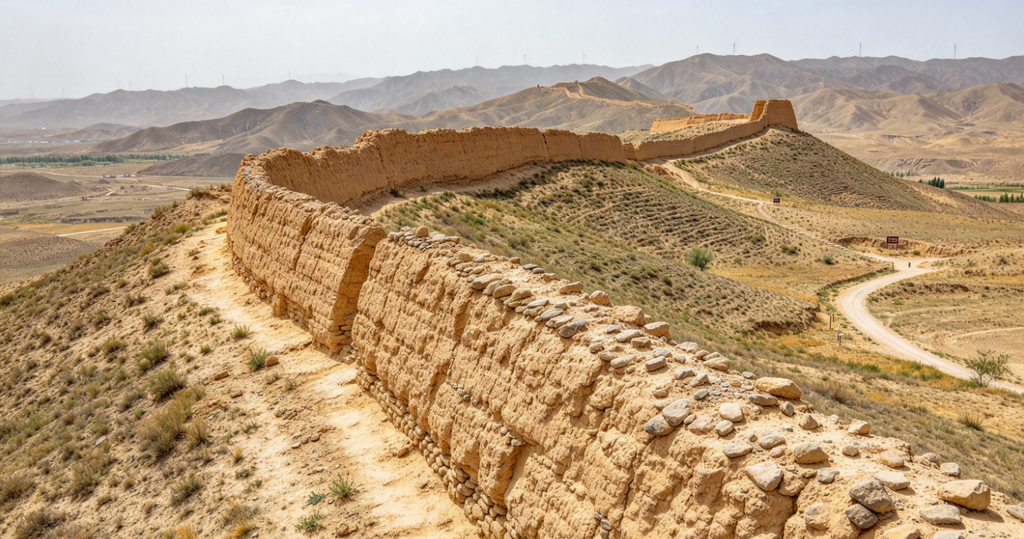
The history of the Great Wall begins before the formation of a unified Chinese empire.
During the Spring and Autumn period and especially the Warring States period (475–221 BCE), several competing states built defensive walls along vulnerable borders.
Among the states associated with early wall construction were:
- Qin
- Zhao
- Yan
- Qi
- Chu
- Wei
These walls served different regional military purposes.
They were not necessarily intended to become one continuous structure.
Instead, each state built fortifications according to its own geography and military needs.
This is why it is inaccurate to say that one emperor simply decided to build the Great Wall from nothing.
There were already centuries of frontier-wall construction before the Qin unification.
3. 221 BCE: Qin Unification Changes the Wall System
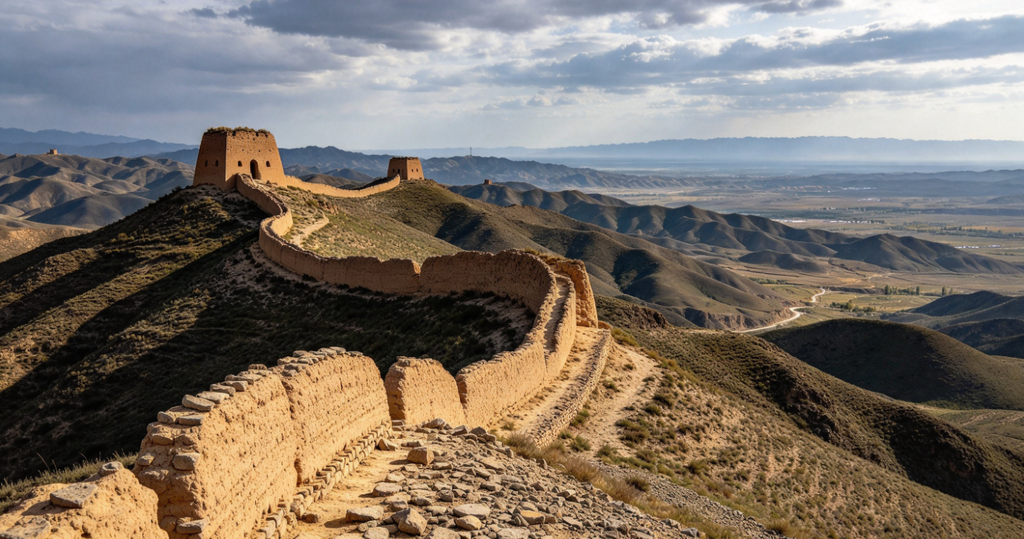
A major turning point came in 221 BCE, when Qin Shi Huang unified the competing states and established the Qin Dynasty.
The new empire inherited several existing defensive walls.
The Qin government connected, expanded, repaired, or abandoned parts of these earlier systems according to its strategic requirements.
This is the historical event that gave rise to the traditional story that Qin Shi Huang “built the Great Wall.”
The reality is more precise.
He did not construct every part of the Great Wall from scratch.
Instead, the Qin state reorganized and expanded existing northern defenses into a larger imperial frontier system.
The work required enormous resources, including soldiers, laborers, and state-organized construction teams.
4. What Did the Qin Wall Look Like?
The Qin-period walls were generally very different from the famous brick walls seen around Beijing today.
Local materials strongly influenced construction.
In areas where stone was scarce, builders could use:
- rammed earth
- compacted soil
- wood
- locally available materials
The resulting structures were functional rather than designed to resemble the monumental brick fortifications associated with the Ming period.
Many early walls have also disappeared, eroded, or become archaeological remains.
This creates an important distinction:
The age of the Great Wall system is not the same as the age of the walls tourists can physically see today.
A traveler visiting a Ming section near Beijing is seeing a much later phase of this long history.
5. The Han Dynasty: The Wall Moves West
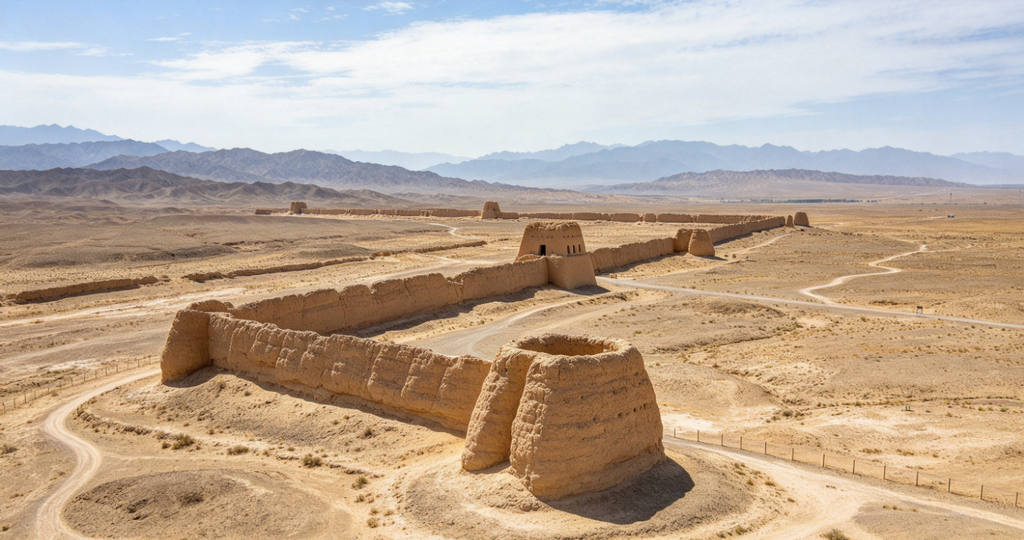
The Han Dynasty (206 BCE–220 CE) continued to develop frontier defenses.
This period is particularly important because the Han state expanded its influence toward Central Asia.
The defensive system was therefore not limited to the northern frontier immediately surrounding the Chinese heartland.
Some Han-era walls and related fortifications extended toward regions associated with the ancient Silk Road.
Their purpose was connected with frontier defense, communication, administration, and protection of strategic corridors.
The Han period demonstrates why the Great Wall should not be imagined as a single east-west line.
Different defensive systems existed across a much larger geographical area.
Some were connected historically with the broader Great Wall tradition even though they may look completely different from the famous Ming structures near Beijing.
6. After the Han Dynasty: The Wall Was Not Always Being Built
Another misconception is that construction continued continuously for 2,000 years.
That is not correct.
There were periods when major frontier-wall construction was limited or when political priorities shifted elsewhere.
Different dynasties relied on different combinations of:
- military settlements
- cavalry
- frontier garrisons
- forts
- natural barriers
- walls
- diplomatic relationships
The importance of walls therefore changed according to political and military circumstances.
This is one reason a simple timeline saying “the Great Wall was continuously built from 221 BCE to 1644” would be misleading.
The history contains periods of construction, reconstruction, maintenance, abandonment, and strategic change.
7. Northern Dynasties and Other Medieval Walls
During the centuries following the Han Dynasty, several states and dynasties constructed or repaired frontier fortifications.
The Northern Wei, Northern Qi, Northern Zhou, and other regimes developed defensive systems in different parts of northern China.
These projects demonstrate that Great Wall construction was not exclusively an imperial Qin or Ming phenomenon.
The political map of northern China changed repeatedly.
As borders moved, defensive priorities moved with them.
A wall that was strategically important under one regime could become less important after political control shifted.
This is why the Great Wall’s history is closely connected with the changing geography of Chinese states.
8. The Ming Dynasty: The Great Wall We Know Today
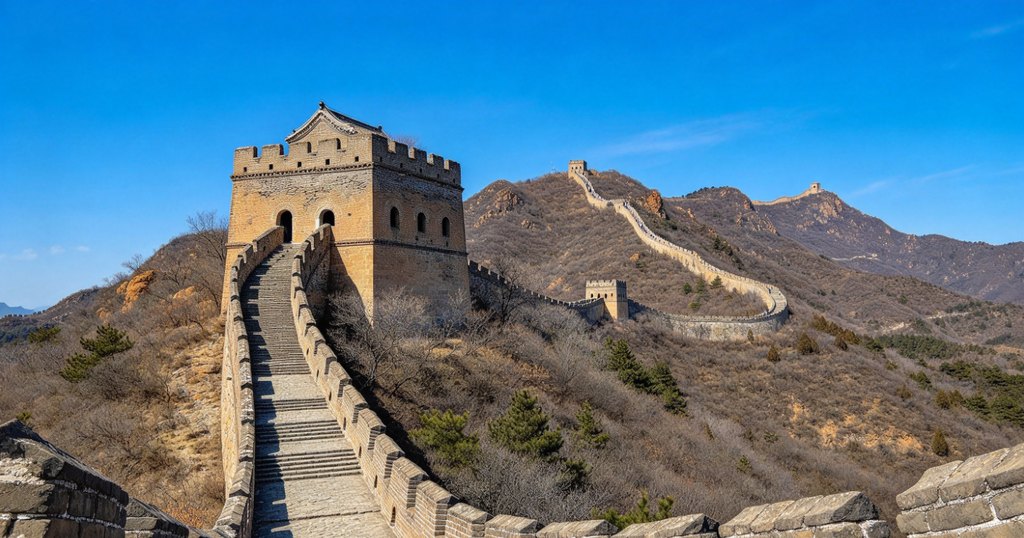
The most important period for modern visitors is the Ming Dynasty (1368–1644).
After the Ming established control over China, northern military threats remained a major strategic concern.
The dynasty developed extensive defensive infrastructure along its northern frontier.
This included:
- walls
- watchtowers
- passes
- fortresses
- garrison settlements
- communication systems
Many famous sections around Beijing belong primarily to this period.
This includes well-known visitor areas such as Mutianyu, Badaling, and other sections of the Ming defensive network.
Therefore, if someone asks when the Great Wall they see near Beijing was built, the answer is usually much more specific than “over 2,000 years ago.”
Many of the surviving tourist-accessible sections around Beijing were constructed or extensively rebuilt during the Ming Dynasty.
9. Why Did the Ming Build So Much Wall?
The Ming period deserves special attention because its walls represent a major change in construction technology and defensive organization.
Compared with many earlier earth-and-timber structures, Ming builders increasingly used:
- bricks
- stone
- compacted earth
- fortified passes
- watchtowers
The construction reflected the military technology and strategic conditions of the period.
The Wall was not simply a barrier.
It formed part of a larger defensive network.
Watchtowers allowed soldiers to observe surrounding terrain.
Fortified passes controlled important routes.
Garrisons provided manpower.
Communication systems allowed information to travel between defensive positions.
Understanding this system is more historically useful than thinking of the Wall as one giant piece of masonry.
10. When Was the Great Wall of China Built Near Beijing?
For visitors planning a Beijing trip, this is one of the most useful distinctions.
The Great Wall sections closest to Beijing that tourists commonly visit are predominantly associated with the Ming Dynasty.
This means a traveler standing on a well-preserved brick-and-stone section is generally experiencing a structure that is hundreds of years old, rather than directly standing on a Qin-era wall.
The broader Great Wall tradition is more than 2,000 years old.
The specific structure in front of you may be several centuries old.
Both statements can be true at the same time.
This distinction helps explain why different sources sometimes give apparently different dates.
11. A Simple Great Wall Timeline
| Period | Approximate Date | Great Wall Development |
|---|---|---|
| Spring & Autumn period | 770–476 BCE | Early regional defensive walls |
| Warring States period | 475–221 BCE | Several states build frontier walls |
| Qin Dynasty | 221–206 BCE | Earlier walls connected and expanded |
| Han Dynasty | 206 BCE–220 CE | Frontier defenses extended and developed westward |
| Northern Dynasties | 4th–6th centuries | Multiple regimes construct or reinforce northern walls |
| Ming Dynasty | 1368–1644 | Major surviving brick-and-stone network developed |
| Modern era | After 1644 | Many sections deteriorate, are studied, conserved, or restored |
The dates are important, but the bigger lesson is that the Great Wall evolved in stages.
12. Qin Wall vs. Ming Wall
The difference between the Qin and Ming periods is particularly important.
| Feature | Qin Period | Ming Period |
|---|---|---|
| Date | 221–206 BCE | 1368–1644 |
| Main materials | Rammed earth and local materials | Brick, stone, earth |
| Political context | Newly unified empire | Established imperial dynasty |
| Defensive system | Connected and expanded earlier walls | Extensive frontier network |
| Surviving visitor structures | Limited | Numerous |
| Beijing tourist sections | Generally not what visitors see | Main historical basis |
This comparison shows why the phrase “the Great Wall was built by Qin Shi Huang” is incomplete.
The Qin period was foundational, but the Great Wall visible to most international visitors today largely reflects later construction.
13. Why Does the Great Wall Have Different Construction Dates?
If you research the Wall, you may encounter several different dates.
This is not necessarily a contradiction.
Different sources may be referring to:
- the earliest known defensive walls
- Qin-era expansion
- Han frontier walls
- medieval construction
- Ming reconstruction
- a specific surviving section
The correct date therefore depends on which part of the Great Wall you are talking about.
This is particularly important when researching individual sections.
A tourist website might describe a section as “over 2,000 years old” because it belongs to the larger historical tradition.
An archaeological source may identify the surviving structure as Ming-era.
Both descriptions can refer to different layers of the same broader history.
14. Was the Great Wall Ever Finished?
Not in the conventional sense.
There was never one final moment when an emperor could declare:
“The Great Wall is complete.”
Different governments constructed and maintained different defensive lines according to changing needs.
Some sections were extended.
Others were abandoned.
Some were repaired repeatedly.
Some disappeared almost completely.
This means the Wall should be thought of as an evolving frontier infrastructure system rather than a finished monument.
Its historical development resembles a series of construction phases layered across centuries.
15. How Long Did Great Wall Construction Take?
The answer depends on which construction phase you mean.
If you count the earliest known defensive walls associated with the Great Wall tradition through the end of major Ming construction, the development spans more than two millennia.
But individual projects could have taken much shorter periods.
A dynasty might build or rebuild a particular section according to an immediate military requirement.
Another generation could then modify the same area.
Therefore, saying “it took 2,000 years to build the Great Wall” is useful as a broad summary but misleading if interpreted as one uninterrupted construction project.
A more accurate statement is:
The Great Wall developed through many separate construction and reconstruction projects over more than 2,000 years.
16. Did the Great Wall Always Look Like It Does Today?
No.
The familiar image of a continuous brick wall with crenellations and watchtowers mainly represents the best-preserved Ming sections.
Earlier walls could be dramatically different.
Depending on location and period, builders used:
- rammed earth
- gravel
- reeds
- wood
- stone
- brick
Climate also affected preservation.
A dry desert environment can preserve certain ancient earth structures surprisingly well, while exposed mountain walls can experience erosion, vegetation growth, weathering, and human damage.
This explains why photographs from different regions can make the Great Wall appear to be entirely different monuments.
17. Why Are So Many Famous Sections Around Beijing Ming?
Beijing was strategically important during the Ming Dynasty.
The city became the Ming capital in 1421, increasing the importance of northern defenses surrounding the capital region.
The defensive network around Beijing was therefore developed extensively.
This helps explain why modern visitors have access to numerous famous Wall sections within a practical distance of the capital.
These sections were not simply built for tourism.
They were part of a military landscape designed to protect the imperial capital and control important mountain passes and routes.
Today, their strategic purpose has largely disappeared, but the architecture remains visible.
18. The Great Wall as a Layered Historical Landscape
One of the best ways to understand the Great Wall is to think of it as a historical layer.
Layer 1: Early states
Competing states built regional defensive walls.
Layer 2: Qin unification
Existing walls were connected and expanded as part of a larger imperial frontier strategy.
Layer 3: Han expansion
Defensive systems developed alongside the empire’s expansion toward Central Asia.
Layer 4: Medieval reconstruction
Different northern regimes created new defensive lines as political borders changed.
Layer 5: Ming fortification
The most recognizable surviving brick-and-stone network was developed.
Layer 6: Modern preservation
Sections were documented, restored, conserved, and opened to visitors.
This layered approach provides a much more accurate picture than imagining one wall gradually growing longer over 2,000 years.
19. How Restoration Affects What Visitors See
Modern visitors should also distinguish between historical construction and modern restoration.
A Wall section can be genuinely historic while also having undergone substantial conservation or reconstruction.
This is particularly relevant at popular tourist sites.
Restoration may stabilize:
- walls
- towers
- stairways
- parapets
- access routes
Without conservation, many exposed sections would continue to deteriorate.
Therefore, seeing a well-maintained Wall does not mean that every brick was placed hundreds of years ago.
It means you are seeing a historic structure that has been preserved for modern visitors.
20. Does Restoration Make a Great Wall Section Less Historical?
Not necessarily.
The more useful question is:
What historical material survives, and what has been conserved or reconstructed?
Historic buildings around the world require maintenance.
Without intervention, weather and erosion can destroy the evidence travelers want to see.
At the same time, excessive reconstruction can make it difficult to distinguish original material from modern work.
This is why conservation practices and restoration history are important parts of understanding individual Great Wall sites.
If you are particularly interested in history, look beyond photographs and ask about the section’s construction period, preservation status, and restoration history.
21. What Does This Mean for Travelers From Beijing?
The historical timeline can help you choose what kind of experience you want.
If you are mainly interested in seeing the famous Ming defensive architecture, several popular sections near Beijing provide access to that historical period.
If your interest is archaeology and ancient frontier systems, your research should go beyond the most famous tourist sections.
This is an important distinction when you plan Beijing trip.
You are not simply choosing “the Great Wall.”
You are choosing a specific historical landscape from a much larger system.
22. Choosing a Section Based on Historical Interest
The question of Great Wall sections from Beijing becomes more interesting when history is your priority.
For classic Ming architecture
Consider well-preserved sections around Beijing that showcase brick walls, watchtowers, and fortified mountain passes.
For hiking and landscape
Choose a section where the Wall follows extended mountain ridges.
For a quieter historical atmosphere
Look beyond the most heavily developed visitor zones.
For archaeology
Research sections with documented remains from earlier periods rather than assuming every Wall near Beijing represents the same dynasty.
This approach makes your visit more meaningful because you understand what historical period you are actually seeing.
23. What Is the Difference Between Ancient and Ming Great Walls?
The term “ancient Great Wall” can be confusing.
In a broad sense, almost every historical section is ancient.
But historians may distinguish between different periods based on construction dates.
An early Warring States wall might be more than 2,000 years old.
A Ming wall might be roughly 400–650 years old.
Both belong to the history of the Great Wall, but they represent different political and technological environments.
This is why the Great Wall should never be assigned one simple age.
Its age depends on the section and construction layer being discussed.
24. Why the Great Wall Was Rebuilt So Often
Walls deteriorate.
Military technology changes.
Borders change.
Political priorities change.
These factors encouraged successive governments to repair or replace defensive structures.
A wall built several centuries earlier might no longer meet the needs of a later dynasty.
A new government could therefore construct a new defensive line nearby instead of simply repairing the old one.
This process contributed to the complex network of walls and fortifications that survives today.
The Great Wall’s enormous scale is therefore partly the result of repeated investment across different political eras.
25. Did Every Dynasty Build the Great Wall?
No.
This is another useful distinction.
Some dynasties invested heavily in frontier walls.
Others relied more heavily on different military or political strategies.
The Great Wall was not a permanent construction policy followed identically by every Chinese government.
Its importance changed according to:
- external threats
- military technology
- political geography
- economic resources
- diplomatic relationships
- the location of the capital
The result was an uneven history of construction and maintenance.
26. Why the Ming Sections Matter So Much Today
The Ming sections dominate modern images of the Great Wall for a simple reason: many of them survived relatively well and remain accessible.
Their brick-and-stone construction creates the iconic appearance familiar from photographs.
Watchtowers and crenellated walls make the defensive system easy for visitors to understand visually.
Their proximity to Beijing also makes them practical for international travelers.
This combination of preservation, architecture, scenery, and accessibility has made the Ming Wall the public face of the much larger Great Wall tradition.
27. A More Accurate Answer to “When Was It Built?”
If someone asks you the question casually, you can give a short answer:
The Great Wall was built and rebuilt over more than 2,000 years, beginning with defensive walls constructed by ancient Chinese states before the Qin Dynasty. The Qin connected and expanded earlier walls, later dynasties developed new sections, and the Ming built many of the surviving sections seen today.
That answer is more accurate than saying simply:
“The Great Wall was built by Qin Shi Huang.”
The second statement identifies one important phase but leaves out most of the Wall’s history.
28. Why This History Matters When Visiting the Wall
Knowing the timeline changes the way you look at the structure.
A watchtower is no longer simply a photo opportunity.
A fortified pass represents a strategic route.
A section of brick wall reflects Ming construction technology.
An eroded earth wall can preserve evidence from a much earlier period.
A modern restoration reflects another layer of the site’s history.
The Great Wall becomes more interesting when you see it as a physical record of changing states, borders, technologies, and landscapes.
29. Planning a Great Wall Visit Around Its History
If history is your main interest, do not select a section solely because it appears in the most photographs.
Instead, research:
- construction period
- surviving original material
- restoration history
- defensive function
- nearby passes or fortresses
- landscape
- access conditions
A private Great Wall trip can also provide more flexibility when you want to spend additional time at a particular section rather than following a fixed sightseeing schedule.
The value of that flexibility is not simply convenience.
It allows you to structure the visit around your specific historical interests.
30. A Historical Perspective for First-Time Visitors
For a first visit, you do not need to understand every dynasty or archaeological debate.
Three facts are enough to establish the correct framework:
First: the Great Wall was not built at one time.
Second: early walls existed before the Qin Dynasty.
Third: many of the famous sections around Beijing were developed during the Ming Dynasty.
Once these three ideas are clear, the rest of the history becomes much easier to understand.
FAQ
When was the Great Wall of China originally built?
The earliest defensive walls associated with the Great Wall tradition date to ancient Chinese states before the Qin unification, particularly during the Warring States period.
Did Qin Shi Huang build the Great Wall?
Qin Shi Huang did not build the entire Great Wall from scratch. The Qin government connected and expanded earlier defensive walls after unifying China.
When were the Great Wall sections near Beijing built?
Many of the famous surviving sections near Beijing were constructed or extensively rebuilt during the Ming Dynasty, from 1368 to 1644.
How old is the Great Wall?
The broader Great Wall tradition is more than 2,000 years old, but individual surviving sections have different construction dates.
Was the Great Wall continuously built for 2,000 years?
No. Construction and reconstruction occurred during different periods, separated by periods when major wall building was limited or strategic priorities changed.
Is the Great Wall we see today original?
Historic material survives in many sections, but popular visitor areas have also undergone conservation and restoration. The amount and type of restoration vary by location.
Which dynasty built the Great Wall we see in most photographs?
Most iconic, well-preserved brick-and-stone sections around Beijing are associated primarily with the Ming Dynasty.
Final Takeaway
The answer to when was the Great Wall of China built is not a single year.
Its history began with defensive walls constructed by competing states more than 2,000 years ago. The Qin Dynasty later connected and expanded earlier fortifications, the Han Dynasty developed frontier defenses farther west, and subsequent regimes constructed or rebuilt walls according to changing political and military circumstances.
The Ming Dynasty created many of the brick-and-stone sections that define the Great Wall in the modern imagination, particularly around Beijing.
That is why the Great Wall should be understood as a historical system built, rebuilt, expanded, abandoned, and preserved across many centuries.
For travelers, this distinction is especially useful. When you plan Beijing trip, you are not simply choosing a monument that has one construction date. You are choosing a particular section of a much larger historical landscape.
If you are comparing Great Wall sections from Beijing, look beyond distance and photographs. Consider the section’s construction period, preservation, restoration history, landscape, and the type of historical experience you want.
And if you want more flexibility to explore a particular section and its history, a private Great Wall trip can make it easier to build the day around your own interests rather than treating the Wall as a quick stop on a fixed sightseeing route.
The Great Wall’s greatest historical significance is therefore not that it was built once.
It is that generations of governments repeatedly reshaped the frontier, leaving behind a physical record of more than two millennia of Chinese history.