
Mutianyu vs Badaling: Which Great Wall Is Better?
Introduction
Choosing between Mutianyu and Badaling is one of the most practical decisions when planning a visit to the Great Wall of China. Both sections offer access to one of the country’s most recognizable historic landmarks, but they create different visitor experiences. Transportation, crowd levels, walking routes, mountain scenery, and available facilities can all influence which destination works better for your trip.
The Mutianyu vs Badaling decision is not simply about identifying which section is more beautiful. It is about deciding what kind of day you want: a relatively flexible sightseeing experience, a visit to one of the Great Wall’s best-known restored sections, a more demanding walk, or a trip that fits comfortably into a larger Beijing itinerary.
For many international visitors, Mutianyu is attractive because of its mountain setting and flexible sightseeing options. Badaling appeals to travelers who prioritize a famous, well-developed section with established visitor facilities and convenient access from Beijing. Neither is automatically the better choice for everyone.
This guide compares the two sections from a practical travel-planning perspective, helping you choose according to your schedule, mobility, interests, and expectations.
1. Mutianyu vs Badaling: The Main Differences at a Glance
Before comparing individual features, it helps to understand how the two destinations differ.
| Comparison | Mutianyu | Badaling |
|---|---|---|
| Overall experience | Scenic sightseeing with several ways to structure a visit | Visit to one of the Great Wall’s most famous restored sections |
| Mountain scenery | Forested slopes and sweeping views across the surrounding mountains | Broad views of ridgelines, fortified walls, and surrounding terrain |
| Visitor demand | Popular, but the experience varies by date and time | Extremely well known and often busy, especially during peak periods |
| Walking experience | Different routes offer different levels of physical challenge | Some areas are steep, with stairs and substantial changes in elevation |
| Visitor facilities | Cable car and other visitor services, with options varying by route and operation | Extensive visitor infrastructure, including cable car access on designated routes |
| Transport planning | Requires planning the road journey or an appropriate transfer | Road and rail options are available, depending on the departure point and service |
| Best suited to | Scenic sightseeing, couples, families, and travelers seeking route flexibility | First-time visitors interested in a landmark section and established facilities |
| Main consideration | Choosing the right route and arranging transport | Managing crowds, steep sections, and the scale of the site |
These are general differences rather than guarantees. Both destinations can be crowded, both involve uneven terrain, and both can require considerable walking. The actual experience depends on the date, weather, route, and time spent on the wall.
2. Scenery: Which Section Offers the Better Views?
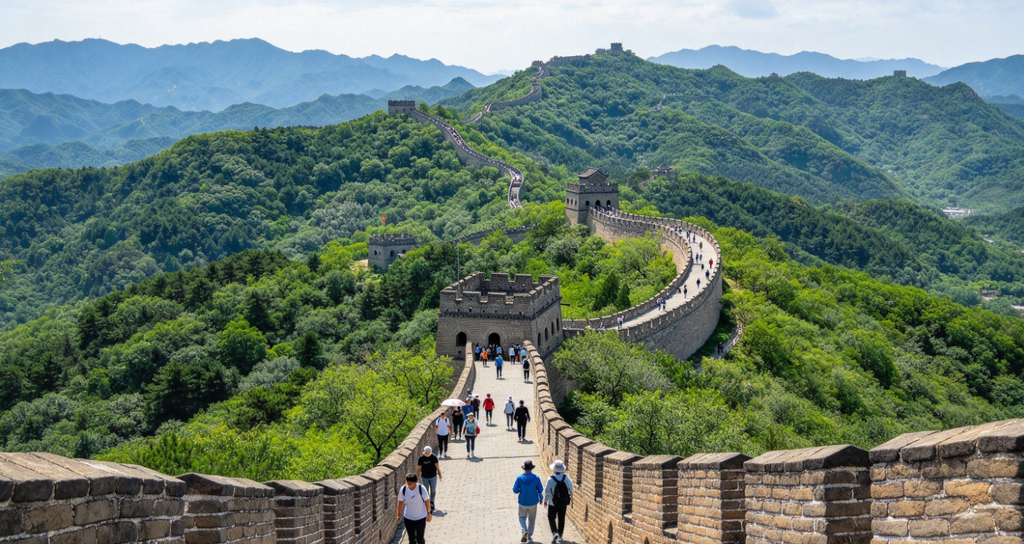
Mutianyu: Forested mountains and a more varied visual experience
Mutianyu is known for its restored stone walls, watchtowers, and position among green mountain slopes. In spring and summer, the surrounding vegetation can make the wall appear to weave through a continuous landscape of hills and forests. Autumn often brings particularly attractive foliage, although the timing and intensity of fall colors vary from year to year.
The combination of wall, towers, and mountain contours makes Mutianyu appealing to travelers who want landscape photography as well as historical sightseeing. Its different walking directions also allow visitors to experience changing views rather than remaining in one small area.
However, scenic does not mean easy. Some routes involve steep staircases, and the wall’s elevation changes can make even a relatively short walk physically demanding.
Badaling: Dramatic ridgelines and a famous historic landmark
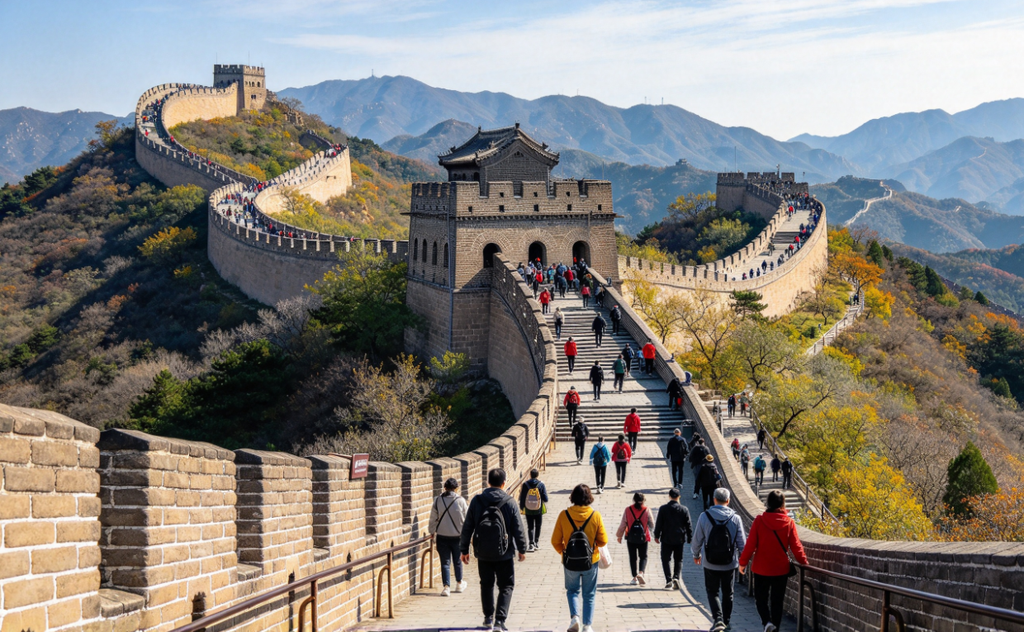
Badaling is also surrounded by mountainous terrain, with the wall following the contours of the ridges. Its restored fortifications and distinctive profile make it an iconic place to experience the scale of the Great Wall.
The landscape can feel especially dramatic when the wall rises and falls across successive mountain peaks. For travelers who want to visit a historically prominent and internationally recognized section, Badaling offers a compelling setting.
Because Badaling is a major visitor destination, the atmosphere may feel busier around popular entrances, towers, and viewing points. This can affect photography and the sense of space, particularly during holidays and peak travel periods.
Which is better for photography?
Choose Mutianyu if your priority is a combination of forested mountains, changing viewpoints, and scenic walking routes. Choose Badaling if you want to photograph a famous restored section and its sweeping ridge-top fortifications.
For either location, arriving early and checking the weather forecast will generally matter more than expecting one section to guarantee better photographs in every season.
3. Crowds: Is Mutianyu Less Busy Than Badaling?
Crowd levels are one of the most common reasons travelers compare these two sections.
Badaling has exceptionally strong name recognition and is a major destination for domestic and international visitors. During public holidays, weekends, and popular travel seasons, the entrance areas and well-known walking sections can become congested. Crowds can slow movement, make it harder to photograph the wall without other visitors, and increase the time needed to complete a route.
Mutianyu is often chosen by travelers looking for a scenic alternative. However, it is not a hidden or quiet section. It is a major tourist attraction in its own right, and its most popular viewpoints and access facilities can also become busy.
The difference is therefore relative, not absolute.
To improve your chances of a less crowded visit:
- Travel on a weekday when your schedule allows.
- Avoid major Chinese public holidays if crowd avoidance is important.
- Arrive close to opening time rather than in the middle of the day.
- Check ticket arrangements and entry requirements in advance.
- Allow extra time for queues at cable cars, shuttle services, or other access facilities.
If a quieter atmosphere is your overriding priority, consider comparing less-visited sections as well. The best Great Wall section should be selected according to your transport options, walking ability, and preferred scenery—not just its reputation for having fewer visitors.
4. Getting There: Which Section Is Easier From Beijing?
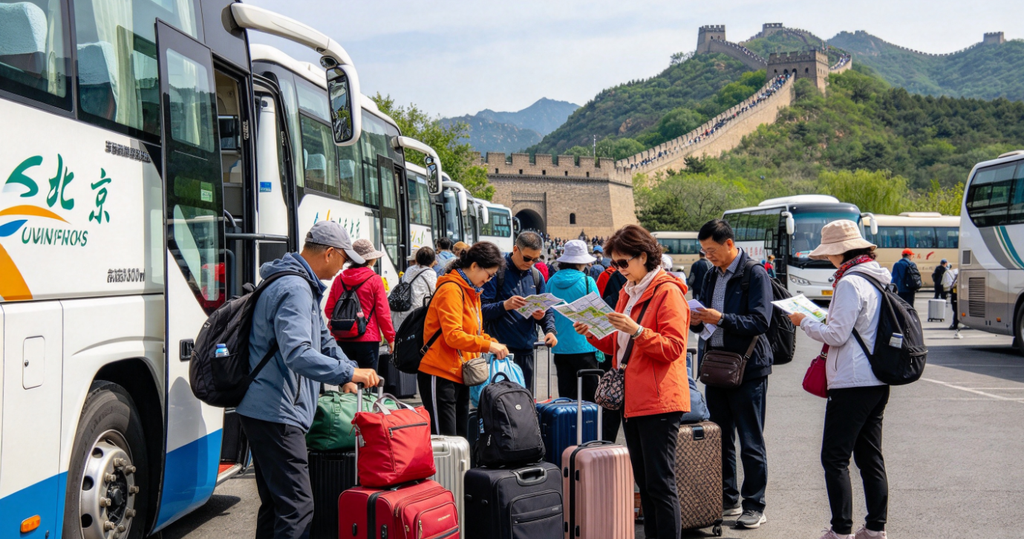
The best destination on paper may not be the best choice once transport is considered. Both sections are outside central Beijing, so the journey requires more planning than visiting attractions within the city.
Getting to Mutianyu
Mutianyu is commonly reached by road. Options may include a private car, a prearranged transfer, a tour vehicle, or an appropriate public transport combination.
A private transfer can be useful for families, small groups, or travelers who want control over departure and return times. It can also reduce the complexity of coordinating several transport connections.
Public transport may cost less, but the overall journey can involve additional transfers, waiting, and local transport between the final stop and the entrance. Check current routes and operating schedules rather than relying on an old itinerary.
Getting to Badaling
Badaling has road access and rail services from Beijing, including high-speed train options on relevant services and dates. Rail can be convenient for travelers whose accommodation and departure times align with the available stations and timetable.
However, train travel is not automatically door-to-door transport. You still need to account for the journey to the departure station, security procedures, ticket availability, arrival arrangements, and the walk or transfer required at the destination.
Road transfers offer more flexibility for combining the Great Wall with other stops, while rail may appeal to independent travelers who prefer a scheduled journey.
Which transport option should you choose?
| Your priority | Practical approach |
|---|---|
| Flexible departure and return times | Consider a private transfer or organized tour |
| Traveling with young children or older relatives | Minimize transfers and confirm accessibility needs |
| Independent travel by rail | Compare available Badaling train services and station locations |
| Combining the wall with other attractions | Plan the route around realistic travel times and opening hours |
| Keeping costs low | Compare the complete transport cost, not just the cheapest individual ticket |
Journey times vary with traffic, departure location, transport connections, and the time of year. Build your schedule around verified departure information and allow a buffer for delays.
5. Hiking Difficulty: Which Section Is Easier to Walk?

Neither Mutianyu nor Badaling should be treated as a flat sightseeing attraction. Both have uneven stone surfaces, stairs, exposed areas, and sections with substantial gradients.
Walking at Mutianyu
Mutianyu offers different route possibilities, allowing visitors to decide how far they want to walk. Cable car or other uphill access options, where operating, can reduce the amount of climbing required to reach certain parts of the wall.
Once on the wall, however, the terrain remains uneven. Some stretches include steep steps, and walking between watchtowers can take more effort than the distance suggests.
Travelers who want to enjoy the views without completing a long hike can plan a shorter out-and-back route. The important step is to decide on a realistic turnaround point before beginning.
Walking at Badaling
Badaling also includes steep sections, stairs, and changes in elevation. Certain areas are physically demanding, even though visitor infrastructure makes the site relatively accessible to a broad range of travelers.
Do not assume that a cable car eliminates the need to walk. The distance from the access point to your preferred viewpoint, the gradient of the route, and the number of stairs still matter.
What if you have limited mobility?
If you have knee problems, balance concerns, limited stamina, or are traveling with someone who struggles with stairs, evaluate the exact access route rather than choosing based on the destination’s general reputation.
Before booking, confirm:
- Whether the relevant cable car or lift is operating.
- How much walking is required after reaching the wall.
- Whether the route contains steep steps or uneven surfaces.
- Whether rest areas and accessible facilities are available along your intended route.
- What alternatives exist if someone in your group needs to turn back early.
For families with children, plan around the slowest walker. For older travelers, a shorter visit with comfortable transport arrangements may be more enjoyable than attempting to cover as much wall as possible.
6. Facilities and Visitor Experience
Both Mutianyu and Badaling are developed tourist destinations, but their visitor experiences are shaped by different layouts and transport arrangements.
Mutianyu’s combination of mountain scenery, walking routes, and uphill access options gives visitors flexibility in how they structure their visit. It can work well for travelers who want to spend time taking photographs, walking between selected watchtowers, and enjoying the surrounding landscape.
Badaling has a highly established visitor infrastructure and is widely recognized as a major Great Wall destination. Its facilities and transport connections can make it appealing to visitors who value a well-known landmark and a structured arrival experience.
At both sites, services can change with the season, weather, maintenance, and operational arrangements. Cable cars, shuttle services, restaurants, shops, and other facilities should be checked before departure.
A useful distinction is that more facilities do not necessarily mean an easier walk, and a scenic route does not necessarily mean fewer crowds. Separate these factors when making your choice.
7. How Much Time Should You Allow?
A Great Wall visit involves more than the time spent walking on the wall itself. You also need to consider the journey from Beijing, entry procedures, uphill access, rest breaks, meals, and the return trip.
As a general planning framework, allow several hours at the destination and reserve a substantial part of the day for the entire excursion.
A shorter visit
A shorter visit may suit travelers who want to experience the wall, photograph a few viewpoints, and return to Beijing for an evening activity. To make this work, choose your access route in advance and avoid trying to cover every available section.
A more relaxed visit
If you enjoy photography, want to walk between several watchtowers, or are traveling with family, allow more time. Frequent stops, rest breaks, and queues can make a meaningful difference to the pace of the day.
Combining the Great Wall with another attraction
Combining a Great Wall visit with another destination can be possible, but the itinerary should be based on actual travel time and the amount of walking involved.
Do not automatically add several distant attractions simply because they appear close on a map. Traffic, ticket times, and delays at the wall can turn an ambitious itinerary into a rushed experience.
If you are deciding how long is the Great Wall of China in terms of its total length, remember that the historic wall system extends far beyond the sections near Beijing. A single visit covers only a small part of this enormous network. For travel planning, the more useful question is how much time you want to spend at the particular section you choose.
8. Which Section Is Better for Families, Couples, and Independent Travelers?
Families with children
Mutianyu can be a good fit for families seeking mountain scenery and a visit that can be adapted to different energy levels. However, steep steps and uneven surfaces still require supervision.
Badaling may suit families who prefer a famous landmark with established visitor infrastructure. During busy periods, parents should plan meeting points and keep children close in crowded areas.
For either section, check age-appropriate walking expectations and transport arrangements before booking.
Couples and photography-focused travelers
Mutianyu is often a strong choice for couples who want scenic views, photography opportunities, and time to explore at their own pace.
Badaling may be more suitable for couples who want to visit a particularly well-known section and value the significance of seeing one of the Great Wall’s iconic restored areas.
Early arrival and a flexible schedule will help either experience feel less rushed.
Solo travelers
Solo travelers should compare transport convenience, ticket arrangements, and their preferred level of independence.
Badaling’s rail options may work well for visitors comfortable planning a trip around scheduled services. Mutianyu may be attractive to those who prefer an organized excursion or can arrange convenient transport.
Before departing, save your return transport details and confirm where and when you need to meet a driver or catch your return service.
Travelers with limited time in Beijing
If you have only a short stay, transport efficiency may be more important than small differences in scenery. Choose the section that fits your accommodation, departure schedule, and other planned activities.
The right choice is the one that gives you a satisfying Great Wall experience without compromising the rest of your trip.
9. Seasonal Considerations: When Should You Visit?
The season can change the appearance of both sections and influence comfort on the wall.
Spring: The surrounding mountains gradually become greener, and temperatures can be comfortable for walking. Wind and changing weather are still possible, so bring suitable layers.
Summer: Vegetation is lush, but heat, humidity, and strong sunlight can make the climb tiring. Start early, carry water, and plan regular breaks.
Autumn: Clear days and colorful foliage can create excellent scenery, especially around Mutianyu. Autumn is also a popular travel season, so attractive weather can coincide with heavier visitor demand.
Winter: Snow and frost can transform the landscape, but they may also make steps and paths slippery. Check weather warnings, access conditions, and operating schedules before traveling.
No section guarantees better weather or a crowd-free experience. Choose a date based on your priorities, then confirm the practical conditions close to departure.
10. How to Make the Final Decision
When comparing Mutianyu and Badaling, avoid relying on a single ranking. A section that is ideal for a photography-focused traveler may not be the most convenient option for a family with young children or a visitor with limited mobility.
Use these questions to make your decision:
- What matters most to you? Prioritize mountain scenery, historical significance, transport convenience, or walking flexibility.
- How much walking can your group comfortably manage? Choose the route according to the least mobile member of your group.
- How will you get there and back? Compare the complete journey, including station access, transfers, and waiting time.
- When are you visiting? Consider holidays, weather, seasonal crowds, and facility availability.
- What else do you want to do that day? Leave enough time for the wall rather than squeezing it between too many attractions.
If you are still planning your overall visit, use these answers to plan Beijing trip around your preferred pace and transport needs. An itinerary should support the experience you want, not force you into a section that is inconvenient for your group.
11. Should You Book a Tour or Visit Independently?
Independent travel gives you control over departure times, time on the wall, and how you spend the rest of the day. It can be a good choice if you are comfortable checking transport schedules, buying tickets, and navigating the destination yourself.
A guided tour can reduce planning work, particularly when transport is included or you want to combine the wall with other experiences. However, not all tours offer the same flexibility. Check the actual itinerary, time allocated at the wall, group size, included services, and whether shopping stops are part of the schedule.
When comparing Beijing tours, look beyond the headline price. Confirm which Great Wall section is included, whether admission and uphill transport are covered, how long you will stay, and whether the return journey is clearly arranged.
A private trip may offer more control over the pace and departure time, while a group tour may be more economical. Neither is automatically better; the right format depends on your budget, comfort level, and priorities.
Conclusion: Mutianyu or Badaling?
For travelers who prioritize forested mountain scenery, flexible sightseeing, and a more customizable walking experience, Mutianyu is often the stronger choice. For those who want to visit one of the Great Wall’s most famous restored sections and value established visitor infrastructure and available rail connections, Badaling can be an excellent option.
The best decision comes from matching the destination to your travel style rather than assuming one section is universally superior. Both offer a memorable encounter with the Great Wall, but the experience you have depends on your route, timing, transport, and expectations.
Ultimately, the Mutianyu vs Badaling choice should be based on what will make your day most rewarding. Choose the section that fits your group’s walking ability, schedule, and preferred scenery, and allow enough time to enjoy the wall instead of treating it as a quick stop on an overloaded itinerary.
Frequently Asked Questions
Is Mutianyu better than Badaling for first-time visitors?
Mutianyu is often appealing to first-time visitors who prioritize mountain scenery and flexible sightseeing. Badaling may be preferable for travelers who want to visit a particularly famous section and take advantage of its established visitor infrastructure. The better option depends on transport, crowds, mobility, and personal interests.
Is Mutianyu less crowded than Badaling?
Mutianyu may feel less congested at certain times, but it is also a popular attraction. Both sections can be busy during weekends, holidays, and peak seasons. Visiting early on a weekday can improve your chances of a more comfortable experience.
Can I visit both Mutianyu and Badaling in one day?
It may be technically possible with carefully arranged transport, but it is usually better to focus on one section. Visiting both adds travel time and reduces the time available to explore each location. A single well-planned visit generally provides a more relaxed experience.
Which section is better for older travelers?
Neither section is automatically suitable for everyone. Compare the precise walking route, stair gradients, uphill transport, rest opportunities, and current accessibility arrangements. A shorter route with suitable access can be more important than the name of the section.
Do I need a guide to visit the Great Wall?
No. Independent visits are possible with appropriate ticket and transport planning. A guide or organized tour can be useful if you prefer coordinated transport, historical explanations, or help combining the wall with other attractions.
How do I choose the right Great Wall section for my Beijing itinerary?
Start with your travel dates, departure location, walking ability, and available time. Then compare transport, crowd expectations, scenery, and the experience you want. Selecting the section around your actual needs is more useful than following a universal ranking.