
Is the Great Wall of China Worth Visiting?
Quick Answer
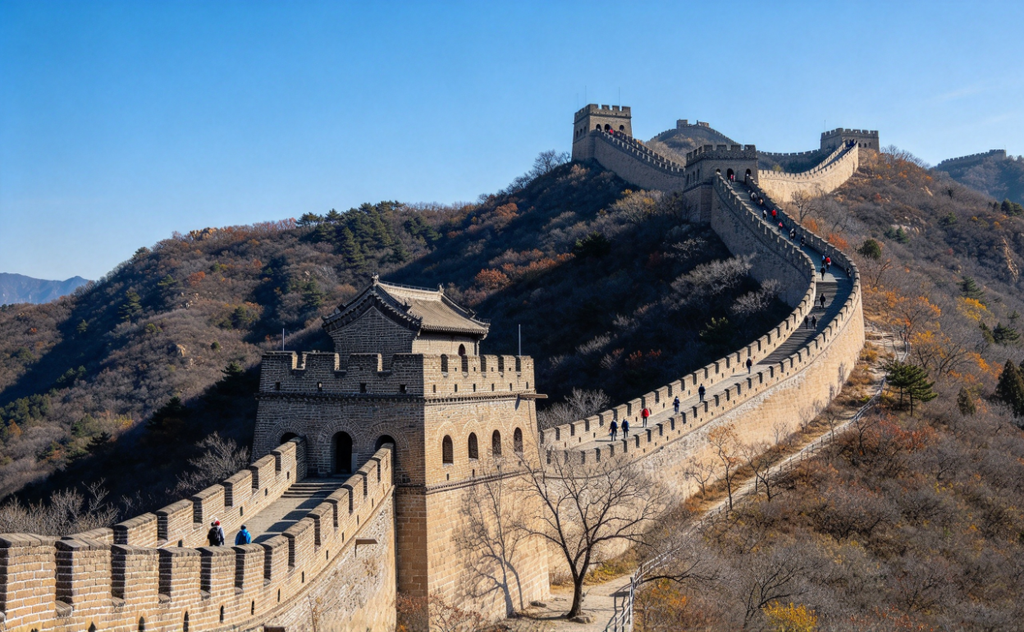
Yes, the Great Wall can be one of the most meaningful experiences on a Beijing trip, but its value depends on what you expect from the visit.
The Great Wall is not simply a monument that you walk up to, take a photograph of, and leave. At the right section, the experience combines mountain scenery, historic architecture, physical activity, and a sense of scale that is difficult to understand from photographs alone.
At the same time, visiting the Wall requires time and effort. Many sections are outside central Beijing, the terrain can be steep, weather can affect the experience, and popular sections can become crowded.
So the better question is not simply is the Great Wall of China worth visiting?
It is:
Is the Great Wall experience worth the time, physical effort, and planning required for your particular trip?
For most first-time visitors to Beijing, understanding that distinction makes the decision much easier.
1. Why the Great Wall Feels Different in Person
Photographs usually show the Great Wall as a long stone or brick structure running across dramatic mountains.
That image is accurate, but incomplete.
What photographs struggle to communicate is scale.
When you stand on the Wall, you can see defensive towers extending along ridgelines and mountains continuing far beyond the immediate section you are walking on.
The Wall stops feeling like an isolated monument.
It becomes part of the landscape.
This is one of the strongest reasons people choose to visit.
The experience is not only about looking at an ancient structure. It is about seeing how architecture interacts with mountains, valleys, passes, and enormous distances.
That combination is difficult to reproduce through museum displays or photographs.
2. The Great Wall Is More Than One Tourist Attraction

A common misconception is that the Great Wall is a single attraction with one standard visitor experience.
It is not.
Different sections have different landscapes, restoration levels, walking conditions, transportation arrangements, and visitor patterns.
This matters enormously when deciding whether a visit is worthwhile.
A heavily restored section near Beijing may offer:
- easier access
- clearer paths
- more visitor infrastructure
- cable-car options in some locations
- strong viewpoints
- a more predictable first-time experience
A less-restored or more remote section may offer:
- rougher terrain
- fewer facilities
- greater solitude
- a stronger hiking component
- more demanding logistics
Neither automatically provides a better experience.
They serve different purposes.
Understanding what is the Great Wall of China therefore requires looking beyond the familiar postcard image and recognizing that the visitor experience changes significantly from one section to another.
3. What Makes a Great Wall Visit Valuable?
The value of visiting the Wall usually comes from several experiences happening simultaneously.
Historical value
You are walking through a physical structure associated with centuries of frontier defense and imperial history.
Landscape value
Many sections cross mountainous terrain, creating viewpoints that combine architecture with dramatic natural scenery.
Physical experience
Unlike many historic monuments, the Wall is something you physically move through.
You climb.
You descend.
You walk between towers.
You stop to look back.
The terrain becomes part of the experience.
Scale
The Wall’s enormous geographic extent becomes easier to appreciate when you stand on one section and see it continuing through the landscape.
Cultural value
The Great Wall has become one of the most recognizable symbols associated with China, making a visit meaningful for travelers who want to connect what they have seen in books and media with a real location.
These values overlap.
That is what makes the experience different from simply visiting another historic building.
4. But the Great Wall Is Not Easy for Everyone
The strongest argument against visiting is not that the Wall lacks historical importance.
It is that the physical experience may not match every traveler’s abilities or preferences.
Many sections involve stairs and uneven surfaces.
Some climbs are relatively steep.
Even visitors who regularly walk in cities may find the Wall more tiring than expected because climbing and descending repeatedly uses different muscles than ordinary sightseeing.
Weather also matters.
A cool, clear day can make the landscape spectacular.
Hot weather can make exposed sections uncomfortable.
Rain can make stone surfaces slippery.
Winter can bring cold temperatures and potentially icy conditions.
This means that the value of the trip is partly dependent on conditions.
A traveler who dislikes hiking, has limited mobility, or wants a relaxed museum-style sightseeing experience may reasonably evaluate the Wall differently from someone who enjoys walking outdoors.
5. How Much Time Does a Great Wall Visit Really Require?
One reason the Great Wall sometimes disappoints travelers is unrealistic time planning.
The attraction itself may not be the only time-consuming part.
You need to consider:
- transportation from your accommodation
- traffic conditions
- parking or transfer arrangements
- entrance procedures
- walking to the Wall
- the actual visit
- returning to Beijing
- meals
- potential waiting time
For that reason, the Great Wall is usually better treated as a substantial excursion rather than a quick stop between two central Beijing attractions.
If your schedule is already extremely tight, the opportunity cost becomes important.
Spending most of a day traveling to and visiting the Wall means giving up time that could otherwise be spent exploring Beijing’s historic center, museums, neighborhoods, or food culture.
This does not make the Wall less significant.
It simply means the visit should be evaluated as a major component of your travel day.
6. Is the Great Wall Worth the Trip From Beijing?
For many visitors, the answer depends on how they value three things:
history + landscape + physical experience.
If all three appeal to you, the journey becomes easier to justify.
If you mainly want to see Beijing’s imperial architecture, the Wall may feel less essential.
If you strongly prefer urban culture, food, museums, and neighborhoods, spending a full day outside the city may not match your priorities.
If you enjoy landscapes and hiking, however, the Wall can provide an entirely different side of Beijing.
This is why a thoughtful plan Beijing trip strategy should not treat every famous attraction as equally important.
A trip has limited time.
The right question is how a destination fits your interests and energy rather than how famous it is.
7. The Wall Gives You a Different View of China’s History
The Great Wall is particularly valuable because history becomes physical.
At the Forbidden City, history is expressed through architecture, courtyards, halls, objects, and political symbolism.
At the Great Wall, history is expressed through terrain.
You can see why ridgelines mattered.
You can understand why towers were positioned where they were.
You can observe passes and valleys.
You can see how defensive architecture interacted with geography.
This makes the experience complementary to Beijing’s major imperial sites.
The two experiences answer different questions.
The Forbidden City helps explain the political center of imperial Beijing.
The Great Wall helps reveal how the empire interacted with its northern frontier.
That contrast can make a Beijing trip historically richer than visiting either type of site alone.
8. The Landscape May Be as Important as the Wall
Some travelers arrive expecting the Wall itself to be the main attraction.
Afterward, they remember the mountains.
This is not surprising.
Many sections of the Great Wall are built across elevated terrain, meaning the visitor experience changes with the season and weather.
In spring, vegetation can add color to the mountains.
Summer can create greener landscapes but may also bring heat.
Autumn is often associated with clear mountain scenery and changing foliage.
Winter can create a quieter atmosphere and different visual conditions.
The structure remains important, but the landscape determines much of what you actually see.
This is another reason photographs cannot fully predict your experience.
The same section can feel completely different under different weather and seasonal conditions.
9. Popular Sections vs. More Remote Experiences
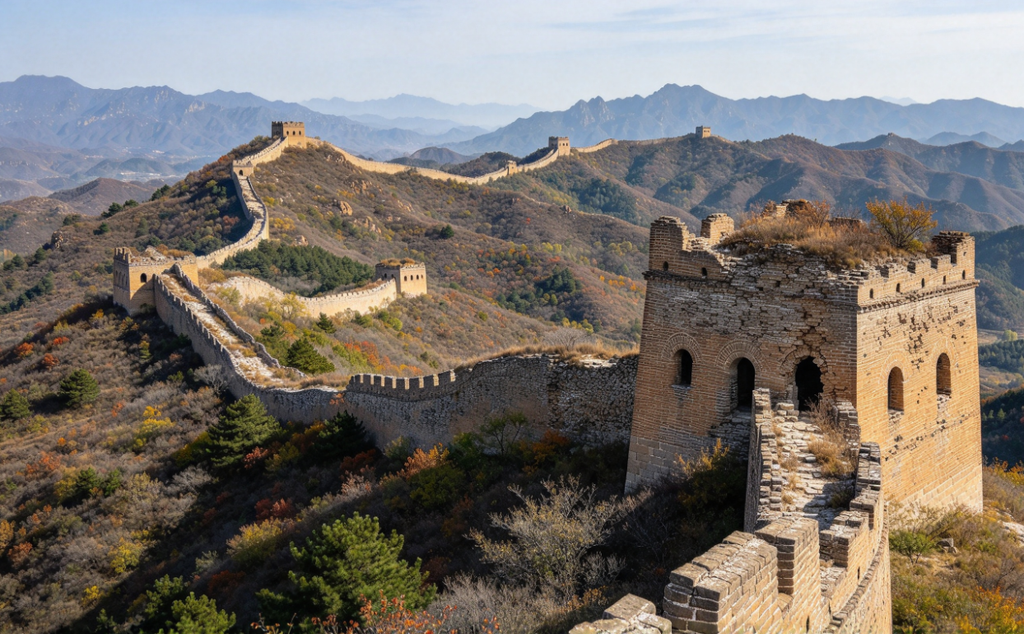
Choosing a Great Wall section is one of the most important decisions you can make.
A popular restored section can be useful for first-time visitors because it reduces logistical uncertainty.
You may have clearer transportation options, established visitor facilities, and easier access.
A less-developed section can provide a different experience, but it may require more preparation and physical effort.
This creates an important trade-off:
| Priority | More accessible section | More remote section |
|---|---|---|
| Logistics | Generally simpler | More complicated |
| Infrastructure | More developed | More limited |
| Hiking | Often easier to manage | Can be more demanding |
| Visitor numbers | Potentially higher | Often lower |
| Convenience | Higher | Lower |
| Sense of exploration | More structured | Potentially stronger |
The appropriate choice depends on your trip rather than a universal ranking.
For many first-time visitors, predictability has real value.
For experienced hikers, the additional effort of a more remote section may itself be part of the attraction.
10. What About the Crowds?
Crowds can change the experience considerably.
A busy Great Wall section can still be visually impressive, but it may be harder to walk at your own pace or pause at viewpoints.
Photographs can also become more difficult.
This is one reason timing matters.
Early visits can sometimes provide a quieter atmosphere than arriving during the busiest part of the day, although actual visitor levels vary by date, season, weather, holidays, and specific section.
The important lesson is not simply “avoid crowds.”
It is to understand that the Wall is a popular attraction and that your experience will be influenced by how many other people are there.
If solitude is a major priority, your section and timing choices become especially important.
11. Should You Visit the Great Wall Independently or With a Private Trip?
There is no single correct format.
Independent travel can work well for visitors who are comfortable managing transportation, tickets, timing, and navigation themselves.
A private trip can reduce the number of logistical decisions you need to make and may be particularly useful when traveling with family, older relatives, children, or travelers with specific mobility or timing requirements.
A private Great Wall trip can also make sense when the Wall is one of the main purposes of the Beijing visit and you want the day organized around the experience rather than around figuring out each transfer.
The important distinction is that a guide or driver does not make the Wall itself more historically significant.
The value is primarily logistical and interpretive.
If you enjoy planning transportation and exploring independently, you may prefer to handle the excursion yourself.
If you would rather focus on the landscape and history without coordinating every step, additional support may be useful.
12. Is the Great Wall Worth Visiting With Children?
For families, the answer depends heavily on the children’s age, energy, weather, and expectations.
The Wall can be fascinating for children because it is tangible.
They can walk on it, climb stairs, enter watchtowers, and see mountains from above.
That is very different from looking at historical objects behind glass.
However, the physical challenge can also become tiring.
A successful family visit therefore depends more on choosing an appropriate section and pacing the day than on trying to cover as much Wall as possible.
Children do not need to hike for hours for the visit to be meaningful.
A shorter, manageable walk can still provide the central experience.
13. What About Older Travelers?
Older travelers should not automatically assume that the Great Wall is impossible.
But mobility needs should be considered honestly.
The relevant questions include:
- How comfortable are you with stairs?
- Can you walk on uneven surfaces?
- How long can you comfortably remain outdoors?
- Would a cable-car option be useful where available?
- How much walking is required before reaching the main Wall?
- What will the weather be like?
The goal should not be to prove physical endurance.
The goal is to create an enjoyable experience.
For some travelers, seeing one scenic section and spending more time at viewpoints is more appropriate than attempting a long hike.
14. When Might the Great Wall Not Be Worth It?
A useful travel guide should also acknowledge situations where skipping the Wall can make sense.
You might reasonably choose not to visit if:
Your Beijing stay is extremely short
If you have only a limited amount of time, traveling outside the central city can consume a significant part of your available sightseeing time.
You strongly dislike hiking
The Wall is not a conventional flat walking attraction.
Weather conditions are poor
Fog, heavy rain, extreme heat, or winter conditions can substantially change the experience.
Your interests are primarily urban
If your priority is food, museums, contemporary culture, shopping, or historic neighborhoods, another day inside Beijing may fit your interests better.
You have mobility limitations that make the terrain unsuitable
The physical structure of many Wall sections cannot simply be made flat or effortless.
You are visiting only because you feel obligated
Famous does not automatically mean personally meaningful.
Travel time is limited, so choosing experiences that fit your interests is reasonable.
15. When Is the Great Wall Especially Worth Visiting?
The opposite conditions can make the excursion particularly compelling.
The Wall may be especially appealing if you:
- are visiting China for the first time
- enjoy history
- like mountain landscapes
- enjoy walking or hiking
- want a major outdoor experience
- want to see a different side of Beijing
- are interested in defensive architecture
- enjoy places where history and geography intersect
- have enough time for a dedicated excursion
The more of these characteristics describe you, the more likely the Wall’s particular combination of experiences will match what you want from the trip.
That is a more useful way to evaluate the attraction than relying on its reputation alone.
16. The Great Wall Is Not a Checklist Item
One of the biggest differences between a satisfying visit and a disappointing one is mindset.
If the goal is simply:
“I need a photo at the Great Wall.”
the experience can become rushed.
You arrive.
Take photographs.
Walk a little.
Leave.
But the Wall rewards slower observation.
Look at how the path follows the mountain.
Notice the relationship between towers.
Watch how the landscape changes as you gain elevation.
Consider how difficult construction and maintenance must have been in mountainous terrain.
Observe how the modern visitor experience interacts with a structure that originally served a completely different purpose.
The Wall becomes much more interesting when you stop treating it as a photograph and start treating it as a place.
17. How the Great Wall Fits Into a Beijing Trip
The Great Wall works best when it provides contrast.
Central Beijing is dense, architectural, urban, and historically concentrated.
The Great Wall is elevated, open, mountainous, and physically demanding.
That contrast is valuable.
After several days of imperial buildings, museums, hutongs, and city streets, spending a day in the mountains can change the rhythm of the trip.
It also helps you understand Beijing geographically.
The capital is not only the historic core visible in maps and photographs.
Its surrounding landscape has always influenced how the city developed and how people moved through the region.
The Wall makes that broader geography visible.
18. What Should You Expect to Feel?
There is no universal emotional response to the Great Wall.
Some visitors are impressed immediately.
Others are more interested in the surrounding mountains than the structure itself.
Some enjoy the physical challenge.
Others find the stairs exhausting.
Some travelers are fascinated by the historical context.
Others mainly remember the scenery.
All of these responses are reasonable.
The important point is to know what kind of experience you are seeking before you go.
If you expect a short, effortless sightseeing stop, the Wall may surprise you.
If you expect a substantial historical and outdoor excursion, the physical demands are easier to understand.
19. A Simple Decision Framework
Instead of asking whether everyone should visit the Great Wall, consider these five questions:
1. Do you enjoy historical places?
If yes, the Wall offers a strong physical connection to China’s history.
2. Do you enjoy mountain scenery?
If yes, the landscape can be as rewarding as the architecture.
3. Are you comfortable with stairs and walking?
If yes, you will have more flexibility in choosing how to explore.
4. Do you have enough time?
If yes, the excursion is easier to integrate without sacrificing too many central Beijing experiences.
5. Does the experience match your travel priorities?
If the answer is yes, the Wall may deserve a significant place in your trip.
This framework is more useful than simply following a list of famous attractions.
20. What Makes the Visit Memorable?
The most memorable part of a Great Wall visit may not be one particular tower.
It could be:
- seeing the Wall disappear over a mountain ridge
- entering a watchtower
- looking down into a valley
- watching clouds move across the mountains
- walking a quiet stretch early in the day
- seeing autumn foliage around the fortifications
- understanding the terrain that shaped the Wall
- realizing how different the landscape is from central Beijing
These moments are difficult to predict.
They depend on weather, season, visitor levels, physical ability, and your chosen section.
That unpredictability is part of the experience.
Final Takeaway

The answer to is the Great Wall of China worth visiting depends less on the Wall’s fame than on what you want from your Beijing trip.
If you value history, mountain scenery, outdoor experiences, architecture, and places where geography and human history intersect, the Great Wall offers a combination that is difficult to reproduce elsewhere.
If your trip is extremely short, you dislike walking, have significant mobility limitations, or strongly prefer urban experiences, spending a full day at the Wall may not fit your priorities.
The key is to choose the right section, allow enough time, prepare for the physical conditions, and avoid treating the visit as merely a photo opportunity.
The Great Wall is most rewarding when you give it enough time to become an experience rather than simply another item on a sightseeing checklist.