
Why Was the Great Wall of China Built? History & Purpose
Quick Answer
Why was the Great Wall of China built? There was no single answer.
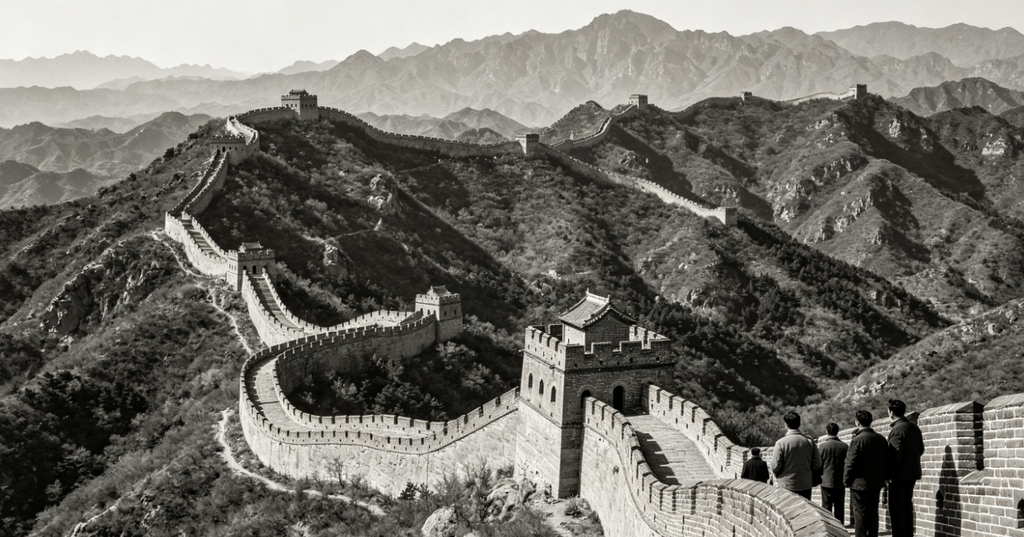
Different Chinese states and dynasties constructed frontier walls for different strategic reasons, including slowing cavalry raids, protecting agricultural settlements, controlling passes and trade routes, supporting military communication, and managing movement across the northern frontier.
The Great Wall was therefore not simply a giant barrier designed to stop an invading army.
It was part of a much larger frontier system that included defensive walls, watchtowers, beacon towers, fortified passes, roads, garrisons, supply networks, and border markets.
It also was not built as one continuous project. Walls appeared in different parts of northern China over more than two thousand years, often being abandoned, rebuilt, connected, or extended as political circumstances changed.
The sections most familiar to international visitors around Beijing were primarily constructed or extensively rebuilt during the Ming Dynasty (1368–1644).
To understand the Great Wall, it is therefore better to ask not only why a wall was built, but what problem each dynasty was trying to solve by building one.
What Is the Great Wall of China?
Before asking what is the Great Wall of China, it helps to move away from the modern image of one enormous wall stretching continuously from east to west.
The Great Wall is better understood as a historical collection of frontier fortifications.
These included:
- Defensive walls
- Watchtowers
- Beacon towers
- Fortified passes
- Barracks and garrisons
- Military roads
- Storage and supply facilities
- Border settlements and markets
Different sections were built from different materials according to local geography.
In mountainous areas, builders could use locally available stone. In dry regions where stone was scarce, rammed earth, gravel, reeds, and other materials were used.
This explains why the Great Wall does not look the same everywhere.
A brick-and-stone Ming wall near Beijing represents only one phase of a much longer history.
The Great Wall Was a Frontier System, Not Just a Wall
One of the biggest misunderstandings about the Great Wall is assuming that its purpose was simply to create an impenetrable physical barrier.
That was rarely realistic.
A wall several meters high could be crossed, bypassed, damaged, or attacked. The real strategic advantage came from combining the wall with surveillance, communication, troops, and controlled access points.
Imagine a long frontier without a defensive system.
A small cavalry force could move quickly across open terrain, raid settlements, seize livestock, attack supply lines, and withdraw before a large agricultural army could respond.
A fortified frontier changed that calculation.
Watchtowers could observe movement.
Beacon towers could transmit warnings.
Garrisons could concentrate troops at threatened locations.
Passes could channel traffic into defensible points.
Military roads allowed soldiers and supplies to move along the frontier.
The wall therefore helped transform an enormous and difficult-to-monitor border into a series of observable and controllable sectors.
That distinction is essential to understanding why the Great Wall mattered.
Why Northern China Needed Frontier Defenses
The strategic problem came partly from the different economic systems that existed on either side of the northern frontier.
Large parts of northern China were based on settled agriculture.
Agricultural societies depended on land, crops, villages, irrigation, storage, and predictable seasonal cycles.
Farther north and northwest, steppe societies could depend much more heavily on pastoralism and mobile livestock herding.
These systems were not simply enemies.
They traded with one another, negotiated alliances, exchanged hostages, intermarried, and sometimes fought.
But their military and economic structures were different.
Mobile horse-based societies could potentially move much faster than large agricultural armies.
This created a persistent strategic problem for Chinese states:
How could a government protect settled territory from fast-moving raids without maintaining a massive army everywhere along its northern frontier?
Frontier fortifications were one part of the answer.
1. Early Chinese States Built Walls Before the Qin Dynasty
The Great Wall did not begin with Qin Shi Huang.
During the Warring States period (475–221 BCE), several competing states constructed their own defensive walls.
States such as Qin, Zhao, and Yan built fortifications to protect their territories from neighboring states and northern peoples.
This is important because the earliest walls were not originally designed as one national border.
They were regional military infrastructure.
The political situation changed dramatically when Qin conquered the rival states and unified China in 221 BCE.
Qin Shi Huang then ordered existing northern walls to be connected, extended, and reorganized.
This created an early large-scale frontier defense network.
So the Qin contribution was not “building the Great Wall from nothing.”
It was integrating and extending earlier fortifications as part of a newly unified empire.
2. The Qin Dynasty: Consolidating a New Empire
The Qin Dynasty lasted only from 221 to 206 BCE, but its approach to frontier defense had long-term consequences.
After unification, the Qin government faced threats from northern groups, particularly the Xiongnu.
The empire had already spent enormous resources conquering the Chinese states.
Maintaining control over such a large territory required roads, armies, administrative institutions, and defensive infrastructure.
Northern walls formed part of this broader state-building project.
The wall did not eliminate the need for soldiers.
Instead, it helped define where soldiers needed to concentrate and provided physical infrastructure for surveillance and defense.
This reflects an important principle:
The Great Wall was never a replacement for an army.
It was an instrument that made an army’s deployment more organized.
3. The Han Dynasty Expanded the Frontier System
The Han Dynasty (206 BCE–220 CE) inherited and modified earlier frontier defenses.
But the Han strategic situation was different from that of the Qin.
Han rulers were not interested only in defending the agricultural heartland. They also sought to project power farther west and maintain access to important routes through Central Asia.
This is where the Great Wall’s relationship with the Silk Road becomes important.
Rather than thinking of the wall as directly “protecting the Silk Road,” it is more accurate to say that Han frontier fortifications helped secure strategic corridors, settlements, garrisons, and transport routes connected to China’s western expansion.
The wall system was therefore part of a larger military and administrative presence.
It could help protect caravans and supply movements, but its broader purpose was to maintain state control over strategically important territory.
4. The Great Wall Was Also About Controlling Movement
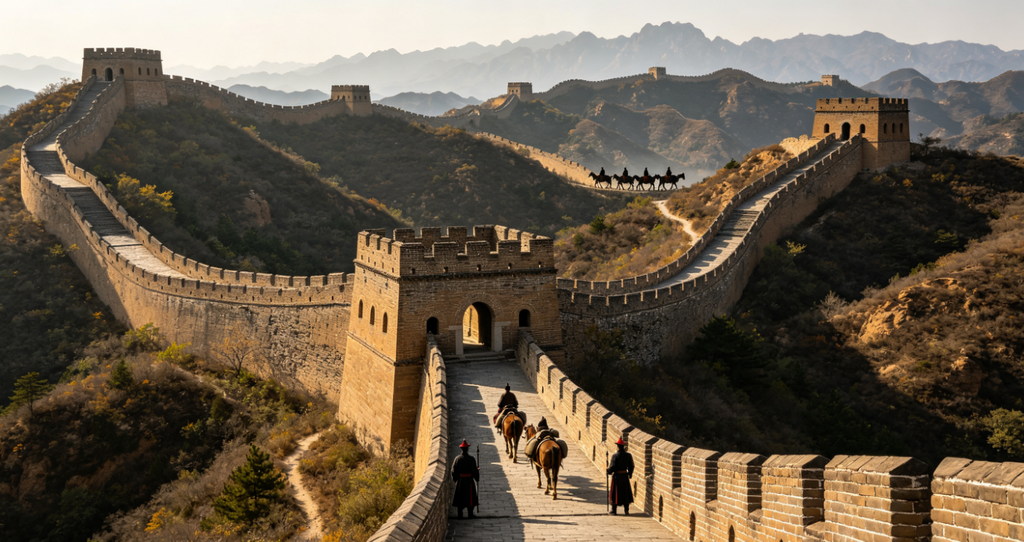
A wall without controlled openings would be economically and politically inconvenient.
People, animals, goods, messengers, and armies needed to cross the frontier.
This is why passes were so important.
A fortified pass could function simultaneously as:
- A military checkpoint
- A customs point
- A trading location
- A communication center
- A transportation corridor
Instead of trying to seal the entire frontier, governments could concentrate resources at strategically important passages.
This reveals another purpose of the Great Wall system.
It was not simply about keeping outsiders out.
It was about deciding where, when, and under what conditions people could cross the frontier.
That distinction becomes especially important when considering periods of peaceful trade.
5. Trade and Warfare Were Not Opposites
It is tempting to imagine the Great Wall as separating two completely hostile worlds.
History was more complicated.
Northern Chinese states and steppe societies depended on one another economically in many periods.
The agricultural regions could provide products such as:
- Grain
- Silk
- Textiles
- Tea
- Metal goods
Pastoral societies could provide:
- Horses
- Livestock
- Animal products
- Other goods from the steppe
Governments therefore faced a difficult balancing act.
They wanted to prevent uncontrolled raids while still benefiting from regulated trade.
Fortified passes and border markets allowed governments to manage this relationship.
This means the Great Wall should not be understood simply as a symbol of isolation.
In many periods, it was part of a system that enabled authorities to control interaction while allowing selected forms of exchange.
6. Why Did Later Dynasties Keep Building Walls?
The wall-building tradition did not end with the Qin or Han.
Later states and dynasties built or rebuilt frontier fortifications according to their own circumstances.
Significant wall-building occurred during periods including:
- Northern Wei
- Northern Qi
- Sui
- Liao and Jin
- Ming
The materials, routes, military technology, and political objectives changed over time.
Some walls were built by states that were themselves based in northern China or had steppe origins.
This is another reason the simplistic idea of “Chinese civilization versus northern invaders” is misleading.
The political geography of medieval and early modern China was constantly changing.
Different states controlled different territories, and frontier walls were tools used by many different governments.
7. Why the Ming Built the Great Wall We Know Today
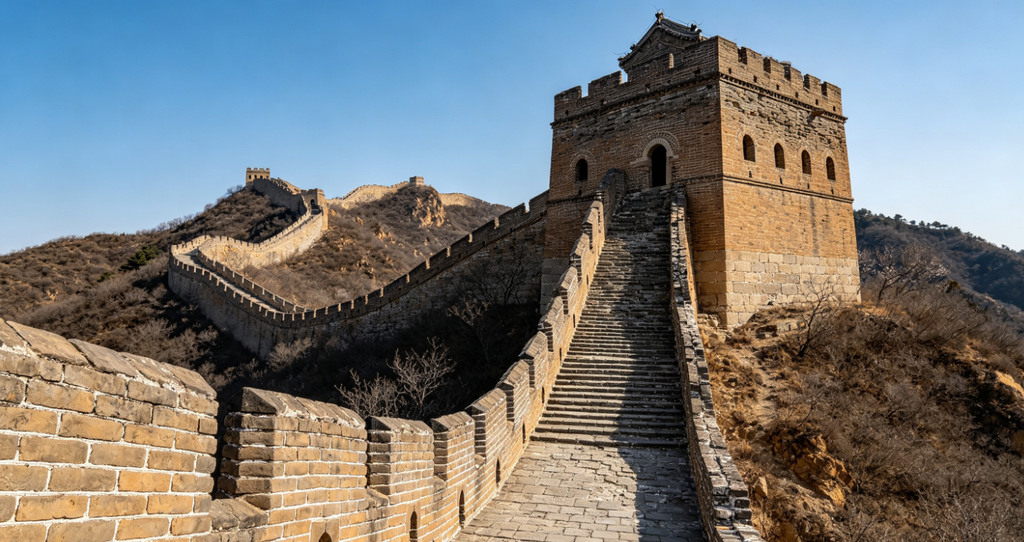
When travelers visit the Great Wall near Beijing today, they are primarily seeing the legacy of the Ming Dynasty.
The Ming had particular reasons to invest heavily in northern defenses.
After the Ming established itself in the fourteenth century, northern military threats remained a major strategic concern.
The situation became especially serious after the Ming capital was moved to Beijing in the early fifteenth century.
Beijing was now the political center of the empire and geographically much closer to the northern frontier than the earlier Ming capital at Nanjing.
Protecting the approaches to Beijing became a major strategic priority.
The Ming therefore developed a sophisticated northern defense system consisting of:
- Walls
- Towers
- Fortified passes
- Garrisons
- Military settlements
- Roads
- Signal systems
The famous stone-and-brick sections around Beijing belong largely to this period.
8. Why Are Ming Walls So Much More Impressive?
If earlier dynasties also built walls, why do modern visitors associate the Great Wall with massive brick structures?
Technology and military requirements changed.
By the Ming period, firearms were increasingly important in warfare, while artillery and improved siege technology affected defensive architecture.
Ming builders invested heavily in stronger fortifications.
Brick and stone could provide more durable structures than earlier rammed-earth walls in suitable environments.
The mountainous terrain around Beijing also offered natural defensive advantages.
The resulting landscape is what many travelers now recognize as the “classic” Great Wall:
- Stone foundations
- Brick parapets
- Watchtowers
- Steep mountain ridges
- Fortified passes
It is visually dramatic partly because it represents the mature stage of Ming frontier defense, not because all Great Wall sections throughout history looked this way.
9. How Did the Great Wall Actually Work?
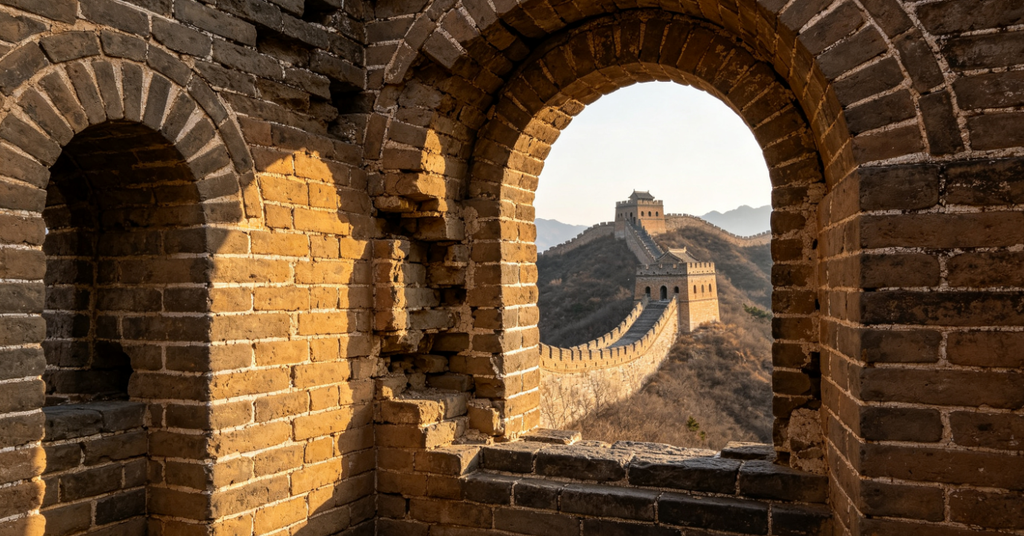
The wall itself was only one layer of the defense system.
Watchtowers
Watchtowers allowed soldiers to observe the surrounding landscape and detect approaching forces.
Their elevation was particularly useful in mountainous terrain.
Beacon Towers
Signals could be transmitted rapidly from one tower to another.
This allowed information about enemy movement to travel much faster than troops could physically move.
Garrisons
Soldiers stationed near strategic locations could respond to threats.
Fortified Passes
Passes concentrated movement and provided heavily defended entry points.
Roads and Supply Networks
Defensive infrastructure required food, weapons, horses, and other supplies.
Without logistics, even an impressive wall would have limited military value.
This is why historians often describe the Great Wall as a military system rather than a single architectural object.
10. Did the Great Wall Actually Stop Invasions?
Not in the absolute sense.
This is one of the most important points when answering why was the Great Wall of China built.
The Great Wall was not an invisible force field.
Large armies could attack fortified sections. Smaller forces could exploit weak points. Political instability could undermine defenses. Gates could be opened through negotiation, betrayal, or political collapse.
Most famously, the Ming defense system ultimately failed to prevent the Manchu-led forces from entering China in the seventeenth century.
But saying that the wall “failed” is also too simplistic.
Military defenses should not be judged only by whether an enemy eventually crossed them.
A defense system can still:
- Delay an attack
- Channel movement
- Give warning
- Protect strategic settlements
- Reduce surprise
- Concentrate defenders
- Control crossings
- Increase the cost of an offensive
The Great Wall’s value therefore depended on how well it worked together with soldiers, commanders, communications, and political institutions.
11. The Great Wall and the Cost of Defense
Building a frontier wall required enormous resources.
Governments needed:
- Workers
- Soldiers
- Engineers
- Materials
- Food
- Transportation
- Administrative coordination
In remote mountain and desert environments, transporting materials could be extremely difficult.
This raises an important historical question:
Why would a government spend so much on walls instead of simply relying on mobile armies?
The answer varied by period.
A mobile army could respond to threats, but it could not be everywhere simultaneously.
A fixed defensive system provided persistent surveillance and established defensible positions.
In other words, the wall represented a trade-off between permanent infrastructure and permanent military mobility.
Different dynasties made different choices depending on their resources and strategic circumstances.
12. The Human Cost of Building the Wall
The Great Wall is often presented as an architectural achievement, but its history also involves enormous human labor.
Workers included soldiers, peasants, transported laborers, craftsmen, and other groups mobilized by governments.
Construction in mountainous terrain was physically demanding.
Workers had to quarry, transport, shape, and place materials under difficult conditions.
In remote areas, food and water could be difficult to supply.
Stories about the Great Wall often emphasize dramatic legends about workers dying during construction. Some popular stories have been exaggerated or transformed over centuries, so they should not be treated as straightforward historical evidence.
Nevertheless, the scale of the construction itself demonstrates the enormous burden that frontier defense could place on a state and its population.
13. The Great Wall Was Also a Symbol of State Power
Military function was not the only reason governments invested in monumental frontier infrastructure.
A large fortification demonstrated that the state could:
- Mobilize labor
- Collect taxes
- Transport materials
- Station troops
- Administer remote territory
- Maintain a long-distance communication network
In this sense, the Great Wall was a physical expression of government capacity.
But it is important not to reduce it to propaganda.
The wall had real military and administrative functions.
Its symbolic significance emerged partly because it represented an enormous investment in those practical functions.
14. Why Was the Great Wall Not Always Maintained?
A fascinating aspect of Great Wall history is that walls were sometimes built, abandoned, repaired, or replaced.
That is because a wall’s usefulness depended on the political geography around it.
If a dynasty expanded its territory, the old defensive line might no longer be strategically important.
If the government lost control of a frontier region, maintaining a remote wall could become impractical.
If a new military threat emerged in a different location, resources might be redirected.
Therefore, the Great Wall was not a static line.
Its changing location reflects changing ideas about where the empire’s strategic frontier actually was.
15. Why the Great Wall Is Especially Important Around Beijing
For modern travelers, Beijing is one of the best places to understand the later history of the Great Wall.
The capital’s northern position made the surrounding mountains strategically important during the Ming period.
Several major fortified passes and wall sections were incorporated into the defensive network protecting the approaches to Beijing.
This is why sections such as Badaling, Mutianyu, Jinshanling, and others are so strongly associated with Beijing tourism.
They are not simply scenic mountain walls.
They are surviving parts of a broader military landscape.
When visiting, look beyond the wall itself.
Notice:
- The position of towers
- Mountain ridgelines
- Visibility between towers
- Fortified passes
- Steep approaches
- Valleys and routes below
These features help explain the defensive logic behind the architecture.
16. What Is the Difference Between the Ancient and Ming Great Wall?
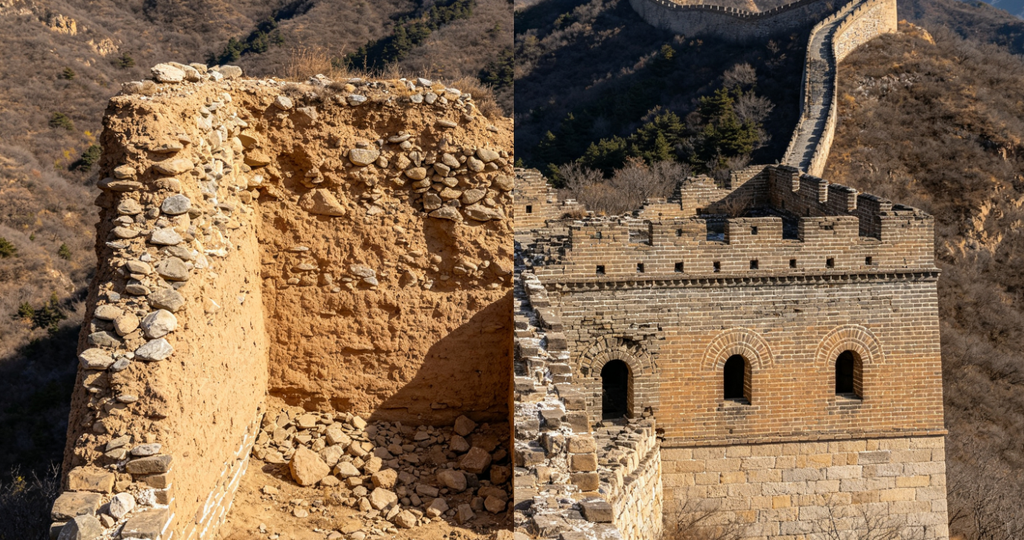
Visitors sometimes use “the Great Wall” as if it refers to one historical structure.
In reality, there are major differences between earlier and later walls.
| Period | Main Characteristics | Strategic Context |
|---|---|---|
| Warring States | Independent state walls | Defense between competing states |
| Qin | Connected and expanded earlier walls | Consolidation of unified empire |
| Han | Expanded frontier network | Western expansion and frontier control |
| Northern Dynasties | Extensive northern defenses | Defense amid political fragmentation |
| Ming | Brick and stone fortifications | Defense of northern frontier and approaches to Beijing |
The table also demonstrates why there is no single answer to the question of purpose.
The Great Wall changed because the political problem changed.
17. How Long Is the Great Wall of China?
If you are wondering how long is the Great Wall of China, the answer depends on what is being counted.
The often-cited figure of roughly 21,000 kilometers refers to the total length of wall remains and associated sections from multiple historical periods identified in China’s official survey work.
The Ming defensive system is considerably shorter, with the often-cited total of approximately 8,850 kilometers when walls, trenches, and associated structures are included in the survey measurement.
These numbers should not be interpreted as the length of one continuous wall.
They represent a huge collection of fortifications constructed in different periods and locations.
For a traveler, this distinction matters because visiting one section near Beijing means seeing only a small part of a much larger historical landscape.
18. Why the Great Wall Did Not Need to Be Continuous
A continuous wall sounds logical from a modern perspective, but ancient military defense did not necessarily require it.
Natural geography could provide part of the defense.
Mountains, cliffs, rivers, deserts, and difficult terrain could make certain areas less vulnerable or less practical for large-scale movement.
Walls were therefore often concentrated where human engineering could reinforce important defensive corridors.
The objective was not necessarily:
“Build a wall everywhere.”
It was closer to:
“Strengthen the places where movement is strategically possible.”
This helps explain the irregular shape of many surviving sections.
19. The Great Wall and the Relationship Between Farmers and Pastoralists
Another misconception is that the Great Wall represented a permanent civilization-versus-barbarian boundary.
The historical relationship was much more fluid.
Northern frontier societies traded, negotiated, fought, migrated, formed alliances, and sometimes became part of Chinese states.
Some groups that were once described as external enemies eventually established dynasties in China.
The Liao, Jin, Yuan, and Qing periods demonstrate how complicated the relationship between northern and central Asian political traditions could become.
The Great Wall should therefore be viewed as a political frontier infrastructure, not a permanent ethnic boundary.
20. Why Was the Great Wall Built? The Deeper Answer
At the simplest level, the Great Wall was built because governments wanted to make vulnerable frontiers easier to defend.
But the deeper answer is more interesting.
The wall allowed states to transform a difficult geographic problem into an organized administrative system.
Instead of relying entirely on soldiers moving across open territory, governments could create:
Observation → communication → concentration of troops → controlled passage → logistical support
That sequence made frontier defense more manageable.
The wall was therefore an example of how a premodern state used infrastructure to extend its ability to monitor and control a huge territory.
This is why asking only whether the wall “stopped invasions” misses much of its historical significance.
21. What the Great Wall Tells Us About Chinese History
The Great Wall is valuable not simply because it is enormous.
It provides a physical record of how Chinese states responded to changing political circumstances.
Its different sections show:
- Where governments considered important frontiers to be
- Which routes were strategically significant
- How military architecture changed
- How states mobilized resources
- How trade and warfare interacted
- How relations with neighboring societies evolved
Seen this way, the Great Wall is almost a map of changing political priorities.
Every major rebuilding phase tells us something about the government that commissioned it.
22. What Travelers Should Look For When Visiting the Great Wall
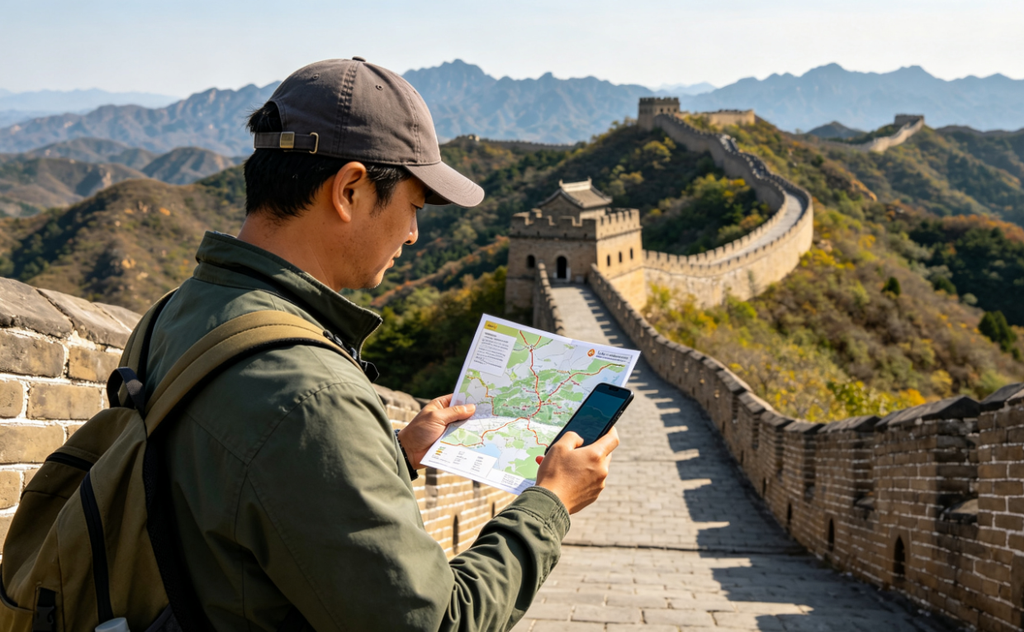
A visit becomes much more meaningful when you understand what you are looking at.
Instead of seeing only a long brick structure, ask:
Why was the wall built here?
Look at the terrain.
Was this a mountain pass, valley, ridge, or transportation corridor?
Why is there a tower here?
Consider what the tower could see and how it might communicate with neighboring towers.
Why is the wall so steep?
The route often follows ridgelines that maximize visibility and defensive advantage.
Why are there so many fortifications?
The wall was part of a network rather than an isolated structure.
Why does this section look different from another?
Construction dates, geography, military needs, and restoration history can all produce differences.
These questions turn a sightseeing stop into a historical experience.
23. Which Great Wall Section Should First-Time Visitors Choose?
The best section depends on what you want from the visit.
Badaling
Badaling is one of the most developed and accessible sections and is a practical option for travelers prioritizing convenience and infrastructure.
Mutianyu
Mutianyu is well known for its mountain scenery and restored Ming architecture and is often attractive to visitors looking for a balance between scenery and accessibility.
Jinshanling
Jinshanling is particularly appealing to travelers interested in longer walks and a more rugged Great Wall landscape.
The important point is not that one section is universally “the best.”
Each represents a different visitor experience and requires different amounts of time and physical effort.
24. How the Great Wall Fits Into a Beijing Trip
The Great Wall should usually be treated as a major component of a Beijing itinerary rather than a quick stop between two downtown attractions.
Travel time, walking, weather, and the physical demands of the visit can make it a substantial part of the day.
If you are beginning to plan Beijing trip, consider the Great Wall early in the planning process rather than adding it at the end.
Your choice of section can affect:
- Transportation
- Departure time
- Total walking
- Return time
- Where you eat
- What other activities can realistically fit that day
For many first-time visitors, giving the Great Wall its own major day makes the overall itinerary more comfortable.
FAQ
Why was the Great Wall of China built?
It was built at different times for different purposes, including frontier defense, surveillance, control of passes and movement, protection of settlements and strategic routes, and administration of northern border regions.
Did the Great Wall stop all invasions?
No. It was never an impenetrable barrier. Its value came from delaying movement, providing warning, channeling traffic, supporting troops, and increasing the cost of attacks.
Did Qin Shi Huang build the entire Great Wall?
No. Earlier Chinese states had already constructed defensive walls. Qin Shi Huang ordered existing walls to be connected and extended after unifying China.
Which dynasty built the Great Wall seen near Beijing?
Most of the surviving sections commonly visited near Beijing were constructed or extensively rebuilt during the Ming Dynasty.
Was the Great Wall built only to stop Mongols?
No. Different frontier walls were built against different threats at different times. The strategic situation changed substantially across more than two thousand years.
Did the Great Wall protect the Silk Road?
Some frontier fortifications helped secure important routes and settlements associated with long-distance trade, particularly during periods of Han expansion. However, describing the entire Great Wall simply as a “Silk Road defense” is too narrow.
How long is the Great Wall?
The commonly cited total for surviving wall sections and associated fortifications from multiple historical periods is around 21,000 kilometers. The Ming system accounts for roughly 8,850 kilometers when associated walls and trenches are included in the official measurement.
Final Takeaway
So, why was the Great Wall of China built?
The answer changed across history.
Early states built walls to defend their territories from neighboring powers. The Qin connected and extended earlier defenses after unifying China. The Han expanded frontier fortifications as the empire pushed westward. Later dynasties built their own defensive systems as political boundaries shifted. The Ming eventually created the sophisticated network of walls, towers, passes, and garrisons that produced many of the sections visitors see around Beijing today.
The Great Wall was never simply a giant barrier.
Its deeper significance lies in how it combined architecture, geography, military organization, communication, logistics, trade regulation, and state administration.
That is also why the Great Wall remains historically important even though it never made invasion impossible.
It represents one of the clearest examples of how a premodern government attempted to manage an enormous and constantly changing frontier.
For travelers, understanding this history changes the experience completely. You are no longer looking at only a famous wall on a mountain ridge. You are looking at the surviving infrastructure of a centuries-long struggle over territory, movement, security, trade, and political power.
And that is the real story behind the Great Wall of China.