
What Surprises First-Time Visitors Most About Beijing?
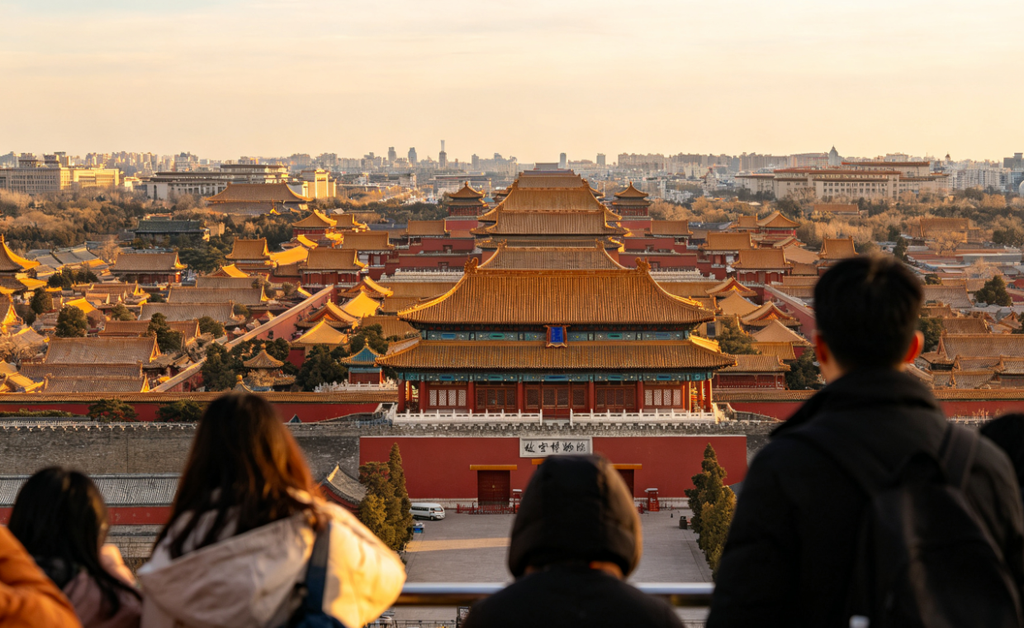
Beijing is one of those cities that can feel familiar before you arrive.
You may already recognize the Forbidden City, the Great Wall, Tian’anmen Square, and other famous landmarks from photographs. You may have spent weeks looking at maps, restaurant recommendations, and travel videos.
Yet the actual experience of arriving in Beijing can be surprisingly different from the image you had in your head.
The biggest surprises are often not individual attractions. They come from the scale of the city, the relationship between old and new, the way public spaces are used, the amount of walking involved, and the difference between seeing Beijing as a collection of landmarks and experiencing it as a living city.
Understanding these Beijing surprises for first-time visitors can make the trip more enjoyable because many of them are not things that photographs or attraction lists communicate very well.
1. Beijing Feels Much Larger Than It Looks on a Map
One of the first surprises is simply the physical scale of Beijing.
A map can make two attractions appear reasonably close together. In reality, the distance between them can involve a long subway journey, a taxi ride, or substantial walking after leaving the station.
This becomes particularly noticeable when travelers combine:
- Central historic sites
- The Summer Palace
- Olympic venues
- Northern Beijing
- The Great Wall
- Western gardens
- Traditional neighborhoods
Beijing is not a compact sightseeing city where almost everything can be reached on foot from one central district.
This affects more than transportation.
It changes how you should think about time.
A sightseeing day is not just:
attraction time + lunch + attraction time
It is:
hotel → transportation → entrance → sightseeing → walking → meal → transportation → next area
Once travelers experience this reality, Beijing’s scale becomes one of the most important factors shaping the rest of the trip.
2. Famous Attractions Are Often Much Bigger Than Expected
Photographs can make major landmarks look like individual buildings.
Many are actually enormous historical complexes.
The Forbidden City, for example, is not simply one palace building. It is an extensive imperial complex containing courtyards, halls, gates, gardens, collections, and architectural details spread across a large area.
The same principle applies to the Temple of Heaven and the Summer Palace.
The Great Wall is even more extreme.
A photograph may show one watchtower and a section of wall disappearing into mountains. In reality, the experience can involve steep climbs, stairs, uneven surfaces, and long distances.
This is why visitors often discover that seeing a landmark and experiencing its physical scale are two different things.
A useful travel expectation is:
If an attraction looks enormous in photographs, assume it will take longer to experience than you initially expect.
3. Beijing Is Both Ancient and Highly Modern
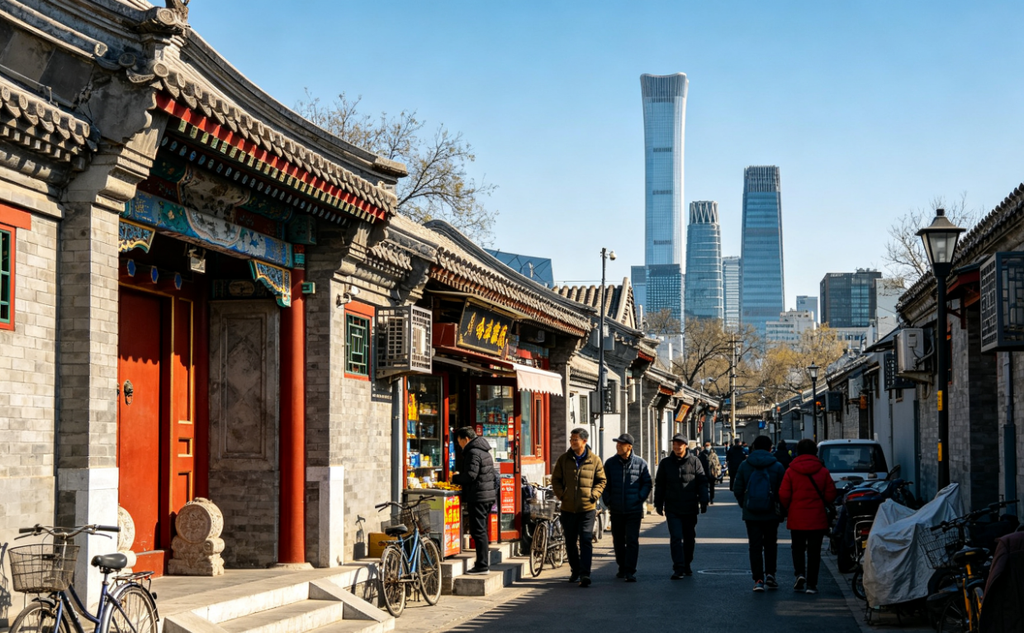
Another major surprise is how quickly Beijing can shift between historical and contemporary environments.
You might spend the morning surrounded by imperial architecture and traditional courtyard neighborhoods and later find yourself among:
- Modern office towers
- Large shopping complexes
- Contemporary restaurants
- Technology companies
- Modern art spaces
- High-density residential developments
The contrast can happen within the same day.
This is one reason Beijing is difficult to understand through a single image.
It is not simply an “ancient Chinese city,” nor is it simply a modern capital.
Instead, several layers exist simultaneously:
Imperial Beijing
Palaces, temples, gardens, ceremonial spaces
Republican and twentieth-century Beijing
Historic streets, institutions, architecture, and changing urban patterns
Contemporary Beijing
Modern infrastructure, commerce, technology, art, and global connections
The surprise comes from seeing these layers physically overlap.
4. The Historic Center Feels Different From a Typical Tourist District
Some first-time visitors expect Beijing’s historic core to resemble a conventional tourist zone.
Instead, they encounter a mixture of monumental landmarks and ordinary urban life.
Near major attractions, you can find:
- Residential streets
- Small restaurants
- Local shops
- Courtyards
- Schools
- Offices
- Neighborhood parks
- Traditional businesses
This mixture is particularly noticeable in hutong areas.
A hutong is not simply an attraction designed for visitors.
Many historic neighborhoods remain connected to everyday life, even though some areas have been renovated, commercialized, or adapted for tourism.
That means exploring historic Beijing can feel less like entering a museum and more like moving through a city where different periods of history continue to coexist.
5. The Great Wall Does Not Feel Like a Normal Beijing Attraction
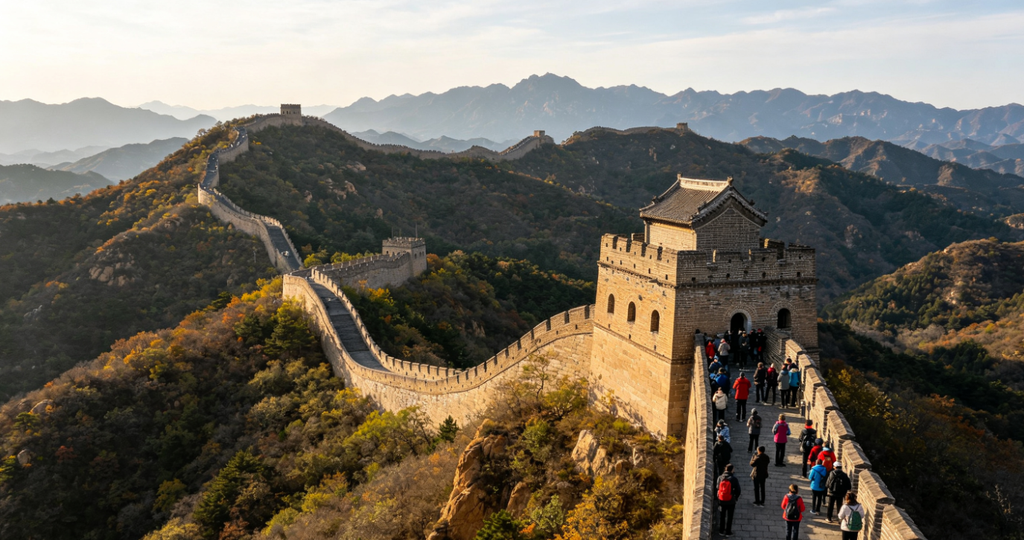
Many travelers mentally categorize the Great Wall alongside the Forbidden City and Temple of Heaven.
Geographically and physically, however, it is a different experience.
The Great Wall sections visited from Beijing are located outside the central urban area. Reaching them can require a substantial portion of the day, depending on the section, traffic, and transportation method.
Once there, the experience also changes.
Instead of:
city streets → building → interior rooms
you get:
mountains → open landscape → stone fortifications → stairs → watchtowers
This makes the Great Wall a landscape experience as much as a historical one.
It also explains why a Great Wall guide can be particularly useful for travelers who want more than photographs. Understanding why the wall follows particular ridgelines, how watchtowers functioned, and how the defensive system worked can change the way you look at the landscape.
6. Beijing’s Public Spaces Can Feel Monumental
Another unexpected feature is the scale of Beijing’s public spaces.
Large squares, broad avenues, monumental gateways, parks, and ceremonial spaces can create a sense of scale that is difficult to appreciate through online photographs.
This is partly connected to Beijing’s role as a historical capital.
The city’s architecture was not designed only for ordinary daily movement. Certain spaces were designed to express:
- Political authority
- Imperial hierarchy
- Ritual order
- National identity
- Urban scale
The result is a city where some public spaces feel much larger and more formal than visitors expect from a normal urban neighborhood.
The experience can be particularly striking when moving from a narrow hutong into a vast ceremonial or civic space.
7. Walking Is a Bigger Part of Beijing Travel Than Many Expect
One of the most practical surprises is how much walking can happen even when transportation is efficient.
A typical sightseeing day may involve:
hotel → subway station → security checkpoint → attraction entrance → attraction → restaurant → next attraction → subway station → hotel
Every individual segment may seem manageable.
Together, they can produce many hours on your feet.
Large attractions contribute heavily to this.
The Forbidden City, Summer Palace, Temple of Heaven, and Great Wall all reward walking, but they can also create physical fatigue.
This is one reason an itinerary should not be evaluated only by how many attractions it contains.
A day with two large attractions may be considerably more demanding than a day with four smaller neighborhood stops.
8. Beijing’s Food Culture Is Broader Than Peking Duck
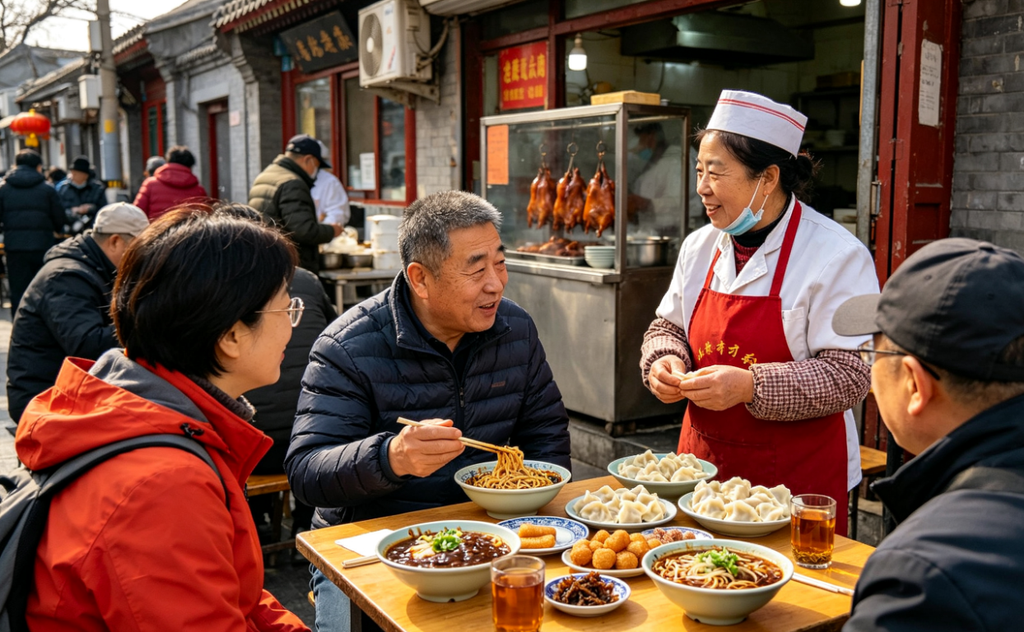
Many international visitors arrive with one food strongly associated with Beijing: roast duck.
It deserves attention, but it represents only a small part of the city’s food culture.
Beijing’s culinary identity also includes:
- Zhajiangmian
- Dumplings
- Hotpot
- Breakfast foods
- Noodles
- Breads and baked wheat foods
- Traditional snacks
- Tea culture
- Regional Chinese cuisines adapted to the capital
Another surprise is how different a food experience can feel depending on the setting.
A formal restaurant may present a carefully structured dining experience.
A neighborhood restaurant can feel much faster and more informal.
A breakfast shop may be centered around convenience and repetition rather than sightseeing.
This diversity makes food one of the easiest ways to experience a side of Beijing that major landmarks cannot provide.
9. Meals Can Become Part of the Geographic Experience
Travelers sometimes treat restaurants as destinations that are independent from sightseeing.
In Beijing, that is not always efficient.
If you are exploring a historic neighborhood, eating nearby can preserve the rhythm of the day.
If you are visiting a distant attraction, traveling across the city simply for one restaurant may create unnecessary transportation time.
This is especially important for shorter trips.
Instead of asking:
“Where is the restaurant I want to visit?”
consider:
“Where will I already be when I want to eat?”
This small change can make the entire trip feel more natural.
10. Beijing Can Feel Quieter Than Expected in Certain Places
The image of Beijing often emphasizes crowds, traffic, and enormous urban density.
Those things certainly exist.
But another surprise is how peaceful some spaces can feel.
Historic parks can contain people practicing exercise or traditional activities early in the morning.
Hutong streets can become quiet once you move away from major commercial roads.
Imperial gardens can create a strong sense of separation from the surrounding city.
Temple grounds can feel calm even when major roads are nearby.
This contrast is important because Beijing’s atmosphere changes dramatically according to:
- Time of day
- Neighborhood
- Season
- Weather
- Distance from major tourist corridors
A traveler who only visits famous attractions during peak hours sees only one version of the city.
11. Early Mornings Can Reveal a Different Beijing
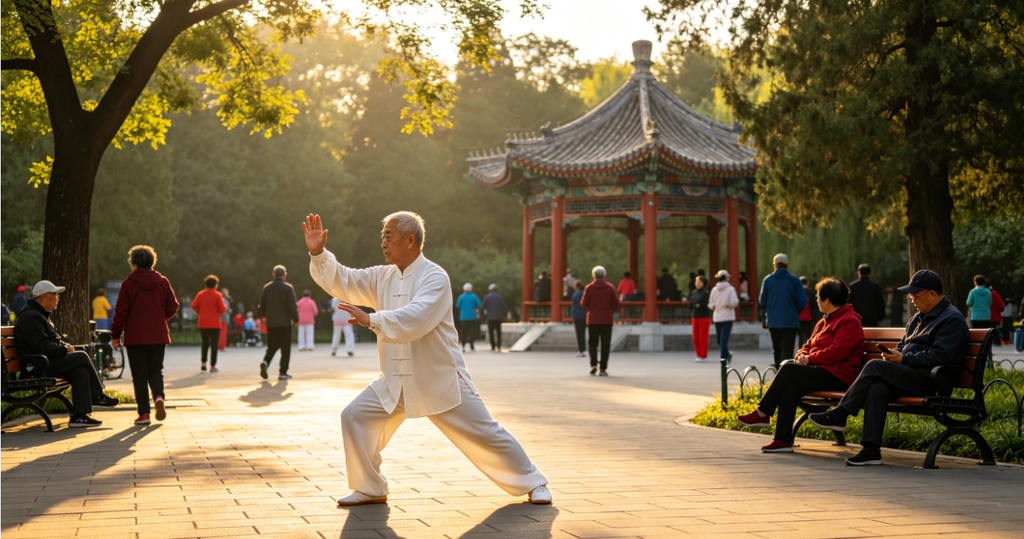
Morning is one of the best times to notice everyday life.
You may see:
- People exercising in parks
- Residents walking through hutongs
- Breakfast businesses opening
- Older residents gathering outdoors
- Commuters beginning their day
- Parks being used as social spaces
This is very different from the Beijing presented by major sightseeing landmarks.
It also explains why adding a neighborhood walk or park visit to a trip can be valuable.
The experience is not necessarily about finding a “hidden gem.”
It is about observing how the city functions when sightseeing is not the main activity.
12. Beijing’s Cultural Experiences Can Be More Interesting Than Another Landmark
Once the major historical sites are covered, travelers sometimes ask what else they should add.
The answer does not always have to be another famous building.
A cultural experience can provide a different type of understanding.
Depending on personal interests, this could include:
- Traditional tea
- Calligraphy
- Chinese painting
- Peking opera
- Traditional crafts
- Local food culture
- Hutong exploration
- Chinese martial arts
- Contemporary art
This is where Beijing cultural tours can provide a different dimension from conventional sightseeing.
The value of a cultural activity is not simply entertainment.
A good experience can answer questions that landmarks cannot:
How are traditional arts practiced?
How has a cultural tradition changed over time?
How do local people understand a particular custom?
What role does the tradition have in contemporary Beijing?
These questions turn culture from something you observe into something you understand.
13. The City Has More Green Space Than Some Visitors Expect
Beijing’s image as a huge capital can make travelers expect almost continuous concrete.
Yet parks and landscaped areas are an important part of the city’s urban environment.
Large historic gardens, public parks, lakes, tree-lined streets, and mountain areas provide significant visual contrast.
The Summer Palace is perhaps the clearest example.
Its combination of water, hills, gardens, architecture, and long walking routes creates an experience very different from central Beijing’s dense urban environment.
This is another reason a balanced trip should include both built heritage and landscapes.
14. Beijing’s History Is Difficult to Understand in a Single Visit
A first trip can quickly reveal just how much history is concentrated in the city.
You may encounter:
- Ming history
- Qing history
- Imperial rituals
- Traditional urban planning
- Republican-era changes
- Twentieth-century political history
- Contemporary development
The surprising part is not simply how much history exists.
It is how physically visible it remains.
A palace is not just an old building.
A temple is not just an architectural attraction.
A hutong is not just a picturesque street.
Each represents a different layer of the city’s development.
Trying to understand everything during one visit can therefore be counterproductive.
It is usually better to choose several historical themes and explore them deeply.
15. Beijing Rewards Slower Observation
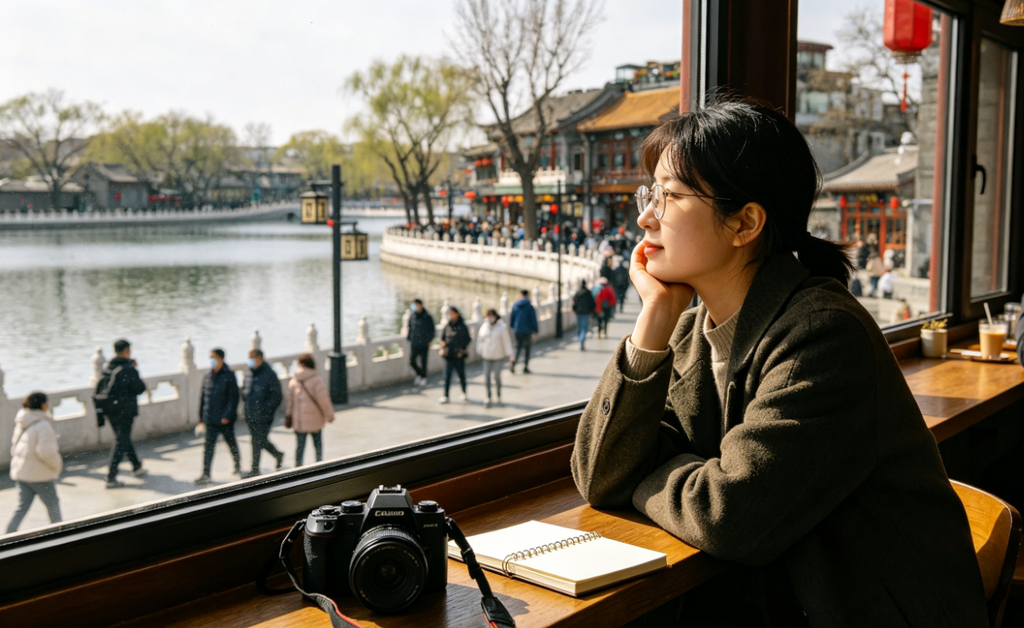
Many visitors initially approach the city with a checklist:
Forbidden City — Great Wall — Temple of Heaven — Summer Palace — hutongs — museum
After a few days, another pattern may emerge.
The most memorable moments can be much smaller:
- Sitting beside a lake
- Watching people exercise in a park
- Walking through a quiet hutong
- Discovering a neighborhood restaurant
- Looking across the city from a high point
- Spending extra time examining architectural details
These moments do not necessarily appear in conventional attraction rankings.
But they help transform a trip from sightseeing into experience.
This is particularly important when designing custom Beijing trip plans. The purpose of customization should not simply be to add more attractions. It should be to allocate more time to the experiences that genuinely match the traveler.
16. Not Every “Traditional” Experience Is the Same
Another subtle surprise is that “traditional Beijing” can mean several different things.
There is:
Preserved heritage
Historic architecture and protected sites
Living heritage
Traditions still practiced in daily life
Reconstructed heritage
Areas restored or redesigned to reflect historical appearances
Commercialized heritage
Historic themes adapted for restaurants, shopping, and tourism
All four can be interesting.
But they provide different experiences.
Recognizing the difference helps travelers develop more realistic expectations.
A renovated historic street may be attractive and convenient without representing exactly how the neighborhood looked or functioned in the past.
Likewise, a quiet residential hutong may provide less polished scenery but more insight into everyday urban life.
17. Beijing Can Feel More International Than Expected
As a global capital, Beijing has a substantial international dimension.
Visitors can encounter:
- International hotels
- Global businesses
- Foreign restaurants
- International universities
- Contemporary galleries
- Expat-oriented services
- Multilingual tourism infrastructure
At the same time, the city remains strongly shaped by Chinese language, food, history, and social customs.
The result is not a simple division between “Chinese Beijing” and “international Beijing.”
Both exist within the same metropolitan environment.
For international travelers, this can make the city easier to navigate than expected in some situations while still providing a strong cultural difference from home.
18. The Best Parts of Beijing Are Not Always the Most Famous
A final surprise is that attraction fame and personal enjoyment do not always correspond.
A famous landmark may be historically essential but personally less interesting than a neighborhood walk.
A small museum may provide more insight than another monumental building.
A quiet park may be more memorable after several intense sightseeing days.
A local meal may tell you more about everyday Beijing than another photograph in front of a landmark.
This does not make famous attractions unimportant.
Instead, it suggests a better way to think about them.
Major landmarks provide the framework.
Smaller experiences provide the texture.
A good trip needs both.
What These Surprises Mean for Your Beijing Trip
Once you understand these differences, several planning principles become clearer.
Think in areas, not isolated attractions
Group experiences geographically whenever possible.
Think in themes, not only landmarks
Combine imperial history, local life, landscape, food, and modern Beijing.
Think in energy levels
Do not schedule several physically demanding experiences consecutively.
Think beyond photographs
Ask what you will actually learn, observe, taste, or experience.
Think about time of day
Morning, afternoon, and evening can produce very different versions of the same neighborhood.
Think about flexibility
Some of the best experiences happen when you have enough time to follow an unexpected interest.
A Simple First-Time Beijing Experience Framework
Rather than building a trip around a long attraction list, consider including six types of experiences:
| Experience | What it shows |
|---|---|
| Imperial landmark | Beijing’s political and architectural history |
| Great Wall | Frontier defense and mountain landscapes |
| Historic neighborhood | Everyday urban heritage |
| Garden or park | Landscape and public life |
| Museum or cultural activity | Deeper historical or artistic context |
| Modern district | Contemporary Beijing |
This framework is flexible enough to work with different trip lengths and interests.
It also prevents one side of Beijing from dominating the entire experience.
Final Takeaway
The biggest Beijing surprises for first-time visitors are rarely about one unexpected attraction.
They come from discovering that Beijing is simultaneously enormous and intimate, ancient and modern, monumental and ordinary.
The Forbidden City can feel almost overwhelming in scale, while a nearby hutong can feel remarkably personal. The Great Wall can transform a city trip into a mountain experience. A modern shopping district can exist only a short journey from centuries-old architecture. A quiet morning in a park can reveal more about everyday life than another landmark photograph.
That is why Beijing is best approached as a layered city rather than a checklist of attractions.
See the major landmarks, but also leave room for neighborhoods.
Understand the history, but also observe contemporary life.
Visit the famous sites, but allow yourself time to slow down.
And most importantly, expect the real city to be more complex than the version you encountered before your flight.
That difference between expectation and experience is often what makes a first trip to Beijing memorable.