
What Should You Book Before Traveling to Beijing?
Planning a Beijing trip does not mean booking everything as early as possible.
That approach sounds safe, but it often creates the opposite problem: a rigid itinerary filled with reservations that leaves no room for weather, jet lag, delayed flights, changing interests, or simply discovering that you want to spend longer somewhere.
The better question is what should you book before traveling to Beijing and, just as importantly, what should you leave flexible.
Beijing has several different types of travel commitments. Some have limited availability and can determine the shape of your trip. Others are easy to arrange after arrival. A few are actually better left open until you know how your first days feel.
The goal is therefore not maximum advance booking.
It is strategic advance booking.
1. Not Every Travel Decision Has the Same Booking Priority
Before making reservations, divide your trip into four categories.
Category 1: Capacity-limited experiences
These should usually be handled first.
Examples include major attractions with controlled entry, popular guided experiences, and certain high-demand excursions.
If availability is limited, waiting can force you to redesign the itinerary around whatever remains.
Category 2: Scarce accommodation
Hotels belong in this category when your dates overlap with busy travel periods, major holidays, or popular seasons.
A hotel may technically have rooms available later, but the location, room type, or price you actually want may not.
Category 3: Flexible transportation
Many city journeys do not need to be booked far ahead.
Subway travel, taxis, ride-hailing, and ordinary urban movement can generally remain flexible.
The important thing is to prepare your payment and navigation systems rather than turning every local movement into a reservation.
Category 4: Experience choices
Restaurants, neighborhood walks, markets, parks, and casual cultural activities often benefit from flexibility.
They can be adjusted around weather and energy.
This four-level framework immediately makes trip preparation easier because you stop treating every item on your itinerary as equally urgent.
2. The First Thing to Lock In: Your Accommodation

Your hotel is more than a place to sleep.
It determines the starting point for every day.
That makes accommodation one of the earliest decisions worth securing, particularly if you are visiting during a busy period.
But booking early does not mean choosing a hotel before you understand your trip.
First establish:
- which airport you are arriving at;
- how many nights you will stay;
- whether the Great Wall is a major priority;
- how much time you expect to spend in the historic center;
- whether you prefer nightlife and modern dining or historic surroundings;
- and how much walking you are comfortable with.
Then choose the location.
For first-time visitors, a central location with convenient metro access often reduces unnecessary travel. But “central” should not automatically mean the most expensive historic district.
The better question is:
Does this hotel reduce the amount of friction in my particular itinerary?
A traveler focused on the Forbidden City has different accommodation priorities from someone spending several days in Chaoyang or making repeated excursions outside the center.
3. Book Your Highest-Value Fixed Attractions Next
Once accommodation is secure, identify the experiences that could constrain the rest of the itinerary.
This is where many travelers make a planning mistake.
They create a complete seven-day schedule and then discover that their preferred attraction is unavailable on the day they assigned to it.
Reverse the process.
Start with the experiences that have the least flexibility.
Then build the rest around them.
For many visitors, these may include:
- major palace or museum visits;
- high-demand cultural attractions;
- popular guided excursions;
- special exhibitions;
- and the Great Wall.
The exact reservation rules can change, so check the official booking system close to your travel date rather than relying on an old blog post.
The principle, however, remains stable:
Fixed availability should shape flexible sightseeing, not the other way around.
4. The Forbidden City Deserves Special Attention
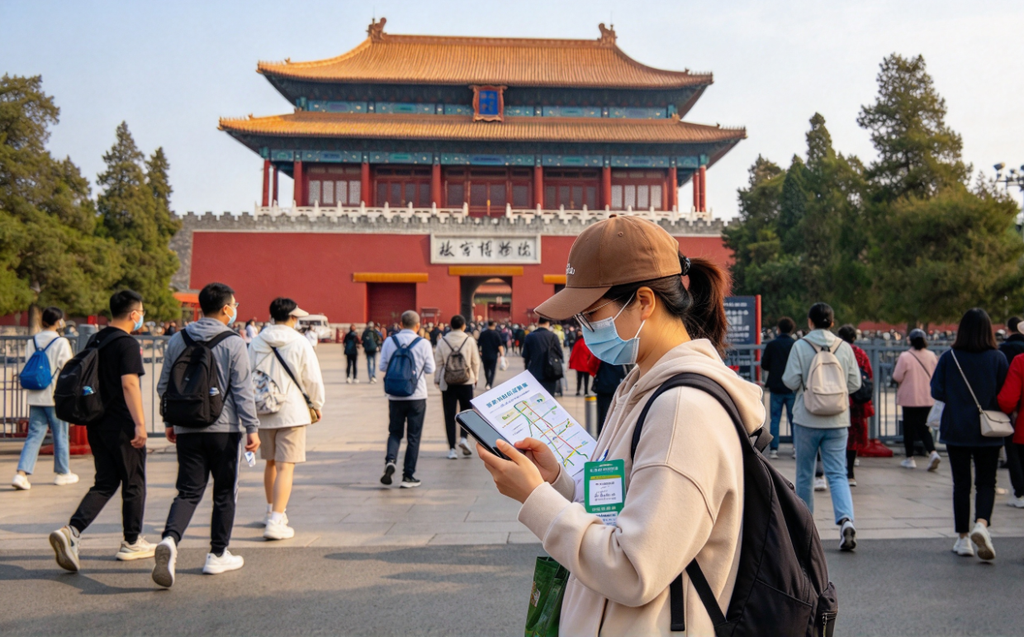
The Forbidden City is a particularly important example because it is not simply another attraction to insert into an empty afternoon.
It is large, historically dense, and subject to visitor-management rules.
If visiting the Palace Museum is one of the central reasons for your trip, treat it as an anchor reservation.
Do not build your itinerary around the assumption that you can arrive whenever convenient.
Instead:
- Confirm the current admission rules.
- Check which dates and times are available.
- Secure your visit.
- Place nearby attractions around it.
- Keep the surrounding schedule relatively light.
A Forbidden City tour can also be useful if your priority is understanding the imperial complex rather than simply walking through its buildings.
This illustrates an important distinction:
Book the experience that controls your day; leave the experiences around it flexible.
5. The Great Wall Is a Different Kind of Reservation
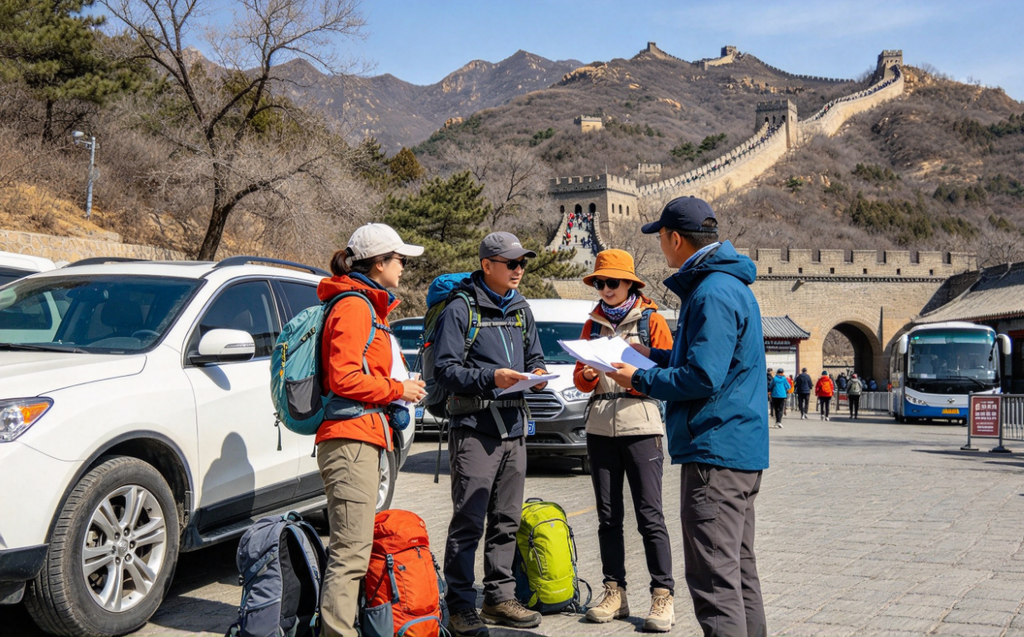
The Great Wall should not be treated like a downtown attraction.
Your reservation decision may involve much more than an entrance ticket.
You may need to consider:
- which section to visit;
- how to reach it;
- whether you need a private vehicle;
- whether cable cars are relevant;
- how much hiking you want;
- whether lunch is included;
- weather;
- and how long the return journey may take.
That means a Wall day can become one of the strongest structural anchors in your itinerary.
If the Great Wall is essential to your trip, decide on the section before arranging transportation or a guided excursion.
Do not simply book “the Great Wall.”
Different sections create very different experiences.
Mutianyu may suit travelers looking for a balance of scenery and accessibility. Badaling may make more sense when convenience and infrastructure are priorities. More rugged sections can appeal to experienced hikers.
The booking priority therefore begins with the type of experience, not the ticket itself.
6. What About Flights?
Flights are often the first thing travelers book, but they should not automatically be the first travel decision.
Your flight establishes the dates and arrival conditions, so naturally it comes early.
But when comparing flight options, consider the downstream effect.
A slightly cheaper flight that lands extremely late may create:
- a difficult hotel transfer;
- a wasted first day;
- additional fatigue;
- or the need for an extra hotel night.
A morning arrival may cost more but give you useful daytime hours.
Likewise, a flight departing very early can effectively remove your final sightseeing day.
The correct comparison is therefore not simply:
Which flight is cheapest?
It is:
Which flight creates the most usable trip?
Your arrival and departure times are part of your itinerary even before you book a single attraction.
7. High-Speed Train Tickets Need a Separate Strategy
If Beijing is one stop in a larger China itinerary, transportation between cities becomes another time-sensitive decision.
High-speed rail can be extremely useful for routes connecting Beijing with other major Chinese cities, but popular departures and preferred seating can become less flexible around busy travel periods.
Before booking, decide:
- whether you want Beijing at the beginning or end of your China trip;
- whether the train station fits your hotel location;
- how much luggage you will have;
- whether an early departure is realistic;
- and whether you are sacrificing a valuable Beijing sightseeing period for a particular train.
A technically convenient train can still be inconvenient if it requires leaving the hotel before sunrise after a full day of sightseeing.
Transportation bookings should therefore be evaluated as part of the whole travel sequence, not as isolated tickets.
8. What You Usually Do Not Need to Book Far Ahead
This is where strategic planning becomes more important than aggressive booking.
You generally do not need to pre-book every local movement.
For example:
- ordinary subway journeys;
- many taxi rides;
- short urban transfers;
- casual neighborhood walks;
- public parks;
- spontaneous hutong exploration;
- flexible shopping;
- and many ordinary meals.
These are valuable precisely because they can respond to the day.
If it rains, change the plan.
If you are tired, shorten the walking route.
If you discover an interesting neighborhood, stay longer.
A fully booked itinerary removes this ability.
The purpose of advance planning is to protect the experiences that are difficult to replace, not to eliminate spontaneity.
9. Restaurants Are More Complicated Than They Look
Restaurant reservations depend heavily on what kind of dining experience you want.
There is a major difference between:
“I want to eat Beijing food.”
and:
“I want to eat at this specific restaurant at 7:00 p.m. on Saturday.”
The first usually requires research.
The second may require a reservation.
For a food-focused trip, identify only the restaurants that are genuinely important to you.
Then consider their geographic position.
A restaurant reservation on the opposite side of the city can quietly dictate an entire evening.
Instead of asking only whether a restaurant is good, ask:
Does this restaurant fit naturally into the area I will already be visiting?
That small change prevents dining reservations from creating unnecessary cross-city travel.
10. Book the Logistics That Remove Real Risk
Some preparations are not glamorous enough to appear on travel bucket lists, but they can make a major difference.
Examples include:
- airport transfers when arriving very late;
- private transportation for a complex Great Wall outing;
- special accessibility arrangements;
- family-oriented services;
- luggage storage when changing hotels;
- and activities with limited departure times.
These should be evaluated by risk, not popularity.
If something would be difficult to solve after arrival, arrange it beforehand.
If it can be solved in five minutes through an app, keep it flexible.
This is one of the most useful principles for building a practical Beijing trip planner: pre-book uncertainty, not everything.
11. Build Your Trip Around “Anchors” and “Fillers”
A useful Beijing itinerary has two different layers.
Anchors
These are experiences that determine when and where you need to be.
Examples:
- Forbidden City;
- Great Wall;
- special exhibitions;
- intercity trains;
- important cultural performances;
- fixed-time tours.
Fillers
These are experiences that can move around them.
Examples:
- hutong walks;
- parks;
- shopping;
- casual dining;
- neighborhood exploration;
- flexible museums;
- evening walks.
The mistake is to book both layers equally.
Instead, let anchors create the skeleton of the trip.
Then use fillers to create the texture.
This produces a schedule that is structured without becoming brittle.
12. A Simple Booking Priority System
If you want a practical hierarchy, use this order.
Priority 1 — Dates that determine the whole trip
Book or confirm:
- international flights;
- major intercity transportation;
- accommodation.
These establish your travel framework.
Priority 2 — Experiences with limited capacity
Then secure:
- major attractions requiring advance booking;
- high-demand tours;
- special exhibitions;
- major performances.
Priority 3 — Complex excursions
Next decide:
- Great Wall section;
- transportation method;
- private or group tour;
- cable car requirements;
- special family or mobility needs.
Priority 4 — Optional reservations
Only after the core structure works should you consider:
- selected restaurants;
- evening shows;
- niche workshops;
- specialized cultural experiences.
Priority 5 — Leave flexible
Keep room for:
- parks;
- hutongs;
- shopping;
- casual meals;
- neighborhood exploration;
- rest;
- weather changes.
This hierarchy is far more resilient than trying to reserve everything simultaneously.
13. Your Booking Order Should Follow Irreplaceability
There is an even deeper way to think about advance reservations.
Ask:
If I cannot get this booking, how difficult is it to replace the experience?
Consider two examples.
You cannot get your preferred restaurant at 7:00 p.m.
You can probably eat somewhere else.
You cannot get admission to the attraction that defines your trip.
That may require restructuring an entire day.
The second reservation has much higher replacement cost.
This gives you a powerful planning metric:
Booking priority = scarcity × importance × replacement cost
An experience deserves early attention when all three are high.
A flexible neighborhood activity scores low because it is easy to replace.
A critical attraction with limited capacity scores high.
This is why experienced travelers do not necessarily book more things.
They book the right things.
14. Leave Space for What You Cannot Predict
One of the biggest differences between a good itinerary and an over-engineered itinerary is the amount of unused space.
Unused time is not wasted.
It is a buffer against:
- delayed flights;
- weather;
- jet lag;
- slower-than-expected sightseeing;
- unexpected queues;
- transportation problems;
- or simply wanting to stay somewhere longer.
This matters especially in Beijing because many attractions are larger than visitors expect.
A palace complex, museum, park, or historic neighborhood can easily absorb several hours.
If every evening is already committed to another reservation, there is no room for the trip to evolve.
For Beijing for first-time travelers, this flexibility is particularly valuable because the first few days often reveal preferences that were impossible to predict before arrival.
15. A Better Question Than “How Early Should I Book?”
Travelers often ask for a universal number:
“Should I book one month ahead?”
“Three months?”
“Six months?”
There is no single answer that applies to every part of a Beijing trip.
Instead, ask three questions:
Is availability limited?
If yes, move it higher in your booking priority.
Is the experience central to my trip?
If yes, protect it early.
Can I easily replace it?
If yes, it can remain flexible.
This framework remains useful even when reservation policies change.
The exact booking window may vary.
The underlying decision logic does not.
16. What First-Time Visitors Commonly Book Too Early
Overplanning can be just as problematic as underplanning.
Be careful about locking in:
Every meal
You may discover that your sightseeing day ends in a completely different neighborhood.
Every evening
Beijing’s evening atmosphere is often best experienced without a strict schedule.
Multiple optional tours
Too many guided activities can make the trip feel like a series of appointments.
A second hotel without a clear reason
Changing hotels creates packing, transportation, and check-in costs.
Attractions simply because they are famous
A reservation is not automatically valuable just because an attraction appears on a top-ten list.
The more reservations you create, the more expensive every unexpected change becomes.
17. A Booking Checklist by Trip Stage
A practical preparation sequence might look like this.
Once your dates are fixed
Confirm:
- flights;
- entry requirements;
- hotel strategy;
- major intercity transportation if needed.
Once your core itinerary is understood
Identify:
- major attractions with controlled admission;
- Great Wall section;
- special tours;
- performances or exhibitions.
Before the trip becomes close
Confirm:
- attraction booking procedures;
- transportation arrangements;
- hotel Chinese address;
- airport transfer if necessary;
- payment and navigation setup.
Shortly before departure
Recheck:
- opening days;
- reservation requirements;
- weather;
- transportation disruptions;
- booking confirmations;
- cancellation conditions.
The final review matters because travel policies can change after the original booking.
18. The “Book, Prepare, Leave Open” Model
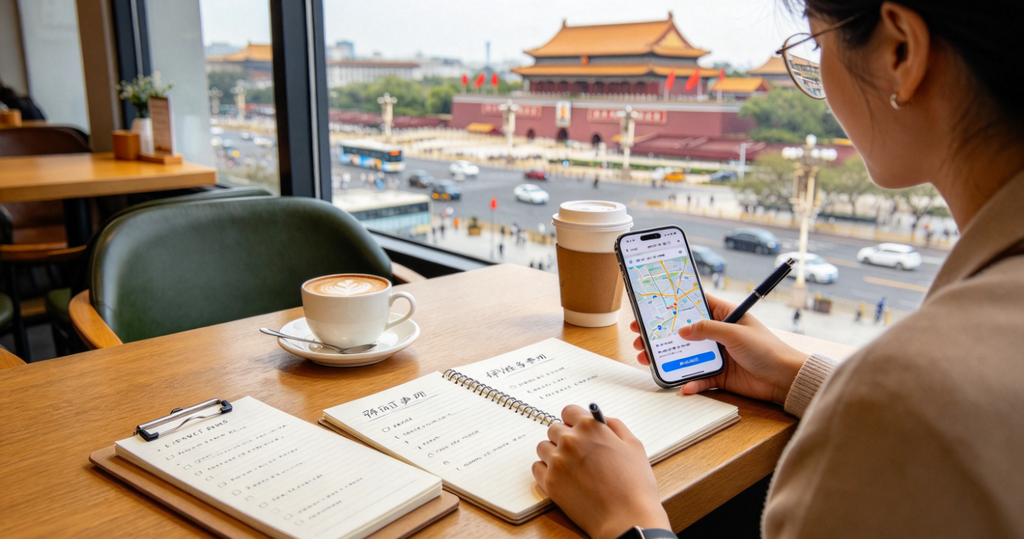
If you want one simple system, divide your Beijing trip into three columns.
| Book | Prepare | Leave Open |
|---|---|---|
| Flights | Payment setup | Neighborhood walks |
| Hotels | Transport apps | Flexible meals |
| Major attractions | Chinese addresses | Shopping |
| Great Wall excursion | Offline information | Parks |
| Intercity trains | Weather backup | Rest time |
| Limited-capacity experiences | Emergency contacts | Repeat visits |
| Special performances | Reservation confirmations | Spontaneous discoveries |
This prevents two opposite mistakes.
The first is underplanning, where important reservations disappear.
The second is overplanning, where every hour becomes fixed.
A good trip needs both structure and empty space.
19. The Real Purpose of Advance Booking
The purpose of booking ahead is not to make your itinerary look organized.
It is to remove the decisions that would otherwise create the greatest risk.
Once the high-risk elements are protected, the rest of the trip can remain flexible.
That is especially important in Beijing because the city rewards exploration outside the obvious checklist.
A morning in a park can become one of the most memorable parts of the trip.
A hutong that was not on your original list can lead to a longer walk.
A restaurant recommendation can change your evening.
A rainy afternoon can turn into an unexpected museum visit.
None of these experiences need to be scheduled six weeks in advance.
Final Takeaway
The answer to what should you book before traveling to Beijing is not “everything important.”
It is more precise than that.
Book what is scarce, important, difficult to replace, or complicated to arrange after arrival. Prepare what makes those bookings work. Leave everything else room to move.
In practical terms, prioritize:
- Flights and accommodation to establish your trip framework.
- Limited-capacity major attractions that can determine your sightseeing sequence.
- The Great Wall and other complex excursions once you know which experience you actually want.
- Intercity transportation when Beijing is part of a larger China itinerary.
- Selected restaurants and special experiences only when they are genuinely important.
- Local transportation, casual dining, neighborhoods, parks, and free time as flexible elements.
The strongest Beijing itinerary is therefore not the one with the most reservations.
It is the one where the important reservations protect the trip while everything around them remains flexible.
That balance gives you structure without sacrificing the freedom that makes a Beijing visit feel like a journey rather than a timetable.