
How to Prepare for Your First Trip to Beijing
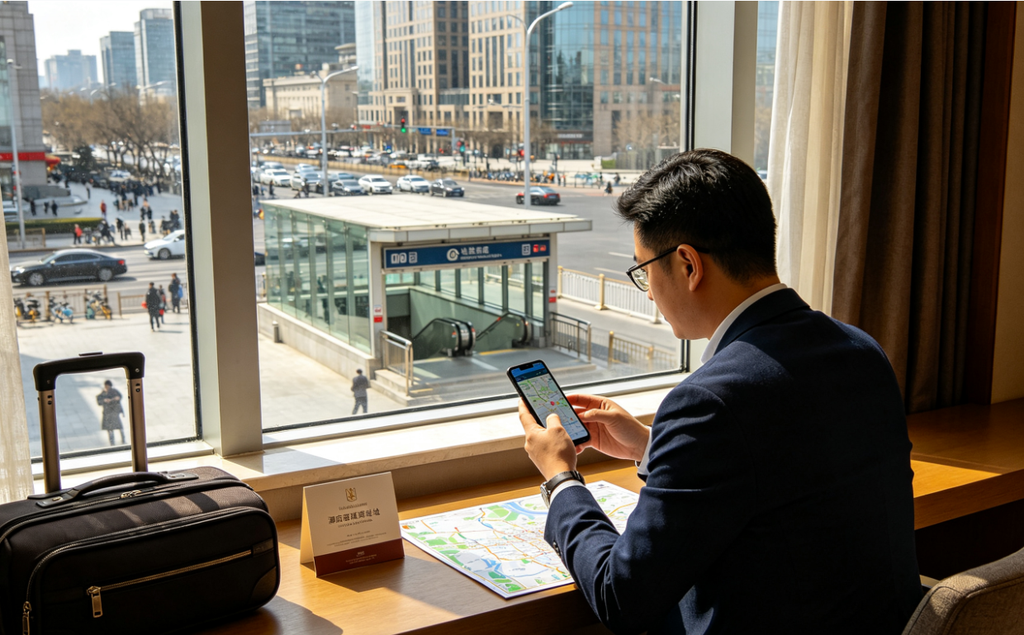
Preparing for a first trip to Beijing is about more than booking a hotel and making a list of famous attractions.
Beijing is a large, highly organized capital city where several practical details can significantly affect your experience. Your passport and entry documents, attraction reservations, payment methods, mobile connectivity, transportation choices, weather, hotel location, and daily schedule all interact with one another.
A traveler who prepares these elements in advance can usually spend much more time enjoying the city and much less time solving avoidable problems.
This guide explains how to prepare for a trip to Beijing from the planning stage through arrival, with particular attention to the issues that matter most to international first-time visitors.
1. Start With the Basics: Entry, Passport and Travel Documents
Before planning attractions, make sure you understand the entry requirements that apply to your nationality and travel circumstances.
Your preparation checklist should include:
- passport validity
- visa or applicable visa-free arrangements
- arrival and departure information
- hotel or accommodation details
- travel insurance documents
- copies of important reservations
- emergency contact information
Entry rules can change, so travelers should verify requirements through official Chinese government or diplomatic sources rather than relying solely on older travel blogs.
Keep Important Information in More Than One Place
Do not keep every travel document exclusively on your phone.
Consider maintaining:
- a digital copy
- an offline copy
- essential booking information accessible without internet
This is particularly useful if your phone battery runs out or you temporarily lose connectivity.
You do not need to carry a large folder of printed documents. A small set of essential information is enough.
The objective is redundancy.
If one method fails, another should still work.
2. Choose the Right Season Before You Build the Itinerary
Beijing can feel dramatically different depending on the time of year.
The city’s climate influences:
- outdoor sightseeing
- Great Wall hiking
- clothing
- daylight hours
- crowds
- hotel prices
- photography conditions
- how much time you want to spend indoors
Spring
Spring can offer comfortable sightseeing conditions, although temperatures can vary and windy or dusty days are possible.
Summer
Summer can be hot, and outdoor attractions may become physically demanding during the middle of the day.
If you visit during this period, early starts and afternoon breaks become more valuable.
Autumn
Autumn is often attractive for outdoor sightseeing, particularly when temperatures are comfortable and you want to spend substantial time around the Great Wall and parks.
Winter
Winter brings colder temperatures but can also provide a completely different atmosphere at Beijing’s historic sites.
Outdoor sightseeing requires more careful clothing preparation.
The Important Planning Principle
Do not choose your itinerary first and think about weather afterward.
Instead:
travel dates → expected conditions → outdoor priorities → daily schedule
If the Great Wall is one of your main reasons for visiting, weather deserves a greater role in your planning than it would on a museum-focused trip.
3. Decide How Many Days You Actually Have
Before creating a detailed schedule, establish the amount of usable sightseeing time.
A five-night hotel booking does not necessarily equal five sightseeing days.
You may lose time because of:
- international arrival
- jet lag
- airport transfers
- hotel check-in
- departure procedures
- long-distance train travel
For a first visit, three to five full sightseeing days can provide a useful introduction to Beijing.
A longer stay allows you to add museums, neighborhoods, food experiences, parks, and slower exploration rather than simply adding more famous landmarks.
Think in Full Days, Not Hotel Nights
For example:
Arrival day: arrival + check-in + light exploration
Full Day 1: major sightseeing
Full Day 2: major sightseeing
Full Day 3: excursion
Departure day: breakfast + light activity + airport/train transfer
This produces a much more realistic schedule.
4. Build a Priority List Before Building a Route
One of the smartest ways to prepare for a trip to Beijing is to separate your interests before opening a map.
Start with categories such as:
History
- Forbidden City
- Temple of Heaven
- Summer Palace
- historic Central Axis
Great Wall
Choose one section rather than attempting several.
Traditional Beijing
- hutongs
- Qianmen
- Shichahai
- traditional food
Museums
Select museums based on your interests.
Modern Beijing
- Olympic venues
- contemporary architecture
- modern commercial districts
Then choose your highest priorities.
A useful question is:
“If I could only experience five things in Beijing, what would they be?”
Your answer should determine the structure of your trip.
Not every famous attraction needs to be included.
5. Understand Beijing’s Geography Before Booking Your Hotel
Beijing’s size makes hotel location an important part of trip preparation.
A hotel that looks inexpensive may become less attractive if you spend a large amount of time commuting every day.
When evaluating accommodation, look at:
- proximity to a subway station
- access to the historic center
- airport transportation
- nearby restaurants
- evening transportation
- distance from your planned sightseeing areas
You do not necessarily need to stay directly beside the Forbidden City.
A hotel with convenient subway access can sometimes be more practical than a hotel that is physically closer to one attraction but poorly connected to the rest of your itinerary.
Think About Your Whole Trip
Instead of asking:
“Is this hotel close to the Forbidden City?”
ask:
“How easily can I reach most of the places I plan to visit?”
That is a much better accommodation question.
6. Learn How Beijing’s Transportation System Fits Together

You do not need to memorize the entire subway network before arriving.
You only need to understand the main transportation options.
Subway
The subway is particularly useful for central-city travel and avoiding road congestion.
Beijing’s subway fares are distance-based, and the official system provides multiple payment and ticketing options. Foreign bank cards can also be used at Beijing subway stations under the current system.
Taxi and Ride-Hailing
These are useful when:
- traveling with luggage
- traveling as a group
- arriving late
- departing early
- reaching locations inconveniently connected by subway
Private Transportation
Private transportation can be particularly useful for suburban excursions such as the Great Wall.
The important point is not to choose one transportation method for the entire trip.
Your route should determine your transportation.
For a deeper understanding of how to get around Beijing, think in terms of combining subway, taxis, walking, and organized transportation rather than treating them as competing systems.
7. Prepare Your Phone and Internet Access Before Departure
This is one of the most overlooked aspects of international travel preparation.
Your phone may become your:
- map
- translator
- payment tool
- booking reference
- transportation guide
- communication device
- camera
- emergency information source
That makes connectivity a practical necessity.
Before departure, determine how you will access mobile data.
Possible options can include:
- international roaming
- travel eSIM
- local SIM
- other connectivity arrangements appropriate to your circumstances
Do not wait until you arrive at the airport to figure this out.
Download What You Need in Advance
Consider preparing offline copies of:
- hotel address
- booking confirmations
- attraction reservations
- important phone numbers
- basic maps
- translation resources
Connectivity can be excellent in many situations, but travel preparation should always include an offline backup.
8. Prepare Your Payment Strategy
Payment is another area where preparation can make the first few hours in Beijing much easier.
Do not assume that your normal travel habits will work exactly the same way in China.
Before leaving home, understand how you intend to use:
- mobile payments
- international bank cards
- cash
- transportation payment methods
China has developed highly integrated mobile payment systems, but international visitors should set up the payment methods available to them before they need to use them.
Keep a Small Cash Backup
Even if you expect to use digital payment most of the time, carrying some local currency as a backup can be sensible.
The goal is not to carry large amounts of cash.
It is simply to avoid having one payment method become a single point of failure.
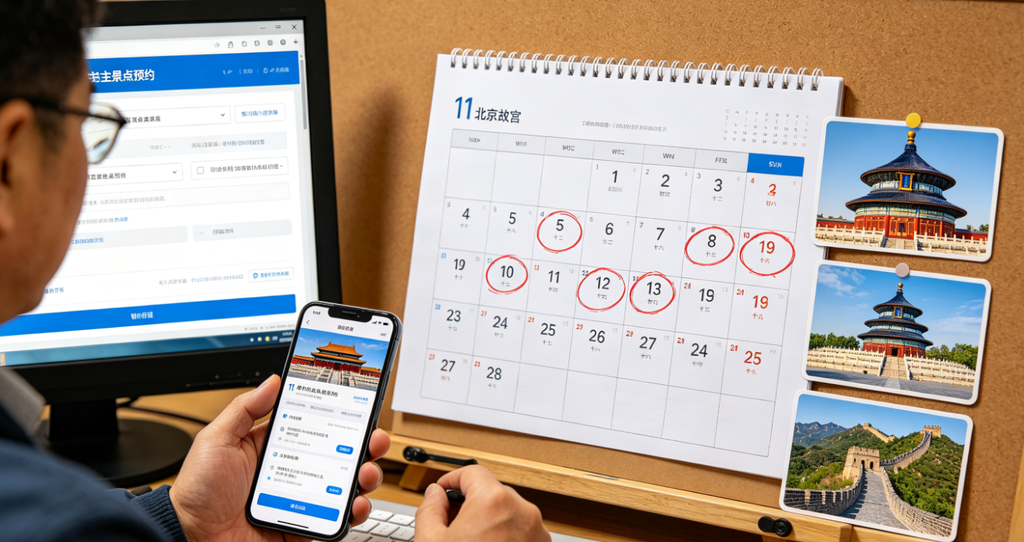
9. Check Attraction Reservation Rules Before You Finalize Your Days
A common planning mistake is creating a beautiful itinerary first and checking ticket availability later.
Reverse that process.
For important attractions, check:
- whether advance reservation is required
- whether real-name registration applies
- whether your passport can be used for booking
- opening days
- opening hours
- admission limits
- official ticketing channels
The Palace Museum, for example, operates with real-name advance reservations, and official visitor information should be checked before your visit.
The same principle applies to other high-demand attractions.
Create a Reservation Calendar
You can make a simple table:
| Attraction | Reservation Needed? | Target Date | Confirmed? |
|---|---|---|---|
| Forbidden City | Check official rules | Day 1 | ☐ |
| Temple of Heaven | Check official rules | Day 2 | ☐ |
| Great Wall | Check selected section | Day 3 | ☐ |
| Summer Palace | Check current rules | Day 4 | ☐ |
| Museum | Depends on museum | Day 5 | ☐ |
This prevents reservation problems from affecting your entire itinerary.
10. Do Not Schedule Your Most Important Attraction Immediately After Arrival
International travel can produce unpredictable delays.
Your flight may be late.
Immigration may take longer than expected.
Luggage may take time.
You may be exhausted from the journey.
For that reason, avoid scheduling the Forbidden City, Great Wall, or another time-sensitive attraction immediately after a long international arrival unless your schedule requires it and you have sufficient buffer.
A better arrival day might include:
- hotel check-in
- neighborhood walk
- nearby dinner
- light sightseeing
- early rest
Then begin your major sightseeing on the following day.
11. Prepare for Jet Lag Strategically
Beijing operates on China Standard Time, which can create a significant adjustment for travelers arriving from North America or Europe.
Do not underestimate this.
A traveler who arrives late at night and then tries to start a major sightseeing day at 6:00 a.m. may lose much of the benefit of an otherwise excellent itinerary.
A practical approach
Before departure:
- gradually adjust your sleep schedule if possible
- stay hydrated during the journey
- avoid overloading your arrival day
- prepare for an early bedtime if necessary
During the first couple of days, place your most important activities when you are likely to have the most energy.
12. Pack for Activities, Not Just Temperatures
Checking the forecast is necessary, but temperature alone does not determine what you should pack.
Consider the activities you will actually do.
A first-time Beijing trip may involve:
- long urban walks
- palace complexes
- parks
- subway transfers
- uneven historic streets
- Great Wall stairs
- outdoor photography
- restaurants
- museums
Useful Packing Categories
Footwear
Comfortable walking shoes are more important than fashionable but uncomfortable footwear.
Weather protection
Bring appropriate layers based on the season.
Sun protection
Useful for extended outdoor sightseeing.
Small day bag
Helpful for water, documents, phone, and basic personal items.
Portable charger
Especially useful on long sightseeing days.
Medication and personal essentials
Bring enough for the trip and keep important items accessible.
The Great Wall is particularly unforgiving of poor footwear choices.
13. Learn a Few Practical Chinese Phrases
You do not need to learn Mandarin before visiting Beijing.
But learning a few useful phrases can make interactions easier and more enjoyable.
Useful examples include:
- 你好 — hello
- 谢谢 — thank you
- 多少钱?— how much?
- 不要 — no / don’t want
- 可以 — can / okay
- 厕所在哪里?— where is the restroom?
- 我听不懂 — I don’t understand
More importantly, prepare the Chinese versions of important destinations and your hotel address.
A screenshot showing your hotel’s Chinese name and address can be much more useful than trying to pronounce the name perfectly.
14. Save Your Hotel Address in Chinese
This deserves its own point because it is so practical.
Your hotel may have:
- an English name
- a Chinese name
- an English address
- a Chinese address
Save all of them.
If you need a taxi or ride-hailing service, the Chinese address can be particularly useful.
Keep it in:
- your phone
- an offline screenshot
- your booking confirmation
This small preparation step can save considerable confusion after arrival.
15. Plan Transportation Around Each Day, Not the Entire Trip
Once your attractions are selected, estimate how you will move between them.
For each day, ask:
- Where am I starting?
- What is my first attraction?
- What is the second attraction?
- How far apart are they?
- Which transportation method makes sense?
- Where will I eat?
- How will I return to the hotel?
This is more useful than trying to memorize Beijing’s entire transportation network.
Your daily route should be a sequence of manageable movements rather than a collection of disconnected destinations.
16. Give the Great Wall Special Preparation
If the Great Wall is one of your priorities, prepare differently from a normal city sightseeing day.
Check:
- which section you are visiting
- transportation
- ticketing
- opening information
- weather
- hiking difficulty
- footwear
- water
- return transportation
Do not assume every Great Wall section provides the same experience.
Badaling and Mutianyu, for example, differ in transportation arrangements, surrounding landscapes, visitor experience, and route characteristics.
Your choice should depend on what matters to you.
Prepare for More Walking Than Expected
Even if you use cable cars or other transportation within a scenic area, you should still expect substantial walking.
A Great Wall day should usually be treated as one of the trip’s physically demanding days.
17. Create a Flexible Itinerary, Not a Perfect One
A good Beijing trip planner should not simply generate a long list of attractions.
It should help you build a plan that can survive real-world changes.
Create three levels for each day:
Essential
The attraction you most want to experience.
Preferred
Something you would like to visit if time allows.
Optional
Something you can remove without damaging the day.
For example:
Essential: Forbidden City
Preferred: Jingshan Park
Optional: shopping
If you arrive late, spend longer inside the Forbidden City, or feel tired, the optional component disappears without breaking the itinerary.
This is much more practical than trying to follow a schedule minute by minute.
18. Understand the Difference Between a Tourist Attraction and a Travel Experience
Preparing for a first trip is also about deciding what you want to remember.
A list might say:
- Forbidden City
- Temple of Heaven
- Great Wall
- Summer Palace
But your actual memories may come from:
- watching local residents exercise in a park
- eating noodles in a neighborhood restaurant
- walking through a hutong at night
- seeing the city from Jingshan
- taking the subway during rush hour
- discovering a small shop
- talking with a local guide
This is why you should leave space between major attractions.
A city becomes understandable through the transitions between its landmarks.
19. Prepare a Backup Plan for Each Important Day
This is particularly useful for outdoor activities.
For example:
Great Wall Day
Primary: Great Wall
Backup: museum + historic neighborhood
Outdoor Park Day
Primary: Summer Palace
Backup: museum + indoor cultural activity
Flexible Central Day
Primary: major historic attraction
Backup: Qianmen + hutongs + food
The backup does not need to be equally famous.
It simply needs to provide a meaningful alternative.
This prevents one canceled activity from ruining an entire day.
20. Do Not Overprepare by Turning the Trip Into a Research Project
Preparation should reduce uncertainty, not create more work.
You do not need to know:
- every subway line
- every restaurant
- every historical date
- every neighborhood
- every attraction in Beijing
Before departure, focus on the information that can actually affect your trip:
Documents
Accommodation
Connectivity
Payment
Reservations
Transportation
Weather
Priority attractions
Emergency information
Everything else can be discovered after you arrive.
A Practical Pre-Trip Checklist
Use this checklist during the week before departure.
Documents
- ☐ Passport checked
- ☐ Entry requirements confirmed
- ☐ Flight information saved
- ☐ Hotel reservation saved
- ☐ Travel insurance information saved
Attractions
- ☐ Priority attractions selected
- ☐ Reservation requirements checked
- ☐ Important tickets confirmed
- ☐ Great Wall section selected
Transportation
- ☐ Airport transfer understood
- ☐ Basic subway routes reviewed
- ☐ Great Wall transportation arranged
- ☐ Hotel address saved in Chinese
Phone & Internet
- ☐ Mobile data solution prepared
- ☐ Important apps/tools installed
- ☐ Offline information saved
- ☐ Portable charger packed
Money
- ☐ Payment methods prepared
- ☐ Bank cards checked
- ☐ Small cash backup arranged
Packing
- ☐ Comfortable shoes
- ☐ Seasonal clothing
- ☐ Weather protection
- ☐ Personal medication
- ☐ Day bag
- ☐ Charger / power bank
Itinerary
- ☐ Major attractions grouped geographically
- ☐ Travel time included
- ☐ Flexible blocks included
- ☐ Backup plans prepared
- ☐ Departure day kept manageable
How to Turn Preparation Into a Realistic Beijing Itinerary
Once the practical preparation is complete, you can begin building the sightseeing schedule.
A useful structure is:
Day 1
Historic center
Day 2
Temple, traditional neighborhoods, and food
Day 3
Great Wall
Day 4
Imperial garden and northern Beijing
Day 5
Museum, modern Beijing, or flexible exploration
The exact attractions can change according to your interests.
The important thing is that preparation comes first.
Once you know your entry requirements, hotel location, transportation options, reservations, and personal priorities, creating a Beijing itinerary for first-time visitors becomes considerably easier.
Final Takeaway
The best way to prepare for a trip to Beijing is not to research every possible attraction.
It is to prepare the elements that can genuinely affect your experience:
- confirm entry requirements
- choose the right travel season
- decide how many full sightseeing days you have
- select personal priorities
- choose accommodation based on transportation access
- prepare payment and connectivity
- confirm attraction reservations
- understand transportation options
- pack for walking and weather
- create flexible daily schedules
- prepare backup plans for important outdoor activities
Once these foundations are in place, Beijing becomes much easier to navigate.
Use a Beijing trip planner to organize your priorities, learn how to get around Beijing before you arrive, and then build a flexible Beijing itinerary for first-time visitors around geography, energy, and the experiences that matter most to you.
Preparation should make the trip easier—not make the planning itself another trip.