
Common Mistakes First-Time Visitors Make in Beijing
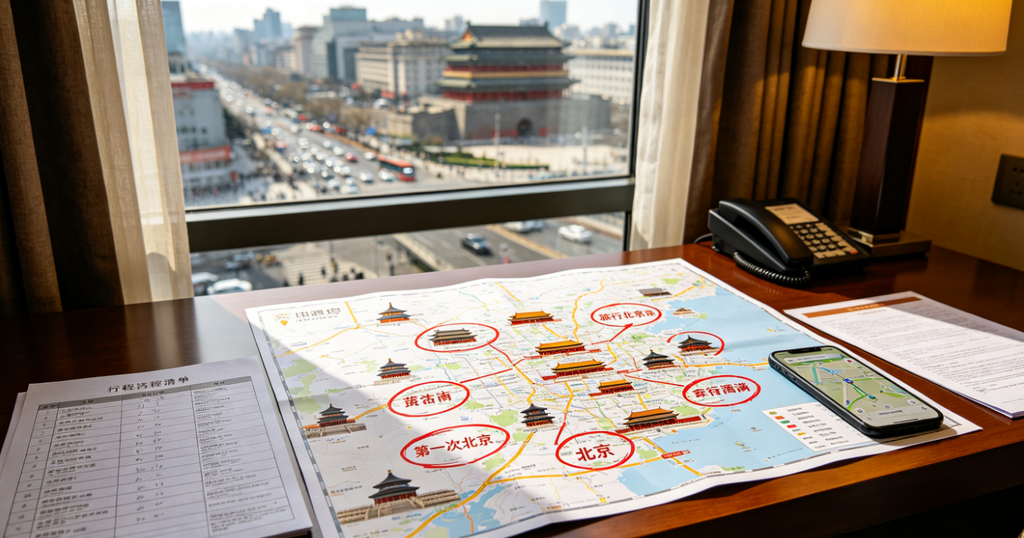
Beijing is one of the world’s most rewarding cities for first-time travelers, but it is also a destination where a few planning assumptions can create unnecessary problems.
The biggest mistakes are rarely dramatic. More often, they involve underestimating distances, scheduling too many major attractions, misunderstanding reservation systems, choosing the wrong transportation for a particular route, or treating every famous landmark as equally important.
A first-time visitor may look at a map and assume that several attractions can be visited in one afternoon. Another traveler may spend hours crossing the city simply because the itinerary was organized by popularity rather than geography. Someone else may arrive at a major attraction without realizing that advance reservations or identification requirements apply.
These problems are avoidable.
This guide explains the most common Beijing travel mistakes, why they happen, and how to design a more realistic trip without sacrificing the city’s major highlights.
1. Trying to See Too Much in Too Little Time
The most common mistake is building an itinerary around a list of famous attractions rather than around actual travel time.
A first-time visitor might create a schedule such as:
- Tian’anmen Square
- Forbidden City
- Temple of Heaven
- Summer Palace
- hutongs
- Olympic Park
- Great Wall
It looks reasonable as a list.
It is not necessarily reasonable as a schedule.
Beijing is a huge metropolitan area, and attractions are distributed across different parts of the city. Some sites also require substantial walking once you arrive.
The Forbidden City alone can occupy much of a day when entrance procedures, walking, sightseeing, and photography are included. The Great Wall should generally be treated as a separate excursion rather than another downtown stop.
A better approach
Divide attractions into geographical clusters.
For example:
Central imperial area
Tian’anmen Square → Forbidden City → Jingshan
Southern historic area
Temple of Heaven → Qianmen → Dashilar
Northern historic area
Drum Tower → hutongs → Shichahai
Western Beijing
Summer Palace → nearby attractions
Great Wall
A dedicated excursion
This reduces unnecessary transportation and gives you more time at the attractions themselves.
2. Assuming Beijing Is Small Because the Attractions Look Close on a Map
This mistake is closely related to overplanning but deserves separate attention.
Maps can make Beijing’s sightseeing areas appear deceptively compact.
A straight line between two landmarks does not tell you:
- how long it takes to reach the correct entrance
- how far you must walk inside the attraction
- whether security checks are required
- how crowded the area is
- whether traffic affects the journey
- how long it takes to find the right subway exit
The result is a hidden form of travel time.
A journey that looks like “30 minutes” on paper may become considerably longer once transfers, walking, queues, and navigation are included.
This is particularly important for travelers who have only two or three days.
Instead of asking:
“How many attractions can I fit into one day?”
ask:
“How many major transitions can I realistically handle today?”
That is a much better way to build a first trip.
3. Planning the Great Wall as if It Were a Downtown Attraction
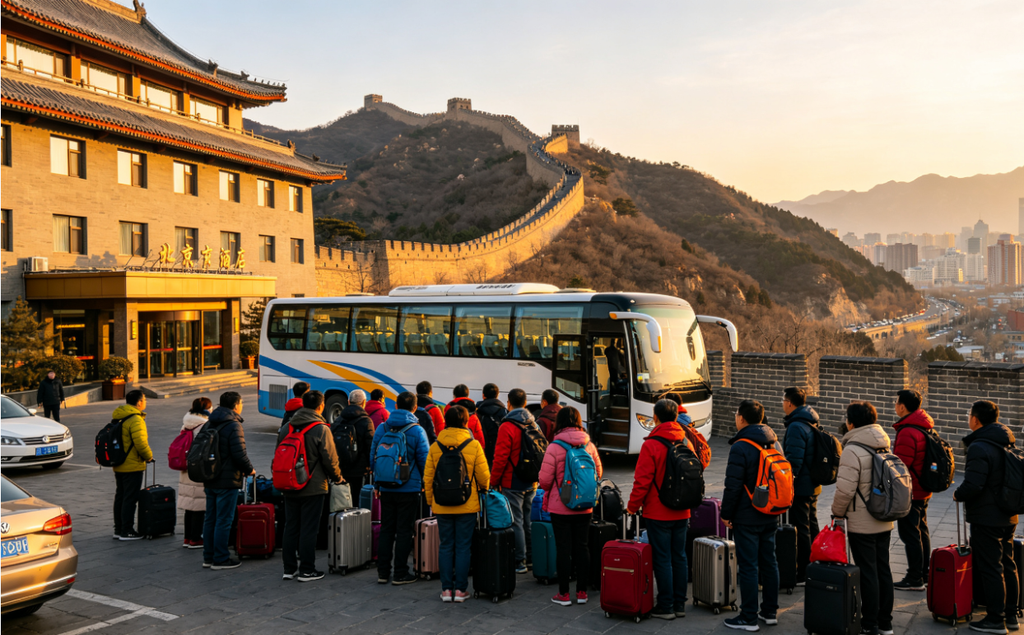
The Great Wall is one of Beijing’s defining experiences, but it should be treated differently from central-city sightseeing.
This is one of the most consequential Beijing travel mistakes because the Wall is not simply another stop on a city sightseeing route.
A typical Great Wall day involves:
- leaving central Beijing
- traveling to the selected section
- entering the scenic area
- walking or hiking
- spending time at viewpoints
- returning to the city
Weather, traffic, seasonal crowds, and transportation arrangements can all affect the schedule.
For first-time visitors, it is usually more practical to reserve a substantial part of the day for the Great Wall.
What about combining it with another attraction?
It depends on the location and transportation arrangement.
But as a general planning principle, avoid combining a demanding Great Wall visit with another major attraction simply because the map appears to allow it.
The goal should be to enjoy the Wall rather than prove that you can visit two destinations in one day.
4. Choosing Attractions Before Choosing the Area
Another common mistake is selecting attractions independently:
“I want to see the Forbidden City.”
“I also want to see the Summer Palace.”
“I want the Temple of Heaven.”
“I want to visit the Great Wall.”
Only afterward does the traveler try to connect them.
This reverses the planning process.
A more efficient approach is:
Step 1: Identify your priorities
For example:
- imperial history
- architecture
- traditional neighborhoods
- food
- gardens
- museums
- modern Beijing
- the Great Wall
Step 2: Group them geographically
Then build each day around one major area.
Step 3: Add secondary experiences
Once the primary attraction is fixed, add nearby activities.
This produces a more coherent trip and reduces unnecessary transportation.
A good Beijing trip planner should therefore organize destinations by both interest and geography, not simply by popularity.
5. Treating Every Famous Attraction as a Must-See
Beijing has too many major attractions for every traveler to visit them all meaningfully.
This creates another common problem: travelers confuse famous with personally important.
The Forbidden City may be essential for someone fascinated by imperial history.
A museum may be more meaningful to another traveler.
A hutong walk may be more memorable for someone interested in everyday life.
A food-focused itinerary may matter more to a traveler whose main interest is Chinese cuisine.
There is no requirement to complete a universal Beijing checklist.
A useful priority system
Divide attractions into three groups:
Priority A — Must See
Places that define your personal reason for visiting Beijing.
Priority B — Strong Interest
Places you would like to visit if the schedule permits.
Priority C — Optional
Places you can skip without feeling that the trip is incomplete.
This simple system creates flexibility.
If rain, crowds, fatigue, or transportation problems affect the schedule, you know immediately what can be removed.
6. Ignoring Reservation Requirements
Some of Beijing’s major attractions operate with advance booking or identity-verification requirements.
This is particularly important for high-demand historical sites.
The Palace Museum, for example, uses real-name advance reservations, and official information recommends checking current admission arrangements before visiting.
The problem is not simply forgetting to buy a ticket.
The larger problem is building an entire day’s itinerary around an attraction before confirming that you can actually enter.
Better strategy
Before finalizing your itinerary, divide attractions into:
Reservation-dependent
Book these first.
Opening-hour dependent
Check their operating days and hours.
Flexible
Keep these available to move between days.
This turns your itinerary into a flexible system instead of a rigid schedule.
7. Assuming You Can Always Buy Tickets at the Door
Many international travelers are accustomed to arriving at a tourist attraction and buying a ticket at the entrance.
That assumption does not always work well in Beijing.
High-demand attractions may use:
- advance reservations
- real-name booking
- identification checks
- timed admission
- limited daily capacity
Even when same-day access is technically possible, relying on it can create unnecessary uncertainty during a short trip.
The safer approach is to verify the official ticketing rules before making the attraction the centerpiece of a particular day.
Do not rely entirely on an old blog post or a travel video from several years ago.
Rules can change.
8. Using the Same Transportation Method for Every Journey
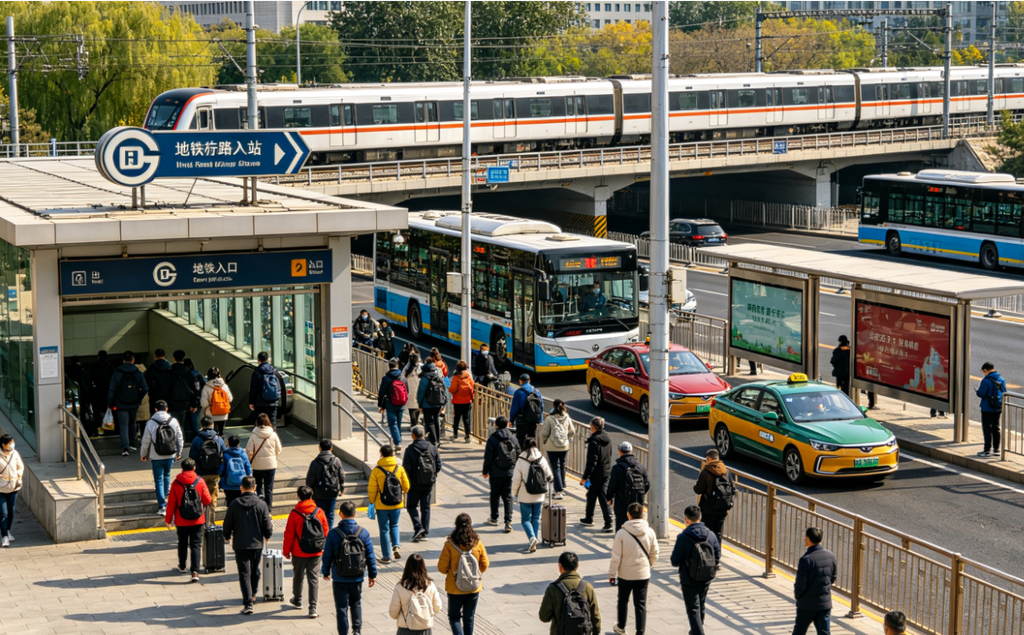
Another common mistake is deciding before the trip:
“I will use the subway for everything.”
Or:
“I will just take taxis everywhere.”
Neither approach is necessarily efficient.
Understanding how to get around Beijing means matching the transportation method to the journey.
Subway
Useful for:
- central-city travel
- predictable routes
- avoiding road congestion
- major sightseeing areas
Taxi or ride-hailing
Useful for:
- early departures
- late returns
- luggage
- groups
- destinations inconveniently located from subway stations
Private transportation
Useful for:
- Great Wall excursions
- multi-stop suburban routes
- families
- travelers who prioritize door-to-door convenience
The best transportation strategy may change several times during the same day.
That is normal.
9. Underestimating Walking
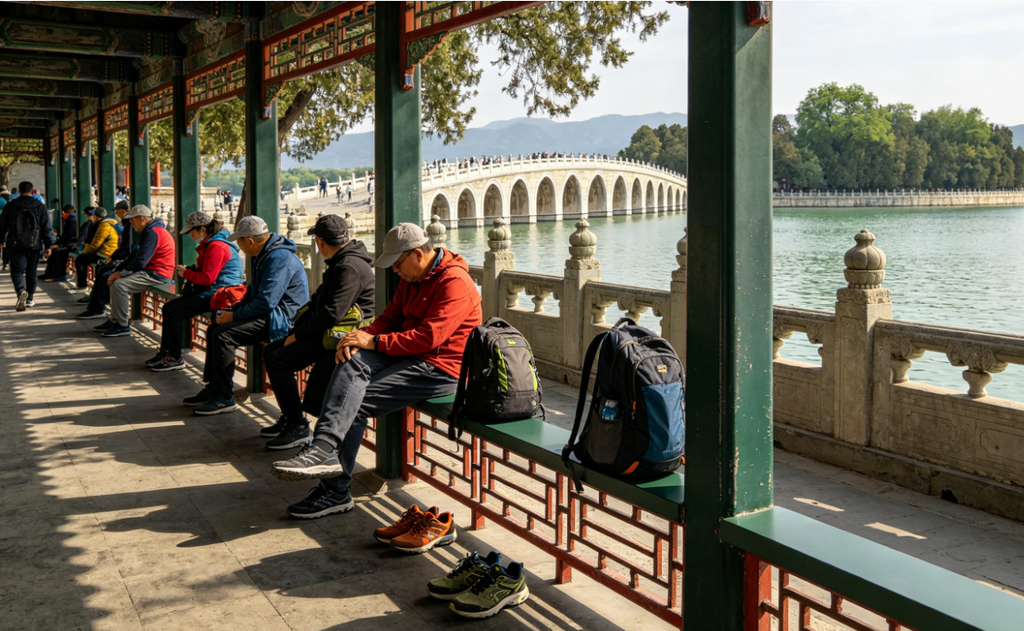
Many travelers calculate transportation time but forget walking time.
Beijing’s attractions can be enormous.
You may spend considerable time walking:
- between subway exits and attractions
- through palace complexes
- around gardens
- along historic streets
- up and down Great Wall sections
- between different entrances and viewpoints
This means a day with only two major attractions can still involve substantial physical activity.
Plan around walking intensity
A useful rhythm is:
High walking day → moderate day → high walking day → slower day
For example:
- Forbidden City
- Temple of Heaven
- Great Wall
- Summer Palace
- museum / hutong day
This alternates different types of physical demand.
It is often more comfortable than scheduling the Great Wall immediately after another extremely long walking day.
10. Booking a Hotel Based Only on Price
A cheap hotel can become expensive in terms of time.
If your accommodation is far from the areas you visit every day, you may spend substantial time commuting.
When comparing hotels, consider more than the nightly room rate.
Look at:
- subway access
- distance to major sightseeing areas
- airport transfer convenience
- neighborhood dining
- evening transportation
- room suitability
- time required to reach your first attraction
For a short trip, location can have a larger practical impact than a modest difference in room price.
A hotel that saves 30–45 minutes of daily transportation may effectively give you more sightseeing time.
11. Staying Only in Tourist Areas
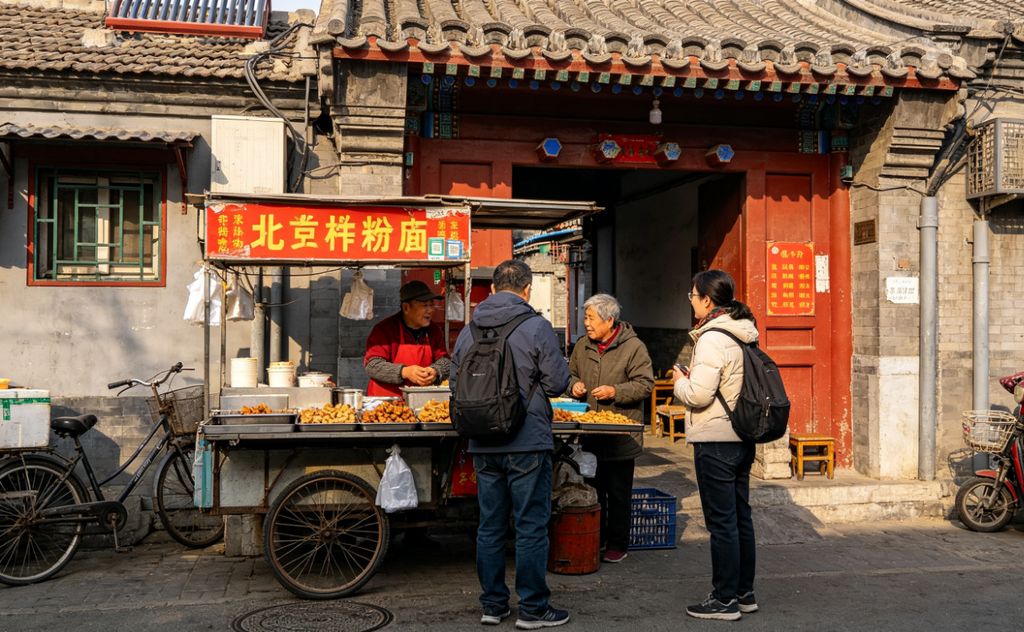
The opposite mistake is never leaving the major attractions.
Beijing’s famous landmarks explain much about its political and imperial history, but they do not fully represent contemporary Beijing.
A first-time traveler can learn something different by spending time in:
- hutongs
- residential neighborhoods
- local markets
- traditional restaurants
- parks
- independent cafés
- small food streets
For example, visiting a neighborhood park in the morning can reveal aspects of daily life that are almost invisible inside a major palace complex.
The contrast matters.
Monuments explain history. Neighborhoods show how the city is lived in.
A balanced itinerary needs both.
12. Expecting Every Traditional Area to Look Completely Authentic
Another subtle mistake is having an overly romantic idea of “old Beijing.”
Historic neighborhoods have changed.
Some streets have been restored, commercialized, renovated, or transformed for tourism.
That does not automatically make them meaningless.
Instead of asking whether a neighborhood is “100% authentic,” look at what layers remain:
- historic street patterns
- courtyard architecture
- local businesses
- traditional food
- residential life
- restored buildings
- new businesses occupying old spaces
Urban heritage is often a combination of preservation and change.
Understanding this makes the experience more interesting than searching for a perfectly frozen version of the past.
13. Scheduling Every Hour
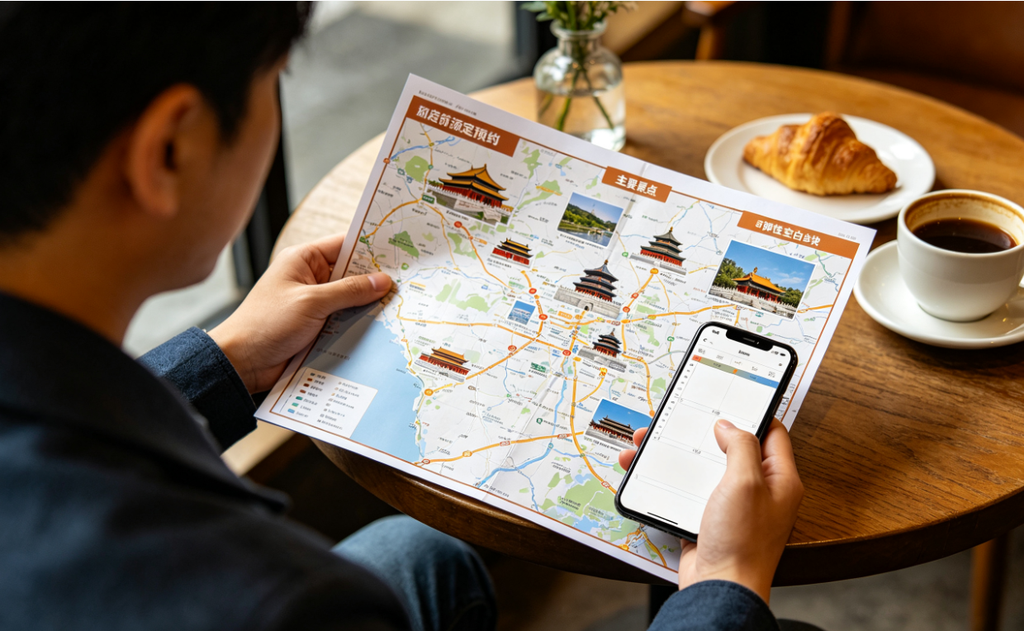
A detailed itinerary can create the illusion of control.
For example:
8:00 — breakfast
8:45 — subway
9:30 — attraction
11:15 — leave
11:40 — lunch
12:30 — taxi
13:00 — second attraction
The problem is that real travel does not behave like a spreadsheet.
You may:
- spend longer at an interesting site
- encounter a queue
- get hungry earlier
- take the wrong subway exit
- find a restaurant worth staying at
- experience bad weather
- want to photograph something
- simply need a break
Instead of scheduling every minute, divide the day into fixed commitments and flexible blocks.
Fixed
- timed admission
- reservations
- train departures
- airport transfers
Flexible
- lunch
- neighborhood walks
- shopping
- photography
- optional attractions
This provides structure without making the trip feel like a work schedule.
14. Forgetting That Weather Changes the Best Plan
Beijing’s outdoor attractions are strongly affected by weather.
A Great Wall hike on a comfortable clear day and the same hike during poor weather are completely different experiences.
This is why travelers should avoid making every day equally rigid.
If your schedule allows it, keep some flexibility around major outdoor experiences.
For longer trips, a useful strategy is to identify:
- one or two outdoor-priority days
- one or two indoor/cultural alternatives
- flexible neighborhood activities
Then adjust according to actual conditions.
This is particularly valuable for travelers visiting during periods when weather can be variable.
15. Eating Only Near Major Attractions
Tourist areas are convenient, but convenience does not necessarily mean the best food experience.
If every meal is chosen because it is within five minutes of the next attraction, food becomes an afterthought.
Instead, treat food as part of the itinerary.
For example, you can deliberately create:
Morning sightseeing → local lunch → neighborhood exploration → evening restaurant
rather than:
Attraction → nearest restaurant → attraction → nearest restaurant
This also helps you explore different parts of Beijing.
Food can become a geographical bridge between sightseeing areas.
16. Not Leaving Time for Beijing’s Central Axis
First-time visitors often see Beijing as a collection of unrelated landmarks.
But the city’s historic structure can be easier to understand when viewed through its north-south Central Axis.
The route connects major historical spaces including the Bell and Drum Towers, Forbidden City, Tian’anmen area, and Temple of Heaven. Beijing’s Central Axis was inscribed on the UNESCO World Heritage List in 2024.
Instead of treating every landmark as an isolated attraction, think about how they relate spatially.
This creates a deeper understanding of why Beijing developed the way it did.
The city becomes a historical system rather than a collection of photographs.
17. Assuming a Private Tour and Independent Travel Are Opposites
First-time visitors sometimes think they must choose one approach for the entire trip.
They do not.
You can combine:
- independent subway travel
- self-guided museum visits
- local food exploration
- guided historical experiences
- private transportation for a Great Wall day
This hybrid approach can be particularly practical.
For example, central Beijing may be easy to explore independently, while a more complicated suburban day may benefit from private transportation and local guidance.
The question is not:
“Should I travel independently or take a tour?”
A better question is:
“Which parts of the trip benefit from independence, and which parts benefit from logistical support?”
18. Building the Itinerary Around Social Media Photos
A photograph can tell you what a place looks like.
It cannot tell you:
- how long it takes to reach
- how crowded it is
- how large the site actually is
- whether you personally care about its history
- how physically demanding the visit will be
- whether it fits your route
This is particularly important with famous landmarks.
A destination may look spectacular online but take half a day to reach and occupy only a small part of your interests.
Use photos for inspiration.
Use geography, opening information, transportation, and your own interests for planning.
19. Trying to Understand All of Chinese History in One Trip
Beijing is deeply connected with Chinese history, but no first-time itinerary can explain everything.
Trying to visit every historical site can actually make the trip less meaningful.
Instead, choose several themes.
For example:
Imperial Government
Forbidden City
Imperial Ritual
Temple of Heaven
Imperial Gardens
Summer Palace
Frontier Defense
Great Wall
Traditional Urban Life
Hutongs
Modern China
Olympic area and contemporary districts
This creates a narrative.
You are not merely visiting six famous places.
You are seeing different parts of Beijing’s historical and urban development.
20. Not Leaving a Buffer Before Your Departure
One of the most overlooked planning mistakes happens at the end of the trip.
Travelers sometimes schedule a major attraction on the same day as:
- an international flight
- a long-distance train
- an airport transfer
- a hotel checkout
That creates unnecessary risk.
The final day should usually be simpler.
Keep major transportation commitments separate from ambitious sightseeing whenever possible.
A relaxed final morning is often worth more than squeezing in one last landmark.
A Better Framework for Planning Your First Beijing Trip
Instead of starting with a giant attraction list, use this sequence.
Step 1: Decide Your Trip Length
Determine whether you have:
- 2–3 days
- 4 days
- 5 days
- 6–7 days
Your trip length determines how much depth is realistic.
Step 2: Choose Three to Five Core Experiences
For example:
- imperial Beijing
- Great Wall
- traditional neighborhoods
- gardens
- Chinese food
Step 3: Group Attractions by Geography
Build each day around a coherent area.
Step 4: Check Reservation Requirements
Do this before finalizing the schedule.
Step 5: Estimate Real Travel Time
Include:
- transportation
- walking
- security
- entrances
- meals
- breaks
Step 6: Add One Flexible Block Every Day
This is your buffer.
Step 7: Keep the Last Day Light
Avoid creating unnecessary departure-day pressure.
This method is more reliable than copying someone else’s exact itinerary.
A Simple First-Time Beijing Planning Template
You can use this structure as a starting point:
| Planning Element | Recommended Approach |
|---|---|
| Major attraction | 1–2 per day |
| Geographic area | Keep daily travel concentrated |
| Great Wall | Dedicated major excursion |
| Reservations | Confirm before finalizing |
| Transportation | Mix subway, taxi, and private options |
| Meals | Use them to explore neighborhoods |
| Walking | Alternate high- and low-intensity days |
| Flexible time | Keep at least one open block daily |
| Final day | Keep relatively light |
| Extra days | Add depth rather than more checklists |
This framework is intentionally flexible.
Your ideal schedule may look completely different depending on whether you travel with children, prefer museums, care primarily about food, or want to photograph architecture.
Final Takeaway
The biggest mistake first-time visitors make in Beijing is not choosing the “wrong” attraction.
It is trying to turn an enormous and historically complex city into a simple checklist.
A better trip begins with geography, then adds history, transportation, reservations, meals, and personal interests.
Use a Beijing trip planner to organize the major pieces, but leave enough flexibility for real-world travel.
Learn how to get around Beijing according to the specific route instead of relying on one transportation method for everything.
And when creating your first-time Beijing itinerary planning, think in terms of experiences and areas rather than individual landmarks.
The result is usually a trip with fewer rushed transfers, fewer avoidable booking problems, more time in meaningful places, and a much clearer understanding of Beijing itself.