
How Far in Advance Should You Plan a Beijing Trip?
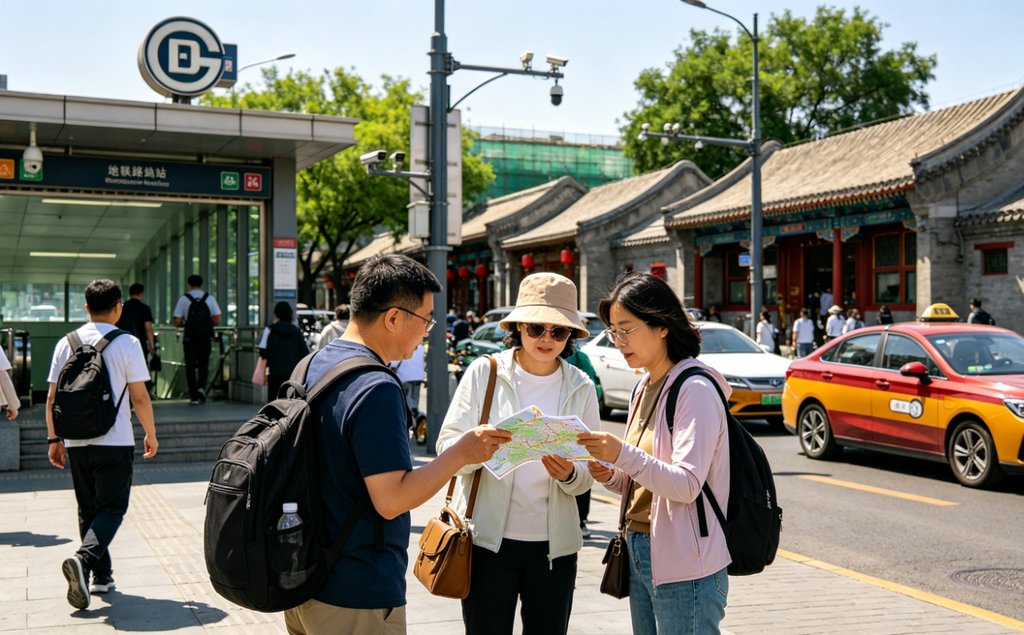
There is no single booking window that works for every Beijing trip. A short independent visit in a quiet season may be organized relatively quickly, while a first visit during a major holiday, peak travel period, or multi-city China itinerary can require substantially more preparation.
The important question is therefore not simply how early should you book Beijing? It is which parts of the trip need to be secured first, and which decisions can safely wait?
For most international travelers, a practical approach is to start the main planning process two to three months before departure, then adjust the timeline according to season, travel style, entry requirements, and the attractions you want to visit. Travelers who need a visa, are visiting during a busy holiday period, or want a highly customized experience may benefit from starting considerably earlier.
This guide breaks the process into realistic planning windows so you can avoid both last-minute pressure and unnecessary overplanning.
How Early Should You Start Planning a Beijing Trip?
For a typical first-time international visitor, the following timeline works well:
| Planning stage | Recommended timing | Main priorities |
|---|---|---|
| Initial research | 3–6 months before | Season, trip length, flights, major priorities |
| Core booking | 2–3 months before | Flights, hotel, visa if required, private tours |
| Attraction planning | 2–6 weeks before | Reservations, museums, special experiences |
| Final logistics | 7–14 days before | Transport, connectivity, payments, documents |
| Final check | 24–48 hours before | Weather, reservations, flight details, digital copies |
These are planning guidelines rather than strict rules.
The real determining factor is what could become unavailable.
A hotel with hundreds of rooms is fundamentally different from a museum with a limited daily capacity. A flexible subway journey is different from an international flight. A self-guided hutong walk is different from a private guide whose availability depends on a particular date.
This distinction is the foundation of efficient Beijing trip planning.
3–6 Months Before: Decide When and Why You Are Going
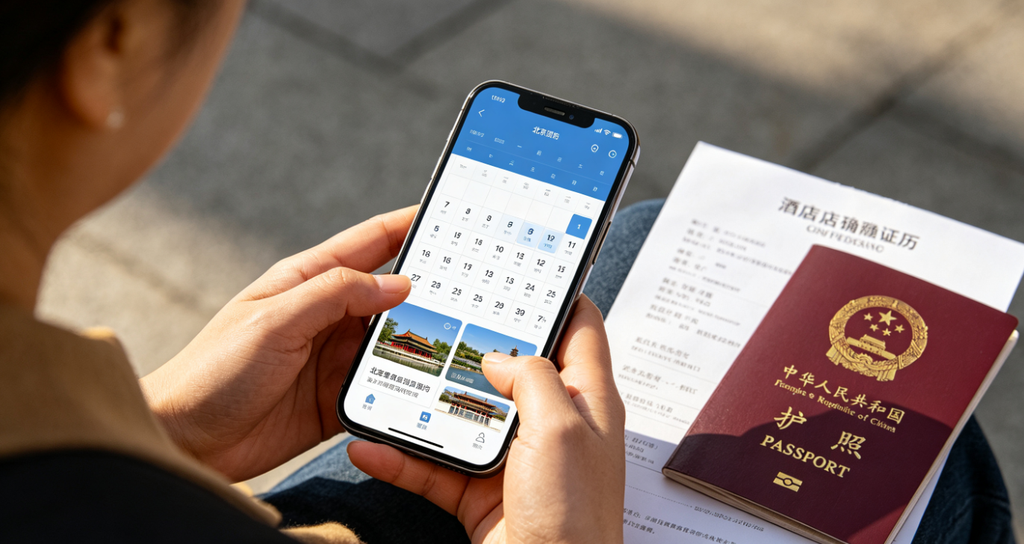
The earliest stage should focus on trip architecture, not detailed scheduling.
Before reserving individual attractions, determine four things:
- When you want to visit
- How many days you have
- What kind of experience you want
- Whether Beijing is your only destination in China
Choose the season before choosing the itinerary
Beijing changes considerably throughout the year.
Spring can offer comfortable sightseeing conditions and seasonal scenery, while summer tends to bring warmer weather and periods of higher visitor demand. Autumn is often attractive for outdoor sightseeing, particularly around the city’s historic and mountain areas. Winter can bring cold conditions but also lower visitor volumes at some attractions.
Rather than asking which season is universally “best,” consider what you want to do.
If your priorities are long outdoor walks, the Great Wall, parks, and historic neighborhoods, weather should have a greater influence on your travel dates. If museums, architecture, food, and indoor cultural attractions dominate your trip, you may have more flexibility.
Check major holiday periods
China’s major holiday periods can significantly affect transportation demand, accommodation prices, and attraction crowds.
If your dates overlap with a major national holiday or another high-demand period, move your planning process forward rather than relying on the standard two-month window.
This is particularly important if your trip includes:
- Popular Great Wall sections
- Centrally located hotels
- Private guides
- Intercity trains
- Family rooms
- Larger groups
- Specific dining or cultural experiences
The earlier you identify a peak period, the more useful your planning time becomes.
2–3 Months Before: Secure the Decisions That Control the Trip
Once your dates are reasonably firm, move from research into commitment.
For many travelers, this is the point at which how far in advance to plan a Beijing trip becomes a practical question rather than a theoretical one.
Book international flights
Flight pricing varies significantly by route, airline, season, and demand, so there is no universal “perfect” booking day.
Instead of waiting for an exact number of days before departure, establish your travel dates first and monitor the routes you actually need.
If Beijing is part of a larger China trip, think about the entire flight structure:
Home → Beijing → another Chinese city → home
rather than treating the Beijing flight as an isolated purchase.
An open-jaw or multi-city ticket may sometimes reduce unnecessary backtracking, particularly when Beijing is your first or final major stop.
Secure your hotel
Accommodation deserves early attention because hotel location can affect the entire character of your trip.
Do not choose a hotel only by room price.
Consider:
- Distance to a subway station
- Access to your main sightseeing areas
- Airport transfer convenience
- Evening dining options
- Neighborhood atmosphere
- Room size and occupancy rules
- Luggage storage
- Cancellation conditions
For first-time travelers, a slightly more convenient location can reduce repeated transportation and make the entire trip easier to manage.
You do not necessarily need the most central hotel. You need a location that works with the geographic pattern of your planned sightseeing.
Begin arranging specialist experiences
If you want a guide, photographer, translator, cultural experience, or private vehicle, earlier planning gives you more choice.
This is especially relevant for travelers looking at Beijing private tours, because the value is not simply having a vehicle and guide. A well-designed private experience may depend on matching a specific guide, vehicle, language, route, and date.
For a simple independent trip, this stage can remain relatively light.
For a customized trip, it is one of the most important planning windows.
6–8 Weeks Before: Build the Trip Around Anchors
At this stage, you should know where you will stay and approximately when you will be in Beijing.
Now begin identifying the experiences that actually determine your schedule.
Think in terms of anchor activities.
An anchor is something that cannot easily be moved without affecting the rest of the day.
Examples include:
- Forbidden City admission
- A museum reservation
- A Great Wall excursion
- A private guide
- A fixed cultural performance
- A day trip outside central Beijing
- A train departure to another city
Flexible activities such as walking around a hutong, visiting a neighborhood, or exploring a local shopping street can usually be arranged around these anchors.
This creates a much more resilient travel plan than assigning every attraction a fixed time months in advance.
Why anchor-based planning works
Suppose your Forbidden City reservation is fixed for Tuesday morning.
That reservation can determine:
Tuesday morning → central Beijing sightseeing → nearby historical area → evening activity
The reservation is the constraint.
The surrounding activities remain flexible.
This approach also makes it easier to adjust the trip if weather changes, a museum becomes temporarily unavailable, or you simply want a slower day.
4–6 Weeks Before: Reserve Attractions That Actually Require It
One of the most important differences between Beijing and some other major tourist cities is that not every attraction follows the same ticketing system.
Some attractions can be visited relatively spontaneously. Others have timed or advance reservation systems.
The Forbidden City is a particularly important example for first-time visitors. Its official visitor information states that it does not sell same-day tickets, and regular tickets become available seven days before the visit at 20:00. Foreign visitors use passport information for reservations.
This means that booking a Beijing trip six months ahead does not mean you can necessarily reserve every attraction six months ahead.
Instead, you need to understand each attraction’s booking window.
Beijing’s official tourism information also notes that reservation requirements vary between attractions and can change over time.
The better strategy: create a reservation calendar
Rather than booking everything immediately, create a simple table:
| Attraction | Desired date | Reservation opens | Action |
|---|---|---|---|
| Forbidden City | Day 2 | 7 days before | Set reminder |
| Great Wall | Day 3 | Depends on section | Check official system |
| Museum | Day 4 | Depends on museum | Confirm booking window |
| Flexible neighborhood | Any | Not usually fixed | Decide later |
This prevents a common planning problem: knowing that you need a reservation but forgetting when the reservation window actually opens.
2–4 Weeks Before: Turn the Plan Into a Working Travel System
By this point, the major pieces should already exist.
You do not need a minute-by-minute schedule.
Instead, confirm that the trip works operationally.
Check how you will move between major areas
Beijing is geographically large, so transportation should be considered in relation to your daily sightseeing pattern.
Your goal is not to memorize every subway line.
Your goal is to understand:
- Where your hotel is
- Which attractions are close together
- Which journeys are better by subway
- When a taxi or ride-hailing service saves time
- Which excursions require more dedicated transportation
- How much walking each sightseeing day involves
A useful Beijing itinerary for first-time visitors should therefore be checked for geographic logic before individual restaurant or shopping choices are finalized.
Confirm airport arrival logistics
Your first transportation decision is often not a sightseeing decision at all.
It is:
How will I get from the airport to my hotel?
Consider:
- Arrival time
- Airport terminal
- Hotel location
- Luggage quantity
- Number of travelers
- Public transportation availability
- Taxi or ride-hailing options
- Whether you arrive late at night
For a solo traveler with light luggage, public transportation may be perfectly practical.
For a family arriving after a long international flight, a pre-arranged transfer may reduce friction.
The objective is not to choose the most expensive option. It is to make the first transition predictable.
1–2 Weeks Before: Prepare the Digital Side of the Trip
This is an overlooked part of international travel preparation.
Your phone becomes much more important once you are in a foreign country.
Before departure, organize:
Important documents
Keep digital and offline copies of:
- Passport
- Visa or entry documentation, if applicable
- Flight confirmations
- Hotel reservations
- Travel insurance information
- Attraction bookings
- Tour confirmations
- Emergency contacts
Do not rely exclusively on one cloud account.
Save essential documents locally on your phone so they remain available even if connectivity becomes temporarily unavailable.
Hotel information in Chinese
Save your hotel’s:
- English name
- Chinese name
- Address
- Phone number
A screenshot of the Chinese address can be surprisingly useful when communicating with drivers.
Offline information
Prepare offline access to:
- Hotel address
- Airport information
- Key reservation details
- Important phone numbers
- Your next destination
This is especially valuable during the first few hours after arrival, when you may still be dealing with unfamiliar networks, transportation systems, and fatigue.
7 Days Before: Stop Expanding the Trip
One week before departure is usually the wrong time to add ten new attractions.
Instead, review what you already have.
Ask:
If my flight arrives late, what can I safely remove?
If it rains tomorrow, what can I move indoors?
If I become tired after a long walking day, which activity is optional?
Which reservations are impossible to replace?
This produces a hierarchy:
Tier 1 — Fixed
Things that cannot easily move:
- Flights
- Hotel
- Important reservations
- Private guides
- Trains
- Special events
Tier 2 — Preferred
Things you strongly want to do but can reschedule:
- Certain museums
- Neighborhood walks
- Specific restaurants
- Shopping
Tier 3 — Flexible
Things that can happen whenever convenient:
- Coffee
- Casual shopping
- Street photography
- Exploring nearby streets
- Extra parks or local areas
This hierarchy is more useful than a rigid timetable because it tells you what to protect when something changes.
3–7 Days Before: Check Weather, Clothing, and Walking Conditions
Your final packing decisions should reflect your actual itinerary.
Beijing sightseeing often combines:
- Long walks
- Historic sites
- Large plazas
- Museum interiors
- Parks
- Uneven surfaces
- Stairs
- Outdoor excursions
Therefore, packing should be activity-based rather than destination-based.
Instead of asking:
“What clothes do I need for China?”
ask:
“What will I physically do each day?”
A Great Wall day, a museum day, and a neighborhood walking day can have completely different comfort requirements.
This is also when you should check the latest weather forecast rather than packing entirely according to historical averages.
24–48 Hours Before Departure: Perform a Final Travel Audit
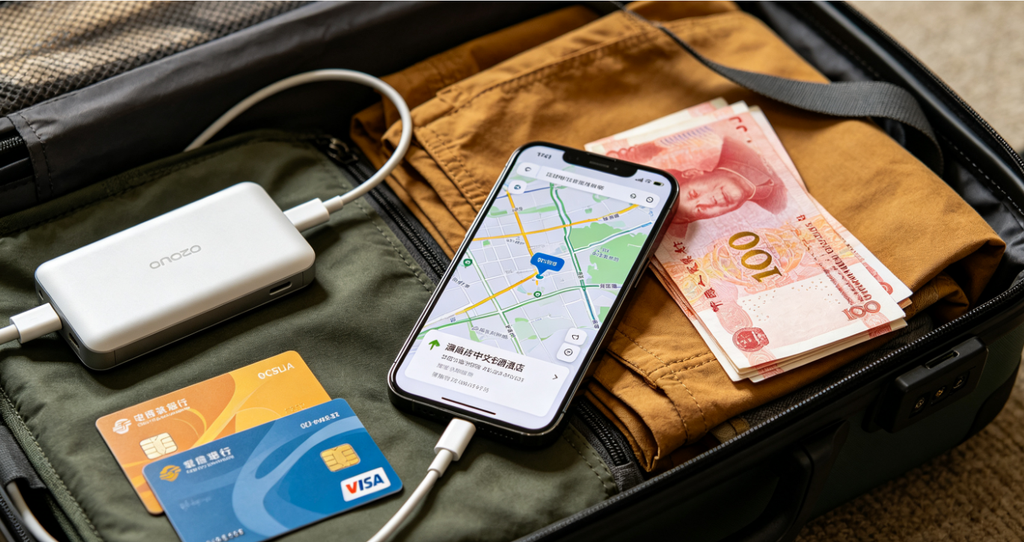
The final check should be short.
You are not trying to redesign the trip.
You are verifying it.
Final Beijing checklist
Documents
- Passport
- Entry documents
- Flight confirmation
- Hotel confirmation
- Insurance information
Bookings
- Major attraction reservations
- Tour confirmations
- Train tickets if applicable
- Airport transfer information
Technology
- Phone
- Charging cables
- Power adapter
- Backup battery
- Connectivity plan
Money
- Payment methods
- Backup payment method
- Some contingency cash if appropriate
Information
- Hotel Chinese address
- Emergency contacts
- Important reservation screenshots
- First-day transportation plan
At this stage, the most valuable preparation is redundancy.
If your phone battery dies, you should still know your hotel address.
If an app fails, you should still have your reservation information.
If your original payment method does not work, you should have another option.
Good travel preparation is less about predicting every problem and more about ensuring that one small problem does not become a major one.
So, How Far in Advance Do You Really Need?
The answer depends on the type of Beijing trip.
A simple 3–4 day independent trip
Recommended: around 6–10 weeks
This gives you enough time to arrange flights, hotel, entry requirements where applicable, and important reservations without creating a long planning process.
A first-time 5–7 day Beijing trip
Recommended: around 2–3 months
This provides more flexibility for hotel selection, attraction reservations, transportation planning, and a balanced sightseeing structure.
A peak-season Beijing trip
Recommended: around 3–6 months
The earlier window is useful when your dates are fixed and you want particular hotels, guides, rooms, or transportation arrangements.
A customized private trip
Recommended: around 2–4 months, or earlier for peak periods
A customized trip can involve coordination between guides, transportation, attractions, restaurants, and special experiences. The earlier you begin, the more options are available for matching those elements.
A Beijing + China multi-city trip
Recommended: around 3–6 months
The complexity increases because Beijing is only one part of the transportation chain.
You may need to coordinate:
international flights → Beijing → Xi’an/Shanghai/Chengdu/etc. → international departure
In this situation, planning the entire route first is usually more useful than booking Beijing independently.
What Should You Book Early—and What Can Wait?
A useful way to think about planning time is through scarcity.
Book early when something has:
- Limited capacity
- Fixed dates
- Limited availability
- High seasonal demand
- Difficult replacement options
You can usually wait when something has:
- High availability
- Flexible timing
- Many alternatives
- No reservation requirement
- Little impact on the rest of the itinerary
This creates a simple decision rule:
Secure the scarce things first. Leave flexible things for later.
That principle is more reliable than blindly following a “book everything three months ahead” rule.
When Planning Too Early Can Actually Be Unhelpful
More planning is not automatically better.
If you create a detailed schedule six months before departure, some information will inevitably change.
Attractions may change opening arrangements. Restaurants may change operating hours. Your interests may change. Weather may affect outdoor activities. You may discover a neighborhood you would rather explore than spend another afternoon inside a museum.
Therefore, early planning should establish the framework, not every detail.
Think of the process in three layers:
Layer 1: Commit early
Flights, hotel, visa or entry requirements, major tours, and other limited-capacity arrangements.
Layer 2: Schedule later
Attractions with defined reservation windows and activities that depend on your final dates.
Layer 3: Decide locally
Restaurants, shopping, neighborhood walks, cafés, and optional activities.
This gives you structure without eliminating spontaneity.
A Better Planning Timeline for First-Time Visitors
If you want one simple framework, use this:
3–6 months before:
Choose dates, check entry requirements, establish the China route, and research neighborhoods.
2–3 months before:
Book flights and accommodation. Arrange specialized tours or guides if needed.
4–8 weeks before:
Build your sightseeing framework and identify attractions with limited availability.
1–4 weeks before:
Make reservations according to each attraction’s actual booking window and finalize transportation details.
7 days before:
Check weather, documents, connectivity, payments, and important confirmations.
24–48 hours before:
Perform a final audit and stop making unnecessary changes.
This approach keeps planning proportional to the actual risk of something becoming unavailable.
Final Takeaway
For most travelers, the ideal answer to how far in advance to plan a Beijing trip is about two to three months, with more time recommended for peak seasons, complex China itineraries, visa-dependent travel, and customized experiences.
But the calendar alone is not the most important factor.
The smarter approach is to divide your planning into three categories:
Book early: things with limited availability.
Schedule later: attractions whose reservation windows open closer to the visit.
Keep flexible: activities that can easily move between days.
That distinction allows you to prepare thoroughly without turning your Beijing vacation into a project that needs to be micromanaged months in advance.
The goal is not to know exactly what you will be doing at 3:15 p.m. six months from now. The goal is to make sure the important pieces are secure, the route is realistic, and you still have enough flexibility to enjoy Beijing when you arrive.