
How to Eat Peking Duck Like a Local
Eating Peking duck in Beijing is more than ordering a famous dish and wrapping meat in a pancake. The experience involves appreciating the crisp skin, balancing the rich duck meat with fresh vegetables and savory sauce, and understanding how the restaurant serves the different parts of the duck.
For first-time visitors, the unfamiliar details can make the meal confusing. Should you eat the skin separately? How much sauce belongs in a pancake? Is it acceptable to use your hands? And what should you order after the duck has been carved?
This Peking duck guide explains how to enjoy Beijing roast duck step by step, from the first bite to the final course. It also covers ordering portions, choosing accompaniments, restaurant etiquette, and practical tips for getting more out of your meal.
1. Start by Understanding What Makes Peking Duck Special
Peking duck, known in Chinese as 北京烤鸭 (Běijīng kǎoyā), is one of Beijing’s signature dishes. Its appeal comes from the contrast between glossy, crisp skin and tender, flavorful meat, traditionally served with thin pancakes, sweet bean sauce, scallions, and cucumber.
According to the Beijing municipal government’s overview of local cuisine, Beijing’s roast-duck tradition includes different roasting methods. Historic restaurants such as Bianyifang use a closed-oven technique, while Quanjude is associated with an open-oven method. These approaches produce different cooking environments while preserving the dish’s distinctive character. Read the official Beijing cuisine overview.
The traditional meal is not simply about eating the duck as quickly as possible. It is about tasting the skin and meat in different combinations and enjoying the accompanying ingredients without allowing one flavor to overwhelm the others.
Why the skin matters so much
The skin is one of the defining features of Peking duck. When properly roasted, it should be thin, aromatic, and crisp, with rendered fat contributing richness.
A skilled chef may carve the duck beside the table, separating the skin and meat into thin slices. Watching the carving is part of the experience, especially if this is your first visit to a traditional roast-duck restaurant.
Do not worry if the restaurant serves the skin and meat together rather than separately. Presentation varies by restaurant, and there is no need to insist on one specific serving style.
2. How to Eat Peking Duck Step by Step
The most familiar way to enjoy Peking duck is to wrap thin slices in a pancake with sauce and fresh vegetables. Once you understand the basic method, the process is straightforward.
<AsyncImageGroup query={[“Peking duck thin pancakes sweet bean sauce scallions cucumber traditional Beijing restaurant table”,”chef carving crispy Peking roast duck at restaurant”,”Chinese Peking duck pancake wrap sliced duck scallions cucumber close up”]} aspectRatio=”5:4″ layout=”bento” size=”lg” />
Step 1: Taste the crispy skin first, if it is served separately

Some restaurants serve a plate of especially crisp duck skin before the remaining meat. You may be offered a small dish of white sugar for dipping.
Try a small piece without adding anything first. This lets you appreciate its texture and roasted flavor. If sugar is offered, taste a lightly dipped piece to experience the sweet contrast.
This serving style is not universal. If the restaurant presents the skin and meat together, simply begin with the slices provided.
Step 2: Take one thin pancake
Place a pancake on your palm or a small plate. Beijing roast duck is commonly served with thin wheat pancakes, although some restaurants offer other bread-like accompaniments.
Handle the pancake gently. Thin pancakes tear easily when overloaded, so it is better to prepare one small wrap at a time.
Step 3: Add a little sweet bean sauce
Spread a small amount of sweet bean sauce, called 甜面酱 (tiánmiànjiàng), over the center of the pancake.
The sauce provides a savory-sweet, fermented flavor that complements the duck. Start with a thin layer rather than covering the entire pancake with sauce. You can always add more to the next wrap.
Step 4: Add duck, scallions, and cucumber
Place two or three thin slices of duck in the center, adjusting the amount to the size of the pancake. Include some crisp skin and meat if both are available.
Add a few strips of scallion and cucumber. The scallion provides a sharp, fresh flavor, while cucumber adds coolness and crunch.
The aim is balance. Too much meat makes the wrap difficult to fold, too much sauce can overpower the duck, and too many vegetables can hide the flavor of the roasted skin.
Step 5: Fold the pancake and eat
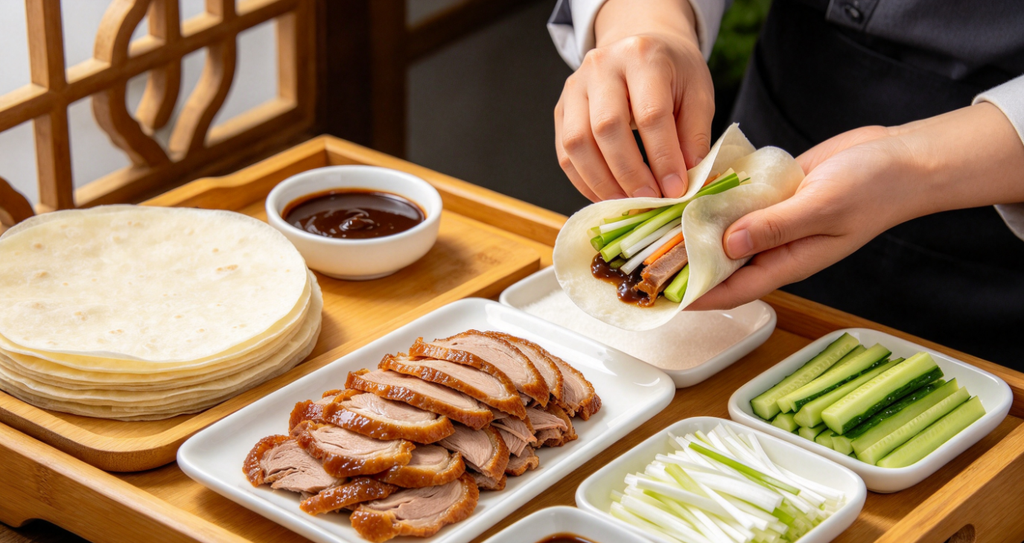
Fold the bottom edge over the filling, tuck in the sides, and roll the pancake into a compact parcel. Pick it up with your hands and eat it carefully.
Using your hands to eat a pancake wrap is perfectly acceptable. You do not need to use chopsticks for every part of the meal.
If the pancake is very thin or the filling is generous, make a smaller wrap instead of trying to fit everything inside. A neat, manageable bite is more enjoyable than a wrap that falls apart.
3. Which Sauce Should You Choose?
Sweet bean sauce is the classic accompaniment, but it is not the only way to enjoy roast duck. Depending on the restaurant, you may also receive mashed garlic, soy-based seasonings, sugar, or other condiments.
| Condiment | Flavor | Best way to try it |
|---|---|---|
| Sweet bean sauce (甜面酱) | Savory, fermented, slightly sweet | Start with a thin layer in a pancake |
| White sugar (白糖) | Sweet and simple | Try a small piece of separately served crispy skin if offered |
| Mashed garlic (蒜泥) | Strong, pungent, savory | Add a small amount to a separate wrap or meat serving |
| Soy-based seasoning | Salty and savory | Taste sparingly, especially if the duck is already well seasoned |
You do not need to combine every condiment in one wrap. Try the classic sweet bean sauce first, then experiment with other options if the restaurant provides them.
Why less sauce is often better
The duck already has a rich roasted flavor. Too much sauce can mask the contrast between the crisp skin, tender meat, and fresh vegetables.
A useful approach is to make your first wrap with a small amount of sweet bean sauce, scallion, cucumber, and duck. Once you know the balance you like, adjust the next wrap to your taste.
There is no single combination that everyone in Beijing follows. Personal preference and restaurant tradition both influence how people eat the dish.
4. What Should You Order Alongside Peking Duck?
A roast-duck meal often includes more than the main dish. Side dishes provide contrasting textures and flavors, and ordering thoughtfully can make the meal more satisfying.
Pancakes and extra accompaniments
Check whether the duck order includes pancakes, sauce, scallions, and cucumber. Some restaurants include these items with the duck, while others charge separately for additional portions.
If you particularly enjoy the wraps, ask whether extra pancakes and condiments are available. It is easier to order an appropriate quantity at the beginning than to discover halfway through the meal that you have run out.
Vegetable dishes
Vegetables can balance the richness of roast duck. Depending on the menu, you might choose a simple seasonal vegetable dish or another light accompaniment rather than ordering several rich meat dishes.
For a small group, one vegetable dish may be enough alongside the duck. Larger groups can add dishes according to appetite and preferences.
What happens to the duck carcass?
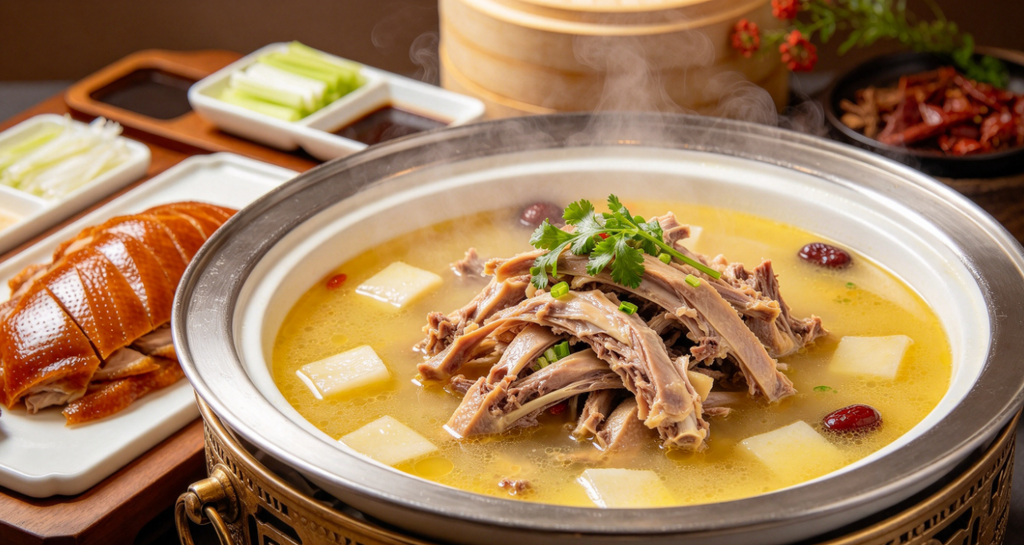
After the chef has carved the meat, ask what the restaurant offers for the remaining duck frame, often called the duck carcass.
Common preparations include:
- Duck bone soup: A warming soup made by simmering the remaining bones and other parts of the duck.
- Stir-fried duck: Remaining meat may be cooked with vegetables or seasonings.
- Other regional preparations: Some restaurants offer additional dishes using the duck frame.
Availability, preparation, and pricing vary. Ask whether a second preparation is included in your order or charged separately. If you want soup, confirm that the restaurant offers it before assuming it will arrive automatically.
Making use of the remaining duck is a practical way to enjoy more of the ingredient and extend the meal beyond the carved slices.
5. How Much Peking Duck Should You Order?

The right quantity depends on the size of the duck, the restaurant’s serving style, the number of people dining, and how many other dishes you plan to order.
A whole duck can be too much for a solo diner, while a group ordering several substantial side dishes may not need as much duck as expected.
Use these guidelines as a starting point, not a fixed rule:
| Group size | A practical starting point |
|---|---|
| One person | Check whether the restaurant offers a half portion or individual duck dishes |
| Two people | A half duck may be sufficient if available; a whole duck may suit a larger appetite or a meal with few other dishes |
| Three to four people | Consider a whole duck and add side dishes according to appetite |
| Five or more people | Ask the restaurant about duck size, extra pancakes, and whether ordering more than one duck makes sense |
Always check the menu’s actual serving sizes. Restaurant portions, prices, and set-menu inclusions differ, so a whole duck should not automatically be assumed to feed the same number of people everywhere.
Is a set menu worth it?
A set menu may simplify ordering because it can include the duck, pancakes, condiments, and selected side dishes. However, it is not always the best value.
Compare the set-menu price with the cost of ordering the duck and accompaniments separately. Check whether drinks, service charges, extra pancakes, and the duck-frame preparation are included.
If you have dietary restrictions or prefer only a few side dishes, ordering à la carte may offer more flexibility.
6. Peking Duck Restaurant Etiquette: What Visitors Should Know
You do not need to memorize a complicated set of rules to enjoy a traditional Beijing meal. A few simple habits will help you feel comfortable.
Watch the carving before taking your first bite. If a chef carves the duck beside your table, give them room to work and wait until the plates are ready.
Share the food comfortably. If you are dining with others, take a reasonable portion and leave enough for everyone. If you are unsure how to serve a dish, follow the arrangement on the table or ask the staff.
Use your hands for pancake wraps. It is acceptable to pick up a prepared wrap with your hands. Use chopsticks for the sliced duck, vegetables, and other dishes when appropriate.
Do not worry about making every wrap identical. Some diners prefer more skin, others prefer more meat, and some enjoy additional scallion or garlic. You can adapt the filling to your own taste.
Ask about ingredients when necessary. If you have a food allergy, tell the staff clearly and confirm the ingredients and preparation method. A translated message can help, but it cannot guarantee that cross-contact will not occur.
The aim is to enjoy the meal respectfully, not to imitate every gesture of someone who grew up in Beijing.
7. How to Choose a Peking Duck Restaurant in Beijing
A good restaurant choice depends on the experience you want, not only its reputation or the number of people taking photographs outside.
Traditional versus modern dining
Beijing has long-established roast-duck restaurants as well as contemporary restaurants that present the dish in a more modern style.
The Beijing municipal government’s cuisine overview describes the contrasting roasting traditions associated with Bianyifang and Quanjude. This is a useful reminder that different restaurants can produce distinct versions of the same classic dish.
When choosing a restaurant, consider:
- Whether you prefer a historic dining experience or a contemporary atmosphere.
- Whether the menu explains the duck portions and accompanying dishes.
- Whether the restaurant accepts reservations and how to book.
- How convenient the location is for the rest of your day.
- Whether the staff can accommodate your language and dietary needs.
A famous restaurant is not automatically the best fit for every traveler. A convenient location, clear menu, suitable portion size, and comfortable dining environment can matter just as much.
Should you reserve a table?
Reservation requirements vary by restaurant, location, and time of day. Popular dining times can be busy, particularly on weekends and holidays.
Check the restaurant’s current booking policy before visiting. If you are traveling with a group or have a tight sightseeing schedule, making a reservation can reduce uncertainty.
Also confirm the restaurant’s exact branch. Well-known restaurant brands may have multiple locations, and traveling to the wrong branch can add unnecessary time to your day.
8. How to Fit a Peking Duck Meal into Your Beijing Trip
Peking duck is often a substantial meal, so it is worth planning your day around the restaurant rather than treating dinner as an afterthought.
If you are visiting central Beijing, you may want to combine a duck dinner with nearby historic streets, shopping areas, or other attractions. However, check actual travel times and avoid scheduling a restaurant reservation immediately after a major attraction without allowing time for queues, walking, and transportation.
A food-focused outing can also introduce you to more than one local dish. Depending on your interests, you could explore traditional snacks, neighborhood restaurants, and Beijing’s broader culinary culture in addition to roast duck.
If you want help combining food stops with sightseeing, a Beijing food tour can be a useful option to explore. Check the specific itinerary to see whether it includes a roast-duck meal, food tastings, transportation, or an English-speaking guide; inclusions vary between tours.
Travelers who want to combine dining with major attractions may also consider Beijing private tours. A private itinerary can make it easier to coordinate sightseeing, restaurant timing, and transportation, especially when several people have different interests.
The most useful arrangement is one that matches your schedule and priorities. You do not need a guide just to eat duck, but assistance may be valuable if you want historical context, help navigating menus, or a day organized around specific cultural experiences.
Frequently Asked Questions
Do you eat Peking duck with your hands or chopsticks?
Both can be appropriate, depending on what you are eating. It is common to pick up a prepared pancake wrap with your hands, while chopsticks are useful for taking slices of duck and vegetables from shared plates.
Do you have to eat the crispy skin with sugar?
No. Some restaurants serve crispy skin with sugar as an optional tasting, but it is not compulsory. Try it if it interests you, then enjoy the duck with the accompaniments you prefer.
What is the correct sauce for Peking duck?
Sweet bean sauce is the classic accompaniment for pancake wraps. Some restaurants also offer mashed garlic, soy-based seasonings, sugar, or other condiments. Begin with the traditional sauce and experiment according to your taste.
Is Peking duck spicy?
Traditional Peking duck is not usually served as a spicy dish. Its flavor comes primarily from the roasted skin and meat, with sauces and accompaniments providing sweetness, savoriness, and freshness. Individual restaurants may offer additional spicy dishes.
Can one person order Peking duck?
It depends on the restaurant. Some offer half portions or individual duck dishes, while others emphasize whole-duck orders. Check the menu before visiting if you are dining alone.
What should you do with the remaining duck bones?
Ask whether the restaurant can prepare duck soup or another dish using the remaining frame. These options are not always included in the original order, so confirm availability and any extra charge.
How can you tell whether a restaurant is suitable for international visitors?
Look for a clear menu, transparent prices, convenient reservation arrangements, and staff or digital tools that can help with communication. If you have special dietary needs, contact the restaurant in advance and confirm what it can accommodate.
Final Thoughts: Enjoy Peking Duck at Your Own Pace
Learning how to eat Peking duck is less about following rigid rules and more about understanding the balance of crisp skin, tender meat, sweet bean sauce, scallions, cucumber, and thin pancakes.
Start with a simple wrap, use a moderate amount of sauce, and adjust the ingredients to your preference. Ask about side dishes and the duck frame, check portion sizes before ordering, and confirm the restaurant’s current booking and pricing arrangements.
This Peking duck guide gives you the basics for enjoying Beijing’s famous roast duck with greater confidence. Whether you choose a historic restaurant, a modern dining room, or a food-focused outing around the city, the best meal is one that lets you appreciate the dish without worrying about getting every detail perfect.