
What Should You Know Before Visiting Beijing? A First-Timer’s Guide
Quick Answer
What should you know before visiting Beijing?
The most important thing is that Beijing is a large, highly organized but surprisingly complex city. Your experience will depend not only on which attractions you visit, but also on how you plan transportation, reservations, payments, meals and daily walking.
Before arriving, first-time visitors should understand these essentials:
- Beijing is much larger than it appears on a map.
- Major attractions may require advance reservations.
- The Great Wall usually deserves most of a day.
- Subway travel is often efficient, but stations can involve substantial walking.
- Mobile payment is widely used, so payment preparation matters.
- Weather can significantly affect outdoor sightseeing.
- Traditional food is an important part of the experience.
- Your hotel location can save hours of transportation time.
- A flexible itinerary is usually better than an overloaded one.
- Basic preparation can make the first 24 hours much easier.
The goal isn’t to plan every minute.
It is to understand how Beijing works well enough that you can make good decisions once you’re there.
1. Beijing Is Bigger Than Most First-Time Visitors Expect
One of the first things to understand before visiting Beijing is its enormous geographic scale.
The city contains major attractions across a very large area.
For example, your itinerary might include:
- Forbidden City
- Temple of Heaven
- Summer Palace
- Great Wall
- Hutongs
- Olympic Park
- Museums
- Shopping districts
These places aren’t necessarily close to each other.
This means that an itinerary that looks reasonable on paper can become exhausting once you include actual transportation and walking.
The solution is simple:
Plan by geographic area, not just by attraction popularity.
2. Don’t Try to See Everything
Beijing has enough attractions to fill much more than one trip.
A common first-time mistake is creating a checklist of every famous landmark.
The result often looks like:
Attraction → subway → attraction → taxi → attraction → dinner → hotel
You may technically see more places, but you experience less of them.
Instead, choose your priorities.
For a first visit, consider balancing:
imperial history + Great Wall + local neighborhoods + food + free time
This gives you a broader understanding of the city.
3. Decide How Many Days You Really Need
There is no universal answer.
2 Days
Suitable for a very short introduction.
You’ll need to focus heavily on the highlights.
3 Days
Enough for a classic first visit if you plan efficiently.
4–5 Days
A much more comfortable option.
You can include major attractions while leaving room for food and neighborhoods.
6+ Days
Ideal if you want a slower pace or additional cultural experiences.
The important point is that adding one extra day doesn’t simply give you more attractions.
It gives you more flexibility.
4. Plan Your Hotel Location Carefully
Your hotel is one of the biggest decisions you’ll make.
A hotel that costs slightly less but adds 60–90 minutes of transportation every day may not actually save money or time.
When choosing accommodation, look at:
- Subway access
- Distance to your main sightseeing areas
- Evening transportation
- Nearby restaurants
- Airport access
You don’t necessarily need to stay in the most touristy neighborhood.
You need a location that makes your overall itinerary efficient.
5. Understand Beijing’s Subway Before You Arrive
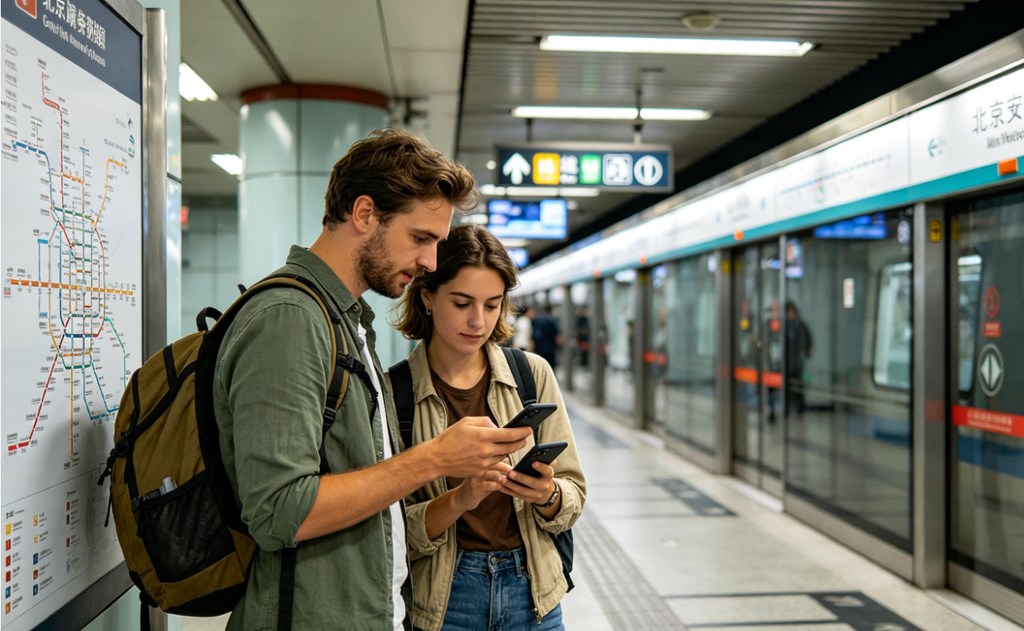
For many visitors, the subway will be one of the most useful ways to move around the city.
It is particularly useful when:
- Roads are congested
- You are traveling longer distances
- Your destination is near a station
- You want predictable journey times
However, remember that subway travel doesn’t end when the train arrives.
You may need to:
find the correct exit → walk through a large station → cross roads → walk to the attraction
So always consider the complete route.
6. Subway Stations Can Be Huge
This is easy to underestimate.
A station may have several exits, and choosing the wrong one can add considerable walking.
Before leaving the station, check:
- Exit number
- Nearby landmark
- Street direction
- Final walking route
For first-time visitors, this small habit can make navigation much easier.
7. Prepare Your Payment Methods
Payment is another issue worth handling before arrival.
Modern Beijing relies heavily on digital payments.
Depending on your circumstances, you may use:
- Mobile payment
- Bank cards
- Cash
- Transportation payment methods
Set up your preferred payment options before you need them.
And keep a backup.
Travel becomes much less stressful when you don’t have to solve payment problems while standing in a busy restaurant or subway station.
8. Keep Your Hotel Information in Chinese
This is one of the simplest practical preparations.
Save your hotel’s:
English name + Chinese name + Chinese address
on your phone.
This can be useful when:
- Taking a taxi
- Asking for directions
- Checking into a hotel
- Navigating unfamiliar neighborhoods
A screenshot is also useful as a backup.
9. Check Attraction Reservation Requirements
Don’t assume that every famous attraction operates like a traditional walk-in tourist site.
Some major attractions may use:
- Advance reservations
- Timed entry
- Visitor quotas
- ID or passport information
- Specific entry procedures
Rules can change, so check the current requirements before your travel date.
This is especially important when your itinerary depends heavily on one attraction.
10. Give the Forbidden City Enough Time
The Forbidden City is enormous.
It’s not simply a building you walk into, photograph and leave.
The complex contains:
- Massive courtyards
- Palace buildings
- Gates
- Ceremonial spaces
- Gardens
- Historical exhibits
If imperial history interests you, allow enough time to appreciate the site.
Also consider what you want to visit afterward.
A long morning inside the Forbidden City followed by another major attraction can be physically demanding.
11. Treat the Great Wall as a Day Trip
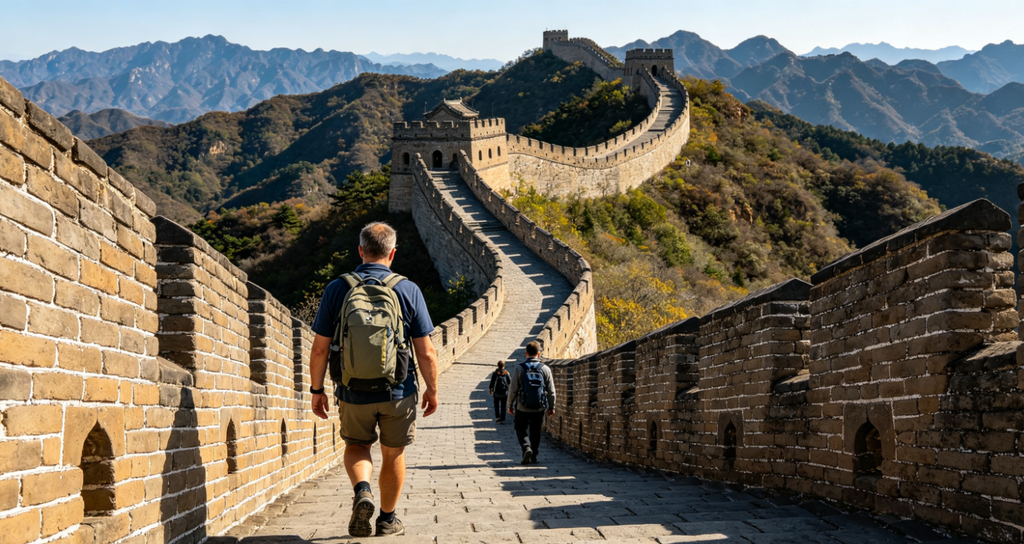
One of the most important things to understand before visiting Beijing is that the Great Wall isn’t a quick stop in central Beijing.
Popular sections such as:
- Badaling
- Mutianyu
- Jinshanling
require different amounts of travel and walking.
A Great Wall day usually involves:
departure → transportation → entrance → hiking/sightseeing → lunch → return
Trying to add several central attractions afterward can make the day unnecessarily rushed.
12. Choose the Great Wall Section Carefully
Each section offers a different experience.
Badaling
Best for convenience and developed facilities.
Mutianyu
A strong choice for scenery, restoration and a comfortable overall visitor experience.
Jinshanling
Better for travelers who prioritize hiking and more dramatic landscapes.
Don’t choose based only on online rankings.
Think about your actual priorities.
13. Wear Comfortable Shoes
This sounds obvious, but it is one of the most important practical tips.
You may walk far more than expected at:
- Forbidden City
- Summer Palace
- Temple of Heaven
- Great Wall
- Hutongs
And that’s before counting subway walking.
Your daily step count can become surprisingly high.
Choose footwear based on comfort first.
14. Weather Can Change Your Itinerary
Beijing’s weather varies significantly by season.
Outdoor sightseeing can be affected by:
- Heat
- Cold
- Rain
- Wind
- Snow
- Visibility
This is especially important for the Great Wall.
If you have flexible days, avoid locking yourself into a schedule where every outdoor attraction must happen on one specific date.
Flexibility is valuable.
15. Think About the Best Season for Your Trip
Rather than asking only:
“When is Beijing cheapest?”
consider:
“When will Beijing be most comfortable for the experiences I want?”
If hiking the Great Wall is a priority, temperature matters.
If you want outdoor photography, visibility and weather matter.
If you want fewer crowds, travel timing becomes more important.
If your dates are flexible, compare the seasonal advantages before booking.
16. Food Is Part of the Beijing Experience
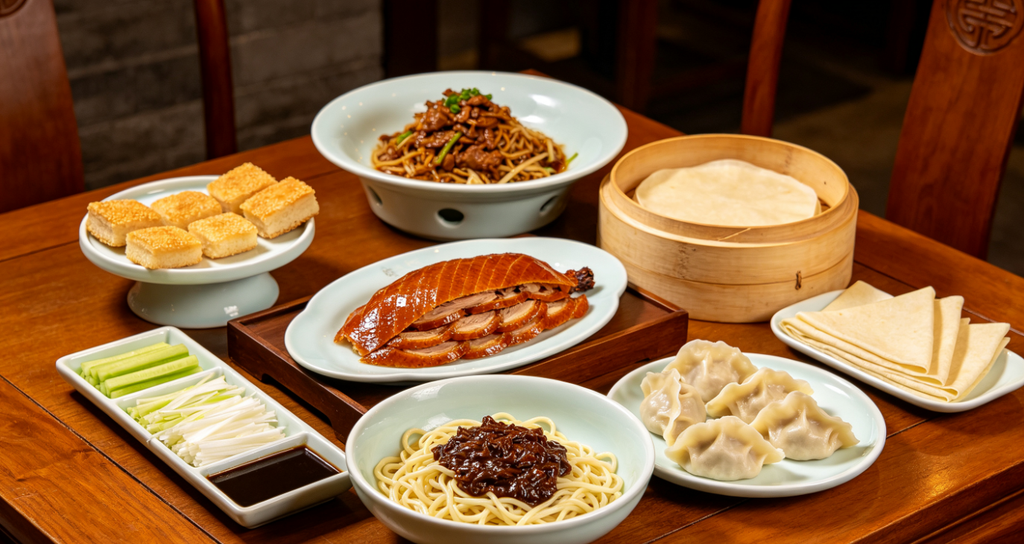
Don’t treat food as something you squeeze between attractions.
Beijing has a distinctive food culture influenced by northern Chinese traditions and the city’s long history as an imperial capital.
Consider trying:
- Peking duck
- Zhajiangmian
- Dumplings
- Jianbing
- Beijing-style hotpot
- Traditional pastries
- Local breakfast foods
Exploring Beijing’s food culture can give you a different understanding of the city.
17. Don’t Eat Only Peking Duck
Peking duck is famous for a reason.
But if you spend your entire trip eating famous tourist dishes, you’ll miss much of Beijing’s everyday food culture.
Try at least one:
noodle dish
one:
local breakfast
one:
traditional snack
and one:
classic Beijing dinner.
This creates much more variety.
18. Explore Local Neighborhoods
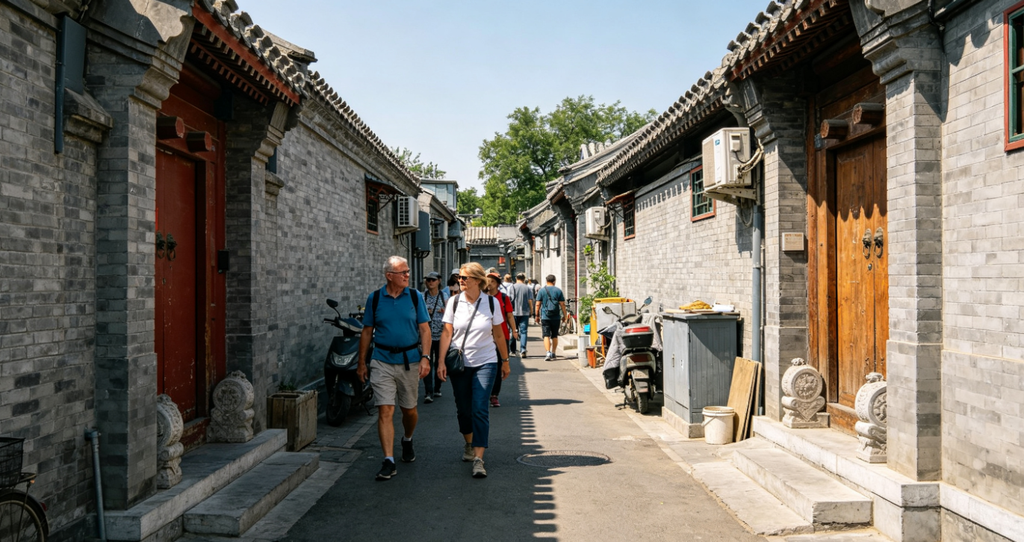
Beijing isn’t just imperial architecture.
The city’s historic neighborhoods can reveal another side of local life.
Hutongs, neighborhood restaurants, small shops and traditional markets can provide experiences that major landmarks cannot.
Don’t spend every hour inside tourist attractions.
Leave some time simply to walk.
19. Respect Hutong Communities
Hutongs are not open-air museums.
People live there.
When exploring:
- Keep noise reasonable.
- Don’t enter private courtyards.
- Ask before photographing people.
- Don’t block narrow passages.
- Respect residents’ privacy.
Responsible tourism makes the experience better for everyone.
20. Learn a Few Practical Chinese Words
You don’t need to become fluent.
But knowing a handful of useful words can make daily interactions easier.
For example:
- Hello
- Thank you
- How much?
- Where?
- Bathroom
- No spicy
- Vegetarian
Even more useful is having important addresses and names written in Chinese.
21. Don’t Assume Every Restaurant Is Tourist-Friendly
Some local restaurants may have:
- Chinese-only menus
- No English-speaking staff
- No photographs
- Digital ordering systems
This isn’t necessarily a problem.
Use translation tools, save dish names and look at what nearby diners are ordering.
Sometimes the restaurants that require a little more effort provide some of the most memorable meals.
22. Plan Your Meals Around Your Route
Beijing is too large to spend an hour crossing the city simply because a restaurant is famous.
Instead:
morning sightseeing → nearby lunch → afternoon attraction → nearby dinner
This saves time and energy.
It also gives you more opportunity to explore the neighborhood you’re already visiting.
23. Don’t Make Every Day Identical
A balanced Beijing trip might look like:
Day 1
Imperial history
Day 2
Great Wall
Day 3
Local neighborhoods and food
Day 4
Summer Palace and cultural experiences
Day 5
Flexible day
This creates variety.
You move between:
history → nature → food → local life → flexibility
rather than repeating the same type of sightseeing every day.
24. Build Your Trip Around Priorities
Before booking everything, ask:
What matters most to me?
Maybe it’s:
- Chinese history
- Architecture
- Food
- Photography
- Hiking
- Family experiences
- Local neighborhoods
Once you’ve identified your priorities, the itinerary becomes easier.
A Beijing trip planner can be useful for organizing the route when you have multiple interests but limited time.
25. Consider a Personalized Itinerary
Standard itineraries work well for some travelers.
Others have very specific needs.
For example:
Food lover:
Markets + restaurants + hutongs + food experiences
History enthusiast:
Forbidden City + Temple of Heaven + museums + Great Wall
Family:
Major attractions + shorter walking periods + flexible meals
Photography traveler:
Great Wall + historic neighborhoods + sunrise/sunset opportunities
A personalized itinerary allows you to spend more time on what actually interests you.
26. Don’t Overload Your First Day
Your arrival day should usually be lighter.
After:
- A long flight
- Airport procedures
- Hotel check-in
- Transportation
you may not have the energy for a major sightseeing marathon.
A better arrival day might be:
hotel → nearby meal → short walk → early rest
Then begin intensive sightseeing the following day.
27. Keep a Flexible Day if Possible
A flexible day is extremely valuable.
You can use it to:
- Revisit something you enjoyed
- Visit a museum
- Explore another neighborhood
- Shop
- Try additional food
- Compensate for bad weather
- Recover from an ambitious hiking day
It also reduces the pressure of making every reservation perfectly.
28. Don’t Forget the “Last Mile”
Transportation apps may tell you that a destination is only five minutes away.
That doesn’t always mean five easy minutes.
You may still need to:
- Find an entrance
- Walk through a complex
- Cross a major road
- Find the correct building
- Navigate a large station
Always check the final part of the route.
29. Plan for Your Energy, Not Just Your Time
Two hours on a subway is different from two hours walking through the Forbidden City.
And two hours hiking the Great Wall is different again.
When planning your day, think about physical intensity.
A useful rhythm is:
high-energy activity → meal → moderate sightseeing → relaxed evening
rather than stacking several physically demanding experiences together.
30. Keep Your Phone Ready
Your phone can be one of your most important travel tools.
You’ll likely use it for:
- Navigation
- Translation
- Payments
- Reservations
- Tickets
- Hotel information
- Communication
Keep it charged.
A portable battery is especially useful on full sightseeing days.
31. Have Backup Information
Don’t store everything in one place.
Keep important information in multiple forms where practical:
- Phone
- Screenshots
- Printed backup when necessary
Important information includes:
- Hotel address
- Reservation details
- Flight information
- Attraction bookings
- Emergency contacts
This becomes especially useful if your phone battery or internet connection becomes unavailable.
32. Think Carefully About Transportation to the Airport
Your final day requires a different type of planning.
Consider:
- Flight departure time
- Hotel location
- Traffic
- Airport procedures
- Luggage
- Transportation method
Don’t optimize for the absolute cheapest option if it creates unnecessary uncertainty before an important flight.
Reliability matters.
33. Give Yourself Permission to Slow Down
One of the most valuable lessons for first-time visitors is that you don’t have to maximize every day.
If you have spent four hours exploring historical sites, it’s perfectly reasonable to return to your hotel and rest.
Travel isn’t a competition.
A relaxed dinner in a local neighborhood can be more memorable than squeezing one more monument into your schedule.
34. Common Mistakes to Avoid
Mistake 1: Too Many Attractions
Solution: Choose priorities.
Mistake 2: Ignoring Geography
Solution: Group nearby attractions.
Mistake 3: Underestimating Walking
Solution: Wear comfortable shoes and add buffer time.
Mistake 4: No Reservation Planning
Solution: Check entry rules before your trip.
Mistake 5: Planning the Great Wall Like a City Attraction
Solution: Give it most of a day.
Mistake 6: Eating Only Famous Foods
Solution: Mix iconic dishes with everyday local food.
Mistake 7: Choosing a Hotel Only by Price
Solution: Consider transportation time.
Mistake 8: No Flexibility
Solution: Leave room for weather, crowds and fatigue.
A Practical 3-Day First Beijing Trip
If you have only three days, prioritize rather than rush.
Day 1 — Imperial Beijing
Focus on the Forbidden City and nearby historical attractions.
Evening: Try a classic Beijing meal.
Day 2 — Great Wall
Choose Mutianyu, Badaling or Jinshanling according to your priorities.
Evening: Return to Beijing and have a relaxed dinner.
Day 3 — Local Beijing
Explore hutongs, local food and a neighborhood that interests you.
This gives you:
history + Great Wall + local life
in three days.
A Comfortable 5-Day Framework
If you have five days, you can slow down considerably.
Day 1
Central Beijing and imperial history
Day 2
Great Wall
Day 3
Summer Palace and northwest Beijing
Day 4
Hutongs + local food + cultural experiences
Day 5
Flexible day
Use the final day for anything you missed or simply explore without a strict schedule.
What to Prepare the Week Before Your Trip
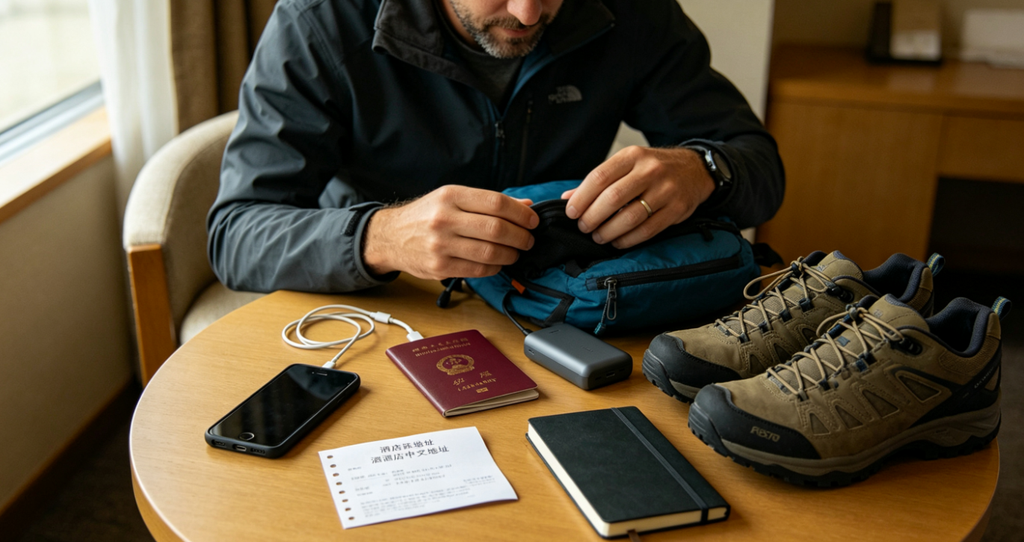
One week before departure, review:
Transportation
- Airport transfer
- Subway options
- Great Wall transportation
Attractions
- Reservations
- Opening days
- Entry requirements
Accommodation
- Hotel address in Chinese
- Check-in information
Payment
- Mobile payment
- Bank card
- Backup option
Communication
- Translation tools
- Important Chinese addresses
Weather
- Forecast
- Appropriate clothing
This small checklist can prevent many avoidable problems.
What to Prepare on Your First Morning
Don’t immediately rush into your most complicated sightseeing day.
First:
- Confirm your transportation options.
- Make sure your phone is charged.
- Check the day’s weather.
- Confirm attraction reservations.
- Have breakfast.
- Review the route.
- Leave with enough time.
Starting calmly can make the entire day easier.
Final Takeaway
The most important things to understand before visiting Beijing are not complicated.
Beijing is huge, major attractions can require planning, transportation takes time, and sightseeing often involves much more walking than expected.
Prepare your payment methods, keep important addresses available in Chinese, check attraction requirements, choose your hotel carefully and give the Great Wall enough time.
But don’t over-plan.
The best Beijing itinerary balances:
major landmarks + local food + neighborhoods + realistic transportation + free time.
If you are unsure where to start, use your priorities to shape the trip rather than copying a generic schedule.
For example:
History → Forbidden City + Temple of Heaven
Nature → Great Wall + Summer Palace
Food → local breakfast + noodles + Peking duck
Culture → hutongs + traditional neighborhoods
And if you want more practical advice specifically for navigating your first trip, your Beijing travel tips for first-time visitors resource can serve as a companion guide rather than competing with this article.
Ultimately, knowing what to expect is more valuable than trying to memorize every travel rule.
Come prepared, leave some flexibility, and give yourself enough time to actually experience the city.
That’s the best way to turn your first visit to Beijing from a checklist of attractions into a trip you’ll genuinely remember.