
Who Built the Great Wall of China?
Quick Answer
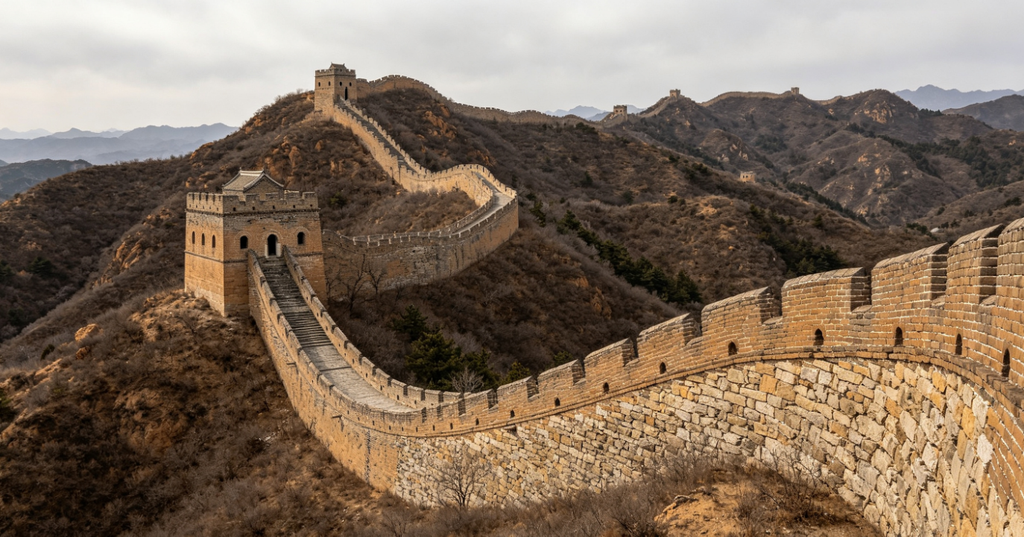
The Great Wall of China was not built by a single emperor, dynasty, or generation. It is the result of construction, reconstruction, expansion, and maintenance carried out by different Chinese states and dynasties over more than two thousand years.
Early walls were built by competing states during the Warring States period, while the Qin dynasty connected and expanded sections after unifying China in the third century BCE. Later dynasties, particularly the Han, Northern Wei, Northern Qi, Sui, and Ming, built or rebuilt defensive walls in different regions.
The people who physically constructed these walls were also diverse. Soldiers, conscripted farmers, prisoners, skilled craftsmen, laborers, and local communities all contributed at different times. The famous brick-and-stone walls associated with Beijing today are largely Ming-era structures, built and maintained through a highly organized military and administrative system.
Understanding who built the Great Wall therefore requires looking beyond the familiar image of one emperor ordering one enormous construction project.
The Great Wall Was Built by Many States, Not One Dynasty
One of the biggest misconceptions about the Great Wall is that it was built as a single continuous project.
It was not.
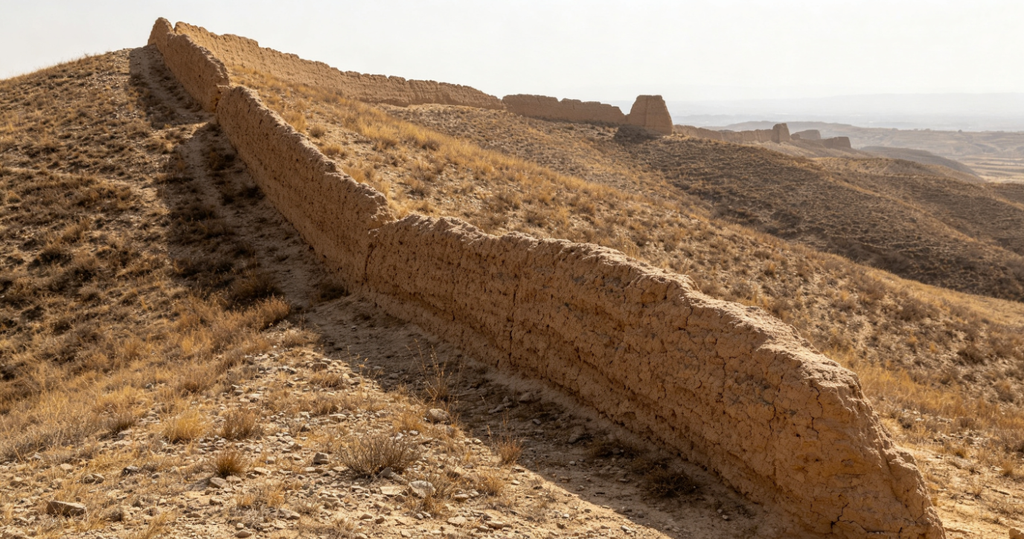
Before China became politically unified, different states constructed defensive walls along their own frontiers. These walls served local military purposes and were often separated from one another by large distances.
During the Warring States period, powerful states including Qin, Zhao, Yan, Wei, Qi, and Chu constructed defensive walls. Their locations reflected the political geography of the time rather than a unified national border.
This means that the earliest builders of what we now call the Great Wall were not working for a single Chinese empire.
They were working for competing states.
Some walls protected agricultural territory. Others guarded mountain passes, military routes, or vulnerable frontier areas. Their construction methods also varied according to local terrain and available materials.
This early history is important because the modern concept of the “Great Wall of China” combines structures that originally belonged to different political systems.
Who Built the Great Wall During the Qin Dynasty?
The Qin dynasty is closely associated with the early imperial development of the Great Wall.
After Qin Shi Huang unified China in 221 BCE, the new empire inherited defensive walls constructed by several earlier states. The Qin government ordered the construction and connection of additional defensive works, creating a much larger frontier defense system.
But saying that “Qin Shi Huang built the Great Wall” is an oversimplification.
The emperor provided the political authority and state organization behind the project. He did not personally construct the wall, and the project did not begin from nothing during his reign.
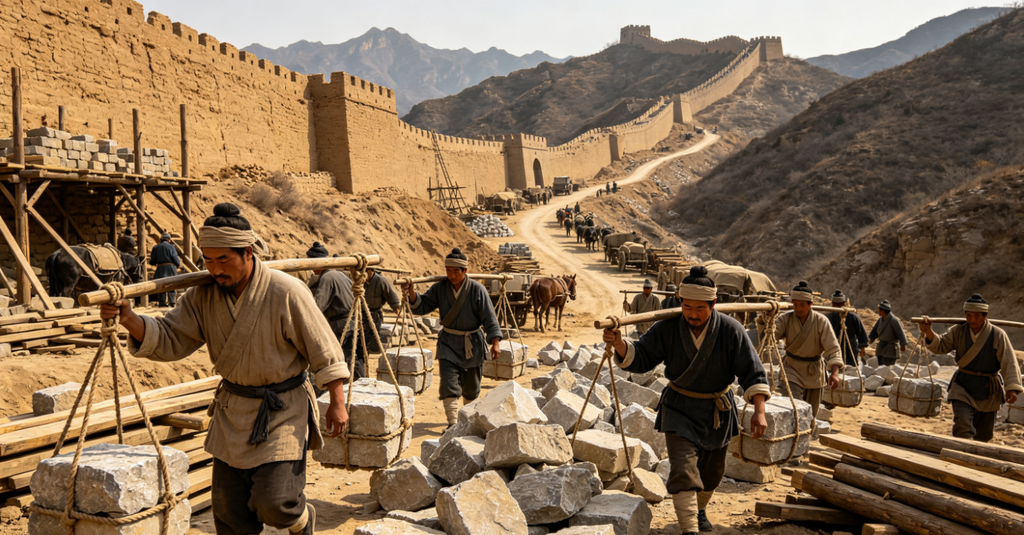
Large numbers of people were mobilized by the imperial state.
These included:
- Soldiers assigned to frontier defense and construction
- Conscripted agricultural workers
- Convicts and prisoners
- Skilled craftsmen
- Transport workers
- Local laborers
- Government officials responsible for organizing supplies and manpower
Construction on such a scale required much more than laying stones or compacting earth. Workers needed food, water, tools, materials, transportation, and protection.
The Great Wall was therefore also a massive logistical project.
In remote frontier regions, transporting construction materials could be as difficult as building the defensive structure itself.
Farmers Were Among the Important Builders
When people imagine the Great Wall’s construction, they often picture professional soldiers or specialized builders.
The historical reality was broader.
Agricultural workers could be mobilized by the state for large infrastructure projects. In ancient China, governments could impose forms of compulsory labor, military service, taxation, and public works obligations on parts of the population.
Farmers were particularly important because the ancient state depended heavily on agricultural communities for both food and manpower.
A farmer sent to a distant frontier might spend months or years away from agricultural work.
This created a significant economic burden.
The construction of frontier defenses therefore affected not only the people physically building the walls but also the communities that depended on their labor.
This is one reason the history of the Great Wall should not be reduced to architectural achievement alone. It was also connected to the administrative power of the states that built it.
Soldiers Were Builders as Well as Defenders
Military personnel played another major role.
Frontier soldiers did not necessarily arrive at a finished wall and simply occupy guard posts. In many periods, soldiers participated in constructing, repairing, extending, and maintaining defensive infrastructure.
This made practical sense.
A military unit stationed on a remote frontier needed defensive facilities, roads, watchtowers, storage areas, and communication systems. Maintaining these structures was part of maintaining the military position itself.
The wall was therefore not simply a line of masonry.
It was part of a larger military landscape.
Watchtowers, passes, beacon towers, garrisons, roads, supply depots, and settlements could all be connected to the defensive system.
This distinction helps explain why asking “who built the wall?” is more complicated than identifying a single group of workers.
Different people performed different roles within the same frontier system.
Prisoners and Convicts Were Also Used
Historical records indicate that convicted criminals and prisoners were used for labor on major state construction projects during various periods of Chinese history.
The Great Wall became associated with harsh working conditions partly because frontier construction could take place in remote mountains, deserts, and other difficult environments.
However, the popular image that the entire Great Wall was constructed by prisoners is also misleading.
Labor arrangements changed significantly between dynasties and even between individual construction campaigns.
Depending on the period and location, the workforce could include combinations of:
- Military personnel
- State-conscripted laborers
- Convicts
- Craftsmen
- Local workers
- Soldiers and frontier garrisons
The important point is that the Great Wall was built through state-organized labor systems, rather than by one specialized workforce that remained unchanged for two thousand years.
Which Dynasty Built the Great Wall We See Around Beijing?
For travelers visiting Beijing, this question is particularly important.
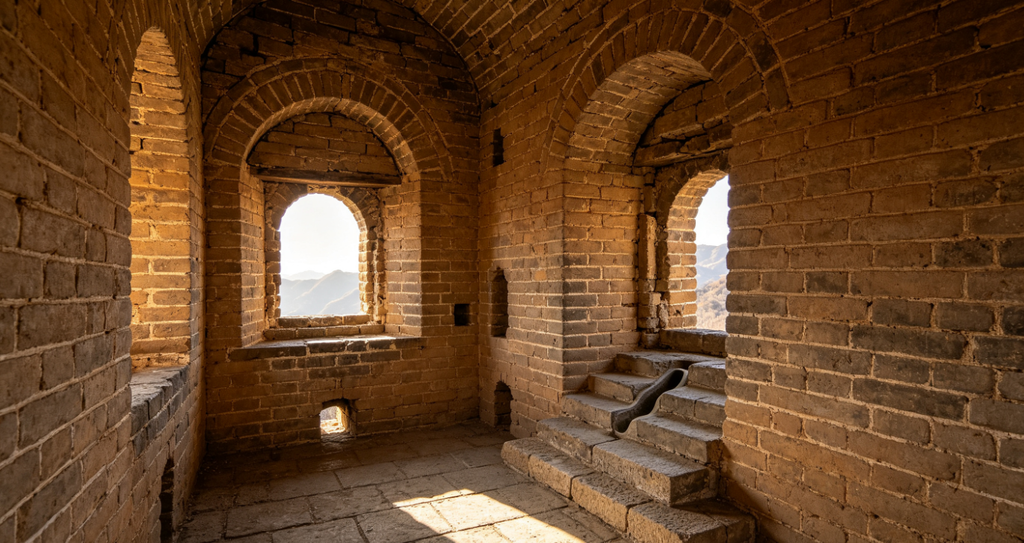
Many of the famous sections near Beijing, including Mutianyu, Badaling, Jinshanling, and Simatai, are primarily associated with the Ming dynasty.
The Ming dynasty ruled from 1368 to 1644 and invested heavily in northern frontier defenses.
By this time, wall construction had become a sophisticated military engineering system.
Ming builders used:
- Brick
- Stone
- Rammed earth
- Watchtowers
- Fortified passes
- Beacon towers
- Defensive platforms
The exact materials varied according to geography.
In mountainous areas around Beijing, stone and brick could be used extensively. In more arid western regions, builders relied more heavily on rammed earth and locally available materials.
This explains why the Great Wall does not look the same everywhere.
The spectacular brick walls that international visitors commonly associate with the Great Wall are largely the result of Ming-era construction and reconstruction, rather than representative of the entire history of the wall.
The Ming Dynasty Had a Different Kind of Great Wall Workforce
The Ming Great Wall was not simply a larger version of an ancient earthwork.
It formed part of an organized frontier defense network.
The government established military settlements, garrisons, passes, watchtowers, and supply systems along strategic areas.
Military households and soldiers could be responsible for maintaining defensive infrastructure, while specialized craftsmen worked on masonry and construction.
Local communities also became connected to the system through agriculture, transportation, taxation, and supply.
This created a more permanent frontier environment than the temporary construction campaigns associated with some earlier periods.
The Great Wall near Beijing therefore reflects not only architectural development but also the administrative sophistication of the Ming military system.
What Did the Builders Actually Have to Do?
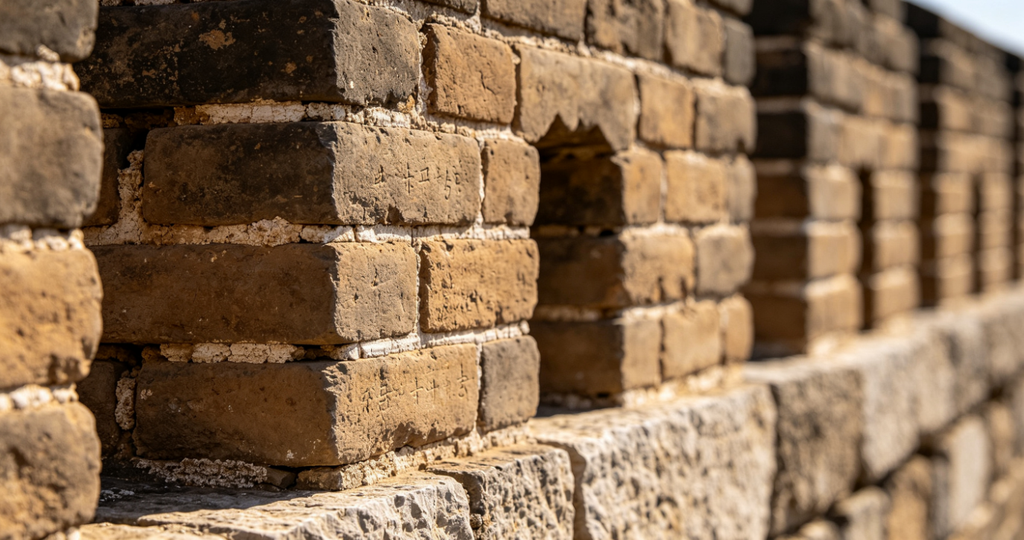
Building a wall in the mountains was an enormous engineering challenge.
The work could involve several separate tasks.
1. Quarrying and Preparing Materials
Stone had to be extracted, shaped, and transported.
Where brick was used, clay had to be processed and bricks manufactured and fired.
2. Transporting Materials
Construction sites were often far from major settlements.
Moving heavy materials through mountainous terrain required human labor, animals, carts, and established transport routes.
3. Preparing the Foundation
A durable defensive wall required a stable foundation.
On steep mountain ridges, builders had to adapt the structure to the terrain rather than simply constructing a straight line.
4. Building the Wall
Workers constructed layers using the materials available in each region.
Different construction techniques were developed for different environmental conditions.
5. Constructing Towers and Passes
Watchtowers were strategically positioned for observation and communication.
Fortified passes could serve as controlled entrances through mountain ranges and frontier routes.
6. Maintaining the System
Construction never really meant the project was finished.
Walls required repairs after weather damage, erosion, military activity, and ordinary deterioration.
In this sense, many generations were builders because many generations had to maintain what earlier workers had constructed.
The Great Wall Was Also a Communication System
Another reason the workforce was so extensive is that the Great Wall was more than a physical barrier.
Its defensive infrastructure supported communication.
Beacon towers could transmit warnings over long distances through signals. Watchtowers allowed soldiers to monitor movement along frontier areas.
This required personnel to operate and maintain the system.
A wall without soldiers, observation posts, communication infrastructure, and supply routes would have had limited military value.
The people who “built” the Great Wall therefore included not only those who physically constructed its walls but also those who created the surrounding infrastructure that allowed it to function.
Did One Emperor Order the Entire Great Wall to Be Built?
No.
This is probably the simplest way to correct the most common misconception.
Qin Shi Huang is strongly associated with the Great Wall because his government connected and expanded earlier northern defenses after unification.
But the Great Wall existed before him.
It was also expanded and rebuilt long after the Qin dynasty disappeared.
Later dynasties developed their own frontier walls according to different political and military circumstances.
The Han dynasty, for example, expanded defensive infrastructure farther west in connection with its frontier and trade networks.
Other northern dynasties constructed their own walls.
The Ming dynasty later built many of the surviving sections that tourists see today.
So the Great Wall is better understood as a layered historical infrastructure system than as a single imperial construction project.
How Many People Built the Great Wall?
There is no reliable single number covering the entire history of Great Wall construction.
The project lasted for centuries and involved different governments, regions, labor systems, and construction campaigns.
Ancient historical records sometimes provide figures for particular campaigns or military deployments, but these should not automatically be added together to produce a total number of builders.
The more useful conclusion is that construction involved large-scale state mobilization over many generations.
The human scale changed from one dynasty to another.
Some projects may have involved substantial military labor forces, while others relied more heavily on local workers, craftsmen, or state-conscripted labor.
This uncertainty is itself important. Claims that millions of people built the entire Great Wall as one continuous project usually simplify a much more complicated historical record.
How Long Is the Great Wall of China?
The answer depends on what is being counted.
The commonly cited official measurement for the entire Great Wall system is approximately 21,196 kilometers, but this figure includes walls, trenches, natural barriers, and defensive structures from different historical periods.
It does not mean that visitors can walk along a single uninterrupted 21,196-kilometer stone wall.
If you are researching how long is the Great Wall of China, it is therefore important to distinguish between the total historical defensive system and the individual sections that survive today.
This distinction also reinforces the main point of this article: there was never just one Great Wall built by one group of people.
There were many construction phases, many defensive systems, and many generations of builders.
Who Built the Great Wall Near Beijing?
For travelers planning to visit the Great Wall from Beijing, the answer is primarily connected to the Ming dynasty.
Many of the most accessible and visually impressive sections around Beijing were constructed or substantially rebuilt during the Ming period.
The builders included military personnel, state-organized laborers, craftsmen, and local workers.
Different sections also had different strategic purposes.
For example, some were designed around mountain ridges and observation, while fortified passes controlled important routes through the mountains.
This is why visiting more than one section can reveal different aspects of Great Wall architecture.
If you are beginning to plan Beijing trip activities, it is useful to think of the Great Wall not as one attraction but as a collection of historically distinct landscapes.
Why Is the Great Wall Sometimes Called a Symbol of Chinese Civilization?
The Great Wall has become a powerful symbol of Chinese history, but its original meaning was more practical and political.
It represented the ability of states to mobilize:
- Labor
- Materials
- Military forces
- Transportation
- Communication
- Administration
- Frontier settlements
Its significance therefore goes beyond the physical wall.
At the same time, the wall also reflects the human cost of large state projects.
Workers could face difficult terrain, harsh weather, separation from their families, demanding labor, and inadequate living conditions.
Both sides belong to the historical picture.
The Great Wall can simultaneously be understood as an extraordinary engineering achievement and as evidence of the enormous resources that premodern governments could demand from their populations.
Did the Great Wall Have One Group of “Builders”?
No.
A more accurate way to describe the builders is to divide them into several overlapping groups.
| Group | Main Role |
|---|---|
| Soldiers | Construction, defense, repair, and maintenance |
| Conscripted farmers | Large-scale manual labor and transport |
| Convicts | Forced labor on certain projects and periods |
| Craftsmen | Brickmaking, masonry, carpentry, metalwork, and specialist construction |
| Local workers | Construction, transport, and regional maintenance |
| Officials | Planning, taxation, labor organization, supply, and administration |
| Frontier communities | Agriculture, logistics, maintenance, and support |
This broader definition is important because large infrastructure projects depend on far more people than those physically visible on the construction site.
What Can You See Today That Connects to These Builders?
When visiting a restored Great Wall section, it is easy to focus on the scenery and architecture.
But looking carefully reveals clues about the people who constructed it.
Notice the variation in:
- Brick sizes
- Stonework
- Wall thickness
- Stairways
- Drainage systems
- Watchtower design
- Defensive openings
- Construction materials
- Adaptation to mountain terrain
These details reflect different construction periods, engineering decisions, and local conditions.
At some sections, you can also see how the wall follows ridgelines rather than taking the shortest geographical route.
That was not accidental.
The terrain itself was part of the defensive strategy.
A private Great Wall trip can be useful for travelers who want more time to examine these details, because different sections provide very different historical and architectural experiences.
The Great Wall Was Built, Rebuilt, and Reinterpreted
Perhaps the most important lesson is that the Great Wall should not be treated as a single completed monument.
It was continuously transformed.
One dynasty inherited structures from another.
A later government might repair an earlier wall, extend it, abandon part of it, or construct a new defensive line nearby.
Materials could be reused.
Military priorities changed.
Frontiers moved.
Technology developed.
Political systems changed.
The physical landscape therefore contains layers of history.
When you stand on a Ming wall near Beijing, you are looking at one chapter of a much longer story rather than the physical product of a single ancient construction campaign.
How the Great Wall’s Builders Changed Over Time
A useful way to understand the history is to think in four broad stages.
Early States
Competing states built separate defensive walls to protect their own territories.
Qin Empire
The newly unified empire connected and expanded parts of earlier frontier defenses while mobilizing large state-controlled labor forces.
Later Dynasties
Different governments constructed new walls and defensive systems according to changing frontier conditions.
Ming Dynasty
The Ming developed many of the sophisticated brick-and-stone fortifications that survive around Beijing today, supported by organized military and administrative systems.
This timeline explains why asking “Who built the Great Wall?” has no single-name answer.
The answer is historical rather than personal.
What the Great Wall Tells Us About Ancient China
The Great Wall provides a window into how premodern states worked.
Its construction required governments to do things that were difficult even on a modern scale:
- Identify strategic locations.
- Mobilize large populations.
- Organize military units.
- Collect and transport materials.
- Build in difficult terrain.
- Maintain supply networks.
- Staff defensive installations.
- Repair infrastructure over generations.
The wall therefore represents a combination of military planning, engineering, administration, economics, and human labor.
This is why the question “who built the Great Wall?” is ultimately more interesting than simply asking which emperor ordered it.
The answer reveals how Chinese states organized society and resources across vast territories.
Planning a Great Wall Visit With Its History in Mind
A visit becomes more meaningful when the physical landscape is connected to the people who constructed it.
Instead of seeing the wall simply as a famous landmark, consider three questions:
Who built this section?
Was it primarily an ancient frontier wall, a later reconstruction, or a Ming-era fortification?
Why was it built here?
Look at the mountains, passes, valleys, and routes surrounding the wall.
How did it function?
Look for towers, gates, signal structures, defensive openings, and pathways.
This approach changes the experience from simply photographing a monument into understanding a functioning historical landscape.
Final Takeaway
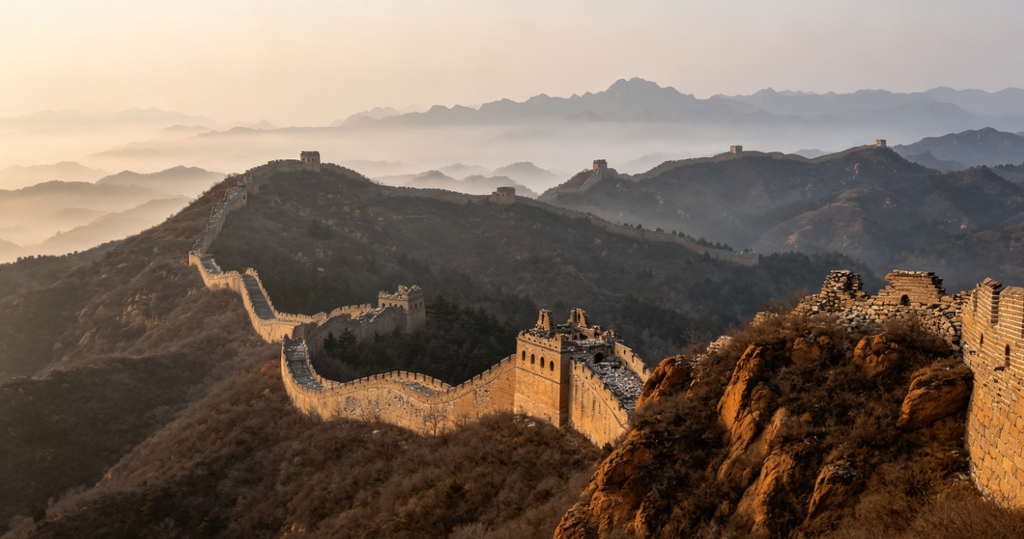
The Great Wall of China was built by many generations of people working under different states and dynasties.
Early Chinese states constructed independent defensive walls. The Qin dynasty connected and expanded parts of these earlier systems. Later dynasties created additional frontier defenses, while the Ming dynasty constructed and rebuilt many of the spectacular sections that survive around Beijing today.
The physical workforce was equally diverse. Soldiers, farmers, craftsmen, convicts, local laborers, transport workers, and administrators all played different roles at different times.
So the most accurate answer to “Who built the Great Wall of China?” is not the name of an emperor.
It is generations of workers organized by successive governments over more than two thousand years.
That long history is precisely what makes the Great Wall more than a monument. It is a record of changing states, frontier strategy, engineering knowledge, administrative power, and human labor written directly into the landscape.