
Beijing Travel Tips for First-Time Visitors: 15 Essential Tips
Quick Answer
Planning your first trip to Beijing can feel overwhelming because the city is enormous, its major attractions are spread across different areas, and some of the most important practical details—transportation, payments, attraction reservations, walking distances and meal planning—can significantly affect your experience.
The most useful Beijing travel tips for first-time visitors are surprisingly simple:
- Don’t try to see everything in one trip.
- Group attractions geographically.
- Allow more time for transportation than you expect.
- Reserve major attractions in advance when required.
- Don’t underestimate walking distances.
- Prepare mobile payment before arriving.
- Keep your hotel address available in Chinese.
- Use the subway for many urban journeys.
- Use taxis or private transportation strategically.
- Treat the Great Wall as a substantial day trip.
- Choose your hotel based on location, not just price.
- Plan meals as part of your itinerary.
- Allow flexibility for weather and crowds.
- Wear comfortable shoes.
- Leave room for experiences beyond famous landmarks.
The biggest mistake is building an itinerary around how many attractions you can fit into each day.
A better question is:
How can I experience Beijing without spending most of my trip moving between places?
1. Don’t Try to See All of Beijing in One Trip
Beijing is a city where more sightseeing doesn’t necessarily mean a better trip.
A first-time visitor may want to include:
- Forbidden City
- Temple of Heaven
- Summer Palace
- Great Wall
- Hutongs
- Olympic sites
- Museums
- Shopping areas
- Local food experiences
The problem is that these places aren’t all next to each other.
Trying to visit too many attractions can turn your vacation into a transportation schedule.
Instead, prioritize.
For a short trip, choose a few major experiences and leave time between them.
2. Understand Beijing’s Scale Before Planning
One of the most important things to understand is that Beijing is geographically large.
A journey that looks short on a map can take considerably longer once you include:
hotel → station → subway → transfer → exit → walking → attraction entrance
This is particularly important when planning days that combine several famous attractions.
Don’t calculate your schedule using subway travel time alone.
Always estimate door-to-door time.
3. Group Attractions by Location
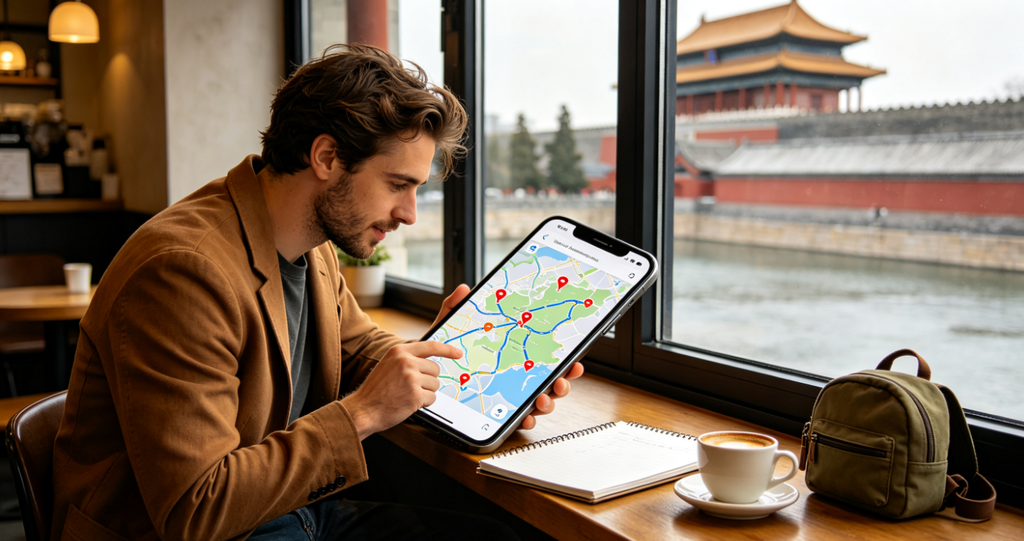
One of the smartest planning strategies is to organize your itinerary geographically.
Instead of:
Attraction A → Attraction B → Attraction C
think:
Which attractions are close enough to visit on the same day?
For example, a central Beijing day can focus on major imperial and historic sights.
Another day can focus on the northwest.
The Great Wall deserves its own transportation plan.
This simple change can eliminate a surprising amount of unnecessary travel.
4. Choose the Right Number of Days
There is no single perfect length for a Beijing trip.
2–3 Days
Good for major highlights.
You’ll need to prioritize.
4–5 Days
A more comfortable first visit.
You can combine major attractions with neighborhoods and food experiences.
6–7 Days
Better if you want a slower pace or plan to explore beyond the classic attractions.
The longer you stay, the more flexibility you have when weather, crowds or fatigue affect your plans.
5. Choose Your Travel Season Carefully
Weather can significantly change the experience of sightseeing in Beijing.
Spring and autumn are often attractive for outdoor exploration because temperatures can be more comfortable.
Summer can be hot, while winter can be cold but offers a different atmosphere and potentially fewer visitors at some attractions.
Rather than choosing dates solely according to hotel prices, consider:
- Temperature
- Rain
- Air conditions
- Crowds
- Daylight hours
- Your preferred activities
If your dates are flexible, compare the advantages of each season using a detailed best time to visit Beijing guide.
6. Don’t Underestimate the Great Wall
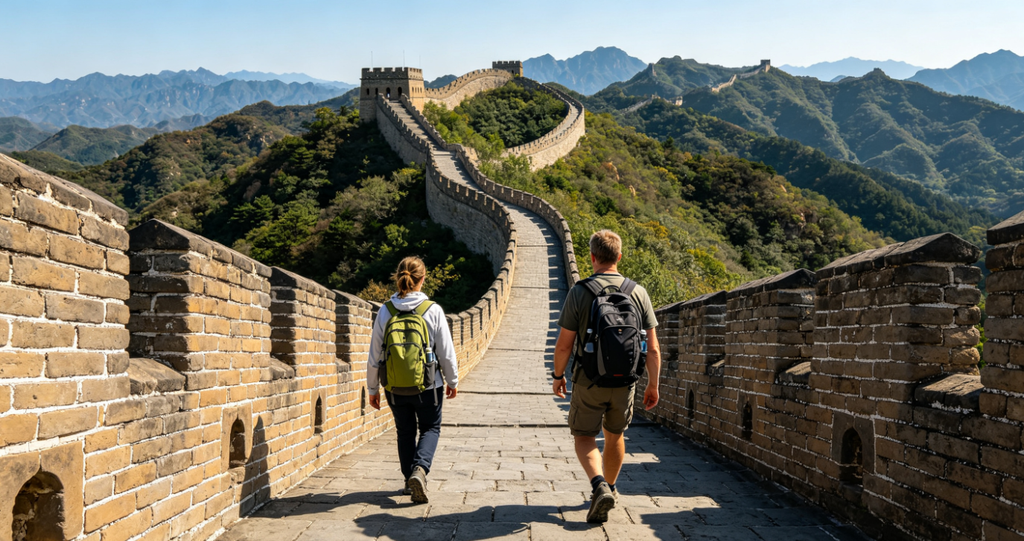
The Great Wall is often treated as if it were another city attraction.
It isn’t.
Depending on the section you choose, getting there can take considerable time.
Popular sections around Beijing include:
- Badaling
- Mutianyu
- Jinshanling
Each has a different balance of:
- Travel time
- Accessibility
- Crowds
- Hiking
- Scenery
For most first-time visitors, the Great Wall should be planned as a major day experience, rather than something squeezed between two central Beijing attractions.
7. Choose Your Great Wall Section Based on Your Priorities
There isn’t one section that is best for everyone.
Badaling
Good for visitors who prioritize accessibility and developed facilities.
Mutianyu
A strong option for travelers looking for scenery, restored architecture and a relatively comfortable visitor experience.
Jinshanling
Better suited to travelers who prioritize hiking and more dramatic landscapes.
The right choice depends on your:
- Fitness
- Available time
- Travel group
- Photography interests
- Transportation preferences
8. Use the Subway Strategically
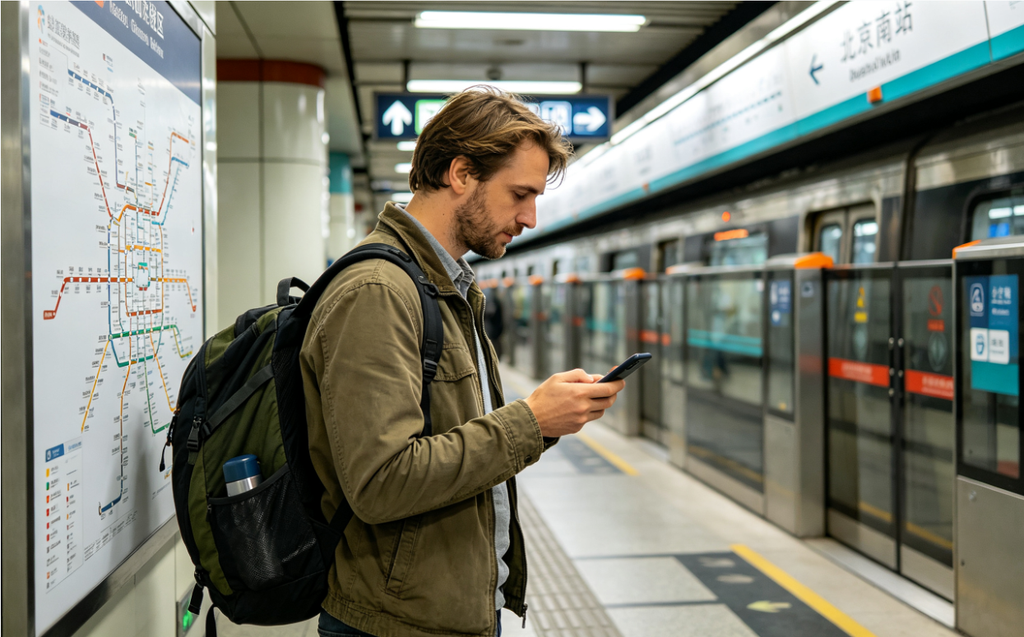
Beijing’s subway is one of the most useful transportation options for tourists.
It works particularly well for:
- Longer journeys
- Central attractions
- Avoiding road congestion
- Predictable travel times
However, don’t assume every journey should be by subway.
A route requiring several transfers and extensive walking may be much less convenient than a direct taxi.
The best transportation strategy is usually:
Subway + walking + occasional taxi or ride-hailing.
9. Pay Attention to Subway Exits
This sounds like a small detail, but it can save significant time.
Large stations may have many exits.
Two exits from the same station can put you on completely different streets.
Before leaving the station, check which exit is closest to your destination.
This is especially useful when:
- Carrying luggage
- Traveling with children
- Meeting someone
- Looking for a specific restaurant
- Arriving at a large attraction
10. Prepare Payment Methods Before Your Trip
Payment is one area where preparation can make your first few days much easier.
Depending on the situation, you may encounter:
- Mobile payments
- Transportation cards
- Ticket machines
- Bank cards
- Cash
Before leaving home, make sure you have a reliable payment method available.
It’s also sensible to keep a backup option.
Don’t wait until you arrive at a subway station or restaurant to discover that your preferred payment method isn’t ready.
11. Keep Important Information in Chinese
Even if you don’t speak Chinese, saving important information in Chinese can make transportation much easier.
Keep your:
- Hotel name
- Hotel address
- Major attraction names
- Restaurant names
- Railway station
- Airport
available on your phone.
This is especially useful when communicating with taxi drivers or navigating smaller streets.
A screenshot can be useful when internet access or mobile service isn’t convenient.
12. Choose Your Hotel for Transportation Convenience
The cheapest hotel isn’t necessarily the cheapest choice overall.
A hotel far from the places you want to visit can cost you:
- Extra transportation
- Extra time
- More walking
- More fatigue
When comparing hotels, consider:
Subway Access
A short walk to a station can be extremely valuable.
Location
Think about your major sightseeing areas.
Evening Convenience
If you plan to eat or explore at night, consider your return route.
Airport Access
If you have an early flight, transportation time matters.
13. Plan Attractions and Food Together
Food shouldn’t be an afterthought.
If you spend the morning exploring one part of Beijing, it often makes more sense to find lunch nearby rather than crossing the city for a restaurant.
The same principle applies to dinner.
For example:
sightseeing → nearby local restaurant → neighborhood exploration
is usually more efficient than:
sightseeing → 45-minute journey → restaurant → 45-minute journey back
When planning your meals, include both famous dishes and everyday food.
A useful reference is Beijing local dishes, especially if you want to understand what traditional foods are worth trying rather than eating only familiar international cuisine.
14. Try More Than Peking Duck
Peking duck is one of Beijing’s most famous foods, but it represents only one part of the city’s culinary culture.
Consider trying:
- Zhajiangmian
- Dumplings
- Jianbing
- Beijing-style hotpot
- Traditional pastries
- Local breakfast foods
- Traditional snacks
Food can also help you understand different neighborhoods.
A breakfast shop, noodle restaurant or small neighborhood eatery can provide a very different experience from a formal tourist restaurant.
15. Make Reservations for Important Attractions
Some major Beijing attractions have visitor limits, reservation requirements or timed-entry systems.
Don’t assume that because you can see an attraction from outside, you can simply walk in whenever you want.
For major sights, check current entry rules before your trip.
This is particularly important when you have a tight itinerary.
A missed reservation can affect your entire day.
16. Don’t Schedule Every Hour
A common first-time visitor mistake is creating a schedule like this:
8:00 Attraction A
10:00 Attraction B
12:00 Lunch
13:00 Attraction C
15:00 Attraction D
18:00 Dinner
It looks efficient.
In reality, it can be exhausting.
Beijing sightseeing often involves:
- Walking
- Security checks
- Transportation
- Queues
- Large attraction grounds
- Unexpected delays
Leave buffer time.
A realistic itinerary usually feels better than a perfectly optimized spreadsheet.
17. Expect More Walking Than You Think
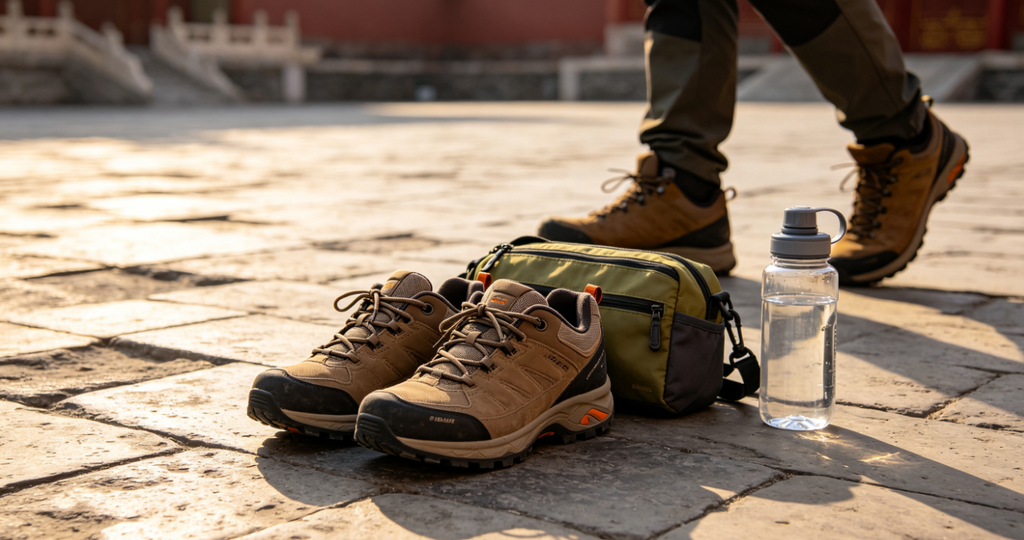
Many major attractions are large.
The Forbidden City, Summer Palace and Great Wall can all involve substantial walking.
Even after arriving by subway, you may still have considerable distance to cover.
Therefore:
comfortable shoes are not optional.
Bring shoes suitable for walking rather than choosing footwear purely for photographs.
Your feet will influence how much you enjoy the second half of the trip.
18. Visit the Forbidden City With Enough Time
The Forbidden City isn’t something you should rush through in an hour.
The complex contains:
- Gates
- Courtyards
- Palaces
- Ceremonial spaces
- Gardens
- Historical architecture
Its scale is part of the experience.
If imperial history is important to you, allow enough time to explore rather than simply taking a few photographs and leaving.
Also consider how the Forbidden City fits with the rest of your central Beijing day.
19. Explore Beyond the Major Landmarks
Beijing is more than its famous monuments.
Once you’ve visited the major attractions, consider exploring:
- Hutongs
- Local neighborhoods
- Markets
- Traditional shops
- Contemporary cultural spaces
- Neighborhood restaurants
These experiences help you understand the city as a living place rather than simply a collection of historical attractions.
For many visitors, the contrast between imperial Beijing and everyday Beijing becomes one of the most memorable parts of the trip.
20. Don’t Treat Hutongs Like a Museum
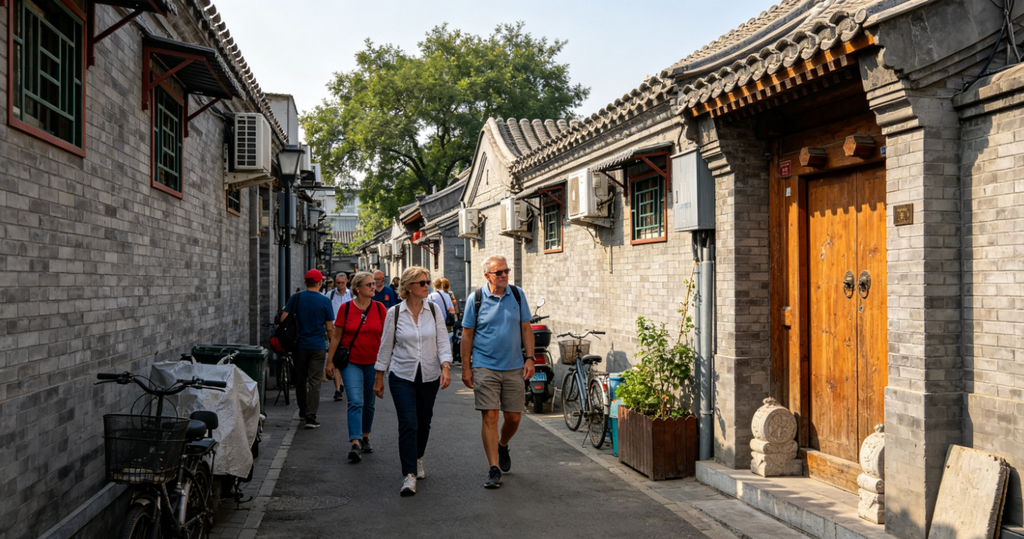
Beijing’s hutongs are residential neighborhoods as well as historic urban environments.
When exploring them:
- Keep noise down
- Respect residents’ privacy
- Don’t enter private spaces
- Avoid blocking narrow lanes
- Be considerate when taking photographs
A respectful visit makes the experience better for both travelers and residents.
21. Build Flexibility Into Your Schedule
Weather can affect outdoor attractions.
Crowds can change your expected timing.
Transportation can take longer than expected.
You may simply discover that you want to spend more time somewhere.
For this reason, don’t make every day dependent on a chain of perfectly timed activities.
Leave at least some flexibility.
A flexible itinerary is often more enjoyable than an extremely detailed one.
22. Consider Your Travel Style
Not every visitor should plan Beijing in the same way.
Independent Travelers
May prefer:
- Subway
- Walking
- Flexible schedules
- Local restaurants
Families
May prioritize:
- Shorter transportation connections
- Comfortable hotels
- Rest breaks
- Private transportation when useful
Older Travelers
May want:
- Less walking
- Fewer transfers
- More frequent breaks
- Convenient transportation
First-Time International Visitors
May benefit from:
- Local guidance
- Pre-planned transportation
- Clear daily routes
- Flexible support
The best itinerary is the one that matches your actual travel style.
23. Don’t Make Every Day an Attraction Marathon
A good Beijing trip should include different types of experiences.
For example:
History → Food → Neighborhood → Nature → Great Wall
is more varied than:
Temple → Palace → Museum → Palace → Temple
Different experiences help prevent sightseeing fatigue.
24. Build a Day Around One Main Experience
A useful planning method is to choose one major experience each day.
For example:
Day 1
Central Beijing and imperial history
Day 2
Great Wall
Day 3
Summer Palace and northwest Beijing
Day 4
Hutongs, food and local culture
Day 5
Flexible day for shopping, museums or anything missed earlier
This gives your itinerary structure without making it rigid.
25. Think About the “Last Mile”
Getting to a neighborhood is not the same as getting to your destination.
The last section may involve:
- Walking
- A short taxi ride
- A local bus
- Finding the correct entrance
- Navigating a large complex
This is particularly important for restaurants, hotels and attractions that aren’t directly next to subway stations.
Always check the final walking route.
26. Plan Your Airport Journey Early
Don’t leave your airport transfer until the last minute.
Consider:
- Flight departure time
- Hotel location
- Traffic
- Airport procedures
- Luggage
- Transportation method
For international flights, give yourself sufficient time.
An inexpensive transportation option isn’t useful if it creates unnecessary stress before an important flight.
27. Keep Your Phone Charged
Your phone can become one of your most important travel tools.
You may use it for:
- Navigation
- Translation
- Payment
- Tickets
- Hotel information
- Restaurant information
- Communication
Carry a portable battery if you expect to spend a full day sightseeing.
A dead phone can make a complicated day considerably more difficult.
28. Don’t Forget Rest Time
This is one of the most underrated travel tips.
Beijing sightseeing can be physically demanding.
After walking through the Forbidden City in the morning and spending several hours exploring another major attraction, you may not want another major sightseeing experience at night.
Sometimes the best plan is:
return to hotel → rest → dinner → relaxed evening
This is particularly valuable on a multi-day trip.
29. Think About Your Trip as a Complete Experience
Instead of asking:
How many places can I visit?
ask:
What do I want to remember about Beijing?
Maybe your answer is:
- Walking on the Great Wall
- Seeing imperial architecture
- Eating Peking duck
- Exploring hutongs
- Trying local breakfast
- Understanding Chinese history
- Experiencing everyday Beijing
Once you know your priorities, itinerary decisions become much easier.
A Practical 3-Day Beijing Framework
If you only have three days, don’t try to cover the entire city.
Day 1 — Imperial Beijing
Focus on central historical attractions.
Transportation: Subway + walking
Food: Traditional Beijing lunch and Peking duck dinner
Day 2 — Great Wall
Choose one section and dedicate most of the day to it.
Transportation: Private transportation or suitable organized transport
Food: Convenient lunch near your route
Day 3 — Local Beijing
Explore hutongs, neighborhoods and food.
Transportation: Subway + walking + occasional taxi
This provides a balance of:
history + nature + local culture
A More Comfortable 5-Day Framework
If you have five days, slow the pace down.
Day 1
Central Beijing
Day 2
Great Wall
Day 3
Summer Palace and northwest Beijing
Day 4
Hutongs + local food + cultural experiences
Day 5
Flexible day
Use the final day for:
- Shopping
- Museums
- Additional neighborhoods
- Restaurants
- Anything missed earlier
This is generally more comfortable than trying to complete every major attraction in three days.
Should You Plan a Custom Beijing Trip?
If your interests are very specific, a personalized route can make sense.
For example, perhaps you care more about:
food + hutongs + architecture
than:
shopping + museums + nightlife.
Or perhaps you’re traveling with children and want fewer long walks.
A custom Beijing trip allows the itinerary to be built around your priorities rather than forcing your trip into a standard sightseeing template.
The key isn’t simply customization for its own sake.
It’s reducing unnecessary travel and allocating more time to the experiences you actually value.
Common Mistakes First-Time Visitors Should Avoid
Mistake 1: Doing Too Much
More attractions don’t automatically create a better trip.
Mistake 2: Ignoring Geography
Cross-city travel wastes time.
Mistake 3: Underestimating Walking
Large attractions can take hours to explore.
Mistake 4: Planning Only Around Famous Attractions
You miss everyday Beijing.
Mistake 5: Leaving Reservations Until the Last Minute
Important attractions may have entry restrictions.
Mistake 6: Choosing a Hotel Only by Price
Transportation time has value.
Mistake 7: Treating Food as an Afterthought
Meals can become part of the travel experience.
Mistake 8: Having No Backup Plan
Weather and crowds can change your schedule.
What Should You Pack for Beijing?
For most travelers, practical packing matters more than bringing lots of equipment.
Consider:
- Comfortable walking shoes
- Weather-appropriate clothing
- Portable battery
- Reusable water bottle
- Small day bag
- Necessary medications
- Sun protection
- Copies/screenshots of important travel information
Your packing list should change according to season.
What Should You Prepare Before Leaving Home?
A few preparations can make your arrival much smoother.
Before Your Flight
Check:
- Hotel reservation
- Major attraction reservations
- Payment setup
- Mobile connectivity
- Transportation options
- Important addresses
- Travel insurance
- Weather forecast
Save Offline Information
Keep important details accessible even if your internet connection isn’t working.
How to Make Your First Beijing Trip More Enjoyable
The best strategy is surprisingly simple:
Plan the important things. Leave space for everything else.
Plan:
- Major attractions
- Great Wall section
- Hotel
- Transportation
- Important reservations
Leave flexibility for:
- Food
- Neighborhood exploration
- Shopping
- Rest
- Unexpected discoveries
This balance creates a trip that feels organized without feeling controlled.
Final Takeaway
The most useful Beijing travel tips for first-time visitors aren’t about creating the longest possible sightseeing list.
They’re about understanding how Beijing actually works as a destination.
The city is large.
Its attractions are spread out.
Major sites can require reservations.
Transportation takes time.
And many attractions involve much more walking than visitors initially expect.
So build your itinerary around geography, realistic travel times and your own priorities.
Use the subway when it makes sense, taxis when they save substantial time or effort, and private transportation when a destination such as the Great Wall makes the logistics complicated.
Most importantly, don’t spend your entire trip rushing from one landmark to another.
Leave room for a local breakfast, a quiet hutong walk, an unexpected restaurant, or an extra hour at a place you genuinely enjoy.
A successful first Beijing trip isn’t the one where you see the most attractions.
It’s the one where you return home feeling that you actually experienced Beijing.