
Beijing Transportation Costs: What Tourists Should Budget
Quick Answer
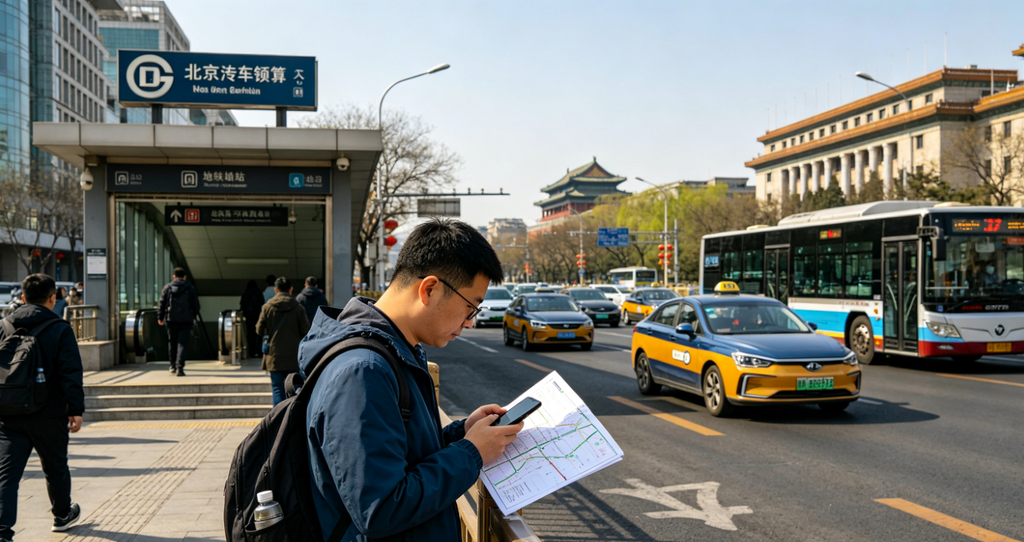
Beijing transportation costs are generally low compared with the total cost of visiting the city, especially if you use the subway for most sightseeing.
For a typical independent traveler, a reasonable local transportation budget is often around RMB 20–80 per day, excluding airport transfers and a dedicated Great Wall excursion. Budget travelers who rely heavily on the subway can spend less, while families, travelers with luggage, and visitors using taxis frequently can spend considerably more.
The biggest difference is not simply how far you travel. It is which transportation method you choose for each type of journey.
A practical strategy is:
- Subway: best for most central sightseeing
- Bus: useful for selected local routes
- Taxi or ride-hailing: best when convenience matters
- Airport rail: good value for suitable airport journeys
- Private car: useful for the Great Wall, families, and multi-stop days
- Walking: surprisingly valuable around compact historic areas
The most cost-effective Beijing trip is therefore not necessarily the one that uses public transportation for every journey. It is the one that matches the transportation method to the distance, group size, time available, and location.
Beijing Transportation Costs at a Glance
Here is a practical framework for budgeting.
| Transportation | Typical Cost | Best For |
|---|---|---|
| Subway | RMB 3+ per ride | Most city sightseeing |
| Public bus | Usually inexpensive | Local routes and short journeys |
| Taxi | RMB 13 starting fare | Short trips and convenience |
| Ride-hailing | Variable | Door-to-door travel |
| Airport rail | Fixed fare depending on line | Airport transfers |
| Private car | Market-priced | Families, groups, Great Wall |
| Bicycle | Low | Short local trips |
| Walking | Free | Compact historic areas |
These figures should be treated as planning ranges rather than guaranteed trip prices. Ride-hailing, private transfers, traffic, tolls, and specific airport routes can all change the final cost.
The most useful way to understand Beijing transportation costs is therefore to examine each mode separately and then build a daily budget around your actual itinerary.
1. Beijing Subway: The Best Value for Most Tourists
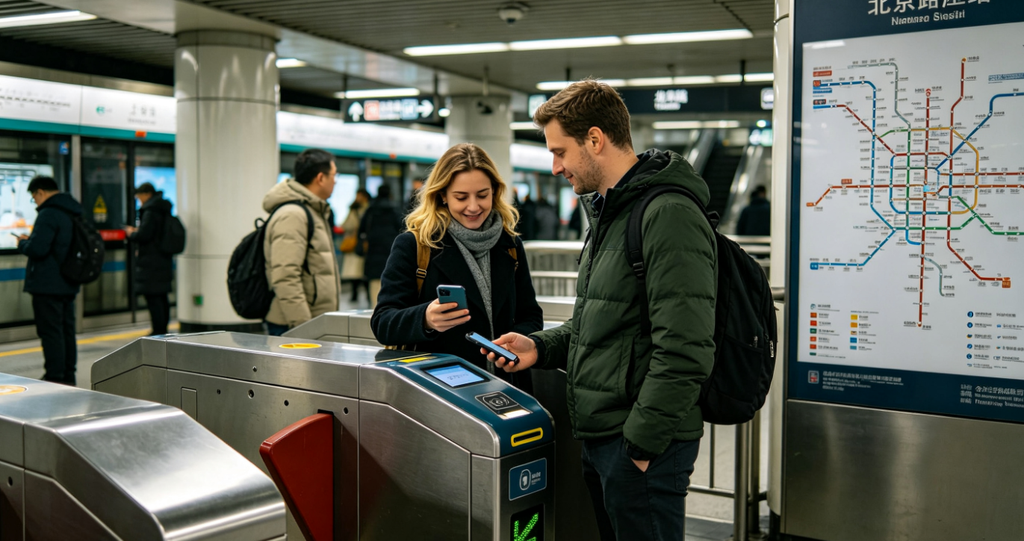
For many visitors, the subway is the backbone of getting around Beijing.
It is inexpensive, extensive, and particularly useful when roads are congested.
Beijing’s regular subway network uses a distance-based fare system. The current fare starts at RMB 3 for journeys within 6 km, then increases to RMB 4 for 6–12 km, RMB 5 for 12–22 km, and RMB 6 for 22–32 km. Longer journeys add RMB 1 for each additional 20 km.
This means a tourist making several ordinary trips around central Beijing can often keep subway spending surprisingly low.
Example
Suppose you make four subway journeys in one day and each falls into the first few fare bands.
Your total transportation spending could remain around:
RMB 12–24 for the day
That is considerably cheaper than taking a taxi between every attraction.
2. Why the Subway Is Not Always the Cheapest in Real Life
The subway may have the lowest ticket price, but that does not automatically mean it has the lowest total travel cost.
You also spend:
- Time walking to stations
- Time transferring between lines
- Time walking from stations to attractions
- Time navigating large stations
- Physical energy
This matters in Beijing because some attractions are enormous.
A station may be geographically close to an attraction but still require considerable walking before you reach the actual entrance.
Therefore, transportation should be evaluated in terms of:
Money + time + convenience + physical effort
rather than ticket price alone.
3. How to Pay for Beijing Public Transportation
International visitors have several options for paying for transportation.
Beijing has also improved access for overseas visitors.
According to the Beijing government, all subway stations have supported foreign bank cards for ticket vending and gate entry since September 2024, including cards and NFC-enabled devices carrying major international card-network logos such as Visa and Mastercard.
Visitors may also use supported mobile payment services and transportation applications.
Beijing has additionally launched the GO BEIJING integrated service platform for overseas visitors, covering transportation and other travel services in multiple languages.
For a short trip, the simplest option is usually to use the payment method you are already comfortable with rather than buying unnecessary transportation products.
4. Public Buses: Cheap but Less Convenient
Public buses can be even cheaper than the subway, but they are not always the easiest option for international travelers.
The main challenges are:
- Route information can be harder to interpret
- Traffic affects journey times
- Stops may be difficult to identify
- Some routes are more useful to local residents than tourists
Buses can nevertheless be valuable when the subway route is indirect or when your destination is far from the nearest station.
For most first-time visitors, the subway is easier to build into a sightseeing itinerary.
5. Beijing Taxi Costs
Traditional taxis remain a useful option, particularly for short journeys or when you are carrying luggage.
Beijing’s official taxi pricing currently starts at RMB 13 for the first 3 km, followed by a basic fare of RMB 2.3 per km. Additional charges can apply in specific circumstances, including low-speed waiting, long-distance empty-run charges, and nighttime operation.
The official pricing also specifies a 20% nighttime increase in the kilometer rate between 23:00 and 05:00.
Rough examples
A short urban journey may cost roughly:
RMB 15–30
A longer cross-city journey can easily reach:
RMB 40–80 or more
Traffic is particularly important.
A taxi traveling 8 km in free-flowing traffic can be much cheaper in time and money than one spending a long period moving slowly through congestion.
6. Taxi vs. Subway: Which Is Actually Better?
Consider a traveler staying near central Beijing.
They want to travel several kilometers to another attraction.
Subway
Potential advantages:
- Low fare
- Predictable travel time
- Avoids road congestion
- Easy to combine with other subway journeys
Taxi
Potential advantages:
- Door-to-door
- No transfers
- Less walking
- Better for luggage
- Convenient after a long sightseeing day
This creates an important rule:
Use the subway when the route is straightforward; use a taxi when the time and convenience saved are worth more than the fare difference.
That is a more useful principle than simply saying “the subway is cheaper.”
7. Ride-Hailing in Beijing
Ride-hailing can be particularly useful for international visitors because it reduces some of the uncertainty involved in finding a taxi.
Prices are dynamic rather than fixed in the same way as regulated taxi fares.
The final price can depend on:
- Distance
- Traffic
- Time of day
- Demand
- Vehicle type
- Pickup location
For that reason, do not build an exact ride-hailing amount into your entire trip budget.
Instead, use it as a variable transportation category.
A traveler who takes two or three ride-hailing trips a day may spend significantly more than a traveler who uses the subway almost exclusively.
8. When Taking a Taxi Is Worth the Extra Money
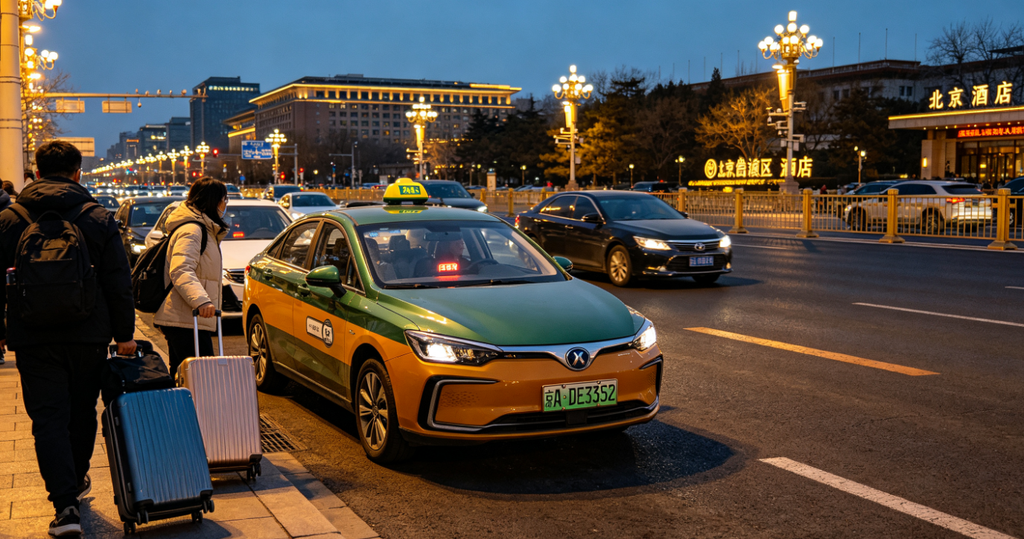
There are situations where saving a few RMB on transportation is not necessarily worthwhile.
After a full day of sightseeing
If you have already walked 15,000–20,000 steps, paying for a short ride back to your hotel can significantly improve the experience.
When traveling with children
Reducing transfers and walking can make the day much easier.
When carrying luggage
Subway stations can involve stairs, corridors, and long walks.
Late at night
A door-to-door ride may be more convenient than navigating multiple transfers.
When traveling as a group
If four people share one ride, the cost per person becomes much more reasonable.
This is why Beijing transportation costs should always be evaluated per traveler rather than simply per vehicle.
9. Airport Transportation Costs
Beijing has two major international airports:
- Beijing Capital International Airport (PEK)
- Beijing Daxing International Airport (PKX)
The best transportation method depends on where your hotel is located.
Capital International Airport
The Capital Airport Express has a fixed fare of RMB 25 according to Beijing’s official transportation information.
For travelers whose accommodation is convenient for the airport rail network, this can be excellent value.
However, you may still need another subway ride, taxi, or ride-hailing trip after leaving the airport train.
So the true airport transportation cost is:
Airport rail + final connection
rather than simply the airport train ticket.
Daxing International Airport
Daxing Airport is farther from central Beijing for many travelers.
Depending on your destination, airport rail, subway connections, airport buses, taxis, and private transfers can all make sense.
A private vehicle becomes more attractive when:
- You arrive late
- You have several suitcases
- You are traveling with children
- You have multiple people
- Your hotel is far from convenient rail connections
10. Why Airport Transfers Can Cost More Than a Day of City Travel
This surprises some first-time visitors.
A traveler may spend only RMB 20–40 moving around Beijing all day by subway but spend considerably more reaching the airport.
The reason is simple:
Airport journeys are long-distance trips.
You are crossing a much larger area than you typically do between downtown attractions.
Therefore, it is useful to separate your budget into:
- Daily city transportation
- Arrival transfer
- Departure transfer
- Special excursions
This produces a much more realistic travel budget.
11. Great Wall Transportation Is a Different Category
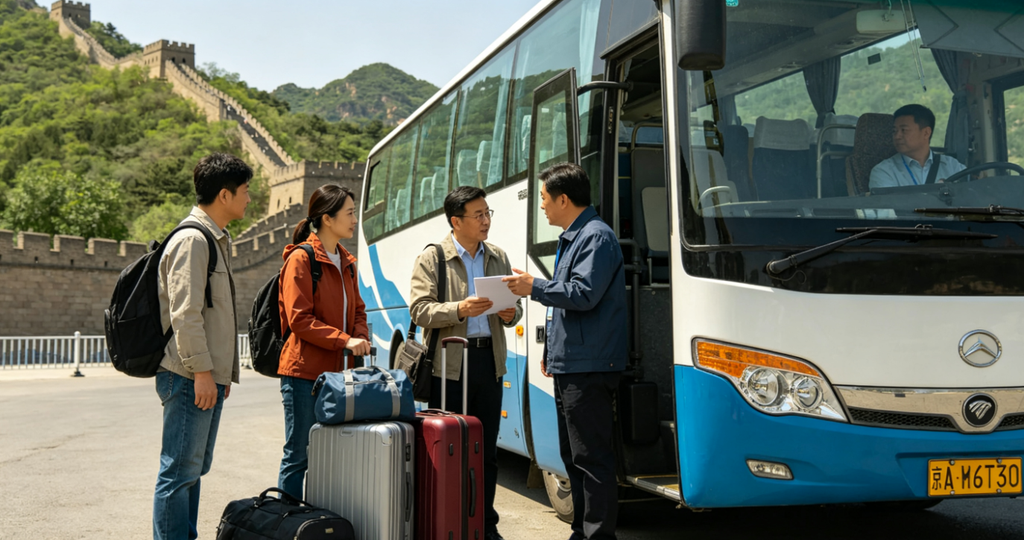
The Great Wall should not be treated as an ordinary Beijing transportation expense.
It is usually one of the largest transportation costs of a sightseeing trip because many popular sections are outside central Beijing.
Your options may include:
- Public transportation
- Tourist bus
- Train
- Group tour
- Taxi or ride-hailing
- Private car with driver
The final cost depends heavily on the section you choose.
12. Why the Great Wall Can Cost More Than Expected
The ticket price of the Great Wall itself is only part of the expense.
You may also need to account for:
- Transportation to the section
- Transportation back to Beijing
- Shuttle buses
- Cable cars where available
- Food
- Private transfers
- Waiting time
For example, a cheaper public transportation option may save money but consume considerably more time.
A private car may cost much more but provide:
- Hotel pickup
- Flexible departure
- Direct transportation
- Flexible return time
- Easier luggage handling
- Better control over the day’s schedule
This is a classic case where time has an economic value.
13. Private Car Costs: When Is It Worth It?
Private transportation is generally the most expensive option, but the calculation changes when several people share the cost.
Imagine a family of four.
A private vehicle might seem expensive compared with one subway ticket.
But compare it with:
- Four subway fares
- Multiple transfers
- Taxi connections
- Lost time
- Walking
- Coordination difficulties
For a full-day Great Wall excursion, a private vehicle can become much more reasonable when the cost is divided among several travelers.
It can also be particularly useful when visiting multiple destinations outside central Beijing on the same day.
14. Walking Can Save More Than Money
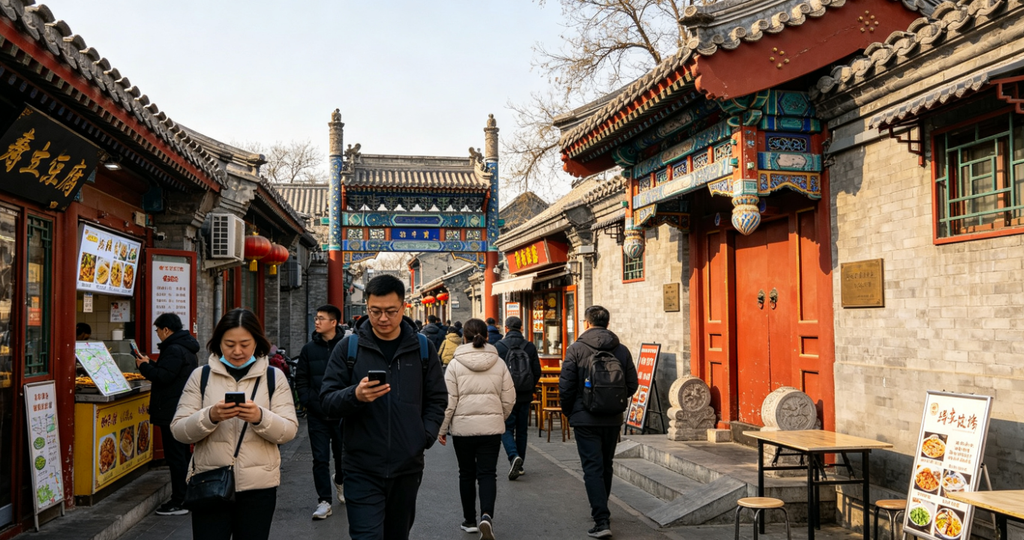
Walking is often overlooked in transportation budget articles.
But central Beijing contains several areas where walking makes sense.
For example, once you are already in a historic district, moving between nearby streets, parks, shops, and restaurants on foot can save both money and time.
Walking also has a cultural advantage.
A subway ride gets you from point A to point B.
Walking allows you to notice:
- Hutong entrances
- Local shops
- Street architecture
- Small restaurants
- Neighborhood life
- Historic details
For travelers interested in experiencing Beijing rather than simply checking attractions off a list, walking is part of the sightseeing experience.
15. How to Get Around Beijing: Choose by Situation
If you are deciding how to get around Beijing, use the following framework.
| Situation | Best Choice |
|---|---|
| Central sightseeing | Subway |
| Short neighborhood journey | Walk |
| Simple local connection | Bus or subway |
| Carrying luggage | Taxi / ride-hailing |
| Late-night return | Taxi / ride-hailing |
| Family with young children | Taxi / private car |
| Great Wall day | Private car, tour, or public transport |
| Airport to convenient rail destination | Airport rail |
| Several remote stops in one day | Private vehicle |
| Very tight budget | Subway + walking |
This approach is more useful than choosing one transportation method for the entire trip.
16. Transportation Costs for Different Types of Travelers
There is no single correct transportation budget.
Your spending depends heavily on how you travel.
Budget solo traveler
A subway-heavy itinerary can keep daily local transportation costs relatively low.
A reasonable planning range is:
RMB 15–40 per day
excluding airport and Great Wall transportation.
Mid-range couple
A couple might combine subway travel with occasional taxis or ride-hailing.
A practical range could be:
RMB 40–100 per day for two people
depending on how often they use private rides.
Family
Families tend to use taxis or private vehicles more frequently because convenience has greater value.
A reasonable planning range might be:
RMB 80–200+ per day
depending on group size and itinerary.
Private-tour traveler
Transportation can be substantially higher because the cost may include a vehicle, driver, and customized routing.
However, this should be evaluated against the number of travelers and the amount of time saved.
17. A Better Way to Calculate Your Beijing Transportation Budget
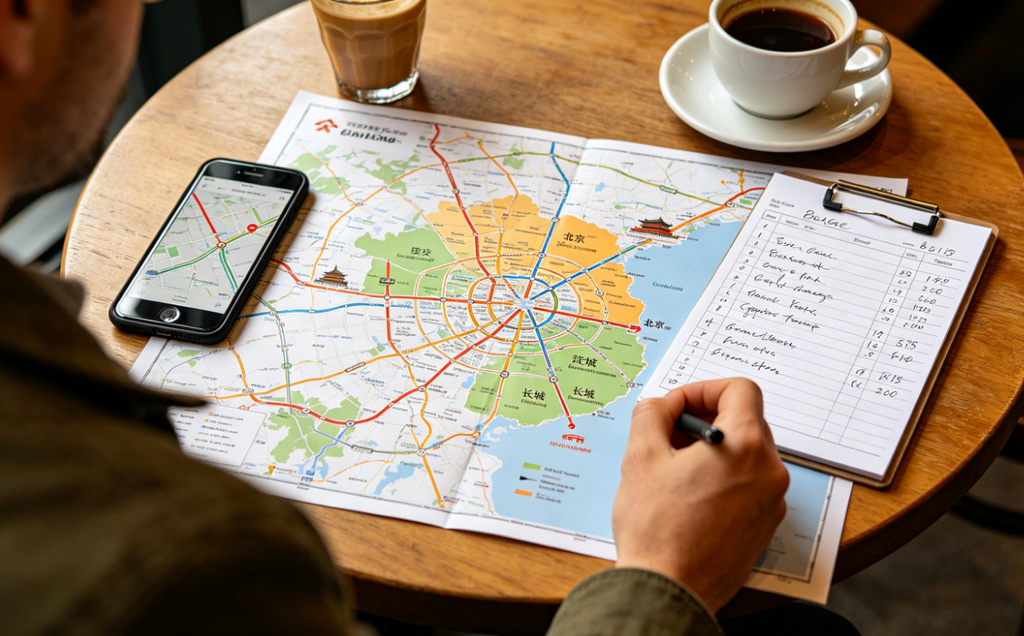
Instead of asking:
“How much does transportation cost in Beijing?”
calculate your budget in four categories.
Category 1: Everyday city transportation
Estimate your subway, bus, taxi, and walking mix.
Category 2: Airport transportation
Budget separately for arrival and departure.
Category 3: Great Wall transportation
Treat this as a special excursion.
Category 4: Unexpected rides
Keep a small reserve for:
- Rain
- Fatigue
- Late nights
- Missed connections
- Luggage
- Schedule changes
This approach prevents your transportation budget from looking unrealistically low.
18. Example: Three-Day Budget
Consider a solo traveler staying in central Beijing.
Day 1
Several subway rides:
RMB 15–25
Day 2
Great Wall excursion:
Variable depending on transportation
Day 3
Subway + walking + one short taxi:
RMB 25–50
Then add airport transfers separately.
This structure is more realistic than multiplying a generic “daily transportation cost” by the number of days because special excursions can distort the average.
19. Example: Family of Four
A family of four may find the calculation completely different.
Suppose they use:
- Subway for some central sightseeing
- Taxi for short connections
- Private transportation for the Great Wall
- Private airport transfer
Their total transportation spending may be several times that of a solo traveler.
But the cost per person may still be reasonable because private transportation is shared.
This is why transportation budgets should always distinguish between:
Per vehicle cost and per person cost.
20. The Hidden Cost: Travel Time
One of the biggest mistakes in transportation budgeting is considering only money.
Suppose:
Option A: costs RMB 10 and takes 70 minutes.
Option B: costs RMB 50 and takes 25 minutes.
For a budget backpacker, Option A may be the obvious choice.
For someone visiting Beijing for only three days, Option B may provide better value.
You effectively have a limited resource:
Sightseeing time.
If spending RMB 40 more saves almost an hour, the additional transportation cost may be worthwhile.
This becomes particularly important for short trips.
21. Avoid Crossing Beijing Unnecessarily
The easiest way to control Beijing transportation costs is not necessarily to find cheaper tickets.
It is to reduce unnecessary journeys.
Instead of planning:
Attraction A → Attraction B → Attraction C → Attraction D
build your day around geographic clusters.
For example:
Historic central Beijing day
Keep most activities in or around the central historic area.
Northwest Beijing day
Combine destinations that make sense geographically.
Great Wall day
Treat the wall as the main destination rather than squeezing several unrelated attractions into the same schedule.
This reduces both transportation expenses and wasted time.
22. Why Hotel Location Affects Transportation Costs
A cheap hotel can become expensive if it creates long daily commutes.
Suppose one hotel saves RMB 150 per night but requires:
- Two subway transfers each morning
- Long walks
- Additional taxis at night
Another hotel may cost more but place you close to major subway lines and sightseeing areas.
The second hotel may reduce both transportation spending and travel fatigue.
Therefore, when comparing hotels, consider:
Hotel price + daily transportation cost + time cost
rather than hotel price alone.
23. How to Save Money Without Making the Trip Uncomfortable
The best strategy is not to eliminate taxis completely.
Instead:
Use public transport strategically
Make the subway your default option.
Walk within attraction clusters
Avoid paying for very short journeys.
Use taxis selectively
Save them for luggage, fatigue, rain, late nights, or difficult connections.
Reserve private transportation for special days
The Great Wall is often where private transportation creates the greatest convenience.
Group travelers when possible
A private vehicle becomes more cost-effective as the number of passengers increases.
Stay near useful subway lines
Location can reduce transportation costs every day.
24. Common Transportation Budget Mistakes
Mistake 1: Budgeting only for subway fares
Airport and Great Wall transportation can dramatically increase total spending.
Mistake 2: Assuming taxis are always expensive
For short journeys shared by several people, the per-person cost can be reasonable.
Mistake 3: Ignoring traffic
A low taxi fare does not help if the journey consumes a large part of your day.
Mistake 4: Staying far outside the city to save on hotels
Transportation savings can disappear quickly.
Mistake 5: Planning every journey separately
Geographic clustering can reduce both time and transportation costs.
Mistake 6: Treating private transportation as automatically “luxury”
For families and groups, private transportation can sometimes be a practical logistical choice rather than a luxury.
25. Is Beijing Expensive to Get Around?
Compared with many major international cities, Beijing can be relatively affordable for everyday urban transportation.
The subway is particularly cost-effective.
The bigger expenses tend to come from:
- Airport transfers
- Great Wall excursions
- Frequent taxi use
- Private vehicles
- Long cross-city journeys
Therefore, someone who uses public transportation for most city sightseeing may spend surprisingly little.
Someone who takes private transportation every day can spend many times more.
The city itself is not necessarily expensive to navigate; your transportation strategy determines how expensive it becomes.
26. Should Tourists Use Beijing Public Transportation Every Day?
Not necessarily.
Beijing public transportation is excellent for many sightseeing journeys, but a good trip usually combines different transportation methods.
For example:
Subway + walking for central sightseeing.
Taxi + subway when tired or carrying luggage.
Private car for a Great Wall excursion.
Airport rail + subway when the route is convenient.
This mixed approach usually provides a better balance of cost and convenience than committing to one method for the entire trip.
27. When Beijing Private Tours Can Make Financial Sense
Travelers sometimes assume that Beijing private tours are always more expensive than independent travel.
That is true if you compare only the transportation ticket price.
But the calculation changes when you consider what a private tour may combine:
- Private vehicle
- Driver
- Guide
- Attraction planning
- Route optimization
- Pickup and drop-off
- Reduced navigation time
For a solo traveler, independent transportation will often be cheaper.
For a family or group with limited time, the value equation can be different.
The important question is not:
“Is a private tour more expensive?”
It is:
“How much am I willing to pay to save time, reduce logistical work, and make transportation predictable?”
28. Final Beijing Transportation Budget
For planning purposes, a useful framework is:
Budget traveler
RMB 15–40/day for ordinary city transportation, primarily subway and walking.
Mid-range traveler
RMB 40–100/day for a mix of subway, taxis, and ride-hailing.
Family or convenience-focused traveler
RMB 80–200+/day, depending on group size and private transportation.
Special transportation
Budget separately for:
- Airport transfers
- Great Wall transportation
- Private vehicles
- Long-distance excursions
These ranges are planning estimates rather than fixed prices.
FAQ
How much does transportation cost in Beijing per day?
A subway-heavy traveler may spend only around RMB 15–40 per day on ordinary city transportation. Travelers using taxis frequently or traveling with families may spend RMB 80–200 or more.
Is the Beijing subway expensive?
No. Regular subway fares start at RMB 3 for journeys within 6 km and increase according to distance.
Is it cheaper to take a taxi or subway in Beijing?
The subway is usually much cheaper. However, taxis can provide better value when several people share the ride, when luggage is involved, or when saving travel time is important.
How much is a Beijing taxi?
The official taxi fare starts at RMB 13 for the first 3 km, followed by RMB 2.3 per km, with additional charges applying in certain circumstances.
Should tourists use taxis in Beijing?
Yes, but selectively. The subway is usually the best default for city sightseeing, while taxis are useful for short connections, luggage, late nights, bad weather, and situations where time matters more than cost.
How much should I budget for Great Wall transportation?
It depends heavily on the section and transportation method. Public transportation can be relatively inexpensive, while private transportation can cost substantially more. Treat the Great Wall as a separate excursion rather than part of your ordinary daily transportation budget.
Is public transportation easy for foreign tourists?
It has become more accessible. Beijing’s subway supports foreign bank cards at stations, and the city has expanded integrated services for overseas visitors.
Final Takeaway
Beijing transportation costs do not have to be a major part of your travel budget.
The subway and walking can cover much of a typical sightseeing itinerary at a relatively low cost. Taxis and ride-hailing add convenience when you need them, while private transportation is most useful for special excursions, families, groups, or travelers with limited time.
The smartest strategy is therefore not to choose the cheapest transportation for every journey.
Instead:
Use the subway when it saves money without costing too much time.
Walk when attractions are close together.
Use taxis when convenience or fatigue makes the extra cost worthwhile.
Consider private transportation for the Great Wall and other logistically difficult days.
And most importantly, plan your route geographically. Reducing unnecessary cross-city journeys can save more money—and more valuable sightseeing time—than obsessing over the difference between two subway fares.
That is the most practical way to manage Beijing transportation costs while still keeping your trip comfortable.